







6 victims of Denver rapist sue parent company of Tinder, Hinge
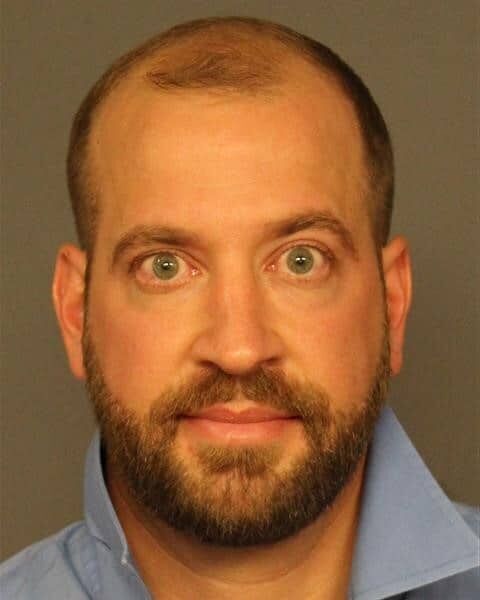
Six women who were drugged and sexually assaulted after matching with a Denver man on online dating apps are now suing the apps’ parent company.
The plaintiffs, all victims of Stephen Matthews, a Denver cardiologist found guilty in 2024 of sexually assaulting 11 women, allege that IAC and its subsidiary Match Group Inc., which owns Tinder, Hinge and several other dating apps, has continued to aid and abet predators on its products through inadequate safety features and a lack of meaningful action to change them.
The apps continued to recommend Matthews’s profile to women whom he then assaulted even after their representatives said he had been “permanently banned,” according to the suit. In cases when his profile had been shut down, Matthews would create a new one with the same personal phone number, same real photographs of himself and under his same real name without consequence.
The victims are seeking relief for all economic damages, including those brought on for physical injuries and psychological harm, according to the suit. Their counsel includes attorneys from several firms: Gerash Steiner, C.A. Goldberg, Dormer Harpring, McDermott Legal and Shafner Law.
A former cardiologist at St. Anthony North, Matthews was sentenced to 158 years to life in prison at the conclusion of the 2024 trial after being found guilty of 35 sexual assault charges. Prosecutors said that between 2019 and 2023, he met women on dating apps, assaulted them and then “gaslit” them afterward.
All six plaintiffs, each under the Jane Doe pseudonym, recounted their own interaction with Matthews in the suit, all of which began on either Hinge or Tinder and ended with him drugging and raping them.
One of the several claims in the suit is that Match Group has made it impossible for users of its apps to avoid predators like him, even if they have been previously reported, and that sometimes those accounts may even be promoted to members.
The plaintiffs also allege that the apps’ representatives make commitments to improve their systems without having the ability to actually fulfill them. Other claims include that the apps violated the Colorado’s Consumer Protection Act — in that they made false, misleading and deceptive claims about the services they provide — and that they made money off Matthews’ continued activity.
None of the plaintiffs were identified in the lawsuit as they were all victims of sexual assault.


Vision Zero: As Denver doubles down, fatalities keep climbing
Mark Samuelson
mark-samuelson@denvergazette.com
Updated 3 hours ago
A decade ago, Denver became one of many U.S. cities to adopt a bold, new model of traffic safety — one that envisioned an end to the hundreds of serious injuries and dozens of fatalities that plague the streets each...

Mark Samuelson
Reporter

Colorado attorney general joins lawsuit against Trump energy emergency order
Scott Weiser
scott-weiser@denvergazette.com
Updated 4 hours ago
Colorado Attorney General Phil Weiser joined a multistate lawsuit challenging an executive order invoking the National Emergencies Act that President Donald Trump issued on the day of his inauguration. The order fast-tracks fossil fuel projects by bypassing or shortening environmental...

Scott Weiser
Reporter

Colorado’s federal judges slash motions backlog to lowest in years
Michael Karlik
michael-karlik@denvergazette.com
Updated 5 hours ago
Colorado’s federal trial judges collectively had 37 motions in civil cases that had been sitting on their dockets for at least six months without a ruling, as of Sept. 30. That is the smallest backlog the state’s U.S. District Court...

Michael Karlik
Reporter
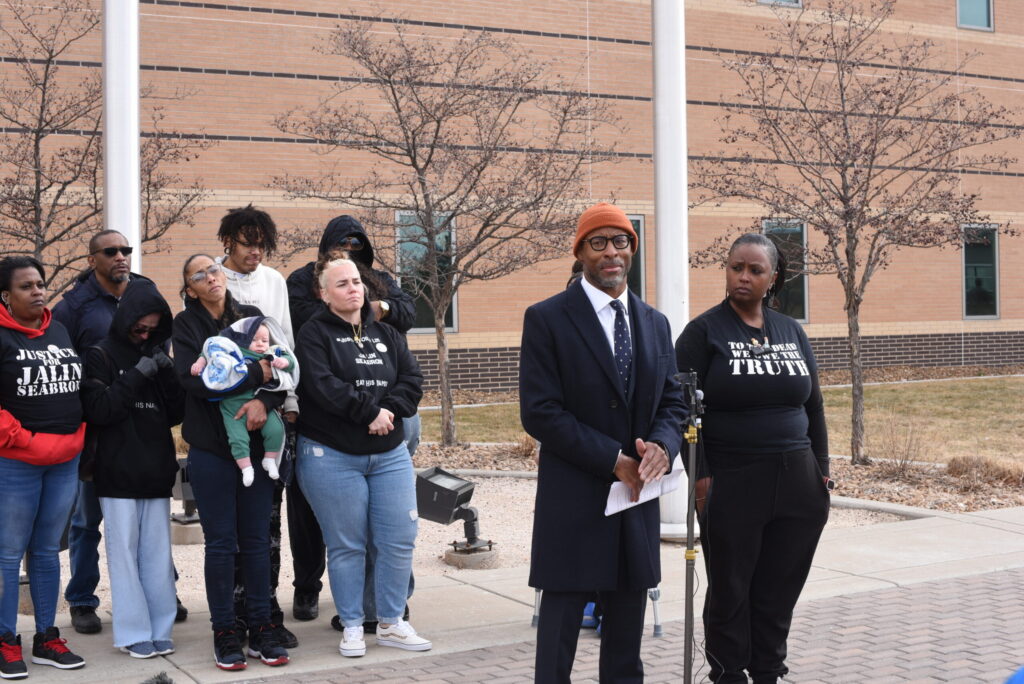
Family of man fatally shot by DougCo deputy files wrongful death lawsuit
Michael Braithwaite
michael.braithwaite@gazette.com
Updated 6 hours ago
The family of a man who was fatally shot by a Douglas County Sheriff’s Office deputy while legally armed filed a wrongful death lawsuit against both the deputy and the department. Tyrone Glover, an attorney representing the family of Jalin...
Michael Braithwaite
Reporter

Second suspect sentenced in 2022 fatal Lakewood apartment fire
Sage Kelley
sage.kelley@denvergazette.com
Updated 4 hours ago
The 15-year-old boy charged with murdering a mother and daughter in an apartment fire years ago was finally sentenced last week. Jefferson County District Judge Lindsay VanGilder sentenced the juvenile to a maximum sentence of seven years in the Colorado...

Sage Kelley
Reporter
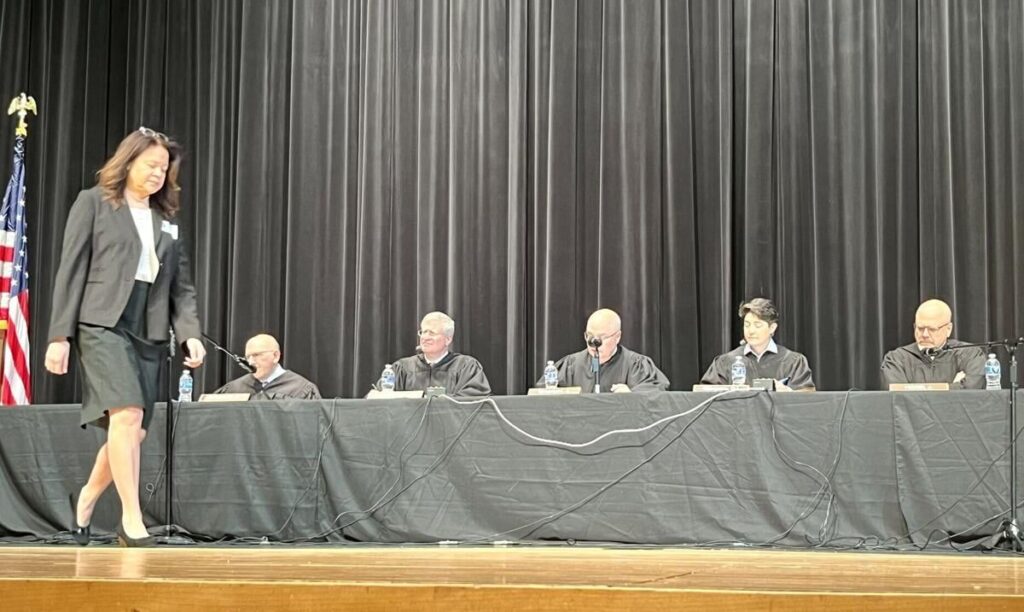
Colorado Supreme Court to review child custody decision
Michael Karlik
michael-karlik@denvergazette.com
Updated 5 hours ago
The Colorado Supreme Court announced on Monday that it will review whether the state’s second-highest court described the correct framework for deciding whether to terminate a parent’s legal rights over a child. At least three of the court’s seven members...
Michael Karlik
Reporter
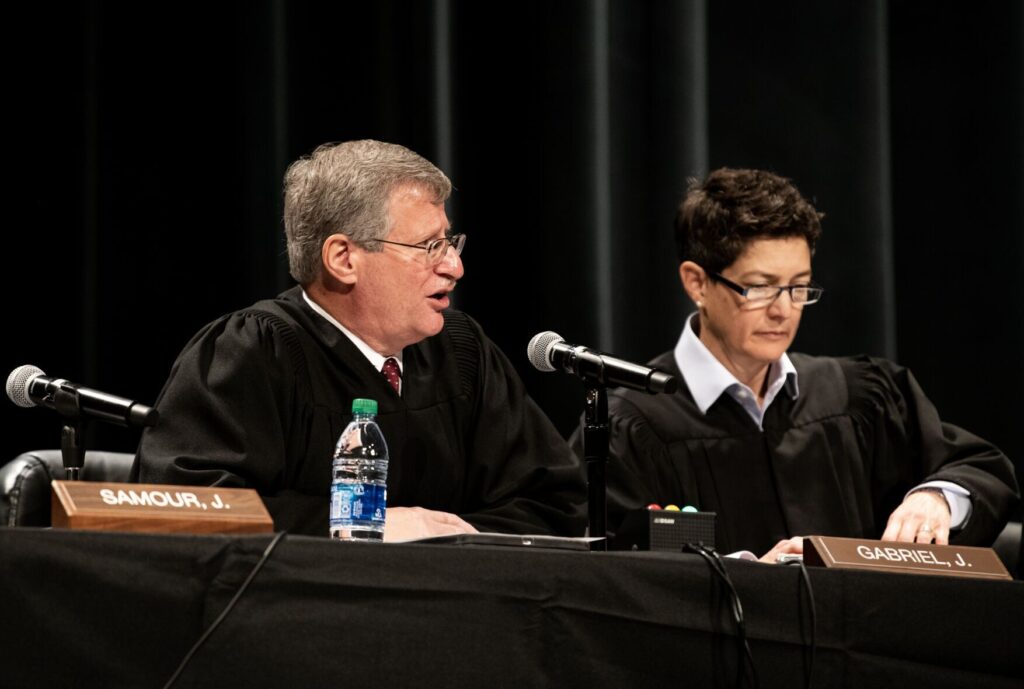
Colorado justices reject defendant’s claim of race-based murder prosecution
Michael Karlik
michael-karlik@denvergazette.com
Updated 1 day ago
The Colorado Supreme Court rejected a convicted defendant’s argument on Monday that Arapahoe County prosecutors unconstitutionally singled out him and another Black teenager for murder prosecutions as adults, while offering lenient plea deals to their two non-Black co-defendants. Lloyd Chavez...
Michael Karlik
Reporter

Colorado justices find portion of anti-SLAPP law unconstitutional
Michael Karlik
michael-karlik@denvergazette.com
Updated 1 day ago
The Colorado Supreme Court ruled on Monday that a 2019 law designed to protect the exercise of First Amendment rights conflicts with the state constitution in certain scenarios involving appeals from county courts. Known as the “anti-SLAPP” law, which stands for...
Michael Karlik
Reporter

Jeffco counselor pleads guilty on sexual assault charge
Sage Kelley
sage.kelley@denvergazette.com
Updated 1 day ago
A Jeffco Public Schools counselor pleaded guilty to a sexual assault charge Monday morning following a multitude of delays. Chloe Castro — standing next to her defense attorney, Marshall Breit — pleaded guilty to one count of sexual assault on...
Sage Kelley
Reporter

Federal judge green-lights excessive force trial against Fort Collins officers
Michael Karlik
michael-karlik@denvergazette.com
Updated 4 days ago
A federal judge concluded last week that a jury will need to resolve whether two Fort Collins police officers violated a man’s constitutional rights by using excessive force after he refused to accept a citation. In a Jan. 21 order,...
Michael Karlik
Reporter
PREV
PREVIOUS

2 girls reported missing during Colorado Springs school basketball game found
UPDATE: The Elbert County Sheriff’s Office confirmed at 9:30 a.m. Tuesday that the two middle school girls have been found and are safe. The Colorado Springs School reported the two girls went missing during a basketball game in Elbert around 5 p.m. Monday, according to a Tuesday news release from the officials. Once school officials […]

Pedestrian in roadway dead after hit by car in Thornton Friday night
A pedestrian in the road was struck and killed by a car in Thornton on Friday night. A 39-year-old man driving eastbound in the 7600 block of 160th Avenue hit the 36-year-old woman around 10:09 p.m. Friday, according to a Tuesday news release from the Thornton Police Department. The woman was pronounced dead on the […]