








U.S. job growth rebounds in November
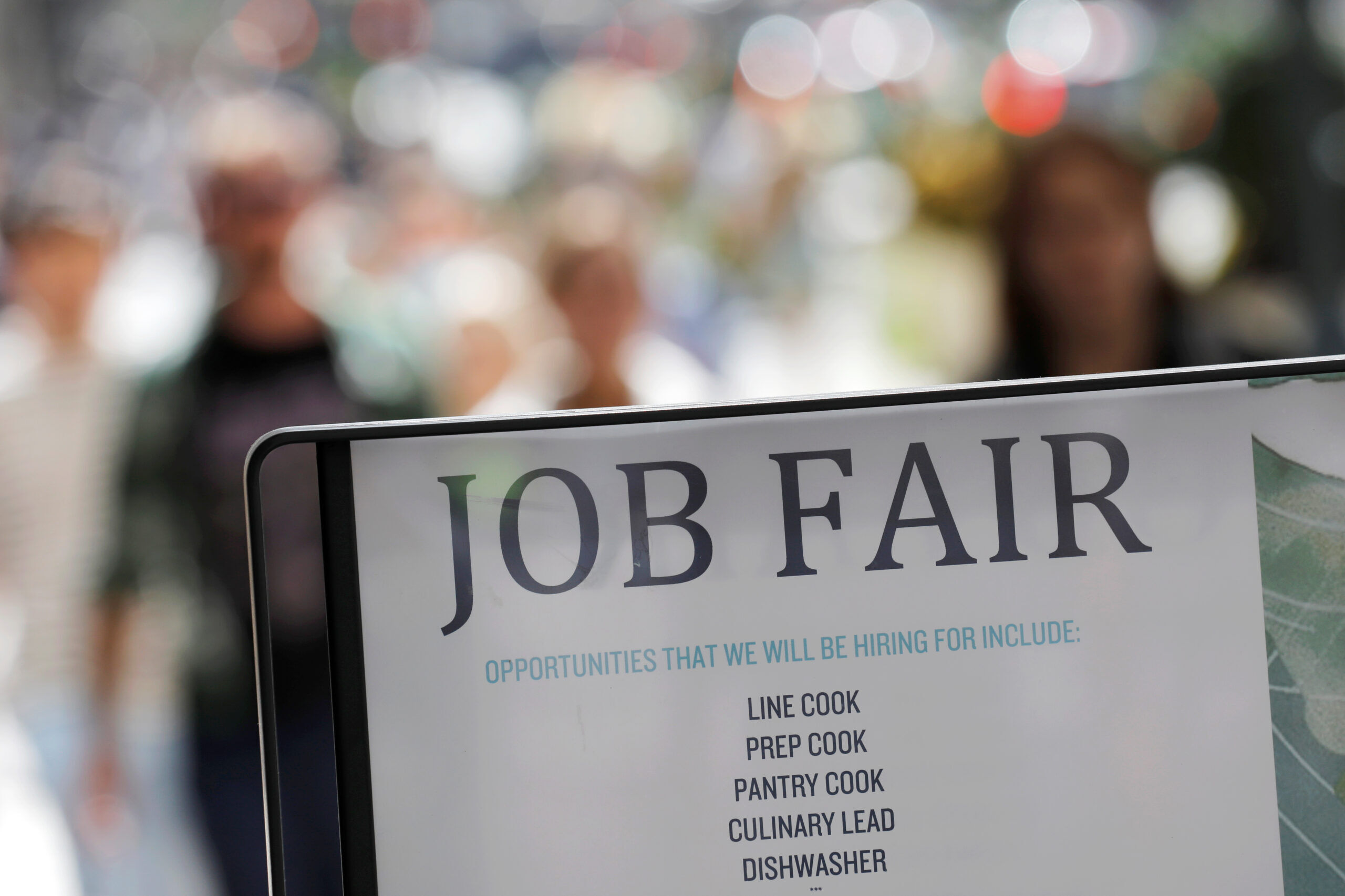
U.S. job growth rebounded more than expected in November after nonfarm payrolls were depressed in October by government-related spending cuts, suggesting no material deterioration in labor market conditions as businesses navigate economic uncertainty wrought by President Donald Trump’s aggressive trade policy.
While the Labor Department’s closely watched employment report on Tuesday showed the unemployment rate at more than a four-year high of 4.6% last month, the Bureau of Labor Statistics changed its methodology after the 43-day government shutdown prevented the collection of data from households. No unemployment rate for October was published.
“The firmer private sector employment figures support the Fed taking a pause in its rate-cutting cycle for some period,” said Kathy Bostjancic, chief economist at Nationwide. “The unemployment rate … should be taken with a large grain of salt since the disrupted normal collection of the household survey data due to the government shutdown distorted the data readings and is associated with higher-than-usual standard errors.”
Nonfarm payrolls increased by 64,000 jobs last month. The economy shed 105,000 jobs in October, reflecting the departure of more than 150,000 federal employees who took deferred buyouts as part of the Trump administration’s push to shrink the government’s footprint. Most of them dropped off government payrolls at the end of September.
Payrolls were not impacted by the furloughing of workers during the shutdown, as they were retroactively paid when the government reopened. The unemployment rate is calculated from the household survey and was at 4.4% in September.
“In the household survey, composite estimation relies on data from the previous month as an input to developing statistical weights for the current month’s data,” BLS said. “Without October data, the composite weighting formula was adjusted by shifting previously-collected data forward one month.”
The BLS also said the response rate was a lower-than-usual 64%, noting that collection started late because of the shutdown, which contributed to slightly higher-than-usual standard errors.
“The November unemployment rate required a 0.26 percentage point change to be statistically significant compared with a required change in September of 0.21 percentage point,” it said.
Job growth has been little changed since April. Economists say employers have pulled back from hiring because of what some described as shock from Trump’s sweeping import tariffs.
The import duties have raised prices for many goods, resulting in consumers, mostly lower- and middle-income households, being more selective in their purchases and ultimately cutting back on spending.
Federal Reserve officials last week cut the U.S. central bank’s benchmark overnight interest rate by another 25 basis points to the 3.50%-3.75% range. However, they signaled borrowing costs were unlikely to fall further in the near term as they awaited clarity on the direction of the labor market and inflation.
Fed Chair Jerome Powell told reporters in a post-meeting press conference that the labor market “seems to have significant downside risks,” alluding to a preliminary benchmark revision estimate in September that suggested 911,000 fewer jobs were created in the 12 months through March than previously reported, the equivalent of 76,000 fewer jobs per month.
The BLS will publish the final payrolls benchmark revision in February along with January’s employment report. With the release of the January report, it said it would effectively change the birth-death model by incorporating current sample information each month. The BLS uses the model to try to estimate how many jobs were gained or lost because of companies opening or closing in a given month.
“The change follows the same methodology applied to the April through October 2024 forecasts during the 2024 post-benchmark period,” the BLS said.
Job gains last month remained narrow, with the health care sector adding 46,000 positions, spread across ambulatory health care services, hospitals, nursing and residential care facilities. Construction employment grew by 28,000 jobs. Social assistance payrolls increased by 18,000.
Transportation and warehousing employment dropped by 18,000 jobs, reflecting job losses for couriers and messengers. Federal government employment decreased by 6,000 positions after plunging 162,000 in October as some federal employees who took deferred resignation offers fell off payrolls. Federal government employment is down by 271,000 since reaching a peak in January.
Average hourly earnings increased 3.5% in the 12 months through November after rising 3.7% in October. Slowing job growth is curbing wage growth and boosting the fight against inflation, but it could be a headwind to consumer spending, the economy’s main engine.


Pfizer foresees challenging 2026 on fading COVID sales, margin pressure
Reuters
reuters@denvergazette.com
Updated 13 hours ago
Pfizer’s profits will fall short of Wall Street estimates next year, as it faces weaker sales of COVID products and squeezed margins stemming from its deal with the U.S. government to lower prescription drug costs. The drugmaker does not expect...
Reuters
Reporter

Kraft Heinz taps former Kellogg chief as CEO to steer split
Reuters
reuters@denvergazette.com
Updated 13 hours ago
Kraft Heinz on Tuesday named former Kellogg chief Steve Cahillane as its CEO, tasking the industry veteran with leading the packaged food giant through a planned split into two stand-alone companies. The company in September decided to break up, with...
Reuters
Reporter

California Pizza Kitchen reaches buyout deal, names new leadership
Reuters
reuters@denvergazette.com
Updated 13 hours ago
An investor group led by Consortium Brand Partners is buying California Pizza Kitchen and has tapped the CEO of Convive Brands to run its restaurants, the company told Reuters on Tuesday, five years after the chain’s pandemic-driven bankruptcy. Jon Weber,...
Reuters
Reporter

Hyundai, Kia to retrofit 4 million U.S. vehicles to address theft concerns
Reuters
reuters@denvergazette.com
Updated 13 hours ago
WASHINGTON – Korean automakers Hyundai and Kia agreed on Tuesday to retrofit more than 4 million U.S. vehicles to address theft concerns and install prevention equipment on all new vehicles to resolve an investigation by a bipartisan coalition of 35...
Reuters
Reporter

China lowers threatened tariff on imports of pork from the EU
The Associated Press
the-associated-press@denvergazette.com
Updated 13 hours ago
China will impose tariffs of up to 19.8% on pork imports from the European Union, a drastic drop from preliminary tariffs of up to 62.4%, its Commerce Ministry said Tuesday. The ministry’s announcement followed an investigation the Chinese side launched...

The Associated Press
Reporter
U.S. retail sales unexpectedly unchanged in October
Reuters
reuters@denvergazette.com
Updated 13 hours ago
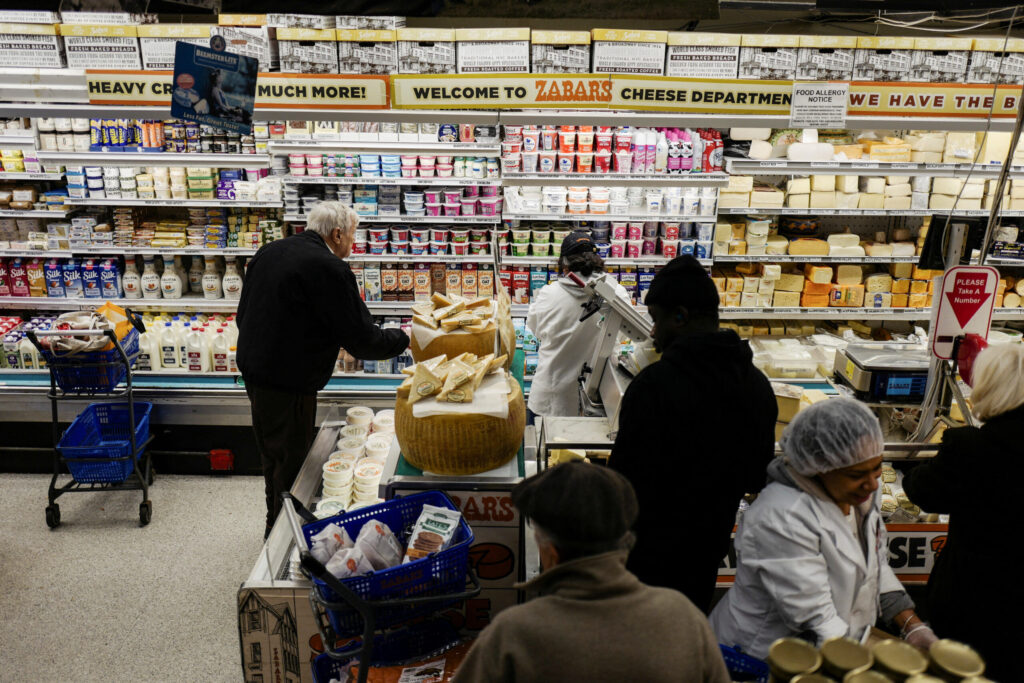
WASHINGTON – U.S. retail sales were unexpectedly flat in October, though consumer spending appears to have remained on a solid footing at the start of the fourth quarter despite the rising cost of living that is forcing some households to...
Reuters
Reporter

Denver council delays stadium rezoning, rejects Key Lime Air contract
Deborah Grigsby
deborah.smith@denvergazette.com
Updated 18 hours ago
Denver’s dreams of a new women’s soccer stadium will have to wait a little longer as members of the city council voted Monday to delay an ordinance rezoning the land where the stadium is proposed to be built. Council Bill...

Deborah Grigsby
Reporter

In a chilly real estate market, resorts ring in a brighter outlook
Mark Samuelson
mark-samuelson@denvergazette.com
Updated 1 day ago
Colorado Realtors are wrapping up a dreary year marked by falling prices and grinch-like sales. But the latest numbers are showing evidence of stabilizing prices that are offering some holiday cheer, according to a new report. That’s doubly true in...

Mark Samuelson
Reporter

Xcel Energy prepares for power shutoffs to help prevent a repeat of the Marshall fire
Scott Weiser
scott-weiser@denvergazette.com
Updated 17 hours ago
Forecast high winds along the Front Range on Wednesday revive memories of the devastating 2021 Marshall fire that destroyed more than 1,000 homes when gusts downed energized power lines. Xcel Energy now weighs proactive power cuts to avoid similar ignitions...

Scott Weiser
Reporter

US tariffs are having an uneven effect on holiday prices and purchases
The Associated Press
the-associated-press@denvergazette.com
Updated 2 days ago
NEW YORK — The Ah Louis Store in San Luis Obispo, Calif., turns into a winter wonderland every holiday season. Green garlands, giant nutcrackers, baubles and bows go up in early November on the historic downtown building that houses the gift...
The Associated Press
Reporter
PREV
PREVIOUS

U.S. retail sales unexpectedly unchanged in October
WASHINGTON – U.S. retail sales were unexpectedly flat in October, though consumer spending appears to have remained on a solid footing at the start of the fourth quarter despite the rising cost of living that is forcing some households to scale back. The unchanged reading in retail sales reported by the Commerce Department’s Census Bureau […]

China lowers threatened tariff on imports of pork from the EU
China will impose tariffs of up to 19.8% on pork imports from the European Union, a drastic drop from preliminary tariffs of up to 62.4%, its Commerce Ministry said Tuesday. The ministry’s announcement followed an investigation the Chinese side launched into imports of pork from the trading bloc after the EU imposed provisional tariffs on China-made electric […]