







Tatiana Bailey: Is the labor market softening?
Major economic data points are now trickling in and one of the most important relates to the jobs market.
The recent employment report showed modest job growth in November of 64,000 jobs, which is significantly lower than the pre-pandemic historical monthly payroll increase of 190,000 jobs. October’s data was stark showing a substantial payrolls decline of 105,000 jobs.
The lackluster job growth was partially driven by federal employment changes, but calculations by Wells Fargo show that if we exclude the federal distortions, job growth over the last two months was only 57,000 jobs. There were also some downward revisions to September’s data, bringing the three-month average job growth to roughly 22,000 per month.

The unemployment rate climbed to 4.6% in November, its highest level since the end of the pandemic. While there was noise in the data, this higher unemployment rate aligns with other indicators, such as continuing unemployment claims, the low quits rate and the moderate but increasing layoff rate.
Consumer surveys reflect that the average U.S. worker is aware of the softening labor market and is not as confident about finding a new job should they want or need to. Young entry-level workers ages 20-24 are particularly challenged, with an 8.3% unemployment rate.
Another important dimension is the softening of wage growth. Year-over-year average hourly earnings growth slowed to 3.5%, the weakest pace observed since 2021. I break with mainstream economists on the issue of wage growth as I do not believe the historical approach of examining year-over-year wage growth is applicable now.
Most people hear of a 3.5% increase in average wages, and they juxtapose that to the 3% inflation rate and think workers are coming out ahead. This is incorrect because we have a somewhat unprecedented dynamic in the surging of prices during and after the pandemic leaving us with cumulative, broad-based price increases roughly 20% to 30% higher. This simply was not the case in previous decades. The price increases seen post-pandemic significantly erode single-digit wage increases.
A weaker labor market probably means the Federal Reserve will implement two 0.25% rate cuts in the first half of 2026.
To me, this labor market report highlights my assertion over the past couple of years that we are in a new normal. In past economic cycles, a 4.6% unemployment rate does not sound so bad, but the rate is that low in large part because we have drastically fewer working-age people. As such, the recent data does indeed indicate a softer jobs market.
Tatiana Bailey is executive director of the nonprofit Data-Driven Economic Strategies. Other Gazette articles, TV segments, DDES monthly economic dashboards with technical explanations, and how to sponsor their work can be found at ddestrategies.org.


Greeley voters to decide fate of project that includes minor league hockey arena
Hap Fry, Special to The Gazette
hap-fry@gazette.com
Updated 32 minutes ago
GREELEY • The fate of the Cascadia development — and quite possibly the future direction of the city — is in the hands of Greeley voters this Tuesday during a special city election on whether the landscape-altering project should be...

Hap Fry, Special to The Gazette
Reporter

Denver’s business community reacts to tariffs ruling
Dennis Huspeni
dennis.huspeni@gazette.com
Updated 2 days ago
Within hours of the U.S. Supreme Court striking down the Trump administration’s tariffs, Denver and Colorado business leaders said the justices provided clarity, adding stability and predictability are essential to the American economy. The court’s 6-3 decision centers on tariffs...

Dennis Huspeni
Reporter
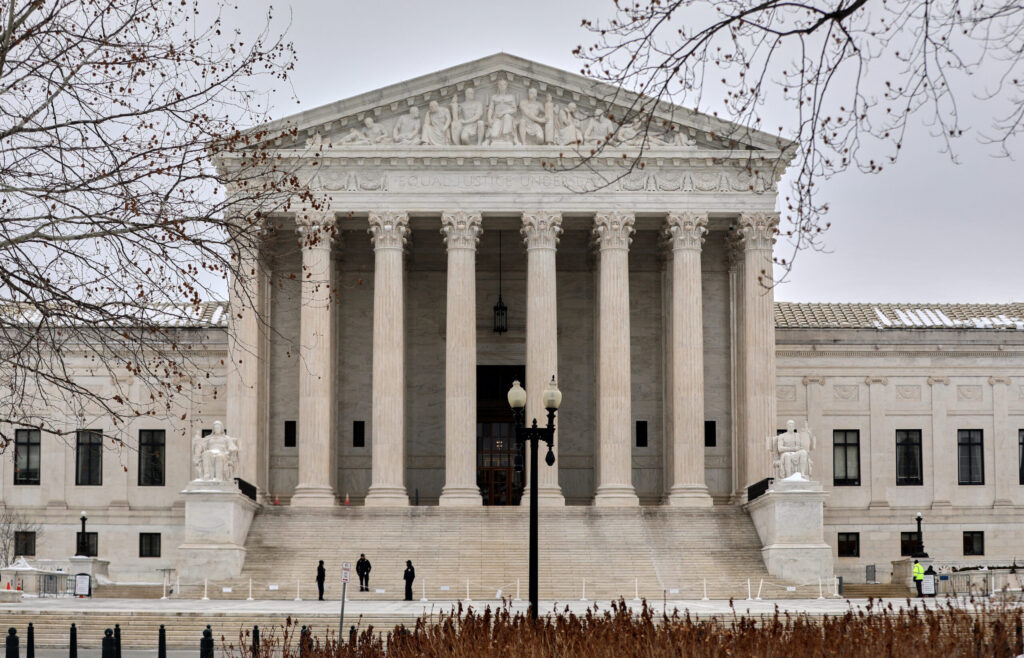
U.S. Supreme Court strikes down Trump’s tariffs, upending central plank of economic agenda
LINDSAY WHITEHURST
lindsay-whitehurst@denvergazette.com
Updated 2 days ago
WASHINGTON • The Supreme Court struck down President Donald Trump’s global tariffs on Friday, handing him a major loss on an issue crucial to his economic agenda. The 6-3 decision centers on tariffs imposed under an emergency powers law, including...

LINDSAY WHITEHURST
Reporter

Former Tattered Cover CEO ready to open his new bookstore: Denver Book Society
Bernadette Berdychowski
bernadette.berdychowski@denvergazette.com
Updated 1 day ago
At the Denver Book Society, natural light from the skylight roof floods into a backroom filled with cooking books, puzzles and board games. An arch greets kids into the children’s section decked with bean bag chairs and reading nooks. Soon,...

Bernadette Berdychowski
Reporter

Colorado legislators challenge lottery rules allowing credit card purchases
Marianne Goodland
marianne-goodland@denvergazette.com
Updated 2 days ago
Back in November, legislators told the Colorado Lottery Commission to hold off on rules that would allow, for the first time, purchases of lottery products with credit cards. The commission went ahead anyway and approved those changes. And now lawmakers...

Marianne Goodland
Reporter

Colorado joins California in lawsuit to restore federal clean energy funding
Scott Weiser
scott-weiser@denvergazette.com
Updated 2 days ago
Colorado has joined a multi-state lawsuit challenging the Trump administration’s termination of more than $600 million in congressionally approved clean energy grants for Colorado projects, Colorado Attorney General Phil Weiser and California Attorney General Rob Bonta announced Wednesday. The suit,...

Scott Weiser
Reporter

State seizes Denver deli Leven Supply for nonpayment of taxes
Angela Case
angela-case@denvergazette.com
Updated 3 days ago
The Colorado Department of Revenue has seized Leven Supply for nonpayment of taxes, according to a notice on the door of the Washington Park West cafe. The notice says the restaurant owes more than $138,000 in taxes. In a statement...

Angela Case
Reporter
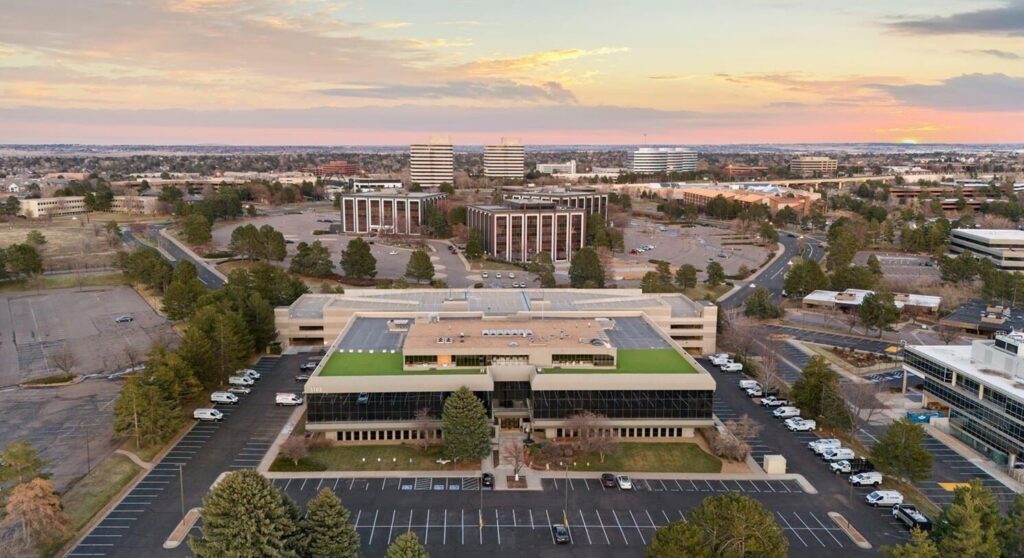
John Madden’s office-top penthouse is modest in scale to its DTC surroundings
Mark Samuelson
mark-samuelson@denvergazette.com
Updated 2 days ago
At a moment when homes around Denver are wowing with their high-altitude prices, anybody who knew who John W. Madden was might marvel at how low this one is priced. The owner of the penthouse built atop a 3-story office...

Mark Samuelson
Reporter

Potential clues? Palantir shares several risks of doing business in Colorado
Bernadette Berdychowski
bernadette.berdychowski@denvergazette.com
Updated 2 days ago
When Palantir announced it moved its headquarters from Denver to Miami, it gave little reason for its decision. All it sent out was a short post on X. It came as a shock that the major company known for its...
Bernadette Berdychowski
Reporter

Zuckerberg denies at trial that Meta targets children
News services
news-services@denvergazette.com
Updated 3 days ago
LOS ANGELES – Meta Platforms CEO Mark Zuckerberg on Wednesday repeatedly said during a landmark trial over youth social media addiction that the Facebook and Instagram operator does not allow kids under 13 on its platforms, despite being confronted with evidence suggesting they were a...

News services
Reporter
PREV
PREVIOUS

High winds revive memories of Boulder’s historic Chinook storms
With gusts in Boulder peaking at more than 100 mph Wednesday and Xcel Energy shutting down power lines to at least 50,000 people along the Front Range as part of its Public Safety Power Shutoff procedure, it’s worth noting that extremely high winds are not unusual for Boulder and the Front Range. Chinook winds are […]

What’s inside Denver Summit’s community benefits agreement
After months of private discussions with neighborhood leaders representing regions around Santa Fe Yards, Denver Summit FC released its community benefits agreement this week. The contract details the team’s negotiations to bring an all-electric women’s soccer stadium, more tree coverage, reduced ticket price deals and a commitment to use woman-owned and minority-owned small businesses for […]