







Army pitches plan to use big guns on Piñon Canyon
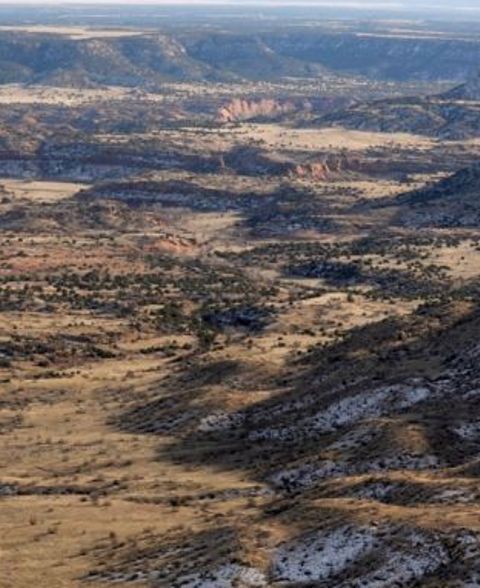
Artillery and rockets could start booming across the prairie in southeast Colorado if the Army is allowed to move forward with plans to start training with larger munitions at the Piñon Canyon Maneuver Site northeast of Trinidad.
Soldiers, Air Force Academy cadets and other service members who visit the 235,000-acre training site for training currently can’t fire anything larger than a .50-caliber machine gun.
Under the proposed change, 60 and 120 mm mortars would be some of the most frequently used weapons, said Mike Camp, chief of training for Fort Carson and Piñon Canyon. While it would be rare, soldiers could also practice firing weapons as large as a High Mobility Artillery Rocket System, commonly called HIMARS, that can be used to bring down bridges or buildings.
The proposed increase in training opportunities at the site would help service members prepare for war, Camp said.
“Piñon Canyon is an incredible place to train and it is underutilized.”
In addition to new kinds of weapons training, the Army is proposing to train far more often, and use more airspace, a change that could require air traffic to be rerouted at times, said Joe Rexroad, an airspace specialist working with the Army on the proposal.
The Army could also build new infrastructure, such as barracks, a headquarters, a training auditorium and aircraft support buildings, according to a public presentation. Fort Carson’s proposal could allow soldiers to train up to 313 days a year, an increase from the 212 days currently allowed.
Hunting would still be allowed on the property, but not within the impact areas where shells and other munitions would land.
The vision faces some skepticism from southern Colorado residents who previously opposed the Army’s plan to expand Piñon Canyon, a fight that lasted about a decade, and left the Army in retreat on the topic by 2013. At a recent community meeting in Trinidad, residents said they were concerned about the potential impact on 6,000 archaeological sites in the canyon, wildlife and habitat.
A Kinder Morgan pipeline that runs through a large proposed impact area for munitions is another major consideration.

So far, the Army has not asked the company to move or abandon the pipeline, a Fort Carson spokesman said. However, the Las Animas County Commissioners publicly backed moving or abandoning the pipeline in late 2024 to allow the Army to train in different ways in the area, according to reporting from The World Journal, a southern Colorado and northern New Mexico publication.
Kinder Morgan did not answer questions about the pipeline, instead providing a general statement about operations in the area.
“The safe operation of these pipelines remains our highest priority. We will continue to work closely with landowners, local communities, and relevant authorities to ensure safe and reliable operations,” the statement said.
If Kinder Morgan doesn’t move the pipeline, Fort Carson has laid out a reduced impact area for shelling practice covering about 12,000 acres that would not be bisected by the pipeline.
A familiar fight
While the environmental assessment process for the new vision for Piñon Canyon is just getting started, for some residents in southern Colorado it feels familiar following the extended battle over whether to expand Piñon Canyon’s boundaries.
It’s a fight that lives on in the memories of residents who came to a community meeting in early December.
“This region does not trust them, and if they think we’re just going to let them do anything they want inside that maneuver site without oversight by citizens and concerned groups, they have got another thing coming,” said Lori Holdread, a resident who was involved in the opposition to the Piñon Canyon expansion.
Her husband, Doug Holdread, who also helped lead the opposition to the expansion, expects the proposed training changes would increase the demand for training on the site and in turn, drive a request for more land later, he said. Holdread also expects training would destroy habitat and drive out wildlife, he said.
History Colorado’s President and CEO Dawn DiPrince is also concerned about how the training activity might hurt the 6,000 archeological sites across the property. Some of those sites include remnants of dwellings and rock art, according to a 2004 survey. The researchers estimated areas around the canyons were inhabited for the last 10,000 years.
DiPrince noted damage can come from heavy vehicles driving over sites and builds over time.
“This kind of damage is really permanent,” she said. She wants to ensure the sites can be studied into the future.
She would like to see the Army work closely with the local communities to learn about the land as required by the National Historic Preservation Act.
“The communities who are closest to these things should be at the table,” she said.
Fort Carson’s Camp noted during the community meeting that many of the archaeological sites are in the canyons where soldiers would not be allowed to practice with live rounds. Right now, soldiers are largely only allowed to walk through the canyons. If they are driving through the canyon, they can’t get off the roads, he said.
Fire mitigation
Fire on Fort Carson from artillery training and other live fire exercises is fairly common, with a fire in early November consuming 4,000 acres.
Across Piñon Canyon, it’s also a regular occurrence, even without artillery shelling because of regular lightning strikes, Camp said.
To help manage that risk, the Army does control burns and thins the vegetation and that would continue. The Army also maintains its own fire department on the base to fight fires. If necessary, fire crews from other local communities will assist, such as the crew from Hoehne, an unincorporated town in Los Animas County, Camp said.
Formal assessment process radically changed
The Army had not determined if the Piñon Canyon changes warrant an environmental assessment, typically a more concise review of a project, or an environmental impact statement, a far more in-depth look at the impacts. Environmental impacts can include changes to air quality, impacts on sensitive habitats, and noise, said Tori Ferrara, the National Environmental Policy Act project manager working with the Army.
Since it is early in the NEPA process, the Army is hoping to hear concerns from the public and other stakeholders.
She said the Army wants to know, “Are they concerned about noise? Are they concerned about traffic?”
She said the level of analysis deemed necessary will dictate how long such a process would take.

The NEPA regulations have gone through sweeping change this year because the Trump Administration eliminated the Council on Environmental Quality’s regulations that guide the implementation of the keystone environmental policy signed into law in the 1970s.
The Department of Defense has adopted implementing procedures on how all the military branches will comply with NEPA, but they are the legal equivalent of an internal guidance document, said Robert Glicksman, a law professor at George Washington University.
It is unknown if an external party, like a nonprofit, could hold the Department of Defense accountable to abiding by its internal NEPA procedures, he said.
The goal of NEPA is to ensure agencies are considering a project’s alternatives and disclosing them. Under the law the agency can say that it is choosing the most environmentally damaging proposal and implement it, he said.
“NEPA is an entirely procedural statute,” he said.
The Army is asking for public comment before Jan. 13 on its proposal to ensure full consideration. Comments can be emailed to [email protected] or mailed to PCMS NEPA ℅ Tetra Tech 7222 Commerce Center Drive Suite 150 Colorado Springs CO 80919.