








Leadership in the age of artificial intelligence | Tom Cronin
The Wall Street Journal recently ran a feature story asking about when and if AI humanoid robots will be able to be chief executives and manage companies.
AI evangelists Sam Altman of Open AI and Elon Musk of Tesla and xAI say AI robots already do remarkable engineering and logistical activities, and we can expect them to become company leaders in the future. Musk, for example, says they will be able to run car companies.
Time Magazine just featured AI and robot pioneers as their “Man of the Year.”
IBM’s Deep Blue computer beat the world’s best chess player way back in 1997.
Today, nearly 1 billion people use ChatGPT or its rival intelligence-information programs every week. There are nearly 5 million industrial robots currently in use, including as many as 750,000 robots being used in Amazon warehouses.
“True AI driven humanoid robots” are now being trained in the thousands, yet they are expected to be with us in the millions in the near future.
We are getting use to driverless cars and highway trucks, and we know that generative AI programs are increasing productivity in a whole range of professions from financial services to health care. AI can help plan your trip, write your will and assist in writing your novel.
There have been some alarming stories about young people using AI as a therapist and there are ongoing fears of AI as a source of political and ethnic disinformation campaigns. AI, we know, can make mistakes and be flat out wrong. Just like humans?
Now we are told that AI robots successfully compete with A-level students on standardized tests such as the SAT and legal bar exams. Some localities are using AI robots to settle legal disputes, when there are cases involving just paperwork.
So, when will robots assume leadership responsibilities in business or other professions?
Most people do not believe that even the best trained robots will be able to run companies. Not soon. Probably never. But we’ll hear this topic debated for a long time.
Robots will become valued executive assistants and even co-managers, but humans will be needed to provide vision, integrity, and moral leadership. Leaders need to be smart and they also need to know how to read the room and have the emotional and situational intelligence to navigate ambiguity and paradox. Human leaders bring out the best in us with inspiration and loyalty.
Some robotics experts believe the humanoid robots will never have the dexterity that humans have. Elon Musk disagrees, predicting that his project Optimus and its successors will be capable of being surgeons.
There is talk too of robots replacing radiologists. The reality is that radiologists with AI are replacing radiologists without AI. And AI will doubtless transform the medical and nursing industries.
Human-AI partnerships and collaborations are in our future, yet human replacement and domination by robots are not in our future. But Musk and others may be right that robotic workforces may someday equal human workforces and that the creation of new jobs may lag behind the elimination of jobs.
One illustration of this is that Amazon needs fewer warehouse employees. And while there is a current need for long-haul truck drivers this may well not be the case a decade from now.
New technologies are disruptive and affect many once cherished businesses. Remember Blockbuster? Sears? Drive-In theaters?
What about robots and AI machines spreading disinformation and having biases or lying? This may be the case, but many of us who regularly use ChatGPT, Claude, Perplexity, Gemini and their rivals are impressed at how quickly these learning models have improved and how they can digest huge amounts of research into readable and useable briefings.
Those of us who are older recall we had to go to our local public library and consult the Encyclopedia Britannica for background information. Now the whole local library seems to be available on our personal computers or smart phones.
Still, leadership intelligence and artificial intelligence are not the same.
We know that human leaders can lie and spread disinformation. Most presidents have done this. Enron and Bernie Madoff and Sam Bankman-Fried did this. Guardrails, safeguards and a least some regulations are needed for both human and robots.
We need all the leadership we can get. Humanoid robots and chatbots can help. But we will still want and need gifted humans who have “streets smarts,” “people skills,” who are superb listeners who can “squint with their ears” and who can be relentlessly curious.
Robots can, we understand, be programmed to be empathetic and can remain calm in crises. But could they be like a Washington and Lincoln in times of major challenges and crises? Neither of them went to college but they had leadership intelligence, knew how to earn trust, develop leadership capital and had the ability bring the best out of others. They were fast learners, learned from their mistakes and had the talent of surrounding themselves with talented people.
They had the ability to deal with complexity, stress, ambiguity and contradictions.
Creative humans are usually smart yet what sets them apart is their willingness to challenge rules and conventional thinking. Can robots defy their training? Thomas Edison is alleged to have said, “Hell, there are no rules here, we’re trying to accomplish something.”
Humans with leadership intelligence look at things differently, explore beyond traditional boundaries, see things in a larger and different context.
Apple’s Steve Jobs came back to the firm that had fired him 12 years earlier. He viewed himself as an artist more than an engineer-scientist. But he surrounded himself with as many creative people as he could recruit. After he returned he developed an ad campaign to celebrate creativity and Apple. It was aimed at his employees and his customers.
“Here’s to the crazy ones. The misfits. The rebels. The troublemakers, The round pegs in the square holes. The one’s who see things differently. They’re not fond of rules. And they may have no respect for the status quo. … And while some people may see them as the crazy ones, we see genius. Because the people who are crazy enough to think they can change the world are the ones who do.”
Jobs wasn’t talking about robots. He was talking about innovative, creative humans and the breakthroughs they could help bring about.
Humans interested in developing their leadership competencies and leadership intelligence might begin by reading the authors and plays and by watching the movies listed below.
Authors: Peter Drucker, Warren Bennis, Howard Gardner, Daniel Goleman, Clayton Christensen, Jim Collins, Tom Peters, John Gardner and Walter Isaacson.
Plays: “Antigone,” “Othello,” “Henry V,” “Coriolanus,” “Enemy of the People,” “The Visit,” “12 Angry Men,” “Death and the King’s Horseman,” “The Best Man.”
Movies: “Lord of the Flies,” “Lincoln,” “Twelve O’Clock High,” “High Noon,” “Oppenheimer,” “All the Kings Men,” “Fog of War,” “The Caine Mutiny,” “Gandhi” and “All the President’s Men.”
These writers, plays and movies emphasize that leadership is a combination of heart and head, feelings and thoughts, intuition as well as analytics. AI will help but humans must be taught, trained and coached to be our primary leaders.
News columnist Tom Cronin writes regularly about politics and is co-author of Leadership Matters and the recently published American Politics Film Festival.


Tocqueville would have been a Broncos fan | Vince Bzdek
Vince Bzdek
vince-bzdek@denvergazette.com
Updated 12 hours ago
We hear much wailing and lamenting that America has lost its common ground, that social media and its algorithms are pushing us apart from each other, that we don’t gather together across race and class in bowling leagues and sewing...

Vince Bzdek
Reporter

Xcel’s blackouts show it’s behind the times | Jimmy Sengenberger
Jimmy Sengenberger
jimmy-sengenberger@denvergazette.com
Updated 2 days ago
Driving into Golden with my fiancée on Wednesday night, we entered what felt like a ghost town. Streetlights vanished. Buildings went dark. Darkness surrounded us. For several minutes, we experienced what tens of thousands of Coloradans were feeling — life...

Jimmy Sengenberger
Reporter

GUEST COLUMN: Colorado’s ‘competency’ loophole imperils public safety
The Gazette
the-gazette@denvergazette.com
Updated 2 days ago
By Elizabeth Caven The evening the video of the brutal attack went viral, a wave of disbelief washed over Colorado: How could a man charged with attempted murder be free on the streets, not by bail or a plea deal,...

The Gazette
Reporter
Peters earned her prison time; GOP must move on | BRAUCHLER
George Brauchler
george-brauchler@denvergazette.com
Updated 3 days ago
The Tina Peters case continues to reveal how the Republican Party has abandoned its long-time commitment to the Rule of Law, including our once sacrosanct Constitution. Republicans BT (Before Trump) were committed to law and order, without passion or prejudice....

George Brauchler
Reporter
Dems shed crocodile tears for narco-terrorists | Mike Rosen
Mike Rosen
mike-rosen@denvergazette.com
Updated 3 days ago
President Trump has taken the war on drugs to narco-terrorists with attacks on high-speed drug boats in the Caribbean ferrying drugs to ultimate destinations in the U.S. Feckless Democrats and their media allies have responded with a counterattack ― against Trump! The...

Mike Rosen
Reporter
GUEST COLUMN: Heed Colorado’s mistakes; don’t ‘reschedule’ pot
The Gazette
the-gazette@denvergazette.com
Updated 3 days ago
By Caroline Jordan When Coloradans voted to legalize recreational cannabis in 2012 with Amendment 64, I was 14 years old. As a freshman in high school, I was among the first generation of teens to experience the reality of legal...
The Gazette
Reporter
Hanukkah’s call to rededication — against antisemitism | Jimmy Sengenberger
Jimmy Sengenberger
jimmy-sengenberger@denvergazette.com
Updated 4 days ago
A weekend of violence swept the globe, capped by another brutal attack on Jews — this time on Bondi Beach in Sydney, Australia. A father-and-son team of gunmen killed at least 15 people, including a 10-year-old girl and a Holocaust...
Jimmy Sengenberger
Reporter

Mastering a combination of ranching and conservation
Rachel Gabel
rachel-gabel@denvergazette.com
Updated 1 week ago
Sue Anschutz Rodgers sat in her downtown Denver office, far from her beloved Crystal River Ranch, but surrounded by photos of the ranch and a wall of plaques and photos and newspaper clippings evidencing her long support of young people...

Rachel Gabel
Reporter

Irrelevant Hickenlooper draws a challenger | Dick Wadhams
Dick Wadhams
dick-wadhams@denvergazette.com
Updated 1 week ago
State Sen. Julie Gonzales should be ashamed of herself. Doesn’t Gonzales understand that U.S. Sen. John Hickenlooper is entitled to the Democratic nomination for Senate? Doesn’t Gonzales know that, just like in 2020, Hickenlooper “needs his sleep” and cannot be...

Dick Wadhams
Reporter
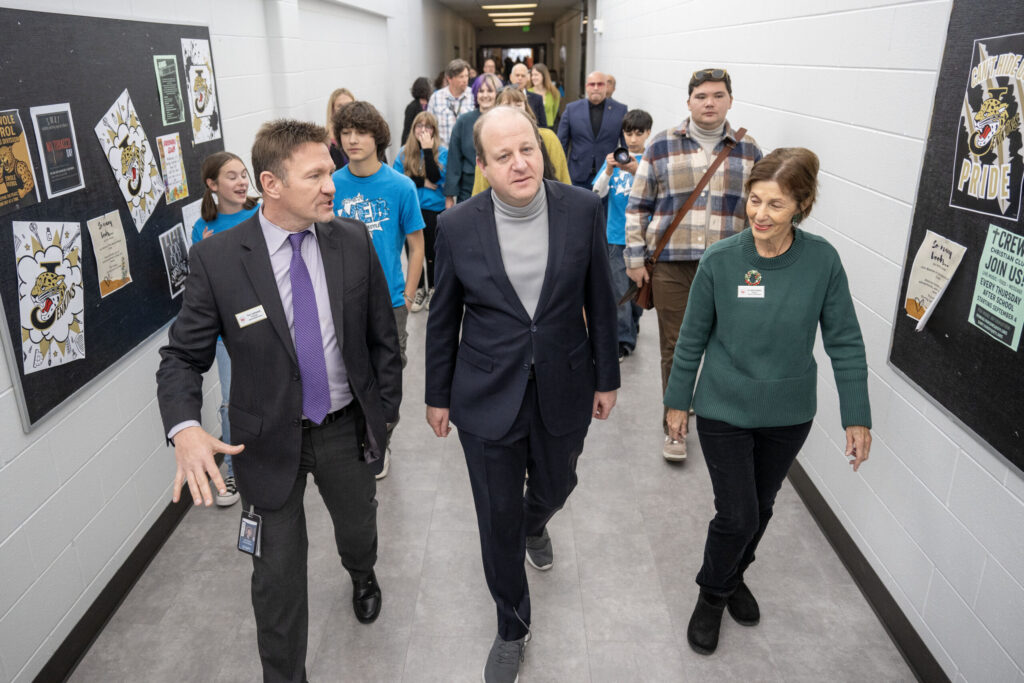
Suddenly, Colorado has a private school choice program │ Vince Bzdek
Vince Bzdek
vince-bzdek@denvergazette.com
Updated 7 days ago
By Vince Bzdek When I was a kid going to St. John’s Catholic grade school in Denver, I remember asking my mom if she and dad minded paying taxes for public schools since all her kids attended Catholic ones. We...
Vince Bzdek
Reporter
PREV
PREVIOUS

Investigation finds Colorado Sen. Faith Winter was at fault in fatal crash
Legislator’s alcohol level was more than twice the legal limit County authorities have concluded their investigation into the I-25 crash that killed Colorado Sen. Faith Winter, determining the Colorado legislator was at fault in the two-vehicle collision. An autopsy found that Winter had alcohol in her system, according to 9News. The autopsy listed her blood […]

Tocqueville would have been a Broncos fan | Vince Bzdek
We hear much wailing and lamenting that America has lost its common ground, that social media and its algorithms are pushing us apart from each other, that we don’t gather together across race and class in bowling leagues and sewing circles like we used to. But last Sunday, I got to re-experience what feels a […]