







EDITORIAL: Underlying Colorado’s rocky economic terrain — overregulation
Colorado’s robust economy has long established the state as one of the nation’s fastest growing. Originally built on tourism and outdoor recreation, the Centennial State has become a haven for high-tech industries like telecom, IT and aerospace — driving an extraordinary population boom and an enviable standard of living.
As new horizons of opportunity rose above the Rockies, the state seemed ripe for a new age of prosperity. That age is now imperiled by mounting headwinds that threaten to unravel the momentum.
The Gazette’s ongoing “Fiscal Rockies” series is documenting the trend, calling attention to Colorado’s rocky economic terrain.
The numbers tell the story: Colorado recently ranked #34 for employment growth, #29 for personal income growth and dead last (#50) for one-year home price changes. And with a cost of living 12% above the national average, Colorado is driving businesses away.
That, in turn, shrinks our population. Whereas Colorado drew an annual average of 76,000 new residents from 2010-2019, just 36,000 migrated here in 2023. Denver’s vacant housing units surged from 53,000 in 2018 to nearly 112,000 by the end of 2023.
So, why is Colorado seeing such a decline in these metrics?
CU economist Brian Lewandowski put it plainly to The Gazette: “We had that 15-year period where Colorado’s economy was really just on a tear, and now when we’re benchmarking to other states… it’s truly a slowdown.”
Business leaders aren’t optimistic about a turnaround. A Colorado Business Roundtable survey of more than 50 senior executives showed nearly two-thirds believe conditions will only get worse. They warn that “the very ecosystem that once attracted businesses is starting to drive them away.”
The Fiscal Rockies series explores various causes for the struggle, but a consistent pattern emerges that boils down to one root problem: too much government interference.
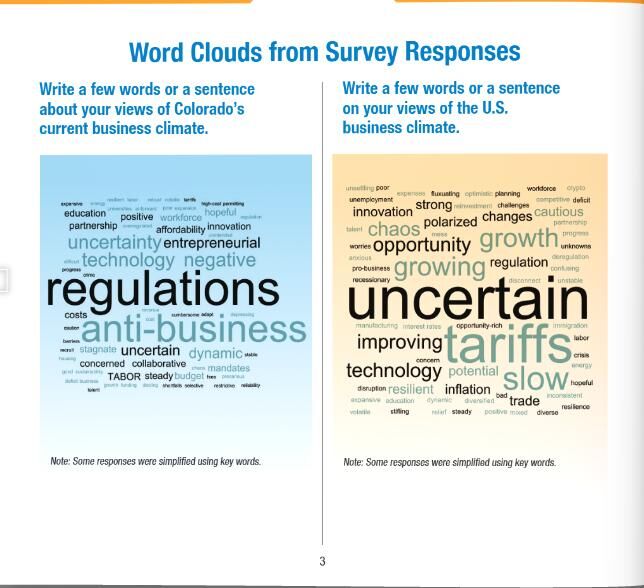
A “word cloud” from the business leaders’ survey shows the most glaring concern: regulations, followed by an “anti-business” climate. Nothing else comes close.
The Gazette’s reporting points to “a regulatory thicket that is driving up costs, stalling investment and pushing companies to look elsewhere in the country.”
The Colorado Chamber of Commerce ranked Colorado the sixth most regulated state for business in its 2024 report. Nearly 45% of those rules are duplicative or redundant, yet businesses must sift through them all to ensure compliance.
Proponents of increased regulation point to a “fast-evolving” world that requires policymakers to “keep up with the rapid changes through legislation.”
But when has government ever been nimble enough to make changes on the fly without squeezing businesses frantically trying to comply? Only the private sector can respond to changing circumstances quickly and effectively. Legislators are always behind.
Regulatory compliance costs jobs and raises consumer prices — disproportionately hitting low-income households and, as the Chamber notes, contributing to “greater income inequality.” For every 10% increase in regulations, an estimated 36,000 jobs and 9,000 firms are lost, alongside a 2% hit to annual economic growth.
No wonder their own survey finds two-thirds of business leaders think Colorado is “on the wrong track.”
Colorado Restaurant Association CEO Sonia Riggs calls it “death by a thousand cuts.” Layer upon layer of regulations and costs, each compounding the last.
It’s as if Colorado is attempting to repeat, even outdo, the failed regulatory disasters of a place like California.
From the state legislature to our city councils, policymakers created this pile-on. Now they must roll it back — before Colorado’s economic road gets any rockier.


EDITORIAL: Keep Colorado’s public business public
The Gazette Editorial Board
thegazette-editorial-board@gazette.com
Updated 3 days ago
A statewide ballot initiative to augment Colorado’s constitutional Bill of Rights would overturn a 2024 law passed by the legislature to hide some of its key deliberations from public view. Arguably, that would be reason enough to embrace the pending...
The Gazette Editorial Board
Reporter

EDITORIAL: Legal prostitution? A new legislative low
The Gazette Editorial Board
thegazette-editorial-board@gazette.com
Updated 2 days ago
Colorado Democrats have introduced a bill to decriminalize “commercial sexual activity” — i.e., prostitution. And Senate Bill 26-097 isn’t just legalization. It provides no limits on prostitution, solicitation, businesses, patronizing or public displays. That goes far beyond even Nevada, where...
The Gazette Editorial Board
Reporter

EDITORIAL: Another back-door tax hike on Coloradans?
The Gazette Editorial Board
thegazette-editorial-board@gazette.com
Updated 4 days ago
Ruling Democrats at Colorado’s legislature have a reflexive urge to raise taxes. Think of it as a collective case of obsessive-compulsive disorder. Problem is, they can’t act on their urge without voters’ permission — thanks to the Taxpayer’s Bill of...
The Gazette Editorial Board
Reporter

EDITORIAL: Uncuff Denver’s cops on immigration
The Gazette Editorial Board
thegazette-editorial-board@gazette.com
Updated 5 days ago
Leave it to Denver Mayor Mike Johnston to insist that the city’s sanctuary policies — which restrict local cooperation with federal immigration authorities — actually make the city safer. As The Denver Gazette reported, Colorado’s capital city has signed onto...
The Gazette Editorial Board
Reporter

EDITORIAL: Don’t lower standards for schoolteachers
The Gazette Editorial Board
thegazette-editorial-board@gazette.com
Updated 6 days ago
Not only are most of Colorado’s public schoolteachers committed to the highest standards of conduct in the classroom, but almost all of them also are undoubtedly law-abiding when off duty. For the relative handful who have “made mistakes” earlier in...
The Gazette Editorial Board
Reporter
EDITORIAL: A ray of hope for more highway funding?
The Gazette Editorial Board
thegazette-editorial-board@gazette.com
Updated 7 days ago
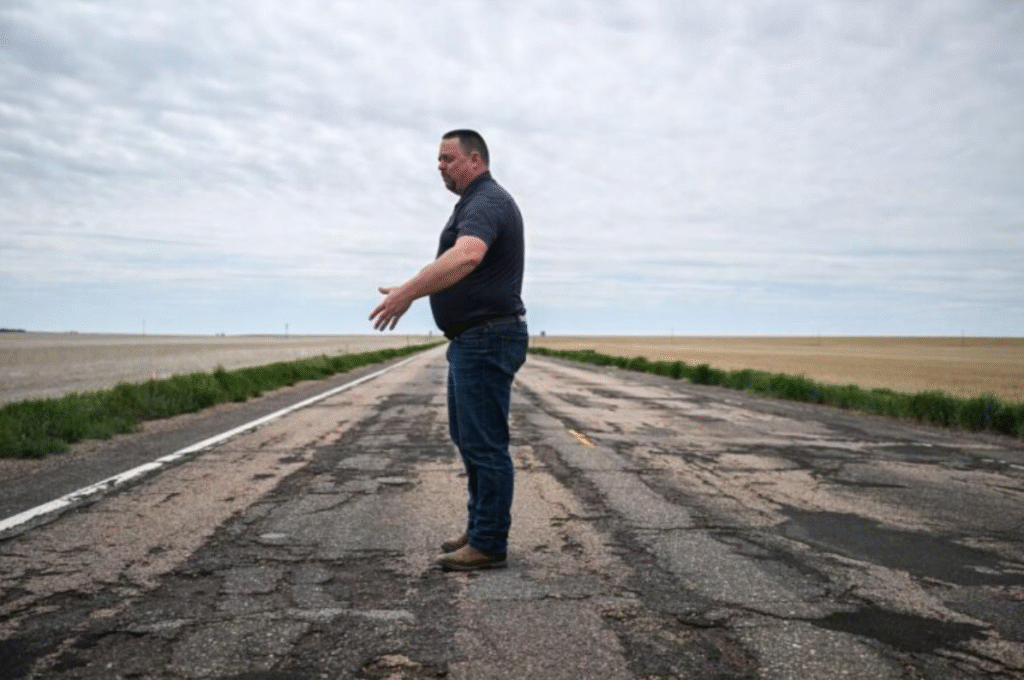
Motorists weary of Colorado’s crumbling and congested highways might appreciate at least a glimmer of hope that our starry-eyed legislature someday will come back down to earth and give our beleaguered transportation grid the funding it needs. That glimmer may...
The Gazette Editorial Board
Reporter

EDITORIAL: Reining in Colorado’s runaway legislature
The Gazette Editorial Board
thegazette-editorial-board@gazette.com
Updated 1 week ago
Colorado lawmakers are cranking out bills at a record pace. The irony? They’re being increasingly productive in the wrong way — and setting up real problems for the state. According to a new report from the nonpartisan Common Sense Institute,...
The Gazette Editorial Board
Reporter
EDITORIAL: Aquila, Golka’s contributions go beyond Colorado’s Catholics
The Gazette Editorial Board
thegazette-editorial-board@gazette.com
Updated 1 week ago
Days ahead of Ash Wednesday, the beginning of the Lenten season, Colorado’s Catholic community is witnessing a momentous transition that echoes up and down the Front Range. The church’s first American pontiff, Pope Leo XIV, has appointed Colorado Springs Bishop...
The Gazette Editorial Board
Reporter
EDITORIAL: Denver’s ‘Vision Zero’ jumps the curb
The Gazette Editorial Board
thegazette-editorial-board@gazette.com
Updated 2 weeks ago
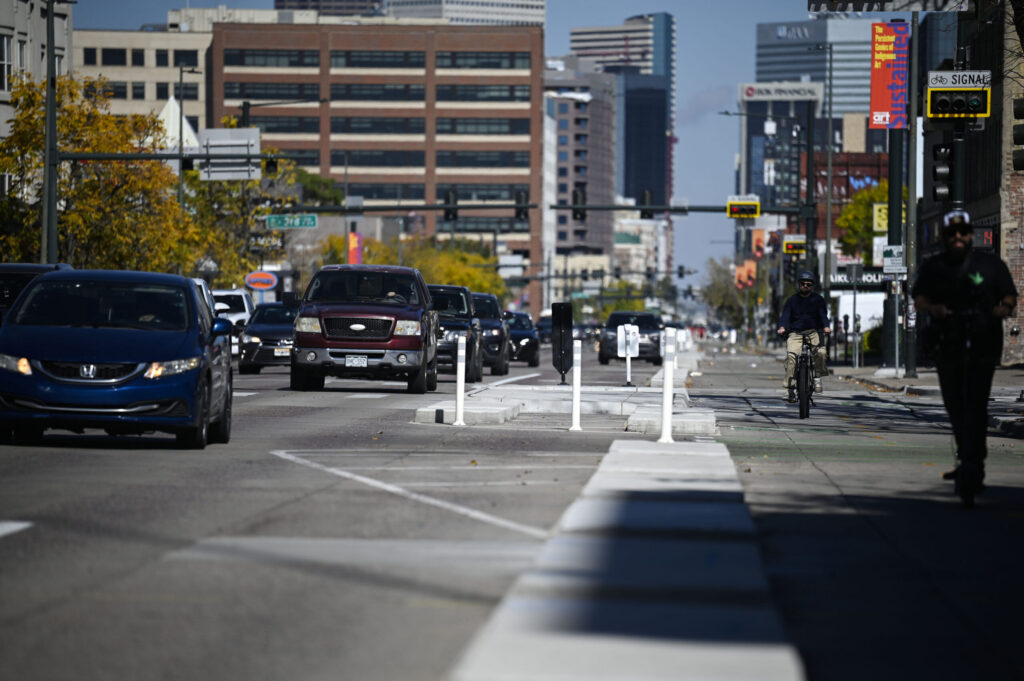
Whatever the intended “vision” of Denver’s vaunted “Vision Zero” agenda for reducing traffic-related deaths and injuries, the policy hasn’t worked. It may even be contributing to the problem. That’s the most telling takeaway from an eye-opening, in-depth news report last...
The Gazette Editorial Board
Reporter

EDITORIAL: Denver police should fight crime, not feds
The Gazette Editorial Board
thegazette-editorial-board@gazette.com
Updated 2 weeks ago
As federal immigration operations stir debate nationwide, Denver’s police chief has declared his officers would intervene if they witnessed “excessive force” by federal agents. “If we see a federal officer who we believe is using excessive force, then I think...
The Gazette Editorial Board
Reporter
PREV
PREVIOUS

Tocqueville would have been a Broncos fan | Vince Bzdek
We hear much wailing and lamenting that America has lost its common ground, that social media and its algorithms are pushing us apart from each other, that we don’t gather together across race and class in bowling leagues and sewing circles like we used to. But last Sunday, I got to re-experience what feels a […]

EDITORIAL: Colorado’s U.S. senators play favorites
So, now we know what it looks like when Colorado’s first-stringers in D.C. go to bat for one of our state’s federal installations. One they actually care about, that is. Meaning, the National Center for Atmospheric Research, or NCAR, in Boulder — as opposed to U.S. Space Command headquarters in Colorado Springs. As reported last […]