







Denver’s performance-based shelter contracts face test with Urban Alchemy
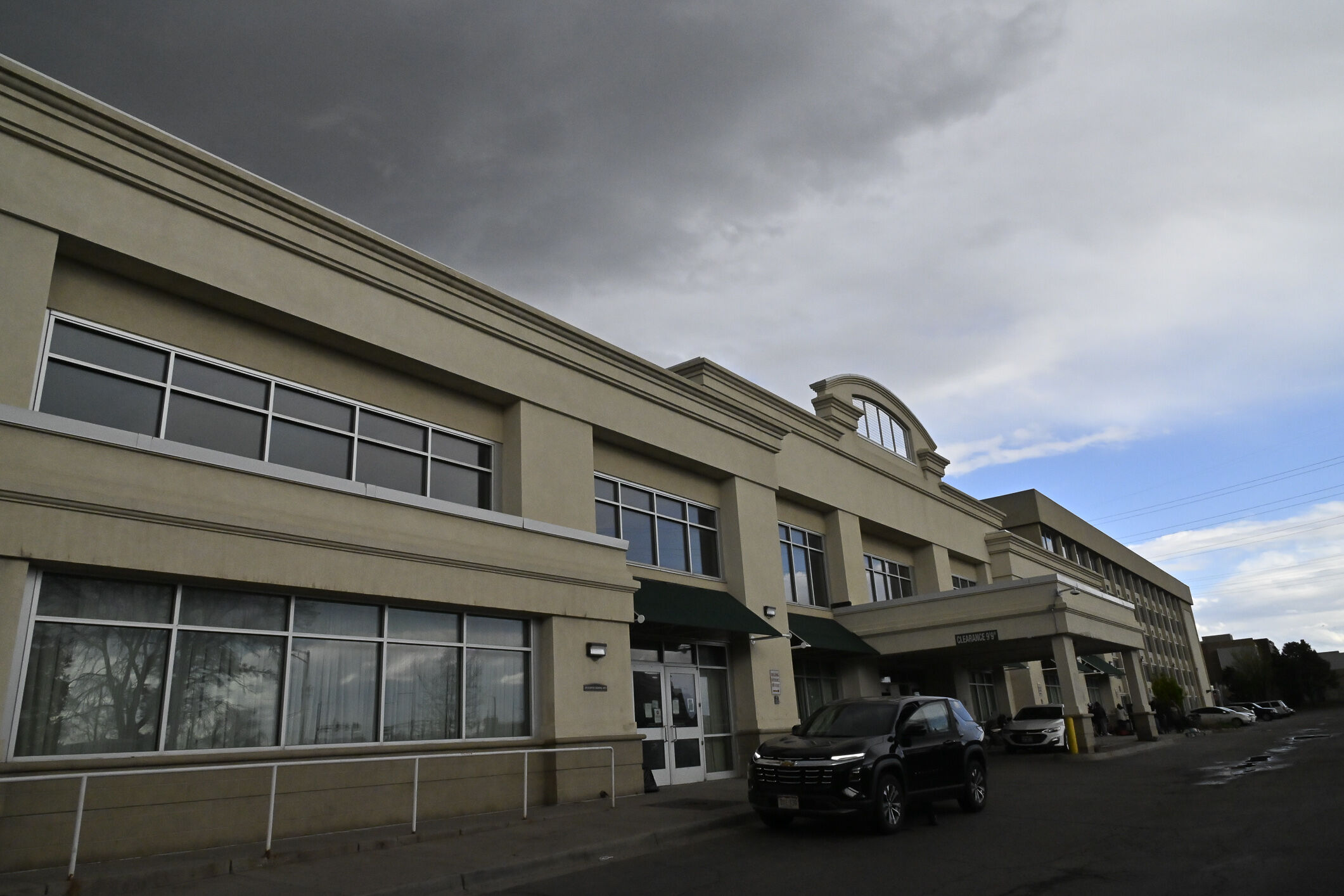
Denver has awarded a $30 million, three-year contract to a San Francisco-based group to provide operational services at The Aspen, one of the largest city-owned homeless hotels-turned-shelters, beginning January 1.
Unlike The Salvation Army, which has operated several of the city’s non-congregate hotel shelters under a flat-fee contract, Urban Alchemy agreed to a performance-based contract, in which it must meet specific metrics to be paid in full.
Urban Alchemy, a nonprofit with operations across the country, has faced criticism and numerous lawsuits involving allegations of labor code violations, employee misconduct, discrimination and sexual harassment. It also faced allegations of breaching lobbying rules.
Last year, at a homeless camp run by the nonprofit near San Francisco, staffers allegedly assaulted a camp resident, dealt drugs, and had sex with camp residents, according to a lawsuit in federal court.
The Denver Gazette reached out repeatedly to officials at Urban Alchemy for comment, both by phone and email, and a reporter was told the message would be passed on. No response was received by the time this article was published.
Members of the Denver City Council have raised concerns about whether Urban Alchemy is a good fit to run one of Denver’s biggest homeless shelters because of its problematic history.
The council reluctantly approved Urban Alchemy’s contract amid media reports about the nonprofit’s finances and oversight practices in San Francisco, Austin, and other cities.
“There’s a ton of very concerning legal mess related to Urban Alchemy in a number of cities,” Councilmember Paul Kashmann said. “These are not 10 years ago. They’re current. They continue to grow at a rapid pace, and I’m just not sure that this is the direction that Denver needs to go.”
Jeff Kositsky, deputy director of Denver’s Office of Housing Stability, told the council that if the Urban Alchemy contract were not approved, significant “retooling” would be required to select and vet a replacement provider.
“We would have to seek out another provider,” Kositsky said. “There was not a great deal of interest when we put out the RFP to operate this site, and the panel went with the provider that they thought was the most qualified and the most able to operate the site.”
He added, “There’s no scenario in which we would be able to contract with another provider at this point, at this late stage in the game.”
Kositsky, before accepting his position with Denver, served as the chief growth officer at Urban Alchemy for nearly three years.
The city insisted there was no conflict of interest regarding Kositsky and the selection of Urban Alchemy.
A HOST spokesperson told The Denver Gazette that the selection for the contract was based on a competitive process and the merits of Urban Alchemy’s proposal.
“Kositsky wasn’t involved in the Request for Proposals (RFP) process for the non-congregate shelters, nor did he serve on the RFP selection committee,” the spokesperson said.
WHAT IS URBAN ALCHEMY?
Founded in 2018 by Lena Miller, Urban Alchemy is a large nonprofit based in San Francisco that employs close to 1,300 “practitioners” or staff members.
Ninety-six percent of Urban Alchemy’s staff have “personally experienced incarceration, most serving long prison sentences,” according to the organization’s website.

Such employees are referred to as “returning citizens.”
The site adds that “the trauma of long-term incarceration” makes Urban Alchemy employees “uniquely qualified” to connect with their clients through “lived experience.”
Besides Denver, the organization operates in several major U.S. cities, including San Francisco, Los Angeles, Portland, Santa Fe, and Birmingham, Alabama.
For the fiscal year ending in 2024, the organization earned $84 million in revenue, according to ProPublica, up from $10 million in 2020, mostly from federal COVID relief funds.
Miller, who holds a doctoral degree in psychology, also serves as Urban Alchemy’s CEO, with an annual salary of more than $369,000, according to recent tax documents.
DENVER IS CONFIDENT IN CONTRACTS
Experts in the field suggest that pay-for-performance contracts, such as those with Urban Alchemy and the city’s other non-congregate shelter providers, can work — but only if the conditions are right and outcomes are clear and measurable.
Critics argued that it can open the door for providers to preferentially select clients and focus their efforts on actions that improve metric outcomes.
Denver officials have applauded the move as forward-thinking and innovative.
In October, Cole Chandler, the city’s senior adviser on homelessness, announced the move to the new contract structure, while noting that the pay-for-performance strategy is not typically used in city service contracts.
“It’s actually a new and emerging model across the country, and so we’re partnering on this sort of national pilot, which we’re really excited about,” he said, adding that HOST will “actually” be paying for specific outcomes.
But can the numbers be trusted?
The City of Austin’s Homeless Strategy Office recently cut ties with Urban Alchemy in September after it was discovered that shelter staff “misrepresented” exit dates and records in the Homeless Management Information System (HMIS). The office opted not to renew an existing agreement that expired on Sept. 20.
HMIS is a local information system used to collect data on the provision of housing and services to homeless individuals and families, as well as those at risk of homelessness.
The Austin incident was self-reported, Ian Clark-Johnston, an Urban Alchemy “practitioner,” told the Denver City Council on Dec. 8, the night the council was scheduled to vote on whether to approve the contract.
“That is part of some of the internal measures that we have in place, where we have a data quality team that’s checking our data consistently, weekly, randomly and monthly, and also cross checking reports, and we were able to catch that data in accuracy before the quarterly report was submitted, self reported, and, you know, corrected it,” Clark-Johnson said.
Urban Alchemy said it terminated the responsible employees.
“We hold our entire team to the highest possible standards, and will never hesitate to take appropriate action when we fall short of those standards,” an Urban Alchemy spokesperson for the organization told CBS Austin.
Shelter providers across the country often use the tool to track a client’s history across programs and to help agencies improve service delivery and secure federal funding.
“HOST will be tracking progress monthly using HMIS data, which is the standard for measuring success in moving someone beyond homelessness,” Julia Marvin, a HOST spokesperson, told The Denver Gazette. “This allows us to take all factors into account and provides us the ability to tie payment not to time or effort, but to verifiable success.”

Marvin added that all city contracts, including those with HOST, have “extensive guardrails.”
“That means if a provider isn’t delivering results, the city isn’t paying for services that aren’t happening,” she said. “It creates accountability and ensures public dollars are spent on what truly matters: helping people move beyond homelessness.”
A LOOK AT THE CONTRACT AND METRICS
Over the next three years, Urban Alchemy stands to earn up to $30,421,129 from the shelter services it provides.
Funding for the contract comes from the city’s general fund and its homeless resolution fund, must be approved each year by HOST, and is subject to annual appropriations from the city.
Payment, according to the contract, will be based on performance across four metrics:
Shelter nights: The provision of a bed and other essentials on a nightly basis. A performance payment is awarded for each “household” sheltered each night.
Rapid resolution at intake: The use of one-time funds and case management to quickly exit a household from homelessness. A performance payment is awarded for each unique household engaging in a Rapid Resolution Conversation within five days of enrollment. This initial conversation would not count toward the housing-focused case management metric.
Housing-focused case management: The offering of regular case management that works with a household to rehouse them into permanent or stable housing. A performance payment is awarded for each such session per household, up to four times per month. Only one session per day would be counted toward the goal and must be with the designated “head” of the household.
Active in the community housing queue: A performance payment is awarded each month to households with a Coordinated Entry Assessment completed less than one year ago who are active in the OneHome or VA community housing queue.
HOST has the option to reduce or suspend payments should Urban Alchemy fail to comply with the requirements of its scope work with the city, fail to make progress, or enter an unsatisfactory financial condition.
| Urban Alchemy Performance Metric Targets | Percentage Required |
|---|---|
| SHELTERED NIGHTS | |
| Target occupancy rate at the shelter (excludes those rooms held offline by the City and County of Denver) | 90% |
| RAPID RESOLUTION CONVERSATION AT INTAKE | |
| Target percentage of households engaged at intake | 90% |
| HOUSING FOCUSED CARE MANAGEMENT | |
| Target percentage of households engaged four times per month | 80% |
| COMMUNITY QUEUE FOR HOUSING | |
| Target percentage of households active in the queue for housing | 90% |
Should Urban Alchemy become delinquent in payments to any supplier or subcontractor under its agreement, its payments could also be at risk.
The city’s contract also spells out the financial specifics of the deal, with gradual increases over the contract’s 36-month performance period.
| 2026 METRIC SCHEDULE | Price Per Metric |
|---|---|
| Sheltered nights | $60.67 |
| Rapid resolution conversation | $1,519.57 |
| Housing-focused case management | $512.61 |
| Community queue for housing | $455.62 |
| 2027 METRIC SCHEDULE | Price Per Metric |
|---|---|
| Sheltered nights | $62.19 |
| Rapid resolution conversation | $1,557.56 |
| Housing-focused case management | $525.43 |
| Community queue for housing | $467.01 |
| 2028 METRIC SCHEDULE | Price Per Metric |
|---|---|
| Sheltered nights | $63.74 |
| Rapid resolution conversation | $1,596.50 |
| Housing-focused case management | $538.56 |
| Community queue for housing | $478.68 |
Under the agreement, Urban Alchemy, as well as the other non-congregate shelter service providers, must submit a quarterly report detailing their activities and supporting numbers.
The first report will be due on April 15, 2026.