







Denver’s budget deficit shaped 2025 news coverage
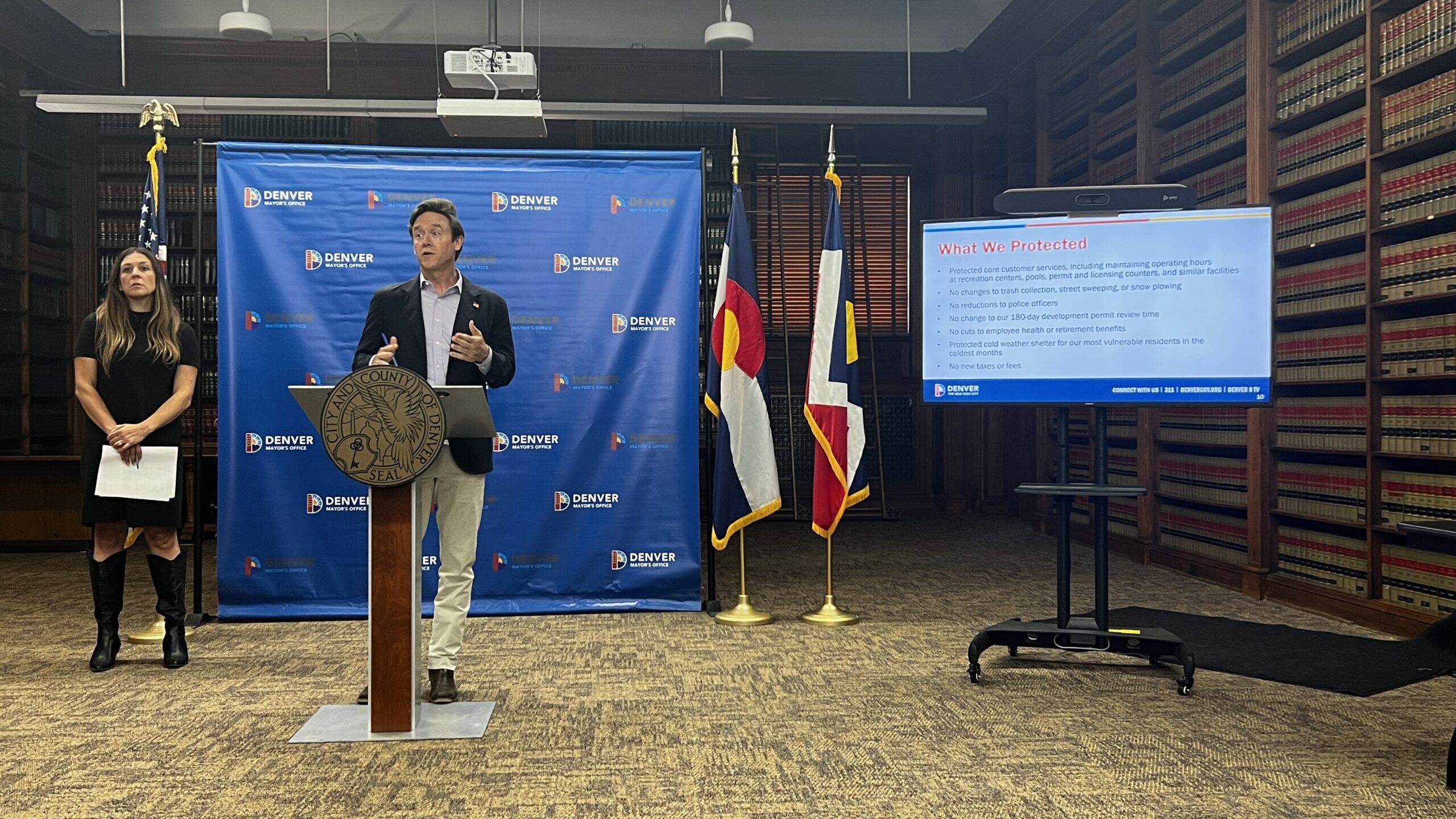
It was a year of big goals on a tight budget for the Mile High City, where Mayor Mike Johnston’s announcement of a $200 million city budget deficit dominated the news coverage.
Facing a $50 million gap in its 2025 budget and a projected $200 million in 2026, Johnston announced plans to tighten the city’s belt in May, with the mayor breaking the bad news to residents and city staffers to brace for budget cuts, furloughs, layoffs, and hiring freezes.
The announcement triggered blowback from residents and councilmembers.
It also put the spotlight on the city’s spending decisions.
Word of the massive shortfall even cast lingering worries over Johnston’s $1 billion Vibrant Denver Bond initiative, which voters approved in November.
City officials blamed flattening city revenues, driven — they said — by national economic uncertainty and rising costs for much of Denver’s fiscal woes. They argued that, with early action to slow hiring in 2024, the city significantly minimized the impact on employees and public services.
By October, Johnston delivered his proposed 2026 budget, which he termed “cut to the bone,” and warned city councilmembers that any budget amendments that would further reduce departments’ spending would have ramifications affecting core services or triggering additional layoffs.
Councilmembers complained of a lack of engagement from the mayor. This statement came amid ongoing disagreements over the city’s budget and oversight authority.
Denver City Clerk and Recorder Paul López weighed in, accusing Johnston of aiming to “raid” the budgets of the city’s independent agencies in an effort to close the deficit.
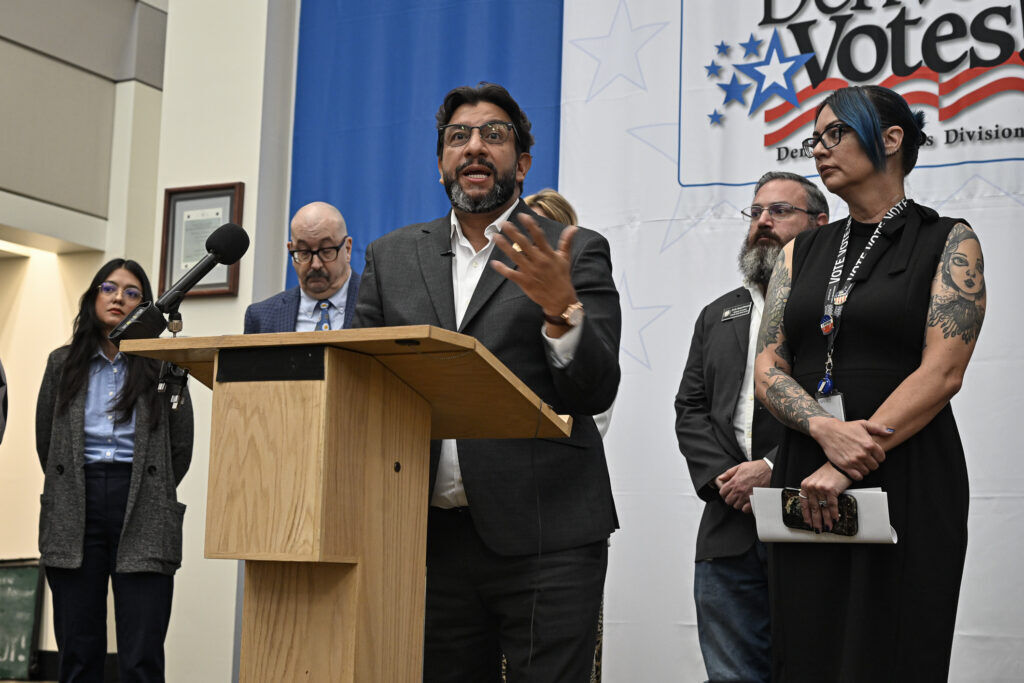
The Clerk argued that 2026 was not the year for such budget cuts, with both a primary and a general election looming and “the world watching.” He called the notion a “slap in the face.”
“(The) City Council is not simply an advisory body in this process — under the City Charter, we are the authority responsible for reviewing, proposing amendments to, and ultimately approving the budget,” City Council President Amanda P. Sandoval said. “Facing a $200 million shortfall, we must ensure fiscal responsibility while meeting the needs of Denver residents.”
Johnston ultimately agreed to the council’s proposed budget changes, and the body, and in turn, approved the $1.66 billion budget as amended.
“Although I am proud of the work that went into this budget, I am concerned that some of the passed amendments dip further into the city’s reserve and contingency funds before we even start 2026,” Johnston said in a letter to the Denver City Council. “Because these changes require funding beyond the coming year, which contingency cannot provide, we will have to find different funding sources to sustain them in 2027.”


Arvada City Council delays vote on public comment changes
Sage Kelley
sage.kelley@denvergazette.com
Updated 1 hour ago
For those looking to share public comments with the Arvada City Council, time may be running out. On Feb. 3, the council unanimously voted to postpone a vote on the timing of public comments during regular meetings until April 21...

Sage Kelley
Reporter

Paul Pazen, a former police chief, launches bid for Denver City Council
Deborah Grigsby
deborah.smith@denvergazette.com
Updated 21 hours ago
Former Denver Police Chief Paul Pazen announced his bid for the District 2 City Council seat to be vacated by Kevin Flynn in 2027. Flynn is term-limited. Pazen, who began his law enforcement career in 1995 with the Denver Police...
Deborah Grigsby
Reporter

Denver advances face covering ban for law enforcement
Deborah Grigsby
deborah.smith@denvergazette.com
Updated 11 hours ago
A Denver City Council committee on Wednesday advanced a proposed ordinance banning law enforcement officers, including federal immigration agents, from covering their faces during an arrest or detainment or inside a city facility. The proposed ordinance also establishes a minimum...
Deborah Grigsby
Reporter

CU Boulder, state launch economic research in coal-transition areas
Scott Weiser
scott-weiser@denvergazette.com
Updated 6 hours ago
Communities in northwest Colorado built on coal mining and power plants are losing hundreds of high-paying jobs and a major share of their tax revenue as operations wind down. In a yearlong effort, the University of Colorado Boulder is teaming...

Scott Weiser
Reporter
Arvada councilmember under investigation for alleged ethics violation
Sage Kelley
sage.kelley@denvergazette.com
Updated 6 hours ago
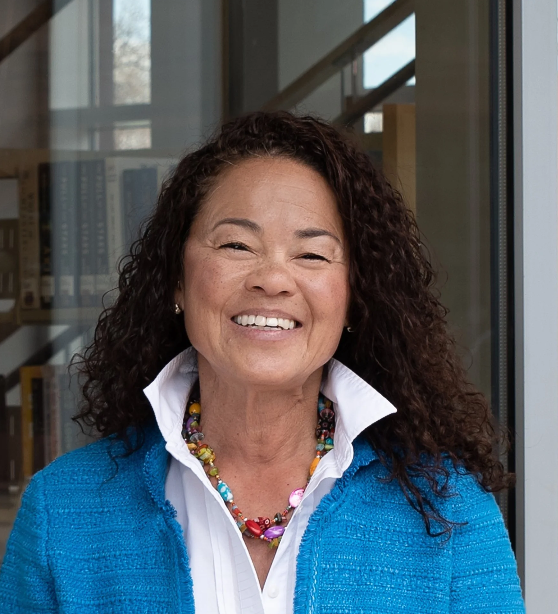
A third-party investigator will look into potential ethics violations from Arvada City Councilmember Sharon Davis. Davis was excused from the dais during the council’s regular business meeting on Feb. 3. The rest of the council then approved the outside investigation...
Sage Kelley
Reporter
Aurora councilmembers discuss Regional Navigation Campus, ADA requirements
Kyla Pearce
kyla-pearce@denvergazette.com
Updated 1 day ago
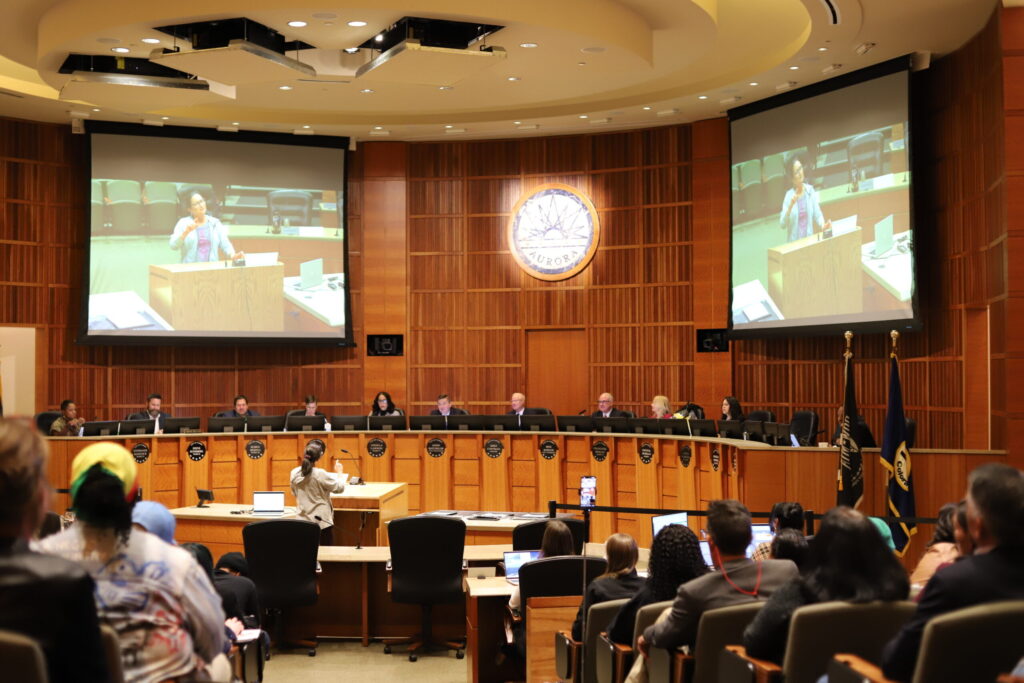
The Aurora City Council tackled several major city topics at a Saturday winter workshop, moving forward with ADA accessibility improvements for the council chambers, addressing concerns about the Regional Navigation Campus and debating a new impact fee for businesses. In...

Kyla Pearce
Reporter

Colorado lawmakers take aim at ‘imposter’ peaches, melons and chiles
Marissa Ventrelli
marissa-ventrelli@denvergazette.com
Updated 21 hours ago
Do you know where your Palisade peaches come from? What about your Rocky Ford melons? Your Pueblo chiles? You might think they were grown right here in the state, especially if they have the “Colorado Proud” logo — but that’s...

Marissa Ventrelli
Reporter

Denver moves to codify quarterly financial updates to the City Council
Deborah Grigsby
deborah.smith@denvergazette.com
Updated 1 day ago
The Denver City Council unanimously advanced a proposed ordinance on Tuesday that aims to codify quarterly general fund reporting to the council from the city’s Department of Finance. The council currently does not receive regular budget updates, relying instead on...
Deborah Grigsby
Reporter

Colorado Title Board rejects challenges to graduated income tax ballot measure
Marianne Goodland
marianne-goodland@denvergazette.com
Updated 10 hours ago
The state body that determines whether a ballot measure contains a single subject has rejected challenges to eight versions of the push to change Colorado’s flat rate to a graduated income tax, thereby increasing the taxes on higher income earners....

Marianne Goodland
Reporter

Lakewood City Council urges residents to keep zoning changes
Sage Kelley
sage.kelley@denvergazette.com
Updated 1 day ago
Lakewood’s long-running zoning fight is headed for a spring showdown at the ballot box, spearheaded by a new resolution from the City Council. The Lakewood City Council amended and confirmed a resolution on Monday expressing the councilmembers’ desire for residents...
Sage Kelley
Reporter
PREV
PREVIOUS

Colorado podcaster who has called for political foes to be executed joins GOP primary for governor
Joe Oltmann, the conservative Colorado podcaster who has repeatedly called for Colorado’s top elected officials to be executed and whose uncorroborated claims that the 2020 election was rigged spawned multiple defamation lawsuits, declared his candidacy for the Republican nomination for governor last week. Oltmann joins a crowded field of Republicans seeking to take over from […]

Raids, pushback and TdA indictments defined Denver’s immigration story in 2025
The Trump administration’s push for a large-scale, deportation effort — built around campaign warnings about Tren de Aragua, the Venezuelan prison gang that established a foothold in Colorado — collided with the realities on the ground in Denver, where raids occurred but never approached the sweeping levels of daily deportations anticipated. President Donald Trump had […]