Raids, pushback and TdA indictments defined Denver’s immigration story in 2025
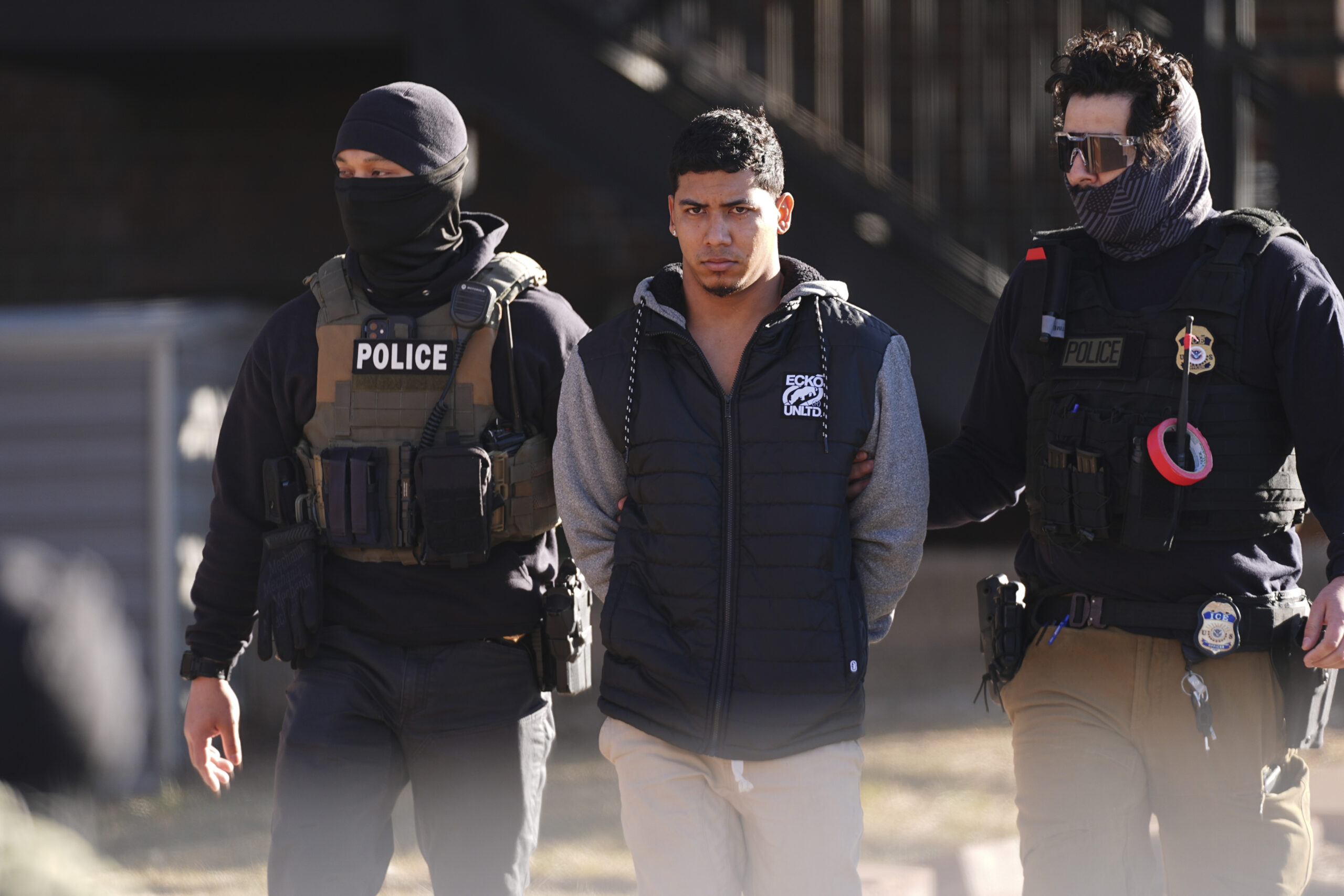
The Trump administration’s push for a large-scale, deportation effort — built around campaign warnings about Tren de Aragua, the Venezuelan prison gang that established a foothold in Colorado — collided with the realities on the ground in Denver, where raids occurred but never approached the sweeping levels of daily deportations anticipated.
President Donald Trump had talked about reaching 3,000 deportations a day, but local enforcement actions here have been smaller. They have also been shrouded in secrecy, and the opacity has been one of the defining features of 2025.
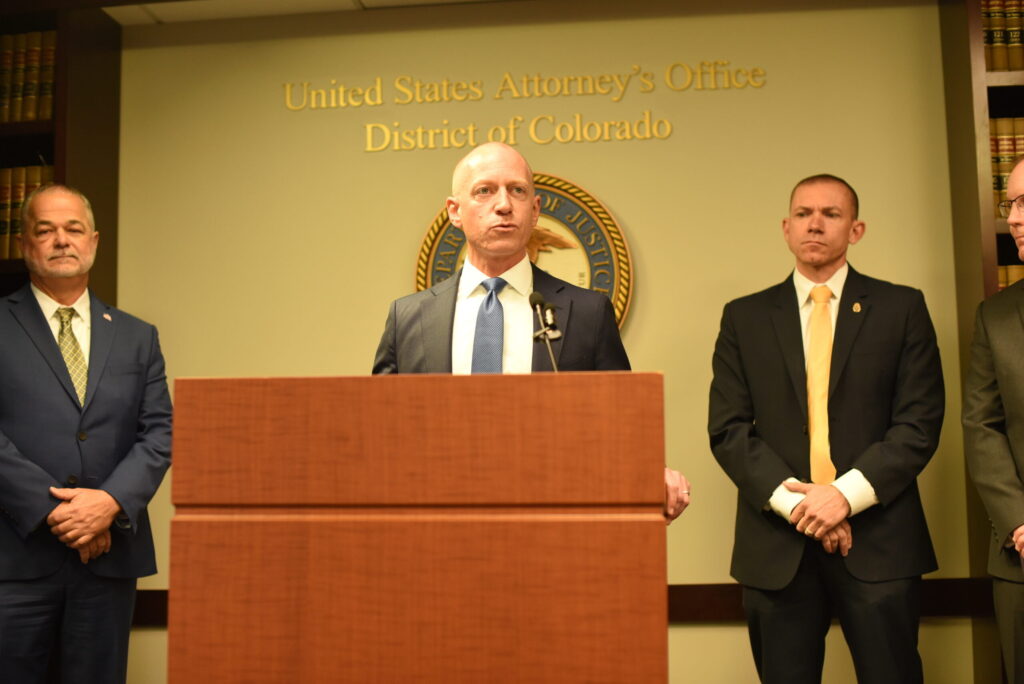
Additionally, a clearer picture of the activities of Tren de Aragua emerged. This month, federal officials announced the indictment of two suspected TdA leaders in Denver on racketeering charges tied to robbery, extortion, kidnapping, money laundering and drug offenses over 14 months.
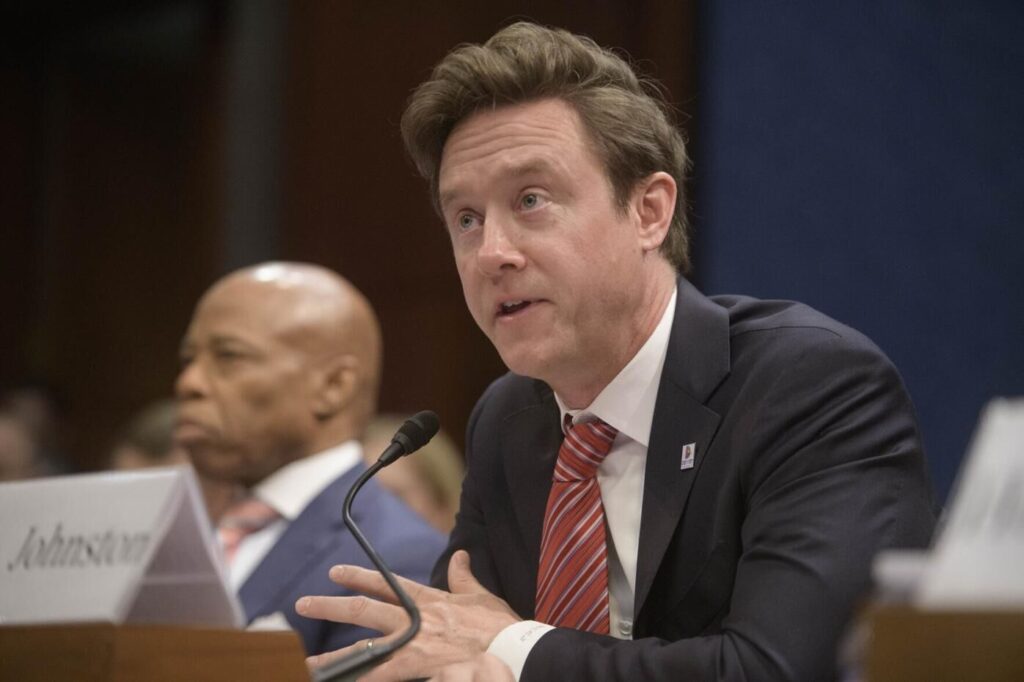
At the political front, Denver Mayor Mike Johnston appeared, alongside the mayors of Boston, Chicago and New York Mayor, in Congress to answer questions about his city’s “sanctuary” policies and response to the illegal immigration crisis, which spilled over from the southern U.S. border into America’s interior cities. The bill for Johnston’s legal defense for that March 5 hearing before the U.S. House Oversight and Government Reform Committee crossed the $1 million mark this month.
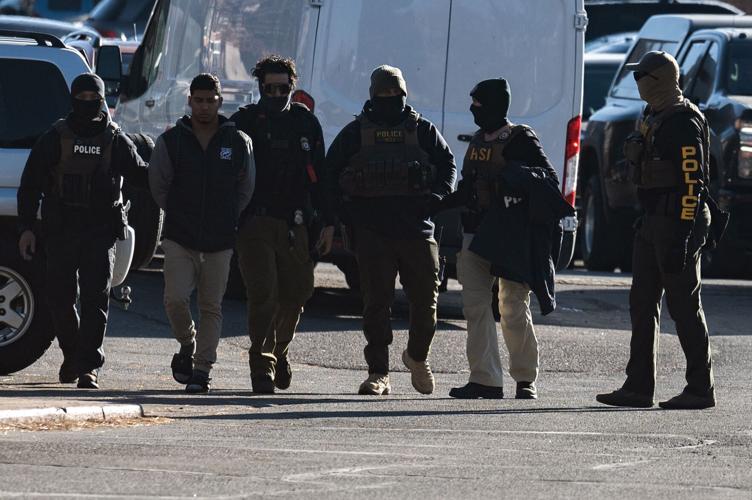
Within weeks of Trump assuming office, Immigration Customs and Enforcement had partnered with the Rocky Mountain Field Division of the U.S. Drug Enforcement Agency (DEA) and Federal Bureau of Investigation (FBI) to knock down doors and round up immigrants unlawfully residing in the U.S.
These agencies widely touted their operations on social media.
Residents at one of these raids at Cedar Run Apartments in southeast Denver near Cherry Creek, disputed that federal agents had warrants targeting “wanted drug traffickers.”
The Denver Gazette sought copies of the warrants through the Freedom of Information Act. In response, ICE provided administrative warrants that in some cases were post-dated April 3 — nearly two months after the raid. An administrative warrant is an internal document that does not carry the same force of law as one signed by a judge. It authorizes agents to make an arrest, but not forced entry.
The DEA and FBI issued what’s called “Glomar” denials, rather than release the warrants tied to local operations, a position under appeal in cases involving the DEA and FBI.
Groups like the ACLU of Colorado have challenged some of the tactics in court, arguing agents have conducted warrantless apprehensions that violate constitutional protections. A federal judge has sided with the ACLU, granting a preliminary injunction.
U.S. Department of Homeland Security Assistant Secretary Tricia McLaughlin has said ICE officials are not making “indiscriminate” stops.
“This activist ruling is a brazen effort to hamstring the Trump administration from fulfilling the President’s mandate to deport the worst of the worst criminal illegal aliens,” McLaughlin has said.
“Allegations that DHS law enforcement engages in ‘racial profiling’ are disgusting, reckless, and categorically false,” McLaughlin has said, adding the ruling will “hamstring” the Trump administration.
Meanwhile, Colorado’s largest school district mounted an unsuccessful legal challenge after the administration attempted to roll back long-standing protections that limited immigration enforcement in “sensitive” locations, such as campuses.
As part of the lawsuit, Denver Public Schools Superintendent Alex Marrero claimed the ICE raids in February negatively affected attendance. Attendance data across district-run schools reviewed by The Denver Gazette suggested a more nuanced picture.
The administration’s immigration operations sparked a wave of “No Kings” demonstrations and mass immigration protests at the state Capitol that drew thousands of residents.
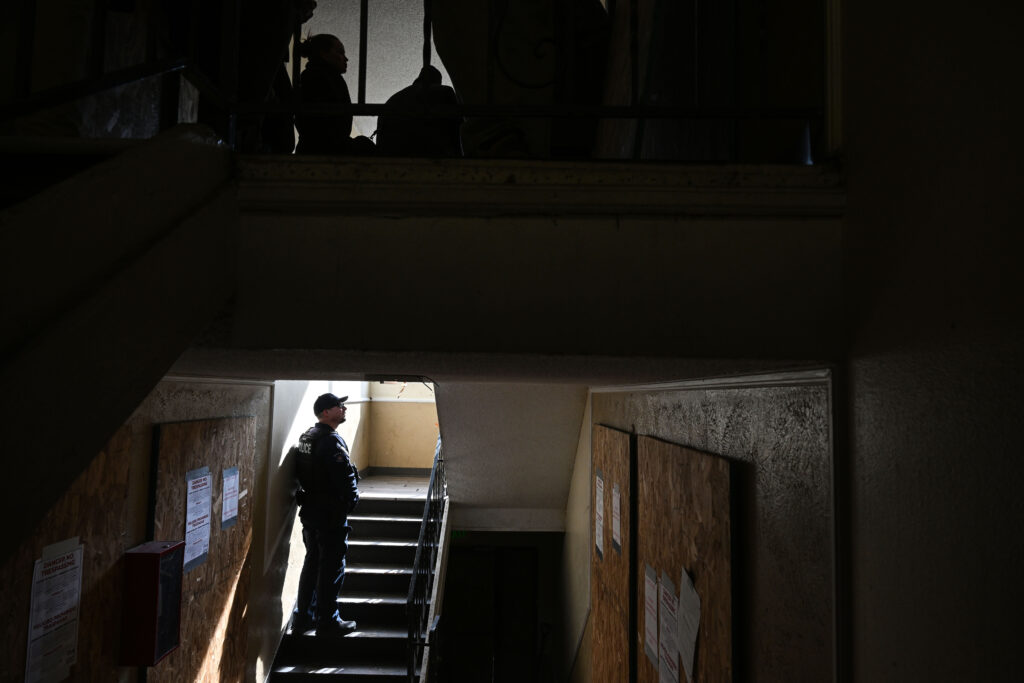
Meanwhile, the TdA gang remained at the forefront of news, with authorities indicting two men they alleged to have sanctioned the armed robberies of two jewelry stores in Denver. In the Joyeria El Ruby robbery, authorities said, gang members stole nearly $4 million in jewelry and gold and brutally beat several employees with a firearm.
The pair also directed the kidnapping of a young man at gunpoint in October last year in an attempt to extract $30,000 ransom that the family did not pay, according to authorities. TdA gang members cut off one of his fingers, the authorities said. One of the leaders is one of the FBI’s top 10 most wanted, with a $5 million reward for information leading to his capture or conviction.


Colorado immigration activist Jeanette Vizguerra released from detention, advocates say
The Associated Press
the-associated-press@denvergazette.com
Updated 1 day ago
A prominent Colorado activist was released Monday after spending nine months in immigration detention, supporters said. Jeanette Vizguerra left an immigration detention center in suburban Denver a day after a judge ruled she could post a $5,000 bond, according to...

The Associated Press
Reporter
Two suspected Tren de Aragua leaders indicted in Denver
Nico Brambila
nico-brambila@denvergazette.com
Updated 1 week ago
Denver and federal officials announced the indictment of two suspected Tren de Aragua (TdA) leaders in Denver on Thursday for racketeering that included robbery, extortion, kidnapping, money laundering and controlled substance abuse over a 14-month period in 2024. Indicted were...
Nico Brambila
Reporter

Court bars Trump administration from blocking congressional oversight visits to ICE facilities
Nico Brambila
nico-brambila@denvergazette.com
Updated 1 week ago
A federal court has temporarily blocked the Trump administration policy that has impeded lawmakers from conducting unannounced visits to federal immigration detention facilities. “Today’s decision is a critical victory toward restoring our ability to conduct essential congressional oversight on behalf...
Nico Brambila
Reporter
Court bars Trump administration from blocking congressional oversight visits to ICE facilities
Nico Brambila
nico-brambila@denvergazette.com
Updated 1 week ago
A federal court has temporarily blocked the Trump administration policy that has impeded lawmakers from conducting unannounced visits to federal immigration detention facilities. “Today’s decision is a critical victory toward restoring our ability to conduct essential congressional oversight on behalf...
Nico Brambila
Reporter
Denver mayor’s legal bill for sanctuary city hearing tops $1 million
Deborah Grigsby
deborah.smith@denvergazette.com
Updated 3 weeks ago
The bill for Denver Mayor Mike Johnston’s legal defense for a March 5 hearing before the U.S. House Oversight and Government Reform Committee on “sanctuary” cities just crossed the $1 million mark. City financial records show that a fourth payment...

Deborah Grigsby
Reporter

Judge denies motion from Gov. Jared Polis to dismiss ICE lawsuit from former state employee
Marianne Goodland
marianne-goodland@denvergazette.com
Updated 3 weeks ago
A Denver District Court judge has denied a request by Gov. Jared Polis to dismiss a lawsuit filed by a former state employee over disclosure of information to federal immigration authorities. The lawsuit filed against the governor by Scott Moss,...

Marianne Goodland
Reporter

Colorado fights federal campaign to stop SNAP from going to illegal aliens, certain noncitizens
Marissa Ventrelli
marissa-ventrelli@denvergazette.com
Updated 4 weeks ago
Colorado joined 21 other states in a lawsuit seeking to undo the Trump administration’s campaign to stop taxpayer-funded food aid from going to individuals illegally staying in the U.S., arguing the move also implicated a group of noncitizens who should...

Marissa Ventrelli
Reporter

Charges against legal observer detained at Denver immigration court dropped
Nico Brambila
nico-brambila@denvergazette.com
Updated 4 weeks ago
The charges against the legal observer detained at Denver Immigration Court have been dropped, the ACLU of Colorado announced. “We are pleased to see that these baseless and ludicrous charges have been dismissed,” Tim Macdonald, legal director for the ACLU...
Nico Brambila
Reporter

Federal judge blocks ICE’s warrantless arrests in Colorado
Nico Brambila
nico-brambila@denvergazette.com
Updated 4 weeks ago
A federal judge granted a preliminary injunction in an ACLU lawsuit challenging the federal immigration agents’ practice of warrantless arrests in Colorado. The judge also granted provisional class certification that extends the injunction statewide. “The court has confirmed what has...
Nico Brambila
Reporter
Federal judge orders immigration agents to follow law on warrantless arrests, imposes requirements on ICE
Michael Karlik
michael-karlik@denvergazette.com
Updated 1 month ago
A federal judge on Tuesday ordered the government to follow the legal requirements for warrantless immigration arrests, finding a practice of agents in Colorado taking noncitizens into custody without evaluating the likelihood they are a flight risk. In a Nov....

Michael Karlik
Reporter