








US Rep. Lauren Boebert calls for override vote after Trump vetoes bipartisan Colorado water bill

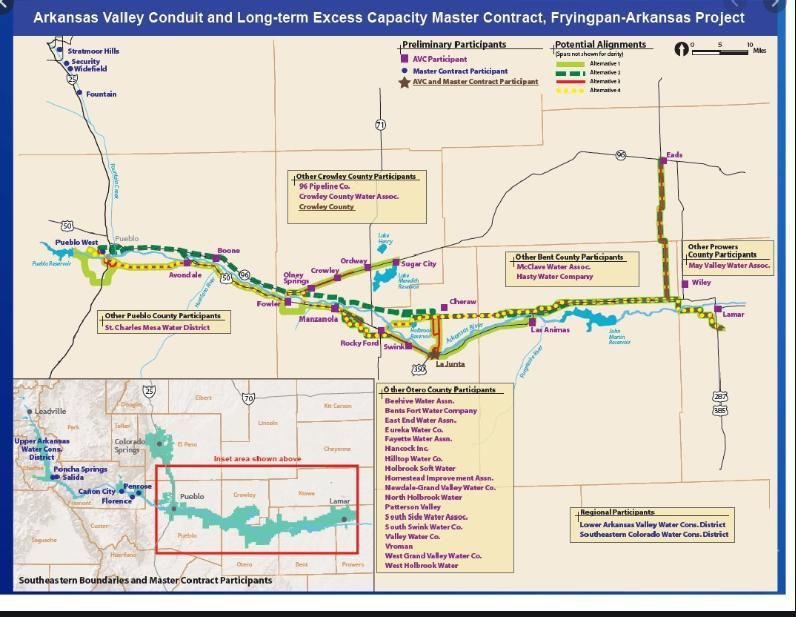
President Donald Trump issued the first veto of his second term Tuesday, blocking a long-awaited bipartisan effort to finish a southeastern Colorado water project that supporters say is critical to delivering clean drinking water to roughly 50,000 residents of the lower Arkansas Valley.
The president described the project as economically not viable — and one that Colorado, not the federal government, should pay for.
Republican U.S. Rep. Lauren Boebert and others have raised the specter that Trump’s veto is more about politics.
In a statement posted on X, Boebert said Trump vetoed a completely “non-controversial, bipartisan bill that passed both the House and Senate unanimously. Why? Because nothing says ‘America First’ like denying clean drinking water to 50,000 people, many of whom voted for Trump in all three elections.”
Boebert also hinted that Trump’s veto could be political retaliation for “calling out corruption and demanding accountability.”
Boebert was one of a handful of House Republicans who signed onto a discharge petition that forced the House to vote on releasing the Epstein files.
Trump is also unhappy with Colorado over the state’s refusal to release former Mesa County Clerk and Recorder Tina Peters from a state prison. Peter is serving a nine-year sentence for tampering with election equipment following the 2020 election.
Additionally, Trump announced he would dismantle the National Center for Atmospheric Research in Boulder.
Given the bill’s overwhelming support in both chambers, a veto override would be the next step.
Boebert told 9News she has spoken to U.S. House Speaker Mike Johnson about a veto override or rolling the bill into other legislation.
Were that to happen, it would not be the first time Trump lost a veto with Congress. In 2020, the House and Senate both rejected his veto of the National Defense Authorization Act for fiscal year 2021.
In his veto message, Trump said the project was not built after its approval in 1962 because it was economically “unviable.”
He said H.R. 131 “would continue the failed policies of the past by forcing Federal taxpayers to bear even more of the massive costs of a local water project — a local water project that, as initially conceived, was supposed to be paid for by the localities using it.”
Local water providers are still on the hook for more than $450 million in project costs, he said.
He called the project an “expensive and unreliable” policy and a taxpayer handout.
The Arkansas Valley Conduit is a 130-mile-long pipeline that will run from Pueblo Reservoir to Lamar. It will provide clean drinking water to 39 communities in the lower Arkansas Valley.
The project was first approved by President John F. Kennedy in 1962 as the last piece of the Frying Pan-Arkansas Project.
The groundwater in the lower Arkansas is contaminated with high levels of selenium. It’s a naturally occurring trace element essential to human health. In large doses, such as is found in the lower Arkansas, it increases the risk for lameness, hair loss, loss of fingernails, neurological damage, cirrhosis of the liver and cancer, according to a 2025 study from Colorado State University.
The project was initially estimated at $600 million, but never got underway because it was unaffordable for the rural communities of the lower Arkansas.
That changed in 2009, when Congress approved a cost share, with the federal government paying 65% and the state and rural water providers 35%.
The money began flowing almost immediately, with the help of then-U.S. GOP Sen. Cory Gardner and Democratic U.S. Sen. Michael Bennet.
The cost is now estimated at $1.39 billion. The federal government has contributed more than $500 million to date; the state appropriated $100 million – $90 million in loans, $10 million in grants – in 2020.
To help the rural water providers responsible for repaying some of the balance, Boebert and Bennet both introduced legislation in Congress to spread out the payments. Under the “Finish the Arkansas Valley Conduit Act,” interest would be waived on the loans, and the repayment schedule would be extended to 100 years from its current 50-year term.
Bennet, on X Tuesday, also criticized Trump’s veto, saying, “This isn’t governing. It’s a revenge tour. It’s unacceptable. I’ll keep fighting to get rural Colorado the clean water they deserve.”
In a statement Wednesday, Bennet and fellow Democratic Sen. John Hickenlooper said, “Nothing says ‘Make America Great Again’ like denying 50,000 rural Coloradans access to clean, affordable drinking water.”
Trump’s veto, they said, “blocks a bipartisan bill that both the House and Senate passed unanimously, costs taxpayers nothing, and delivers safe, reliable water to rural communities that overwhelmingly supported him. Trump’s attacks on Southern Colorado are politics at its worst — putting personal and political grievances ahead of Americans. Southeastern Coloradans were promised the completion of the Arkansas Valley Conduit more than 60 years ago.”
They added: “With this veto, President Trump broke that promise and demonstrated exactly why so many Americans are fed up with Washington. We will keep fighting to make sure rural Coloradans get the clean drinking water they were promised.”
Bennet is running for Colorado governor against Attorney General Phil Weiser in the Democratic primary.
Half of the conduit is located in Boebert’s 4th Congressional District and the other half in Republican U.S. Rep. Jeff Hurd’s 3rd Congressional District. Hurd is a co-sponsor of H.R. 131.
Both bills received unanimous, bipartisan consent through a voice vote on July 21 in the House and on Dec. 16 in the Senate.
In an email statement Wednesday morning, Gov. Jared Polis said, “Water is one of our most precious resources in Colorado, and this bill would have helped ensure that 39 Colorado communities on the Eastern Plains have access to clean, reliable drinking water. It’s very disappointing that the President is hurting rural Colorado by vetoing this bipartisan and non-controversial bill – passed unanimously by both the U.S. House and Senate – which would have delivered on the decades-long promised Arkansas Valley Conduit and secure this much-needed supply of clean water for rural southeastern Colorado.”
Thelma Grimes contributed to this story.


‘Rot in hell’: Trump post reignites feud with Colorado Gov. Jared Polis over Tina Peters
Thelma Grimes
thelma.grimes@coloradopolitics.com
Updated 5 hours ago
Heading into the New Year, President Donald Trump said he would like Gov. Jared Polis and others in Colorado to “rot in hell.” The object of the president’s ire is Tina Peters, the former Mesa County clerk convicted of state...

Thelma Grimes
Reporter

Ben Campbell, former US senator from Colorado and advocate for Native American rights, dies at age 92
Ernest Luning
ernest-luning@denvergazette.com
Updated 24 hours ago
Former U.S. Sen. Ben Nighthorse Campbell, who represented Colorado for two terms beginning in 1993 and was the first Native American elected to the chamber since the 1920s, died Tuesday, his family and close associates confirmed. He was 92. Campbell,...

Ernest Luning
Reporter
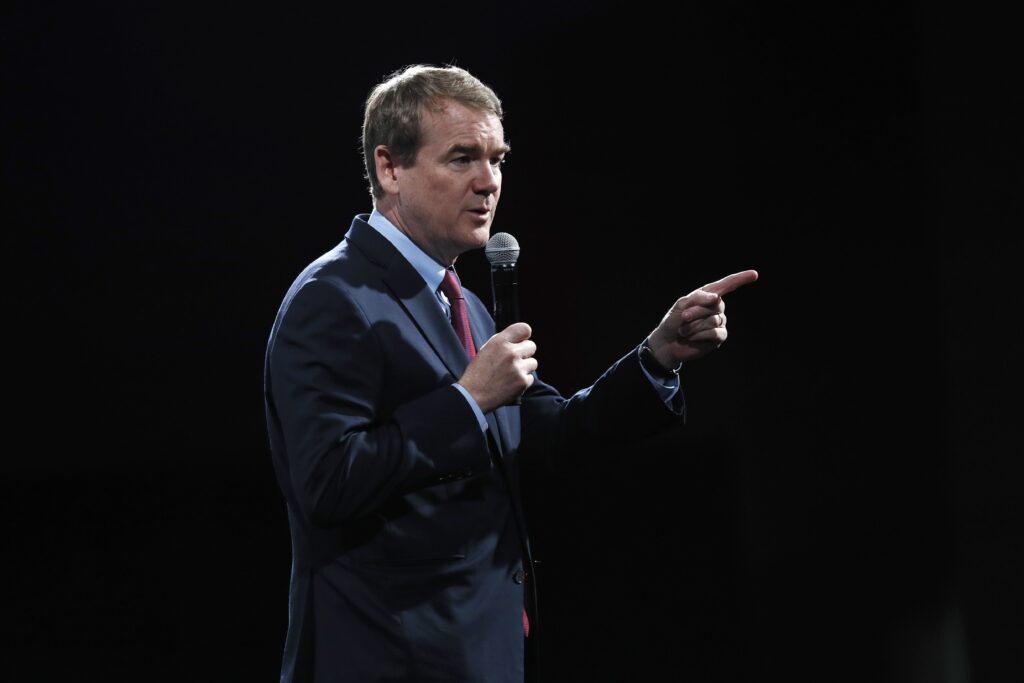
Michael Bennet, Democratic candidate for Colorado governor
Thelma Grimes
thelma.grimes@coloradopolitics.com
Updated 2 days ago
U.S. Sen. Michael Bennet has joined a crowded field of candidates vying for the state’s top spot as governor with Gov. Jared Polis reaching term limits in 2026. Bennet is a longtime Colorado public servant and attorney, having served more...
Thelma Grimes
Reporter

Mark Baisley, Republican candidate for Colorado governor
Thelma Grimes
thelma.grimes@coloradopolitics.com
Updated 2 days ago
Mark Baisley joins a crowded field of Republican candidates for governor. With Gov. Jared Polis being term-limited, Colorado will elect a new leader in 2026. Baisley is a Republican state senator representing Colorado’s 4th Senate District, which covers parts of...
Thelma Grimes
Reporter
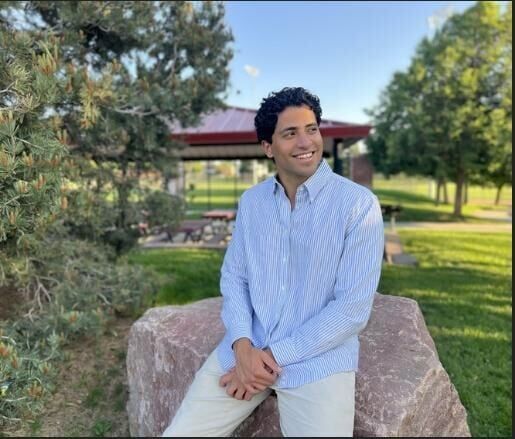
Manny Rutinel, Colorado Democratic primary CD8 candidate
Thelma Grimes
thelma.grimes@coloradopolitics.com
Updated 2 days ago
Manny Rutinel is an attorney, entrepreneur, and currently serves in the Colorado House of Representatives for District 32, representing parts of Adams County after being appointed in 2023 and subsequently elected to a full term.
Thelma Grimes
Reporter

Evan Munsing, Colorado Democratic primary CD8 candidate
Thelma Grimes
thelma.grimes@coloradopolitics.com
Updated 2 days ago
Evan Munsing looks to win the Democratic nomination for a chance to face incumbent U.S. Rep. Gabe Evans next year for Congressional District 8, which is being called one of the most vulnerable seats in Congress and could decide which...
Thelma Grimes
Reporter

Shannon Bird, Colorado Democratic primary CD8 candidate
Thelma Grimes
thelma.grimes@coloradopolitics.com
Updated 2 days ago
Shannon Bird looks to win the Democratic nomination for a chance to face incumbent U.S. Rep. Gabe Evans next year for Congressional District 8, which is being called one of the most vulnerable seats in Congress and could decide which...
Thelma Grimes
Reporter

Gabe Evans, Colorado Republican incumbent, CD8 race
Thelma Grimes
thelma.grimes@coloradopolitics.com
Updated 2 days ago
In what is quickly becoming one of the most-watched congressional races in 2026, Evans looks to continue serving in a second term in Colorado’s Congressional District 8. Evans served 12 years in the U.S. military and was an Arvada police...
Thelma Grimes
Reporter
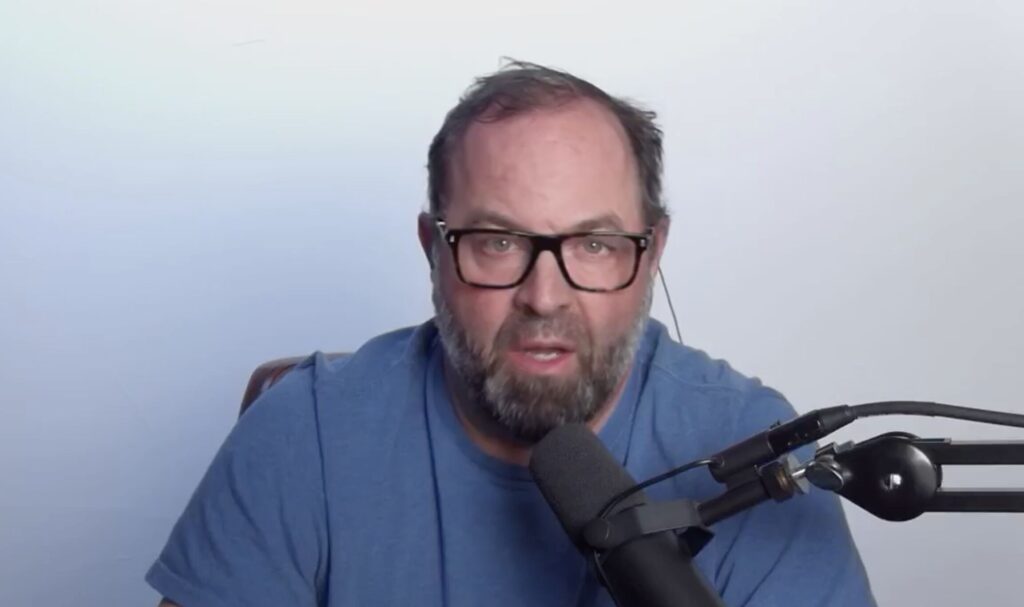
Colorado podcaster who has called for political foes to be executed joins GOP primary for governor
Ernest Luning
ernest-luning@denvergazette.com
Updated 4 hours ago
Joe Oltmann, the conservative Colorado podcaster who has repeatedly called for Colorado’s top elected officials to be executed and whose uncorroborated claims that the 2020 election was rigged spawned multiple defamation lawsuits, declared his candidacy for the Republican nomination for...
Ernest Luning
Reporter
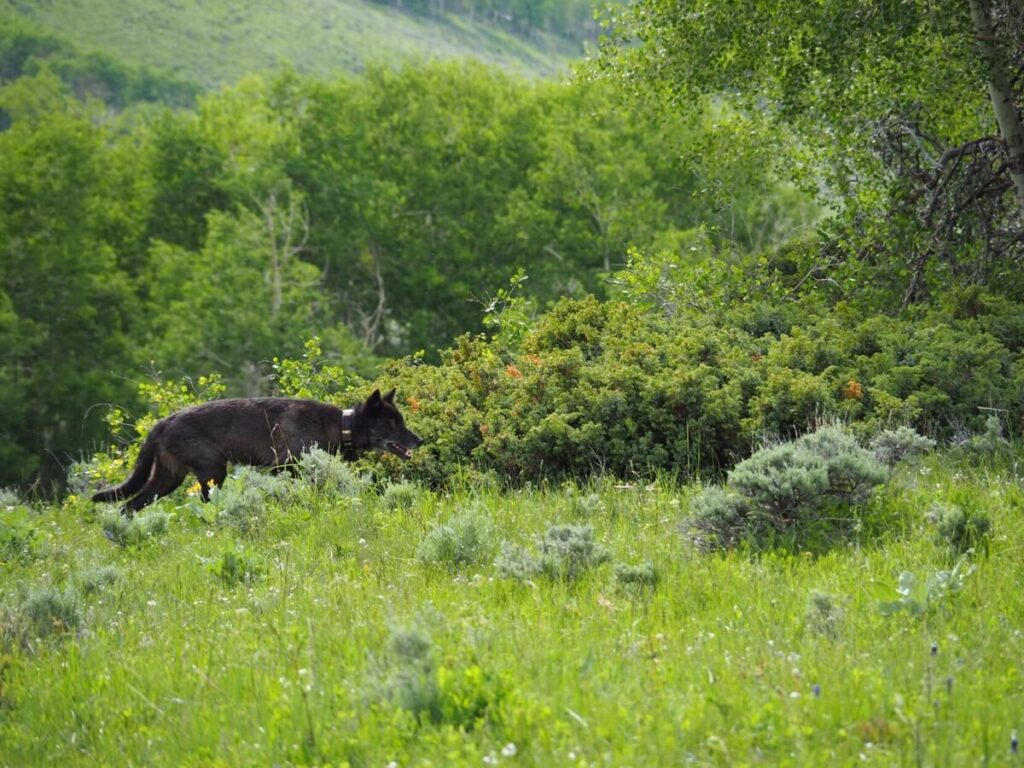
US House passes Colorado Rep. Lauren Boebert’s bill to remove gray wolves from endangered species list
Marianne Goodland
marianne-goodland@denvergazette.com
Updated 1 week ago
A bill sponsored by U.S. Rep. Lauren Boebert of Colorado to delist the gray wolf from federal protections for endangered species cleared the U.S. House late on Thursday, setting up a fight in the U.S. Senate over a measure supporters...
Marianne Goodland
Reporter
PREV
PREVIOUS

Denver government and services to close for New Year's Day
After the world rings in the new year Wednesday night, Denver city officials, like many others, will be taking Thursday off. In observance of New Year’s Day on Thursday, the Denver city government and city services will be closed to the general public. That will include the Mayor’s Office, City Council offices, the Clerk & […]

‘Rot in hell’: Trump post reignites feud with Colorado Gov. Jared Polis over Tina Peters
Heading into the New Year, President Donald Trump said he would like Gov. Jared Polis and others in Colorado to “rot in hell.” The object of the president’s ire is Tina Peters, the former Mesa County clerk convicted of state crimes for a data breach in the 2020 election. Polis, along with other Colorado officials, has […]