







Woman killed in suspected Colorado mountain lion attack
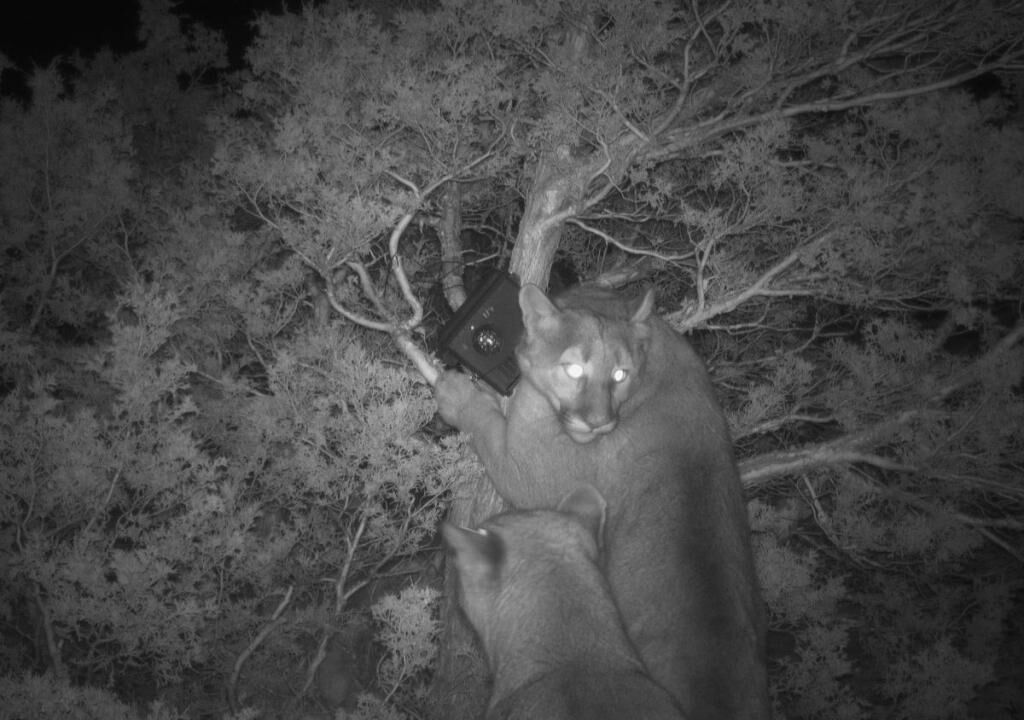
Colorado wildlife officials euthanized two mountain lions on New Year’s Day after they suspected the predators killed a woman in Larimer County.
Colorado Parks and Wildlife said it is investigating after hikers reported seeing a mountain lion near a person who was lying on the ground around 12:15 p.m. on Thursday on the Crosier Mountain trail.
The mountain lion was about 100 yards from the woman’s body. The hikers scared the animal away by throwing rocks at it. They tried to help the woman but couldn’t find a pulse, officials said.
Wildlife officials, deputies from Larimer County and Estes Park police responded to the area and used dogs to track the scent of the mountain lion.
Officials found and euthanized two mountain lions.
“It is unknown if one or multiple animals were involved in the suspected attack,” Colorado Parks and Wildlife said in a news release. “According to CPW policies, wildlife involved in attacks on humans must be euthanized to ensure public safety.”
The Larimer County Coroner will release the victim’s name and cause of death, authorities said.
The wildlife agency is also performing a necropsy on the animals to check for any abnormalities or diseases.
CPW officials were looking for a third lion on Friday.
The U.S. Forest Service announced the temporary closure of the following: Garden Gate trail head (Crosier Mountain Trail 931), Gravel Pit trail head (Crosier and Rainbow Trail 981) and the Piper Meadows trail head.
Wildlife officials said mountain lion attacks on humans are extremely rare, with only 28 instances reported since 1990. It was the first fatal attack reported in over 25 years, the last occurring in 1999, the state wildlife agency said.
The Associated Press reported Friday that Gary Messina said he was running along the same trail on a dark November morning when his headlamp caught the gleam of two eyes in the nearby brush. Messina used his phone to snap a quick photo before a mountain lion rushed him.
Messina said he threw the phone at the animal, kicked dirt and yelled, as the lion kept trying to circle behind him. After a couple of harrowing minutes, he broke a bat-sized stick off a downed log, hit the lion in the head with it, and it ran off, he said.
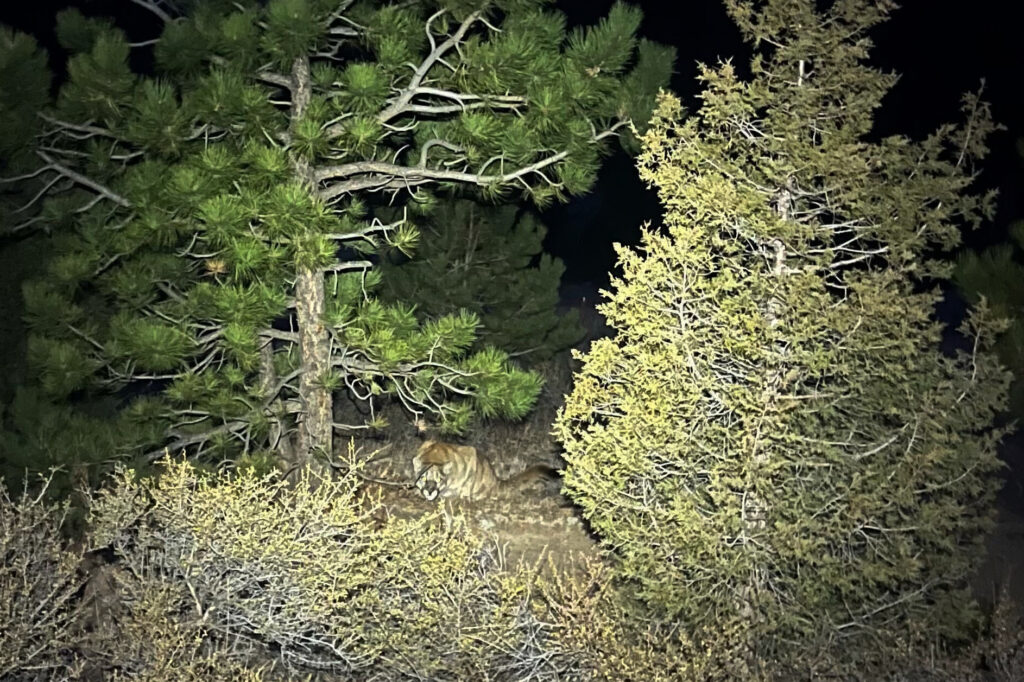
The woman whose body was found Thursday on the same Crosier Mountain trail had “wounds consistent with a mountain lion attack,” said Kara Van Hoose with Colorado Parks and Wildlife. An autopsy is scheduled for next week, said Rafael Moreno with the Larimer County Coroner’s Office.
Based on the aggressiveness of the animal that attacked him on Nov. 11, Messina suspected it could be the same one that killed the woman on New Year’s Day.
“I had to fight it off because it was basically trying to maul me,” Messina told The Associated Press. “I was scared for my life and I wasn’t able to escape. I tried backing up and it would try to lunge at me.”
The 32-year-old man from nearby Glen Haven, Colorado reported his encounter to wildlife officials days later. The latter posted signs to warn people about the animal along trails in the Crosier Mountain area northeast of Estes Park, Van Hoose said. The signs were later removed, she said.
The Mountain Lion Foundation, a nonprofit organization dedicated to protecting mountain lions and their habitat, recorded 29 confirmed fatal mountain lion attacks in North America since 1868.

Paul Beier, Regents’ Professor in the School of Forestry at Northern Arizona University and a leading researcher on cougar ecology and human attacks, documented 53 attacks in the United States and Canada from 1890 to 1990. Nine attacks proved fatal in that period. Colorado Parks and Wildlife recorded 28 attacks since 1990. Three ended in death, possibly including the Jan. 1 case.
“Mountain lion attacks on humans are considered to be very rare in Colorado,” CPW’s Van Hoose told The Denver Gazette.
Beier reported that victims often included children or adults recreating alone. Two Colorado cases highlight risks to young children: A 1997 fatal attack killed 10-year-old Mark Miedema on a popular trail in Rocky Mountain National Park, while a 2016 nonfatal incident near Aspen saw a mother fight off barehanded a lion attacking her 5-year-old son in their yard.
Beier found that offending lions frequently prove to be young or underweight.
Mountain lions normally avoid humans, according to the state wildlife agency. Adults range from 80 to 220 pounds. They hunt at dawn and dusk through ambush. Deer serve as primary prey.
Dickson and Beier, in a joint research published in 2007, showed lions prefer canyon bottoms and gentle slopes for travel.
University of California Santa Cruz researchers stated: “Mountain lions fear humans, fleeing when they hear our voices, new study reveals.”
“Mountain lions are supremely stealthy and excellent, deadly hunters,” one biologist said. “If one really wanted to eat you for lunch, your odds of escaping that encounter would be slim to none.”
Biologists have also described non-fleeing lions as assessing risk, according to Wander Wisdom. One study found that of cougars in close encounters, “females were more likely than males to attack, and of attacking animals, adults were more likely than juveniles to kill.”
Another analysis noted: “Two states that have sport hunting of mountain lions had a higher rate of attacks on humans per square mile of suitable mountain lion habitat.”
Boulder experienced frequent encounters in the 1980s and 1990s, according to Keefover-Ring critique. As development attracted deer, lions followed.
David Baron wrote: “Imagine a cat the size of a German shepherd – and that is a small (mountain lion).”
A 1991 attack killed runner Scott Lancaster near Idaho Springs, according to Baron. A 2006 attack injured a boy on Flagstaff Mountain, according to the Rocky Mountain News.
Colorado Parks and Wildlife recommends group hikes, noise on trails, sturdy sticks, leashed pets, and slow retreats from sightings.
Van Hoose said lions generally are not interested in humans and respond well to hazing, such as yelling, carrying whistles or horns, and appearing larger by raising arms or backpacks overhead. Experts advise fighting back in attacks, according to the agency.
“If you do find yourself in sort of a tussle with a mountain lion, fight back. You can use rocks that are nearby to hit a lion,” said Van Hoose.
Bear spray also proves effective at close range, she added.
Media reports showed a 31-year-old Fort Collins man successfully fought off, and actually killed, a mountain lion in 2019 after it attacked him while he was running in the mountains west of the city.
Colorado Revised Statutes section 33-3-106 permits killing lions to prevent death or serious injury. Reports must follow immediately.
Human development overlaps lion habitat, according to CPW. Colorado hosts 3,800 to 4,400 adult mountain lions, the agency estimated. Encounters remain rare.
“This is just a really sad, tragic incident that happened,” Van Hoose said. “I mean, anytime somebody goes outdoors to enjoy Colorado, we want them to be able to return to their family and loved ones.”
The Associated Press contributed to this report.