








Campbell was a unique political character

There are many things to appreciate about the late Ben Nighthorse Campbell, but one of the items at the top of the list is his belief that it’s more important to kill bad bills than to sign onto a mediocre bill in the name of visibility. His time in the statehouse was the era of then-Gov. Dick Lamm, one of the first politicians I recall. I named my show lamb Governor Lamm one year and that should tell you a lot about why I am the way I am. Campbell was not as polished as those who only wear cowboy boots when in Rome or look the part in a tailored suit. Perhaps that was the appeal.

He served in the state legislature from 1983 to 1986 and then went on to serve three terms in the U.S. House of Representatives. He was reelected to the U.S. Senate in 1992. Campbell was the first Native American chair of the Committee on Indian Affairs.
He left the Democratic party in 1995, but held to his abortion rights stance, reportedly after his passenger in an ambulance one night was a young woman who was suffering as the victim of a back-alley abortion. At the time, he was teaching high school and riding in the ambulance at night as a deputy.
He had already survived a traumatic childhood that ended in an orphanage, quit high school to join the Air Force, and earned a gold medal in judo at the 1963 Pan American Games and competed in the 1964 Olympic Games in Tokyo. He was a rancher near Ignacio and was a driving force behind the designation of the Sand Creek Massacre site as a National Park.
Likely the only member of Congress with a commercial drivers license, Campbell was called upon to deliver the Capitol Christmas Tree from the Pike National Forest to D.C. Campbell didn’t want photo opps with the press, he just wanted to drive the truck like the regular guy he mostly was.
He joined President George W. Bush at the White House in 2004, dressed in his native northern Cheyenne dress, to mark the opening of the American Indian National Museum. Campbell said a good future was not possible for those who don’t learn from their past.
Last summer, Campbell saw the Southern Ute Tribe use water from in the Animas-La Plata Project, the first time since the project was authorized in 1968. The project was marred by decades of debate and is one of the most hotly debated water projects in southwestern Colorado.
The tribe piped water from Lake Nighthorse to oil and gas operations on the reservation. Revenue from those oil and gas activities will fund irrigation infrastructure on the reservation. The project – as most water issues do – divides water users and environmentalists. The debate raged on and in the 1990s, as if on cue, the U.S. Fish and Wildlife Service identified an endangered fish species and the Colorado pikeminnow nearly unraveled the project.
Campbell lived to see his namesake Lake Nighthorse, located 25 miles from his ranch, full of water though at a lower rate than initially planned. The fight for irrigation water continues, but the infamous “Don’t dam the Animas, damn Campbell” bumper stickers aren’t seen on the bumpers of pickups around southwestern Colorado anymore.
Campbell knew rural Colorado, believed in the underdog, created things with his hands, was married to his wife since 1966, and wasn’t one to back away from a fight. They certainly don’t make ‘em like Ben Nighthorse Campbell anymore.
Rachel Gabel writes about agriculture and rural issues. She is assistant editor of The Fence Post Magazine, the region’s preeminent agriculture publication.


The lie that persists five years later | SONDERMANN
Eric Sondermann
eric-sondermann@denvergazette.com
Updated 1 day ago
Some dates require no explanation. September 11. October 7. And to the subject of today’s column, January 6. Simply mention the calendar number and the images flood to mind, still vivid and raw. The fifth anniversary of that dark, dismal...

Eric Sondermann
Reporter

A year later, still no accountability in Jeffco schools | Sengenberger
Jimmy Sengenberger
jimmy-sengenberger@denvergazette.com
Updated 1 day ago
One year ago, Jefferson County Schools descended into turmoil after former Chief of Schools David Weiss was found dead by suicide amid a child pornography investigation conducted by the Jeffco Sheriff’s office. Weiss was fired two weeks earlier after a...

Jimmy Sengenberger
Reporter

Are we all post-liberals now? | Luige del Puerto
Luige Del Puerto
luige.delpuerto@gazette.com
Updated 3 days ago
Three decades after the end of World War II, a Japanese soldier finally returned to his home country after holding out in the jungles of the Philippines. Cut off from his unit, Hiroo Onoda had no way of knowing that...

Luige Del Puerto
Reporter

GUEST COLUMN: State Supreme Court hinders cities’ crime fight
Dan Nordberg
dan-nordberg@gazette.com
Updated 3 days ago
In the days before Christmas, the Colorado Supreme Court decided to dump a heap of coal into the stockings of home-rule cities across our state. In a unanimous decision, the Court ruled that municipalities may not impose “harsher sentences than...

Dan Nordberg
Reporter

Polis is a mixed bag on public ed | Jimmy Sengenberger
Jimmy Sengenberger
jimmy-sengenberger@denvergazette.com
Updated 2 days ago
Gov. Jared Polis deserves real credit for being the first Democrat to opt his state into the Trump administration’s federal school choice program. Even as activists in his own party howled in protest, Polis ignored the noise and chose what’s...
Jimmy Sengenberger
Reporter

PERSPECTIVE: Higher ed’s orthodoxy
Rob Natelson
rob-natelson@gazette.com
Updated 1 day ago
The Writing Center at Metropolitan State University of Denver (MSU-Denver) no longer teaches proper English to its students. The Center’s webpages — removed from public view shortly after being publicized by the Complete Colorado news service — claim that Standard...

Rob Natelson
Reporter

Colorado’s ski bums on strike vs. ‘Big Ski’ | CALDARA
Jon Caldara
jon-caldara@denvergazette.com
Updated 1 day ago
Hopefully, by the time you read this, the strike up at Telluride Ski Resort is over, ski patrollers are again joyfully sliding down mountains and getting paid for it, and tourists are once again being overcharged for… well, everything. But...

Jon Caldara
Reporter
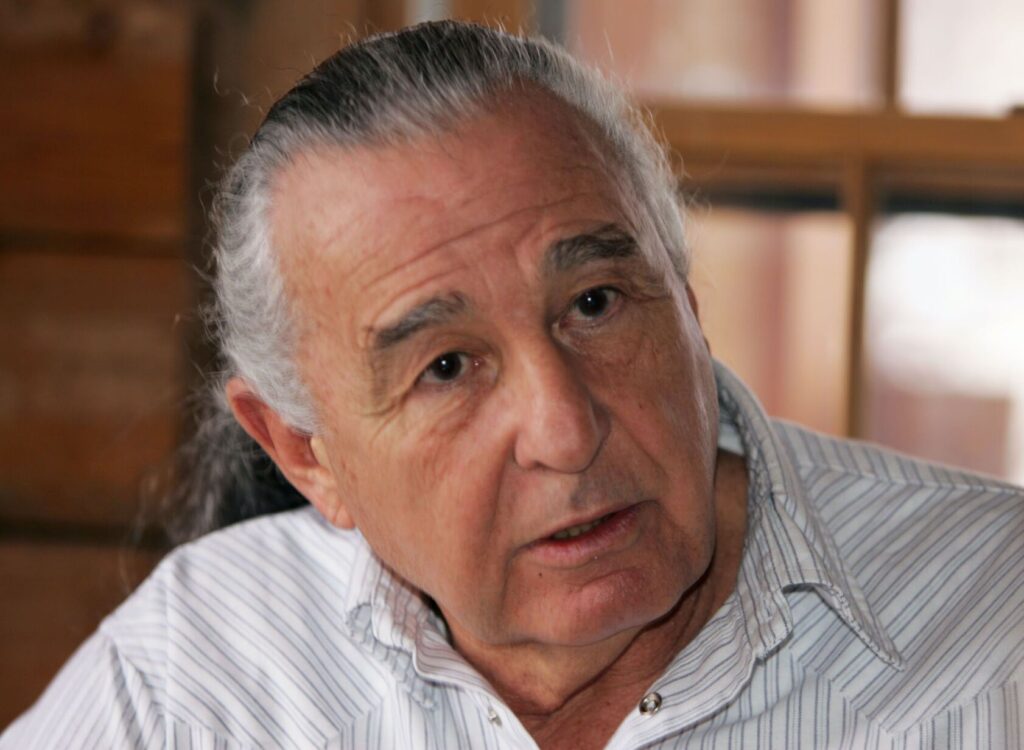
Ben Nighthorse Campbell was a Colorado original | Vince Bzdek
Vince Bzdek
vince-bzdek@denvergazette.com
Updated 3 days ago
One day in 1982, Ben Nighthorse Campbell walked into a political caucus in Colorado to kill time after thunderstorms grounded his flight. He ended up volunteering to run for office that day and wound up serving two terms as a...

Vince Bzdek
Reporter

GUEST OPINION: Vaccines work and Colorado needs them for disease prevention
Brigitta Robinson
Brobinson@gmail.com
Updated 6 days ago
Vaccines are one of the most powerful public health tools we have. They protect individuals, families, and entire communities from diseases that once caused widespread illness and death. And yet, in Colorado and across the country, we are seeing preventable...

Brigitta Robinson
Reporter

“60 Minutes”: A study in journalistic bias
Mike Rosen
mike-rosen@denvergazette.com
Updated 1 week ago
A tautology is a needless repetition of an idea using different wording. For example: “Sooner or later the inevitable is bound to happen.” In this case, Bari Weiss is under fire from the stable of leftist so-called journalists at CBS’s...

Mike Rosen
Reporter
PREV
PREVIOUS

Polis is a mixed bag on public ed | Jimmy Sengenberger
Gov. Jared Polis deserves real credit for being the first Democrat to opt his state into the Trump administration’s federal school choice program. Even as activists in his own party howled in protest, Polis ignored the noise and chose what’s best for Colorado kids. Beginning in 2027, the program — part of last year’s “One […]

The lie that persists five years later | SONDERMANN
Some dates require no explanation. September 11. October 7. And to the subject of today’s column, January 6. Simply mention the calendar number and the images flood to mind, still vivid and raw. The fifth anniversary of that dark, dismal day is now upon us. In some respects, it seems like an eternity has elapsed […]