








A pair of Supreme Court cases put the future of Title IX in the balance
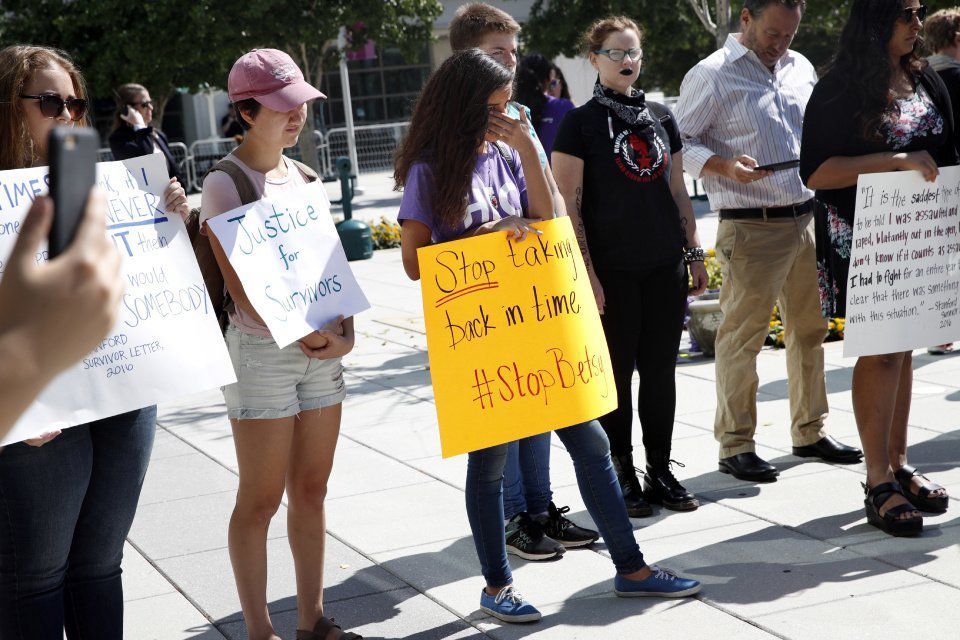
The Supreme Court will hear a pair of cases Tuesday that could shape the future of women’s sports, as state laws limiting women’s sports to biological women come under the microscope.
Idaho’s Fairness in Women’s Sports Act and West Virginia’s Save Women’s Sports Act are at the center of back-to-back arguments at the Supreme Court, with the justices’ eventual ruling in both cases set to have implications for women’s sports across the country. The cases will hinge on two key pieces of law.
Title IX
Title IX is a landmark piece of legislation that allowed women’s sports to grow and flourish since its enactment in 1972. In the case West Virginia v. B.P.J., the state’s law has been challenged under both the Equal Protection Clause of the Constitution and Title IX. Advocates on the side of West Virginia warn striking down the Save Women’s Sports Act would unravel the achievements of Title IX , which ensured women have equal spaces for sports.
John Bursch, senior counsel for the conservative law firm Alliance Defending Freedom, which is helping West Virginia and Idaho in their cases, told the Washington Examiner that the fate of Title IX could be determined by these cases.
“Title IX has done its job, which is to promote women’s participation in sports by giving them a fair playing field where they don’t have to worry about injury, they don’t have to worry about boys in the locker room, they don’t have to worry about male athletes taking their places in conference championship meets or taking their place on the medal stand,” Bursch said.
“And these male athletes have completely reversed that with the blessing of ideologists on the other side and some lower courts, and it’s time for the Supreme Court to put a stop to that and to save Title IX,” he added.
Arguing for B.P.J., the biological male who sued the state to be allowed to participate in women’s sports, the ACLU claimed in its brief to the high court that the law violates Title IX because excluding biological men who identify as women from women’s sports is exclusion on the basis of sex.
“In the absence of any connection to fairness or safety, excluding B.P.J. from every girls’ sports team does not reasonably implement Title IX’s prohibition on discrimination,” the ACLU’s brief claimed. “It unreasonably inflicts discrimination in violation of both the Javits Amendment and Title IX itself.”
West Virginia Attorney General John B. McCuskey explained to the Washington Examiner that the state’s law fits with Title IX because it follows the intent behind the law.
“Title IX’s specific legislative intent and purpose was to ensure that spaces in academia and athletics were reserved for women, to ensure that women and men had equal access to both playing fields in academia,” McCuskey said.
“And what the West Virginia Save Women’s Sports Act does is ensure that biological women have access to athletic playing fields and spaces without fear of competing against biological males,” he said.
He noted that if the Supreme Court were to find that the West Virginia law violates Title IX, “then every girl sports team in America would be illegal.”
Equal Protection Clause
Both in the West Virginia case and in the case regarding Idaho’s law, Little v. Hecox, the state laws are being challenged under the Equal Protection Clause of the 14th Amendment, a frequently used basis for challenging laws that affect transgender people.
In the case United States v. Skrmetti, the Biden administration asked the high court to strike down a Tennessee law banning transgender medical procedures for children as unlawful under the Equal Protection Clause. The high court ruled 6-3 in June 2025 that the law did not violate the Equal Protection Clause, and that ruling could be an indication of how the Supreme Court views the limits of the Equal Protection Clause when it comes to transgender-related statutes.
“The court made clear in that case that simply because a law talks about gender identity or sex, that it notices somebody’s sex, that doesn’t necessarily mean that heightened constitutional scrutiny applies,” Bursch told the Washington Examiner. “The court should do the same thing here.”
“The statutes do not draw any lines based on gender identity, they only draw them based on sex. They say, ‘If you’re male, you go on the boys team, if you’re female, you go on the girls team,'” Bursch said. “And the plaintiffs in both cases aren’t really challenging the idea of having separate teams for boys and girls. What they’re saying is that the states are wrong in defining ‘female’ to exclude males who identify as girls or women, and I don’t think the court is going to find that’s a persuasive constitutional argument at all.”
The ACLU, in its brief for both the Hecox and B.P.J. cases, argues that transgender people constitute a class under the Equal Protection Clause, and the laws therefore should face heightened scrutiny when looking at possible unlawful discrimination. The briefs also claim that under that strict scrutiny, the laws would fail to pass muster and should be found as unlawful for discriminatory reasons.
McCuskey told the Washington Examiner that in his case, there are various arguments for why the West Virginia law is constitutional under the Equal Protection Clause, but the simplest one is that the state law should be looked at by courts with a “rational basis” rather than the strict scrutiny standard required for protected classes.
“What we have here is an actual problem with a rational solution that solves the problem in a nondiscriminatory way,” he said.
Implications beyond the two states
While the cases involve two specific state laws, dozens of similar laws across the country could also be affected by the ruling. Aside from other laws about women’s sports, McCuskey stressed the significant impact the cases will have beyond the sports world.
“What’s at stake is our system of ensuring that young women have access to all of the benefits that team athletics and individual athletics offer. And when you look at the data, over the last 50 years, since Title IX has been implemented, the amount of women who are CEOs of companies in the United States has jumped astronomically,” McCuskey told the Washington Examiner.
“And if you look at the numbers, more than 50% of all the female CEOs in this country either played competitive college or competitive high school athletics,” he said. “And so what Title IX is doing is working.”
McCuskey also invoked his two daughters, both of whom play sports, when he explained how “hyper focused” on this case he has been.
“I’ve spent a lot of time on this case, and it matters a lot to me,” he said.
Bursch specifically discussed how gender ideology and putting aside biological differences between sexes can inflict harm beyond sports.
“This is an ideology that is not just a concept, it’s something that’s being put into practice and harming people,” Bursch said. “And when it comes to the sports issue, you can’t build fairness on the falsehoods that males can be female. That’s just not true.”
“So these cases might be about sports, but they really have much bigger societal ramifications because of the way gender ideology has been rammed down people’s throats,” Bursch said.
The high court will hear arguments in both Little v. Hecox and West Virginia v. B.P.J., beginning at 10 a.m. Tuesday in Washington, D.C.
After oral arguments are concluded, the high court could issue a ruling in the coming months. All decisions for every case heard this term are expected to be released by the end of June.


Good’s friends in the Springs take issue with how she’s portrayed
Stephanie Earls
stephanie-earls@denvergazette.com
Updated 5 hours ago
The shooting death of 37-year-old Renee Nichole Good by a federal Immigration and Customs Enforcement officer in Minneapolis on Wednesday has sparked nationwide protests, vitriol and outrage, from all sides. From those who maintain the mother of three, who grew...

Stephanie Earls
Reporter

Pope Leo issues strongest rebuke of abortion and surrogacy yet in diplomatic corps speech
Claire Carter, Washington Examiner
claire.carter.washington.examiner@gazetteedit.wpenginepowered.com
Updated 11 hours ago
Pope Leo XIV delivered his most forceful rebuke yet of abortion and surrogacy Friday, categorically rejecting both practices as offenses to human dignity in a wide-ranging address to the diplomatic corps. The first U.S.-born pope used the annual exchange of...

Claire Carter, Washington Examiner
Reporter
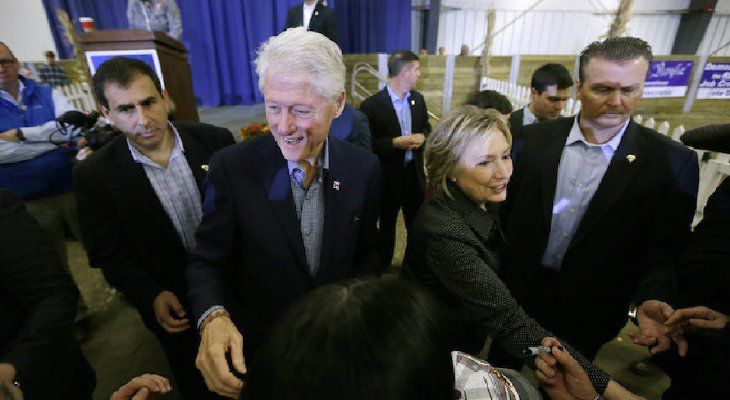
Oversight committee threatens Clintons with contempt if they don’t show up for Epstein hearing
Claire Carter, Washington Examiner
claire.carter.washington.examiner@gazetteedit.wpenginepowered.com
Updated 11 hours ago
The House Oversight Committee has escalated its investigation into Jeffrey Epstein, threatening former President Bill Clinton and his wife, former Secretary of State Hillary Clinton, with contempt of Congress if they fail to appear for depositions. A House Oversight Committee spokeswoman said Friday...
Claire Carter, Washington Examiner
Reporter

New Jersey signs legislation banning cellphones in schools
Molly Parks, Washington Examiner
molly.parks.washington.examiner@gazetteedit.wpenginepowered.com
Updated 11 hours ago
K-12 students in New Jersey will no longer be allowed to use their cellphones in school starting in the fall of 2026. Gov. Phil Murphy (D-NJ) signed a bill into law on Thursday establishing “phone-free” schools in the Garden State....

Molly Parks, Washington Examiner
Reporter
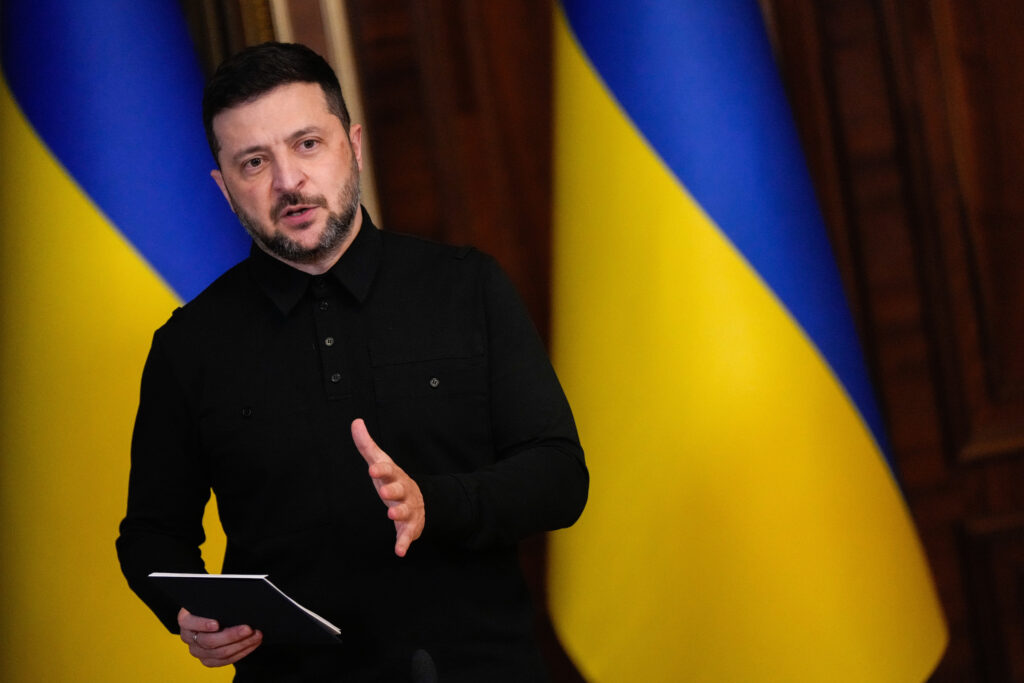
Zelensky calls for ‘clear response’ from US after Russia’s use of nuclear-capable missile in strikes
Molly Parks, Washington Examiner
molly.parks.washington.examiner@gazetteedit.wpenginepowered.com
Updated 11 hours ago
Ukrainian President Volodymyr Zelensky is calling on the United States to give a “clear response” to an overnight barrage of Russian military strikes in Kyiv and Lviv, which included the launch of a nuclear-capable missile. Russia’s Ministry of Defense confirmed...
Molly Parks, Washington Examiner
Reporter

Federal employment has fallen by 277,000 under Trump
Joseph Lawler, Washington Examiner
joseph.lawler.washington.examiner@gazetteedit.wpenginepowered.com
Updated 11 hours ago
The number of employees on the federal government’s payroll has dropped by 277,000 since President Donald Trump took office for his second term, the Bureau of Labor Statistics reported Friday. The agency said in its monthly jobs report that federal...

Joseph Lawler, Washington Examiner
Reporter

US seizes oil tanker sanctioned for transporting Russian oil
David Zimmermann, Washington Examiner
david.zimmermann.washington.examiner@gazetteedit.wpenginepowered.com
Updated 11 hours ago
The United States has seized another sanctioned tanker in an effort to control the flow of oil in and out of Venezuela. The U.S. Coast Guard boarded the Olina tanker, the fifth vessel to be seized in recent days. The...

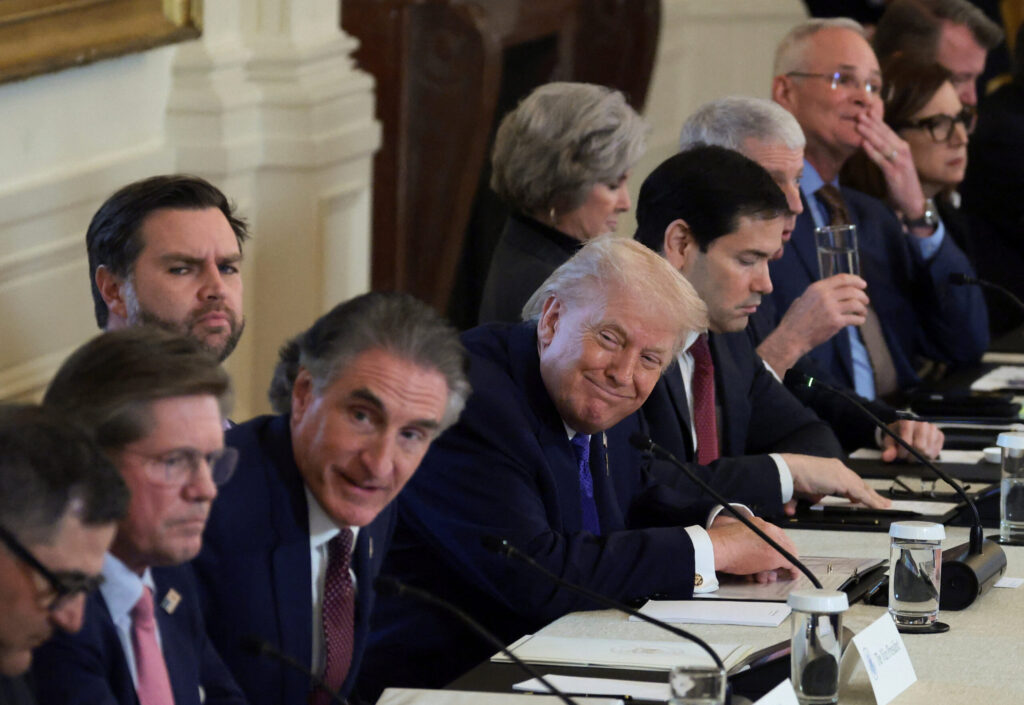
Trump says US will start ‘hitting land’ in pursuit of drug cartels
Washington Examiner Staff, Washington Examiner
washington.examiner.staff.washington.examiner@gazetteedit.wpenginepowered.com
Updated 11 hours ago
President Donald Trump announced the United States will soon engage in military operations on land to hold drug cartels accountable. Trump spoke of plans to expand operations on land to implement a crackdown on cartels and the damage they cause...


Vance takes the lead in defending immigration enforcement after ICE shooting
W. James Antle III, Washington Examiner
w.james.antle.iii.washington.examiner@gazetteedit.wpenginepowered.com
Updated 11 hours ago
Vice President JD Vance made a rare appearance at the podium during Thursday’s White House press briefing to mount a passionate defense of Immigration and Customs Enforcement amid growing anti-ICE protests after an officer was involved in a fatal shooting...

Vance announces new assistant attorney general position to focus on fraud
Christian Datoc, Washington Examiner
christian.datoc.washington.examiner@gazetteedit.wpenginepowered.com
Updated 1 day ago
Vice President JD Vance announced Thursday that President Donald Trump is creating a new attorney general position to lead government efforts to investigate and prosecute fraud cases. Vance joined White House press secretary Karoline Leavitt at an unscheduled briefing Thursday...

Christian Datoc, Washington Examiner
Reporter
PREV
PREVIOUS

Federal employment has fallen by 277,000 under Trump
The number of employees on the federal government’s payroll has dropped by 277,000 since President Donald Trump took office for his second term, the Bureau of Labor Statistics reported Friday. The agency said in its monthly jobs report that federal employment was 2.738 million in November 2025, adjusted for seasonal variations, down from 3.015 million […]

Zelensky calls for ‘clear response’ from US after Russia’s use of nuclear-capable missile in strikes
Ukrainian President Volodymyr Zelensky is calling on the United States to give a “clear response” to an overnight barrage of Russian military strikes in Kyiv and Lviv, which included the launch of a nuclear-capable missile. Russia’s Ministry of Defense confirmed it launched the nuclear-capable Oreshnik ballistic missile on Thursday evening, marking the second time the […]