








Denver’s face covering ban for cops, including ICE, gains momentum

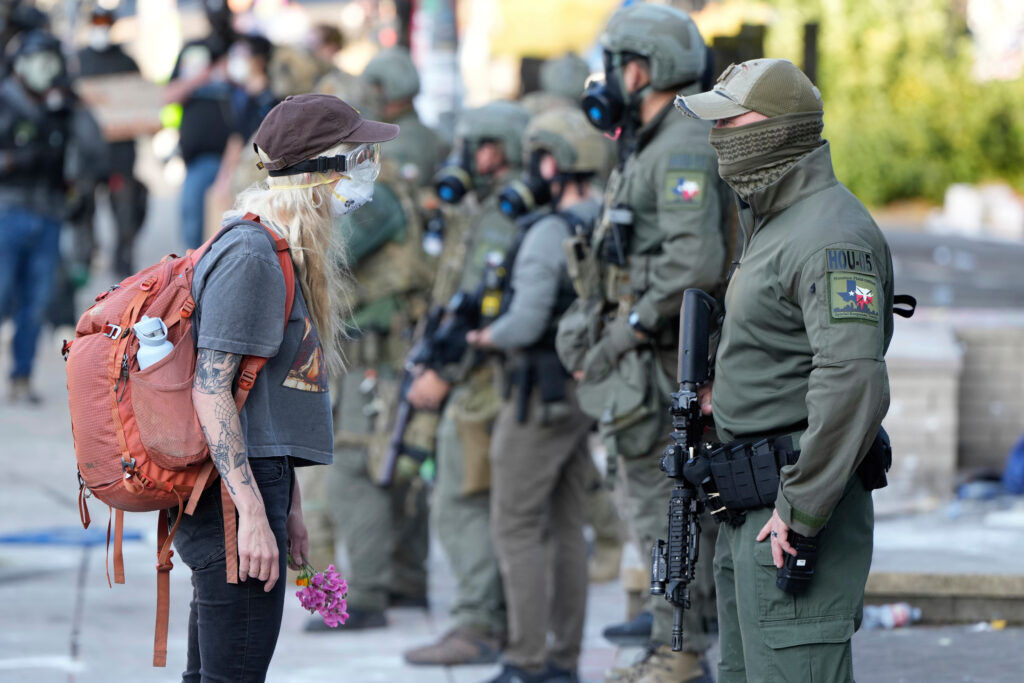
A proposed ordinance prohibiting law enforcement officers from concealing their identities while interrogating, detaining, or arresting an individual within the City and County of Denver moved forward to another yet-to-be-assigned committee for further consideration.
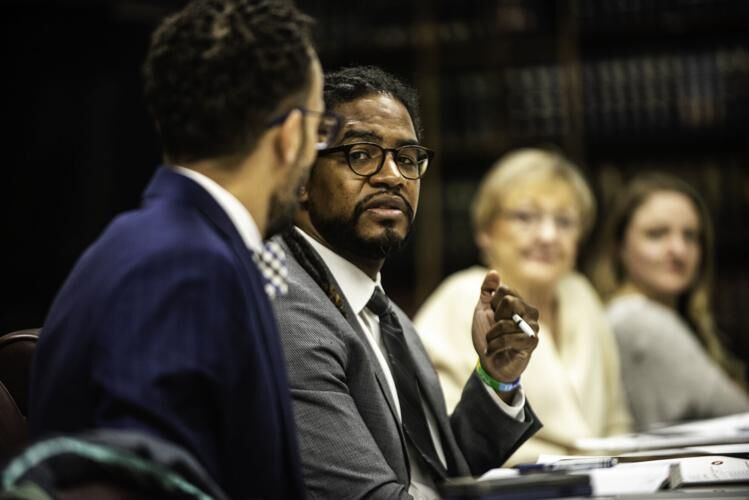
The proposed bill, presented to members of the city’s Budget and Policy Committee on Monday by Councilmembers Flor Alvidrez and Shontel Lewis, would also restrict law enforcement from wearing face coverings within a city facility.
City officials argue the measure would address public safety fears and increase transparency.
“The practice of concealment has several concerning impacts,” Alvidrez said. “Masked law enforcement undermines public trust and conflicts with local law enforcement to promote conflicts with local efforts to promote transparency and accountability; it discourages crime reporting and cooperation with law enforcement, particularly in communities already experiencing a strained relationship with government institutions.”
Alvidrez added that the inability to identify legitimate officers opens the doors to impersonators and other bad actors, who pose a threat to public safety.
Face coverings would include “any opaque mask, garment, headgear or other item that conceals or obscures the facial identity of an individual, including, but not limited to, a balaclava, tactical mask, gator, ski mask and any similar type of face covering or face-sheilding item.”
Exemptions would be made for medical or translucent masks that do not conceal identity, protective eyewear, or helmets required to comply with other local, state, or federal safety standards.
Other exemptions would include personnel assigned to Special Weapons and Tactics teams while actively performing SWAT duties or to the city’s Emergency Response Unit.
But committee members, while supportive, seemed unsure whether the measure had passed and whether it would be effective.
“I don’t expect this to do anything as far as changing ICE (U.S. Immigration and Customs) behavior, Councilmember Paul Kashmann told the group. “But what it would do is clearly state our principle as to how we believe in a situation governed by law and constitution.”
Amanda Sawyer, the council member representing Denver’s District 5, cautioned that while she supports the measure in theory, “in operation, I’m really concerned that this is going to create more problems than it’s going to solve.”
Other challenges center around the enforcement of the proposed measure.
Jonathan Griffin, the city’s deputy legislative counsel, stated that, by law, the Denver Police Department would be responsible for enforcement.
In theory, Griffin said DPD would be sent out to an event being conducted by ICE if it was reported they were wearing masks, and then arrest them for violation of city law.
But questions still lingered about whether such action could be construed as impeding federal law enforcement operations or how the city law might apply to state police.
Denver is not the first to consider such measures in light of recent high-profile federal immigration enforcement operations.
California became the first state to ban most law enforcement officers, including federal immigration agents, from covering their faces while conducting official business, under a bill signed in September 2025 by Gov. Gavin Newsom and swiftly denounced by Trump administration officials.
The ban is a direct response to recent immigration raids in Los Angeles, where federal agents wore masks while making mass arrests. The raids prompted days of protest and led President Donald Trump to deploy National Guard troops and Marines to the area.
Trump administration officials have defended the use of masks, saying immigration agents face strident and increasing harassment in public and online as they carry out federal deportation operations. Obscuring their identities is necessary for the safety of the agents and their families, officials contend.
The U.S. Department of Justice has pushed back on Newsom and California Attorney General Robert Bonta, filing a lawsuit in November challenging their “unconstitutional attempt to regulate federal law enforcement officers.”
“Law enforcement officers risk their lives every day to keep Americans safe, and they do not deserve to be doxed or harassed simply for carrying out their duties,” said Attorney General Pamela Bondi in a press statement. “California’s anti-law enforcement policies discriminate against the federal government and are designed to create risk for our agents. These laws cannot stand.”
In Houston, City Council member Edward Pollard asked the city’s U.S. Immigration and Customs Enforcement field office to adopt a policy prohibiting agents from wearing face coverings, as reported by The Houston Chronicle on Jan. 5, 2026.
Last year, in Louisville, Kentucky, city council members narrowly rejected a similar ban on face coverings.
“This is the right thing to do, but it doesn’t make it not scary as council people to be able to move this forward,” Councilmember Shontel Lewis said, “because you do know that it puts a target on your back, and as you’ve seen, the administration and how they operate, it can be very scary.”
As currently drafted, the new ordinance would take effect Jan. 1, 2027, but some members hope to see the measure passed immediately upon full council approval.

Colorado Democratic vacancy committee selects Lori Goldstein for HD 29
Marianne Goodland
marianne-goodland@denvergazette.com
Updated 4 hours ago
A Democratic vacancy committee on Sunday chose Lori Goldstein, president of the Adams 12 Board of Education, to serve the final year of Rep. Shannon Bird’s term. Bird, a Democrat who would have been term-limited this year, resigned her seat...

Marianne Goodland
Reporter

Colorado business coalition moves Pinnacol privatization fight from Capitol to voters
Marianne Goodland
marianne-goodland@denvergazette.com
Updated 3 hours ago
The future of Pinnacol Assurance is moving away from the governor’s office and the legislature, with a new ballot initiative aiming to privatize the insurer and use the proceeds to expand job training across Colorado. Colorado Succeeds, a coalition of...
Marianne Goodland
Reporter
Lawsuits by Trump allies could shape how the 2030 census is done
Wire Services
wire-services@denvergazette.com
Updated 1 day ago
The Denver Gazette wire services ORLANDO, Fla. — The next U.S. census is four years away, but two lawsuits playing out this year could affect how it will be done and who will be counted. Allies of President Donald Trump...

Wire Services
Reporter

1 arrested after shots fired during Denver traffic stop, shelter-in-place lifted
Deborah Grigsby
deborah.smith@denvergazette.com
Updated 11 hours ago
Denver Police have taken an adult male into custody after shots were fired at officers during an unrelated traffic stop late Saturday night in the Capitol Hill area near East 13th Avenue and North Logan Street. One bystander suffered a minor...
Deborah Grigsby
Reporter
Aurora City Council Q&A: decorum on the dais
Kyla Pearce
kyla-pearce@denvergazette.com
Updated 3 days ago
In November’s election, Aurora voters flipped what was previously a seven-to-three conservative majority on the City Council to a six-to-four progressive majority. With the significant shift of the council’s political leaning could come policy changes and reversals. The Denver Gazette...

Kyla Pearce
Reporter

EPA rejects Colorado’s plan to tie coal plant shutdowns to cleaner skies
Scott Weiser
scott-weiser@denvergazette.com
Updated 11 hours ago
Federal air quality regulators on Friday rejected Colorado’s latest haze-reduction plan, saying the state wrongly tried to force coal-fired power plants to close early as part of efforts to clear up views in national parks and wilderness areas. The U.S....

Scott Weiser
Reporter
Denver City Council to revisit vote on emergency shelter funding
Deborah Grigsby
deborah.smith@denvergazette.com
Updated 8 hours ago
The Denver City Council will have a light agenda on Monday. Meetings will continue in the Parr-Weidner Community Room while renovations progress in the council chambers. Returning to the council from the Community Planning and Housing Committee is a resolution...
Deborah Grigsby
Reporter
Denver Auditor: Office of Social Equity and Innovation risks mismanaging or losing taxpayer money
Deborah Grigsby
deborah.smith@denvergazette.com
Updated 1 day ago
Denver’s Office of Social Equity and Innovation has yet to implement half of the 14 recommendations made by auditors in 2024, leaving the city and the Colorado Youth Detention Continuum Program at risk of misusing small-dollar funds. A follow-up report...
Deborah Grigsby
Reporter
New Aurora councilmembers to host meetings about creating civilian oversight of police
Kyla Pearce
kyla-pearce@denvergazette.com
Updated 3 days ago
Two of Aurora’s new councilmembers plan to hold listening sessions with community members to talk about establishing an independent civilian oversight committee for Aurora police. Gianina Horton and Amy Wiles, who were both elected to the Aurora City Council in...
Kyla Pearce
Reporter

House rejects effort to override presidential veto for Colorado Water Project
Marianne Goodland
marianne-goodland@denvergazette.com
Updated 3 days ago
The U.S. House of Representatives on Thursday rejected a Colorado-led effort to override a Dec. 30 presidential veto of a measure that would have helped finance the Arkansas Valley conduit. The measure, known as H.R. 131 and sponsored by U.S....
Marianne Goodland
Reporter
PREV
PREVIOUS
Colorado Democratic vacancy committee selects Lori Goldstein for HD 29
A Democratic vacancy committee on Sunday chose Lori Goldstein, president of the Adams 12 Board of Education, to serve the final year of Rep. Shannon Bird’s term. Bird, a Democrat who would have been term-limited this year, resigned her seat on Jan. 5 to run for Congress in District 8 full-time. Goldstein, who had already […]

Grateful Dead founding member Bob Weir dies at 78
LOS ANGELES — Bob Weir, the guitarist and singer who as an essential member of the Grateful Dead helped found the sound of the San Francisco counterculture of the 1960s and kept it alive through decades of endless tours and marathon jams, has died. He was 78. Weir’s death was announced Saturday in a statement […]