







Lakewood zoning petitions deemed sufficient, may lead to special election
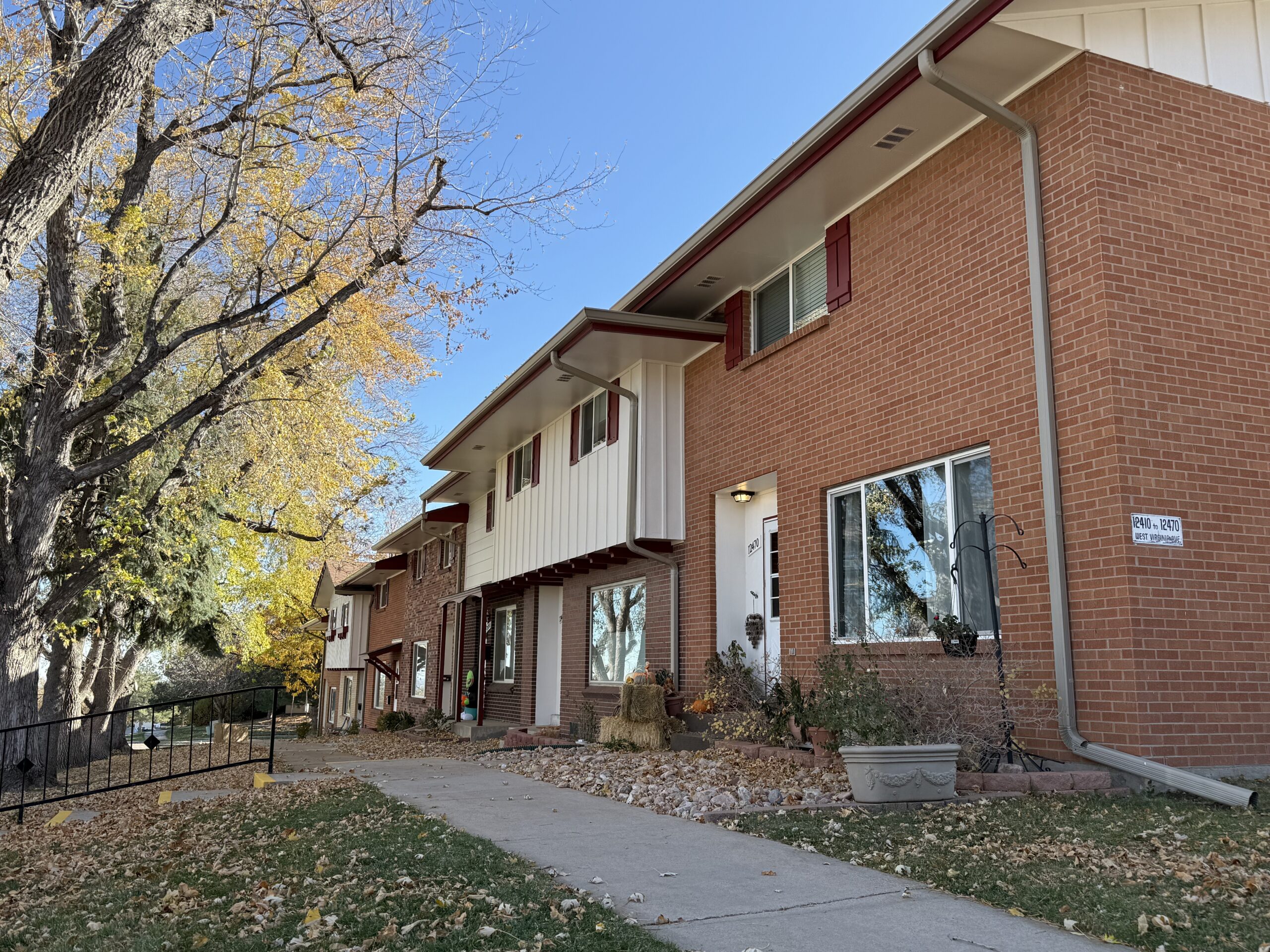
The year-long quarrel regarding Lakewood’s new zoning code is stretching into the new year, with petition signatures potentially taking the issue to the ballot this spring.
A nearly 400-page zoning code update was sent to the City Council in February and was officially approved on Oct. 13. It took effect at the beginning of the year.
But the debate over the zoning code continues because the city has found four petitions to repeal the ordinances sufficient.
Lakewood City Clerk Jay Robb gave a presentation to the council on Monday to confirm the sufficiency of the four referendum petitions against Ordinances 2025-27, 28, 29 and 30 — parts of the zoning code update voted upon at the tail end of last year.
The Lakewood Home Rule Charter requires “at least 3% of the total number of registered electors of the City of Lakewood on the date of the last regular municipal election” to deem a referendum petition sufficient.
All four of the petitions had at least 3,600 signatures, with three stretching past 4,000, and 3% of the around 117,000 Lakewood residents is just about 3,500.

The zoning changes were highly debated by some local groups, including Lakewood Citizens Alliance and Lakewood Stronger Together, who helped collect the petition signatures outside of various businesses and buildings throughout the city, along with social media campaigns.
Meanwhile, Livable Lakewood, a group that formed to help inform people during the zoning voting, has created the legal entity “Make Lakewood Livable” to campaign against misinformation as the ordinances likely hit the ballot.
Ultimately, some residents claimed that changes to single-family zoning would cause parking issues, overcrowding and changes to the characteristics of existing neighborhoods.
Article 3, the most debated part of the code, erased the term “single-family zoning,” which does not appear in the document. Instead, the city will use the term “residential dwellings.” A residential dwelling could be a single-family home, duplex, tri-plex or townhome in an effort to create more affordable housing.
The new residential districts are broken up into low-form residential and mid-form residential classifications.
Lakewood has never had single-family-only zoning, with all areas allowing some type of different usage like group homes or duplexes.
That ordinance is targeted in one of the four petitions.
Sophia Mayott-Guerrero, Make Lakewood Livable campaign manager and a former councilmember, told The Denver Gazette that people had been asking for affordable housing options and walkability for years.
She said the petitioners collected signatures based on misinformation and fear-mongering.
Still, Livable Lakewood agrees with sending the ordinances to the ballot.
“A small portion of Lakewood residents signed the petition, around 3%, with many of them responding to misrepresentation of what is actually in the updates,” she said. “We, too, encourage the City Council to send zoning to the ballot because we expect it to bring wider awareness of the value of these zoning updates, and ultimately strong support of the updated codes from voters.”
The Denver Gazette reached out to the petitioning groups, but did not hear back by the time this story published.
Resident Bonnie Nguyen told the council last year that rushing the vote and not putting it on the ballot was “fundamentally undemocratic.”
“Lakewood is a community-first city, not a developer-first city,” she said.
More than 4,000 people seemingly agreed.
Now the council has two options, per the city’s charter: It can repeal the petitioned ordinances or put them on a special election ballot, allowing the voters to decide on the changes.
The council will decide on next steps on Jan. 26. If the ordinances are sent to the ballot, the election would likely occur on March 31.
In a side issue, residents and Councilmember Roger Low raised the question of how those petition signatures were verified by the city.
The clerk’s office only checks signatures on ballots returned during elections and special elections through the Secretary of State’s database, Robb told Low, adding that he was denied access to that database regarding the petition signatures.
“How do we determine that people aren’t making up signatures?” Low asked.
“I don’t know, but there’s nothing in state law that requires us to be handwriting experts,” Robb responded.
“The idea that signatures can’t be verified flies in the face of the plain language of Lakewood code,” resident Ben David Hensley said. “How can we know that the required number of signatures are present when no checking of the actual signatures that exist (was made)?”


Colorado lawmakers tackle legislation on sexual assault
Jenny Deam
jenny-deam@denvergazette.com
Updated 44 minutes ago
A panel of Colorado lawmakers on Monday unanimously approved a bill that supporters say will offer protections and support to victims of domestic violence, stalking, sex trafficking and sexual assault, including mandatory training for law enforcement on trauma. The measure,...

Jenny Deam
Reporter

Denver adopts face mask ban for law enforcement
Deborah Grigsby
deborah.smith@denvergazette.com
Updated 10 hours ago
Members of the Denver City Council unanimously approved an ordinance Monday that prohibits law enforcement officers, including federal immigration agents, from wearing a mask or face covering while interrogating, detaining, or arresting an individual within Denver, including in city-owned buildings....

Deborah Grigsby
Reporter

More than 20 Colorado counties receive grants to improve land record-keeping systems
Maren Prince
maren.prince@denvergazette.com
Updated 15 hours ago
More than 20 Colorado counties received a total of $2.5 million to improve their land record-keeping systems, according to a Monday news release. The State’s Electronic Recording Technology Board awarded 22 counties with grants ranging from $5,000 to $350,000, according...

Maren Prince
Reporter

Denver among top 5 finalist cities for 2028 DNC
Deborah Grigsby
deborah.smith@denvergazette.com
Updated 44 minutes ago
Denver is among the five cities that could host the 2028 Democratic National Convention, the Democratic National Committee announced Monday. Along with Denver, Philadelphia, Atlanta, Boston and Chicago have advanced in the application process to host the next DNC, which...
Deborah Grigsby
Reporter
Colorado Senate swears in Adrienne Benavidez after SD 21 vacancy win
Marianne Goodland
marianne.goodland@coloradopolitics.com
Updated 2 days ago
Sen. Adrienne Benavidez, D-Adams County, was sworn in Monday to the Colorado Senate, just four days after winning a vacancy election in District 21. She was sworn in by Colorado Court of Appeals Justice Lino S. Lipinsky de Orlov. Usually,...

Marianne Goodland
Reporter
Colorado Senate swears in Adrienne Benavidez after district vacancy win
Marianne Goodland
marianne.goodland@coloradopolitics.com
Updated 2 days ago
Sen. Adrienne Benavidez, a Democrat from Adams County, was sworn in Monday to the Colorado Senate, just four days after winning a vacancy election in District 21. She was sworn in by Colorado Court of Appeals Justice Lino S. Lipinsky...
Marianne Goodland
Reporter

Aurora, Holmes reach settlement in First Amendment lawsuit
Kyla Pearce
kyla-pearce@denvergazette.com
Updated 21 hours ago
Aurora officials and activist MiDian Holmes (Shofner) announced a settlement Monday in a First Amendment lawsuit filed by Holmes almost a year ago. The lawsuit claimed the decision by Aurora City Council members to end public comment pending a decision...

Kyla Pearce
Reporter

Denver mayor says his commute time tripled following ‘road diet’ change
Mark Samuelson
mark-samuelson@denvergazette.com
Updated 19 hours ago
Mayor Mike Johnston is pushing back sharply against the claim by Denver councilmembers and bike activists that the city succumbed to lobbying pressure in revising a “road diet” plan for East Alameda Avenue, while noting that his own commute time...

Mark Samuelson
Reporter

Rural legislators, Colorado farmers defeat pollinator bill backed by Gov. Polis
Marianne Goodland
marianne.goodland@coloradopolitics.com
Updated 2 days ago
A proposal to limit the use of neonicotinoid-coated crop seeds collapsed in the Senate Agriculture and Natural Resources Committee last week, as rural lawmakers, including two Democrats, joined Republicans to reject what they called an expensive, impractical mandate on farmers....
Marianne Goodland
Reporter

Competing overtime bills for agriculture workers split Colorado Democrats
Marianne Goodland
marianne-goodland@denvergazette.com
Updated 2 days ago
Competing bills setting the overtime threshold for farmworkers have split legislators at the Colorado state Capitol, with one group saying a law passed in 2021 has harmed, rather than helped, farming operations and workers alike, while the other side insists...

Marianne Goodland
Reporter
PREV
PREVIOUS

Denver to issue first chunk of Vibrant Denver Bond dollars
Get your shovels ready, Denver. The city is moving forward with the first issuance of Vibrant Denver Bond dollars for 58 named and shovel-ready projects approved by voters in November. Members of the Finance and Business Committee advanced two proposed resolutions on Tuesday that would release more than a third of the bond money approved […]

Denver ranked 5th in metro areas with highest homeless population, report says
Denver is one of the major metropolitan areas in the country with the highest homeless population, and affordable housing may not be the main reason why — a new report claims. A new study by the Common Sense Institute found that metropolitan Denver ranked fifth for total number of homeless people among the 50 largest […]