







Appeals judge asks Colorado Supreme Court to once again clarify magistrate rules
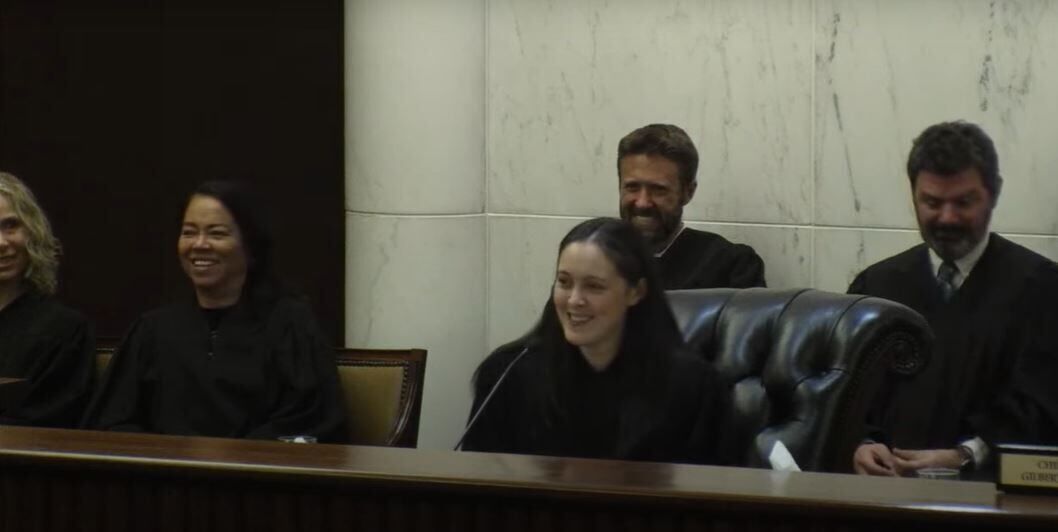
A member of Colorado’s second-highest court urged the state Supreme Court last week to revise confusing language in the rules governing magistrates, less than two weeks after an attempted cleanup of the rules took effect.
Magistrates are judicial employees who are not judges but who handle aspects of cases in the trial courts. Litigants may consent to magistrates being the final decision-maker in certain proceedings, but judicial rules also permit magistrates to address matters without consent. Historically, in those circumstances, a litigant must seek review from a district judge before turning to the Court of Appeals.
As far back as 2009, one member of the Court of Appeals characterized the rules as a “confusing appellate labyrinth” that most endangers self-represented litigants in domestic relations and juvenile matters who are unsure of the proper steps for challenging a magistrate’s order. The vast majority of family law cases features at least one litigant who does not have a lawyer.
Last year, the Supreme Court revised the magistrate rules, most notably to provide a single starting point for appealing an order regardless of consent. But the court’s Civil Rules Committee, which drafted the proposal, opted against clarifying a key phrase underlying the path to appeal: a magistrate judge’s final order is reviewable when it “fully resolves an issue or claim.”
“The ‘issue or claim’ language,” wrote Judge Katharine E. Lum in a Jan. 15 concurring opinion, “adds to the procedural morass by mandating different rules of finality in magistrate proceedings than for proceedings before district court judges.”
‘EXTRAORDINARILY BROAD’
Lum’s concerns touched upon recent Supreme Court precedent that sought to clarify when a magistrate’s order is appealable. In 2024, the Supreme Court noted in the criminal case of People v. Maes that an “issue” is a “point in a dispute” between two parties. Because the magistrate in Maes had made a probable cause ruling that fully resolved that issue, albeit in the middle of the case, the Supreme Court reasoned the defendant could immediately appeal it to a district judge.
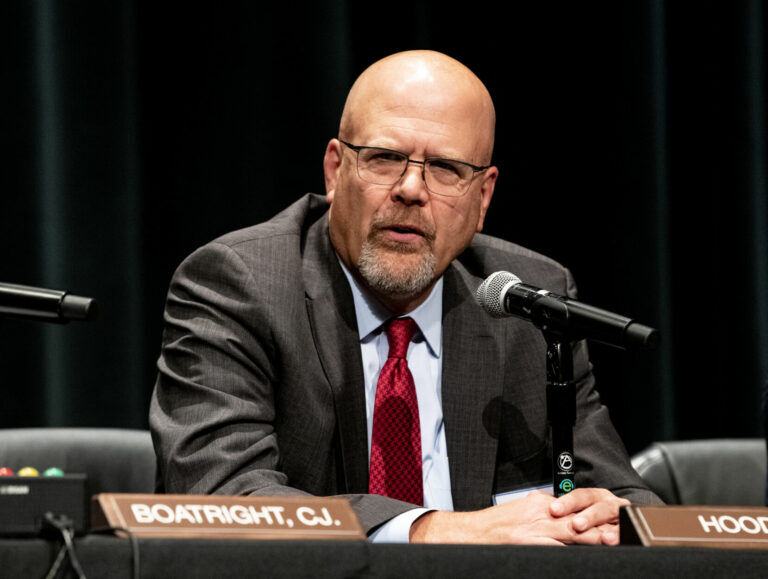
Justice William W. Hood III, in explaining the magistrate rules, added that an issue is fully resolved “when a magistrate no longer has the authority to revisit its determination.”
Fast-forwarding to the case before the Court of Appeals, a three-judge panel considered at length whether it could even hear the challenge to a Chaffee County magistrate’s orders in a dissolution-of-marriage case, involving a mixture of consent and non-consent proceedings. Although the panel ultimately reviewed the appeal as presented, the judges expressed further concerns about the clarity of the rules.
Judge Ted C. Tow III, in the majority opinion, noted that litigants can seek “piecemeal” review of magistrates’ orders in the district courts, but can only turn to the Court of Appeals once all issues are resolved. He further observed that the Supreme Court’s definition of “issue” as a point in a dispute “appears to be quite broad,” and could hypothetically allow appeals of routine evidentiary disputes.
Finally, Tow questioned the logic behind deeming an issue fully resolved when the magistrate “no longer has the authority to revisit” the decision.
“This analysis appears to put the cart before the horse or, at least, is circular: How do we determine if the magistrate has lost the authority to revisit their ruling? By looking at whether it fully resolves the issue or claim,” he wrote. “And how do we determine that the ruling fully resolves the issue or claim? By looking at whether the magistrate has lost the authority to revisit their ruling.”

Lum, writing separately, also raised questions about the Supreme Court’s “extraordinarily broad definition of ‘issue’,” and additional language from a 2020 decision suggesting a magistrate’s decision is final and appealable “at the conclusion of and resulting from a hearing.”
“But that raises the potential for yet more disparate treatment. For example, would the order entering the dissolution decree still fully resolve the claim if the magistrate had entered it without holding a hearing?” she wrote.
‘DESIRE FOR CONSISTENCY’
As part of the Civil Rules Committee’s deliberations on the revised magistrate rules that took effect on Jan. 2, members debated at their June 2025 meeting about whether to include more precise language for when a litigant can appeal a magistrate’s order in light of the Supreme Court’s decisions.
“I’m not sure Maes intended to change anything,” said Justice Richard L. Gabriel, the court’s liaison to the committee. “We don’t want review of everything — a motion for extension of time … we didn’t want everything like that to have to go to the district court.”
“What does ‘issue’ mean?” asked Court of Appeals Judge Jerry N. Jones, who chairs the committee. “I think the general consensus has been, let’s not mess with it because our attempts at defining it weren’t really satisfactory to enough folks.”
Attorney Christopher J. Linas, in submitting comments to the Supreme Court on the proposal, cautioned that the new rules muddied the waters by giving magistrates the power to reconsider their own orders, leading to further questions about finality.
“Both the old rule and the new rule state that a final order is one that completely resolves an issue or claim. This leads to arguments over what orders fully resolve issues and which orders do not,” he told Colorado Politics after the court adopted the final revisions. “It is not always clear where one issue (ends) and another begins. For example, (is) an order in a divorce awarding the boat to the husband reviewable because it fully resolves the issue of who gets the boat, or is it not reviewable because it only partially resolves the issue of how property will be divided overall?”
Without that clarity, Lum elaborated in her concurrence, there may be a new “explosion of petitions” seeking district judges’ review of magistrate orders.
“Or worse, parties will lose appellate rights if they fail to correctly navigate through an increasingly complex procedural maze,” she wrote.
Lum urged the Supreme Court to clarify how its recent interpretation of final orders applies in domestic relations cases, “or (better yet) to revise the ‘issue or claim’ language in the magistrate rules to maintain a consistent definition of finality across the court system,” she wrote.
A rules committee staffer indicated to Colorado Politics that the committee does not plan to address Lum’s concerns at its upcoming meeting this Friday.
The case is In the Marriage of Carey.


Fort Carson soldier’s wife could be deported
Carol McKinley
carol-mckinley@denvergazette.com
Updated 2 hours ago
As the country’s largest immigration enforcement crackdown continues in Minnesota’s Twin Cities, a Fort Carson sergeant is fighting a personal immigration crisis — one that may implode his family. Sgt. Tyler Garza’s wife, Jennifer Maradiaga Baca, is not a legal...

Carol McKinley
Reporter

Federal judge recommends dismissing trans athletics lawsuit by area school districts
Eric Young
eric-young@denvergazette.com
Updated 3 hours ago
A judge has recommended dismissing a federal lawsuit filed by multiple school districts against the Colorado Attorney General’s and Civil Rights Offices over their policies dictating students’ participation in athletics and activities based on their biological sex rather than gender...

Eric Young
Reporter

Parents still waiting for Jeffco counselor plea deal on sexual assault charge
Sage Kelley
sage.kelley@denvergazette.com
Updated 3 hours ago
A plea deal has been delayed again for the Jeffco Public Schools counselor who allegedly started a sexual relationship with a 14-year-old student. Chloe Castro appeared in a Jefferson County District Court room in front of Judge Diego Hunt on...

Sage Kelley
Reporter

Former Jeffco security guard found guilty of sex assault on a child
Sage Kelley
sage.kelley@denvergazette.com
Updated 1 day ago
A Jefferson County jury found a former school security guard and pastor guilty of sexual assault on a child by a person in a position of trust. The jury deliberated on Friday after a four-day trial, eventually finding that 68-year-old Rubel...
Sage Kelley
Reporter

State Supreme Court holds oral arguments, 10th Circuit revives dormant initiative | COURT CRAWL
Michael Karlik
michael-karlik@denvergazette.com
Updated 1 day ago
Welcome to Court Crawl, Colorado Politics’ roundup of news from the third branch of government. The state Supreme Court heard oral arguments last week in multiple civil and criminal cases, plus the Denver-based federal appeals court is doing something unusual...
Michael Karlik
Reporter

Is a pardon for Tina Peters coming? Colorado governor confirms he is weighing options
The Denver Gazette
the-denver-gazette@denvergazette.com
Updated 1 day ago
Gov. Jared Polis on Friday strongly indicated he is considering clemency for Tina Peters, the former county clerk convicted of a security breach at her election office. When pressed about the matter, Polis didn’t offer an explicit answer, but he...

The Denver Gazette
Reporter

Douglas County Sheriff, DA sue Polis administration over immigration policy
Marissa Ventrelli
marissa-ventrelli@denvergazette.com
Updated 4 days ago
Douglas County Sheriff Darren Weekly and District Attorney George Brauchler filed a lawsuit against Colorado Gov. Jared Polis, challenging the constitutionality of a state statute on immigration visas. Filed on Wednesday, the suit also named Colorado Attorney General Phil Weiser,...

Marissa Ventrelli
Reporter

In Tina Peters appeal, judges telegraph some degree of reversal | ANALYSIS
Michael Karlik
michael-karlik@denvergazette.com
Updated 5 days ago
Former Mesa County clerk Tina Peters seems poised to walk away from the state’s Court of Appeals with her criminal convictions largely intact, even as a three-judge appellate panel raised concerns about her sentence and one specific conviction. Peters, a...
Michael Karlik
Reporter

Tina Peters will ask appeals court to overturn her conviction today: Here’s what you need to know.
Colorado Politics
colorado-politics@denvergazette.com
Updated 6 days ago
Lawyers for former Colorado elections clerk Tina Peters will try to convince a state appeals court on Wednesday afternoon to overturn her conviction in a case involving a security breach at the election office she ran. Mesa County jurors convicted...

Colorado Politics
Reporter

Lakewood man sentenced to 48 years in drunken murder retrial after appeal
Michael Braithwaite
michael.braithwaite@gazette.com
Updated 1 week ago
A Lakewood man was sentenced to 48 years in prison Tuesday after a Weld County jury convicted him of second-degree murder for the second time. Kenneth Hoschouer, 45, was found guilty in December of murdering Christopher Grau, who was dating...

Michael Braithwaite
Reporter
PREV
PREVIOUS

Douglas County Board of Commissioners selects new chairman
The Douglas County Board of Commissioners will have a new chairman in 2026, but not a new face. Commissioner George Teal was chosen to serve as chairman on Jan. 13 after serving on the board since 2021, according to a news release from Douglas County. The commissioners switch leadership each year based upon a majority […]

Vice President JD Vance and his wife Usha Vance say they are expecting their fourth child
WASHINGTON (AP) — Vice President JD Vance and his wife, second lady Usha Vance, are expecting a son in late July, they announced in a social media post on Tuesday. The couple said they were excited to share the news of their fourth child, who will join their other three young kids: Ewan, Vivek and […]