







Fort Carson soldier’s wife spared possible deportation
Carol McKinley
Special to the Denver Gazette
In a move that signaled that Homeland Security may be softening its stance on undocumented spouses of active-duty military, a Colorado woman was spared from possible deportation Thursday.
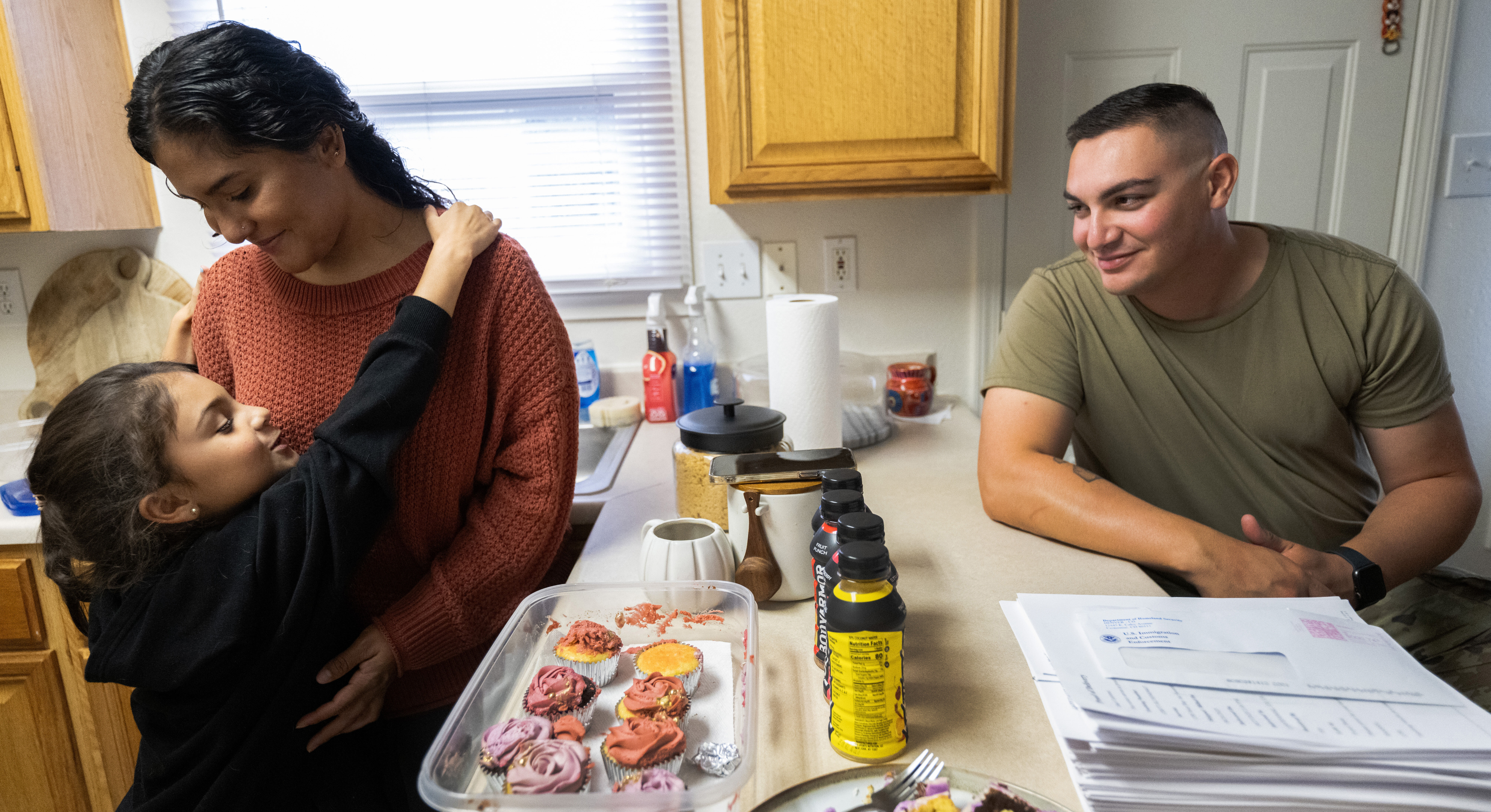
Jennifer Madriaga Baca, an undocumented immigrant, looked exhausted but relieved as she walked out of a Florence Immigrations and Customs Enforcement office Thursday. In her arms was a stack of personal legal documents 12 inches high.
The papers piled up through 10 years of fighting a deportation order handed down by a Texas immigration judge in 2011.
The order sat unenforced until this past summer when Maradiaga Baca received her first demand from Homeland Security.
After that August check-in with immigration authorities in Centennial, she was fitted with a GPS watch which monitored her daily movements. The government further surveilled her with a requirement to send a daily photograph and to supply occasional fingerprints.
She checked in religiously, but there was a glitch which wrongly indicated problems and that’s why she was called in a second time. Still, with no one to tell her differently, she was fully prepared to be detained and returned to Honduras, where she was born. A caravan of friends followed Maradiaga Baca and her husband, Sgt. Tyler Garza, to Florence.
“We’re both so tired. Not only from today, but from the years and effort we’ve put in this far,” said Garza, who is a 4th Infantry Division Squad leader. “We’re both so tired. Not only from today, but from the years and effort we’ve put in this far.”
During a meeting which took an hour, ICE personnel told the couple that there would be future check-ins. Garza indicated the immigration authorities were courteous and feels that the government is “trying to work with us within reason for my military service so as to not create hardship in my career.”
Military experts have said that breaking up a family due to the deportation of a spouse affects readiness of an active-duty military member.
OTHERS NOT SO LUCKY
The Garzas’ story is common. This past June, another U.S. Army sergeant’s wife, Shirly Guardado, was deported to Honduras after being held in federal custody for two months.
Like Maradiaga Baca, Guardado was apprehended crossing the border around 10 years ago and had an order of supervision from ICE. The order required for her to check in regularly with immigration officials.
Still, she was called out of work, handcuffed and detained with no warning, according to her husband. Sgt. Aysaac Correa hopes to relocate to Honduras to reunite with Guardado. The couple has one child.
According to 2021 data from the group fwd.us, there are as many as 80,000 long-term undocumented spouses and parents of military members and veterans living in the United States.
According to fwd.us statistics, most of them are female and 45 years-old or younger. Like Maradiaga Baca, over half are from Latin-American countries and around a third are Asian.
Marrying an active duty soldier does not guarantee U.S. citizenship, but such a marriage has been known to expedite the process.
Maradiaga Baca’s history is one shared by tens of thousands of other undocumented immigrants. In 2010, the then-15-year-old Honduran citizen crossed the border illegally.
According to a Department of Homeland Security spokesperson, Maradiaga Baca allegedly entered the U.S. by “wading the Rio Grande River west of the Hidalgo, Texas Port of Entry, a place not designated as a port of entry.”
Immediately after entry, Mariadaga Baca was detained and placed into immigration proceedings and was ordered to be removed on June 8, 2011.
Once she and Garza got married and started a family, they began the process of attaining United States citizenship, but the process was complicated by the removal order.
BACK TO KIND OF NORMAL
The couple has plenty of supporters who don’t want to see the family split up. Waiting anxiously for them in the parking lot of the Florence ICE office were friends and Army buddies who greeted them with flowers.
Once home, Maradiaga Baca did the best thing any mom could do. She heated the oven and baked a chocolate cake and a flan, requests from her daughters, Isabell and Anabell, not for if she came home, but when.
“It was so nice to see that even after this storm, the kids remained hopeful,” said her husband, Garza.
Last summer, the Garzas filed for asylum and also for a motion to reopen the case for reconsideration, but the couple has not heard anything.
Garza said they won’t give up because “this isn’t the end of our challenges, but many battles win the war.”

Colorado attorney general invites public to report ICE ‘misconduct’
Marissa Ventrelli
marissa-ventrelli@denvergazette.com
Updated 38 minutes ago
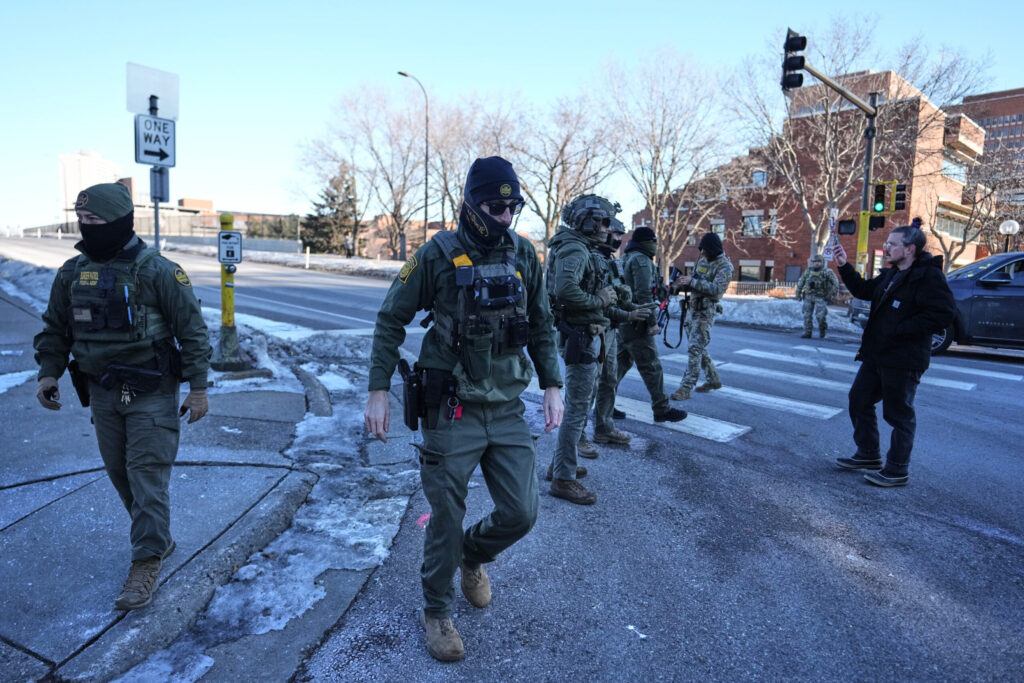
Colorado Attorney General Phil Weiser has launched a new online mechanism that allows Colorado residents to report “misconduct” by federal immigration agents, his office announced on Wednesday. “Nobody is above the rule of law, including federal agents such as ICE...

Marissa Ventrelli
Reporter
Fort Carson soldier’s wife could be deported
Carol McKinley
carol-mckinley@denvergazette.com
Updated 4 hours ago
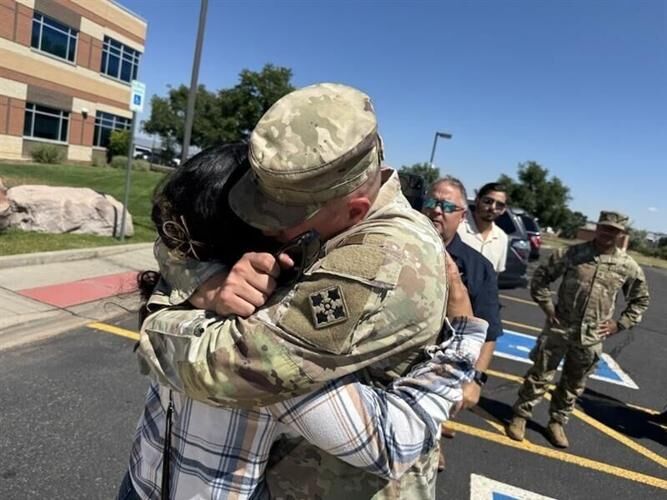
As the country’s largest immigration enforcement crackdown continues in Minnesota’s Twin Cities, a Fort Carson sergeant is fighting a personal immigration crisis — one that may implode his family. Sgt. Tyler Garza’s wife, Jennifer Maradiaga Baca, is not a legal...
Carol McKinley
Reporter

Colorado farmers warn U.S. Sen. John Hickenlooper tariffs and research cuts endanger agriculture
Marianne Goodland
marianne-goodland@denvergazette.com
Updated 7 hours ago
Northern Colorado farmers told U.S. Sen. John Hickenlooper this week that tariffs and President Donald Trump’s decision to import $40 billion worth of beef from Argentina have hurt Colorado’s agricultural industry. But the administration’s cuts to scientific research are almost...

Marianne Goodland
Reporter

Court rules against Colorado Rep. Jason Crow, other Democrats in ICE visitation policy challenge
Michael Kunzelman
michael.kunzelman@associatedpress.com
Updated 2 days ago
WASHINGTON • A federal judge refused Monday to temporarily block the Trump administration from enforcing a new policy requiring a week’s notice before members of Congress can visit immigration detention facilities. U.S. District Judge Jia Cobb, who is based in Washington, D.C., concluded...

Michael Kunzelman
Reporter
Colorado governor insists local officers can work with DEA agents amid non-cooperation law
The Denver Gazette
the-denver-gazette@denvergazette.com
Updated 2 days ago
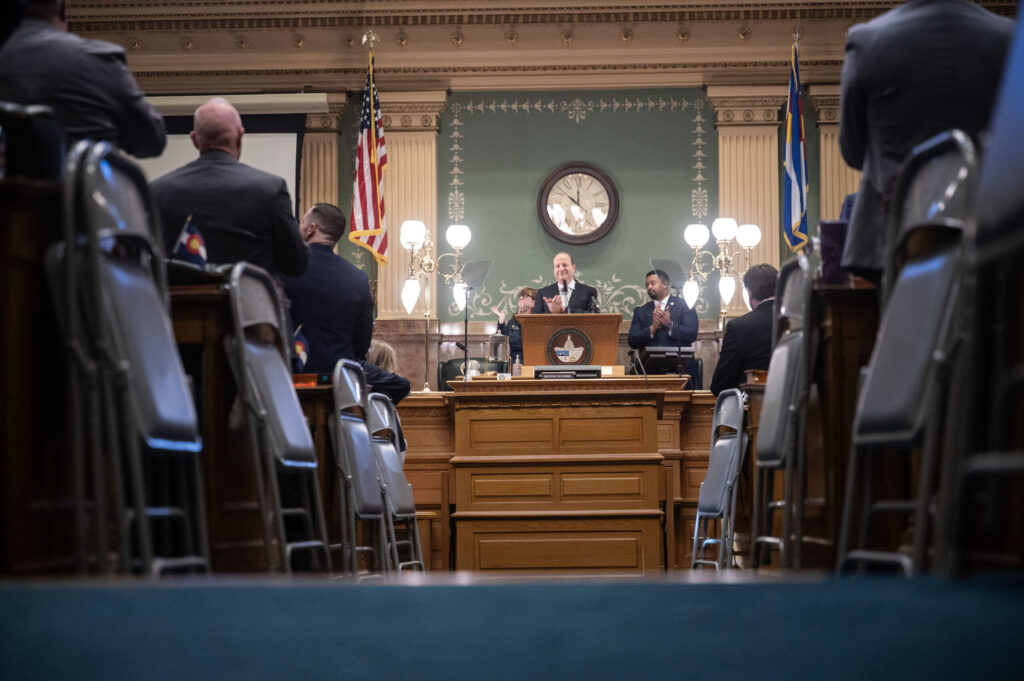
Gov. Jared Polis on Friday insisted that local law enforcement officers in Colorado can — and should — work with federal drug enforcement authorities to go after criminal activity. An official of the U.S. Drug Enforcement Agency earlier said Colorado’s...

The Denver Gazette
Reporter
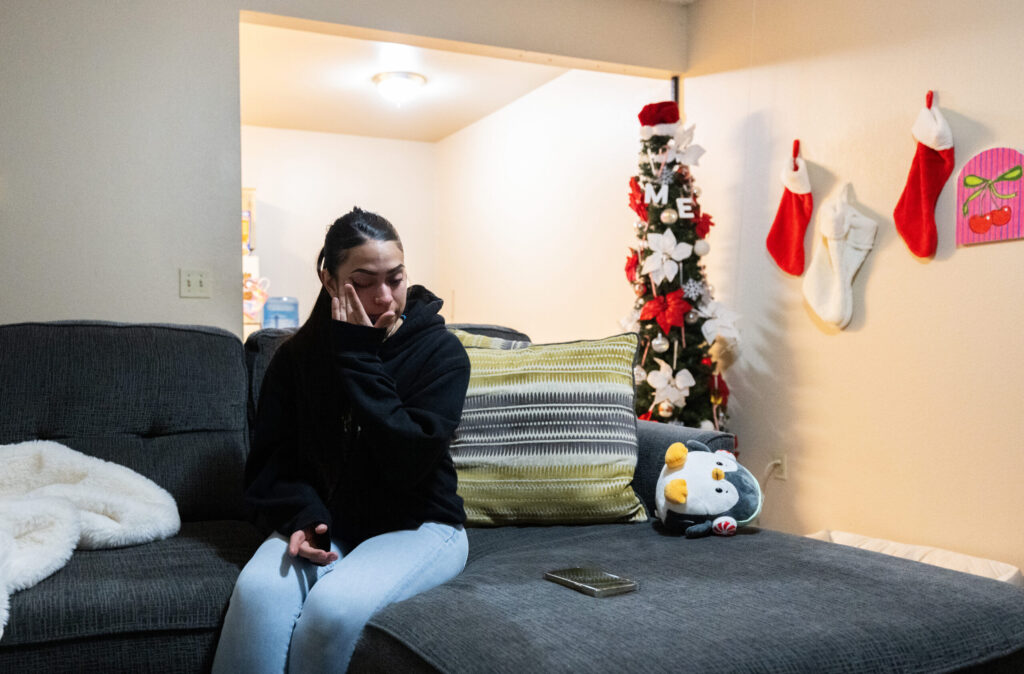
As ICE arrests rise in the U.S., one detainee was eager to leave the country
Mackenzie Bodell
mackenzie-bodell@denvergazette.com
Updated 4 days ago
Marivel Azpeitia was driving from their home in Colorado Springs to Dallas with her fiancé to pick up her stepchildren for Christmas when the pair was pulled over by Texas law enforcement. It would be some of the last moments Azpeitia would see her fiancé,...

Mackenzie Bodell
Reporter
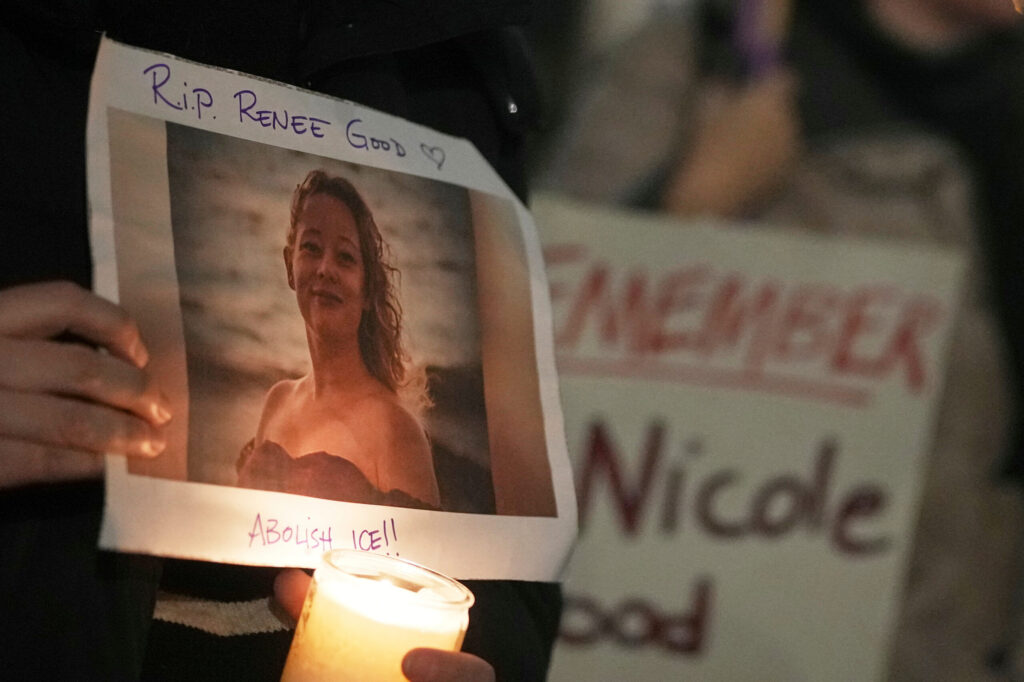
Renee Good’s family hires George Floyd law firm to investigate Minneapolis ICE shooting
The Associated Press
the-associated-press@denvergazette.com
Updated 1 week ago
Renee Good’s family is accusing federal immigration officers of killing the Minneapolis mother as she attempted to follow agents’ instructions, and said Wednesday they have hired the same law firm that represented George Floyd ’s family to press for answers and accountability....

The Associated Press
Reporter

Douglas County Sheriff, DA sue Polis administration over immigration policy
Marissa Ventrelli
marissa-ventrelli@denvergazette.com
Updated 6 days ago
Douglas County Sheriff Darren Weekly and District Attorney George Brauchler filed a lawsuit against Colorado Gov. Jared Polis, challenging the constitutionality of a state statute on immigration visas. Filed on Wednesday, the suit also named Colorado Attorney General Phil Weiser,...
Marissa Ventrelli
Reporter
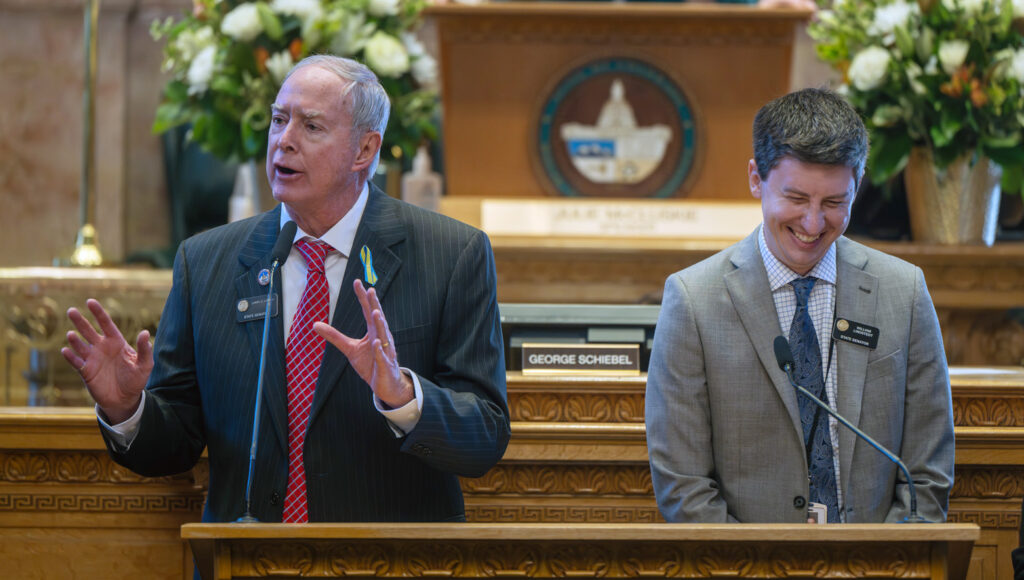
Colorado Senate kicks off 2026 session with bills on competency law, housing, schools and public safety
Marianne Goodland
marianne-goodland@denvergazette.com
Updated 1 week ago
The Colorado Senate opened the 2026 legislative session Wednesday with a flurry of policy proposals, including changes to the state’s competency law, tougher penalties for child trafficking, early action on school funding and measures addressing housing, firearms and immigration enforcement....
Marianne Goodland
Reporter
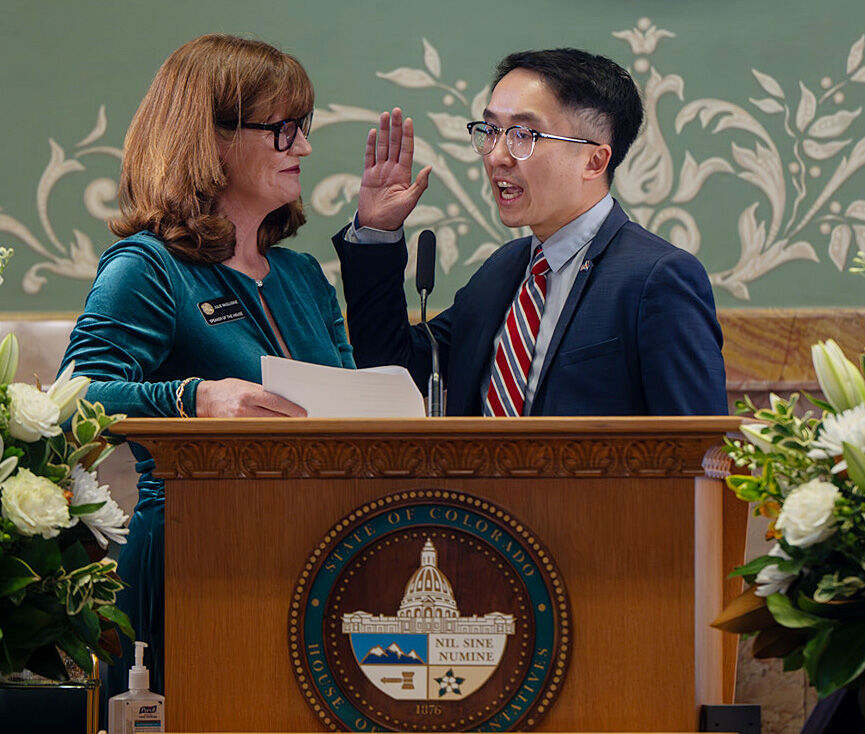
House Speaker urges colleagues to fight Trump, who ‘would hold Colorado hostage’
Marissa Ventrelli
marissa-ventrelli@denvergazette.com
Updated 1 week ago
A top Colorado Democrat on Wednesday characterized Colorado as under siege by the Trump administration, as she invoked Winston Churchill and urged colleagues to fight back. “In this moment, when the White House would hold Colorado hostage, I’m reminded of...
Marissa Ventrelli
Reporter
PREV
PREVIOUS

Colorado title board OKs ballot measures to eliminate flat income tax in favor of graduated brackets
Proponents hoping to change Colorado’s income tax structure from a flat rate to graduated tiers — thereby raising taxes for some brackets — walked away from a Wednesday meeting with eight ballot measures approved by the title board. The coalition backing the graduated income tax change now must pick which one to move onto the […]
Rep. Ron Weinberg won't seek reelection
Republican Rep. Ron Weinberg of Loveland announced on Thursday evening that he will not seek another term in the Colorado House. “Serving this community has been one of the greatest honors of my life,” the two-term state representative said on X. “I am deeply grateful to every supporter, volunteer, friend, and neighbor who trusted me […]