







CU system set to expand collective bargaining rights
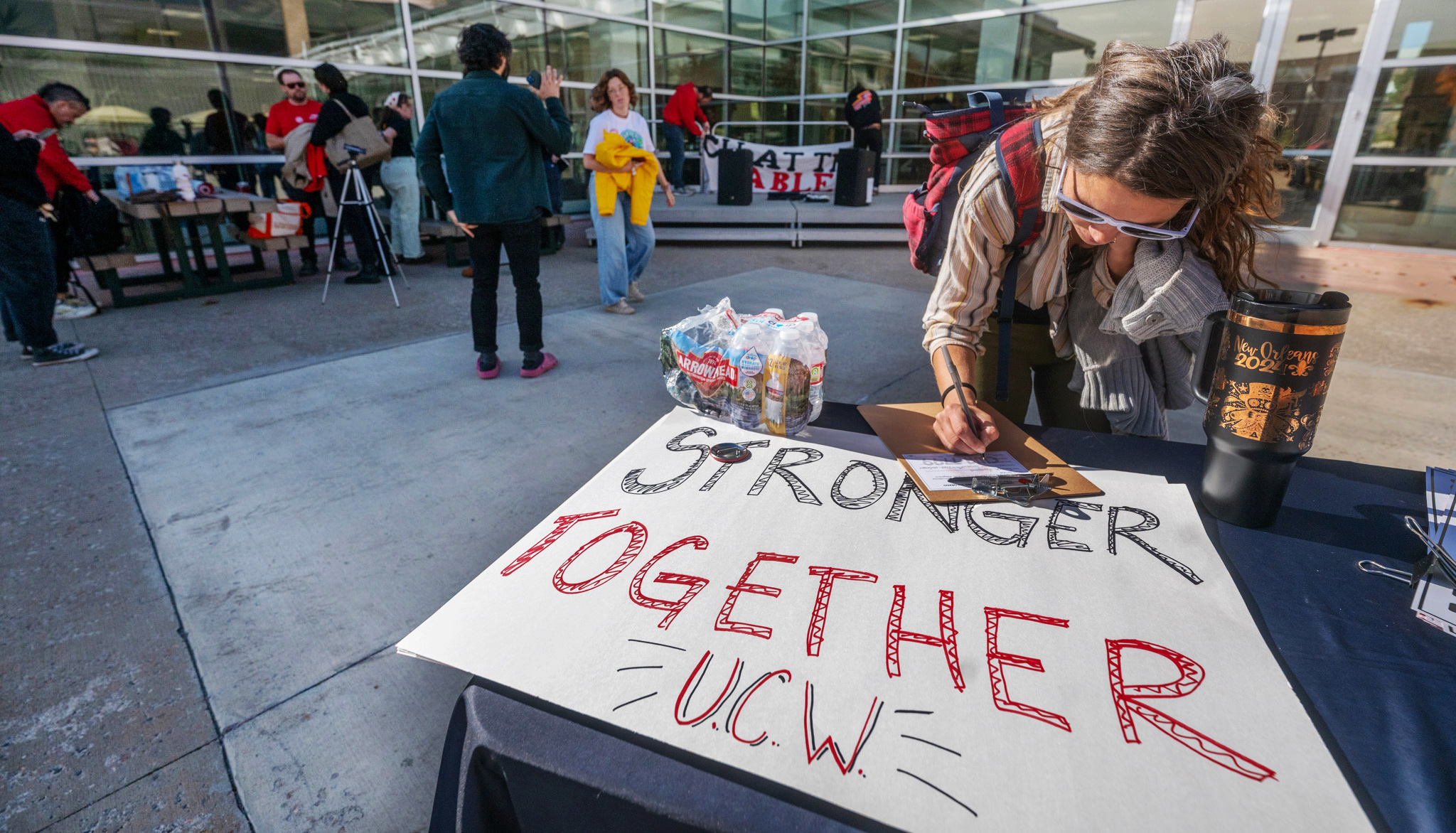
Following recent rallying and advocacy, workers across the University of Colorado system are one step closer to greater collective bargaining.
CU Regent Elliott Hood announced a plan to introduce a policy expanding collective bargaining rights for faculty, university staff and undergraduate and graduate workers at all four campuses during a board governance meeting Friday.
The proposal would amend an existing policy to establish a process for campus workers to unionize and bargain collectively over wages, hours, grievance procedures and working conditions. It will be sponsored by Hood and Regent Ilana Dubin Spiegel with support from United Campus Workers Colorado.
Classified staff, who are already covered by a collective bargaining agreement through the union Colorado WINS, along with confidential employees like university officers, would not be included, according to a press release from UCW Colorado.
“As a former unionized teacher, I believe that every employee deserves a voice in the workplace and should have the right to collectively bargain and join a union,” Hood said in a statement.
The policy is slated to be formally introduced at the Board of Regents’ next regular meeting on Feb. 5 in Boulder.
The announcement comes after years of growing membership and momentum from local campus chapters.
Last November, a mix of union organizers and employees in the CU system held a “Day of Action” across the four campuses, ending with the event in Colorado Springs, where they spoke about the potential benefits of bargaining rights.
Among the challenges CU workers have voiced concerns about recently are wage discrepancies between colleges and lecturers; flat-rate pay raises; a lack of student worker representation; and commuting costs not keeping up with rising costs of living.
Federal mandates targeted at universities across the country last year also have raised uncertainties about academic freedom on campus. The CU system was among the colleges and universities across the country asked to sign a loyalty oath to the Trump administration’s agenda and ideologies.
“Without collective bargaining, workplace safety and academic freedom depend on the goodwill of our bosses,” said Jade Kelly, president of Communications Workers of America Local 7799 and a university staff member at CU Boulder in a statement.
“CU workers deserve a contract with binding protections that address unsafe labs, understaffed classrooms, and the freedom to teach, research, and speak without fear of retaliation or losing our jobs.”
UCW Colorado has previously argued that, of the 15 states currently with a Democratic governor and legislative leadership, theirs is the only one without collective bargaining rights in public higher education.
That said, Colorado has experienced recent shifts in other job sectors. In 2020, the legislature passed the Colorado Partnership for Quality Jobs and Services Act, which allowed state workers to unionize and collectively bargain. In 2024, Denver voters approved ballot measure 2U, which required the city to pass an ordinance ensuring city workers could begin collective bargaining as part of a union by Jan. 1, 2026.
“When workers have clear rights and protections, universities become safer, stronger, and more stable. The financial cost is modest. The institutional cost of silence, turnover, inequity, and preventable risk is enormous,” said CU Regent Wanda James.
“Expanding collective bargaining is not symbolic. It is a decisive step toward a university that actually lives up to its values rather than simply advertising them.”