







RTD pilots digital open meeting discussion tool

The Regional Transportation District debuted a digital tool last week that officials said is the first of its kind they’ve seen for open meetings use — at least in the Denver area.
Utilized by the agency’s Board of Directors, the online discussion tool will allow board members to discuss work plans and plan for upcoming meetings under the public purview, which is required by Colorado open meetings laws involving an elected quorum of at least three people.
The tool is hardwired into the agency’s Microsoft Teams channels, Director Chris Nicholson said. Whenever a message is sent into the channel, that message will be posted on the online board.
Nicholson, who led the charge on the initiative, said the idea arose after a number of new board members who had been in the habit of discussing policy over Slack before their election realized they could no longer do so in the same manner once they held office.
“You can’t even have three people on an email. I can’t email two other directors at the same time unless I bcc them and say ‘here’s what I think about this issue’,” Nicholson said. “It’s just ridiculous in a digital age. No normal person works like this.”
The team consulted RTD legal staff while creating the tool to ensure its compliance with Colorado open meetings laws, Nicholson said, adding that open virtual/video meetings had previously served as the public’s way to observe the discussions at hand.
“If you’re able legally to do that, it’s not a huge step to the idea that a public chat room, which is essentially what this tool is, would also be legal,” Nicholson said.
Days before its implementation, Nicholson also informed Colorado Freedom of Information Coalition Executive Director Jeff Roberts about the soon-to-be-live discussion tool.
“I’ve been doing this job for about 12 and a half years now, and I don’t think I’ve seen anything exactly like this,” Roberts said. “It does seem like something that technology allows at least for some experimentation here.”
While Roberts appreciated the initiative Nicholson took in streamlining internal communication while still making those discussions accessible to the public, he still had some concerns about the tool complying with the “real-time” aspect of the open meetings laws.
“The intent of the law is for people to be able to observe, listen to their elected officials, members of public bodies have these discussions in real time,” Roberts said. “Is this in real time? It seems like it could be if someone is paying attention to this on an ongoing basis.”
Roberts added that, to ensure full compliance with the meaning and intent of the law, he would recommend the agency adopt some sort of sign-up system that would allow people to get notified when there are new comments.
Both Roberts and Nicholson said they hadn’t heard of any similar system being used by government agencies, either in the Denver area or otherwise. Officials from the mayor’s office, the auditor’s office, and the Department of Public Health and Environment confirmed Thursday that they did not have a similar system and also had not heard of other agencies implementing it.
Currently, the online board is broken out into four discussion topics: the 2026 executive work plan, the 2026 operations, safety and security work plan, the 2026 finance and planning committee work plan and the 2026 performance committee work plan.
Nicholson said that during its two-month pilot, the tool will mainly be used for discussing when and how those work plans will be presented at upcoming meetings, ironing out a process the director deemed as previously “cumbersome.”
If the pilot is successful, meaning board members have become comfortable using the tool to discuss agenda items, the agency may use it to have deeper conversations about topics in a way that allows board members to express their opinions in the same manner they would for any discussion item, he added. The board would continue to only take votes during in-person meetings when members of the public also have a chance to comment.
“I like the fact that they’re being cautious with this, that they’re putting it out there only to develop their agenda and not really have actual policy discussions on this yet,” Roberts said. “I do think there are things that may not be technically what the open meetings law requires, but the spirit of what they’re doing does seem to be about making sure the public can more fully participate in their process.”
Those interested in following the discussions can access the tool at rtd-board.rtd-denver.com.

Denver mayor aims to reduce gun violence, homelessness in 2026
Deborah Grigsby
deborah.smith@denvergazette.com
Updated 6 hours ago
Denver Mayor Mike Johnston on Monday outlined his top 2026 priorities, with an eye toward the city’s most persistent challenges, notably homelessness, which has been growing under his administration, though there had been gains in some areas. The city’s top...

Deborah Grigsby
Reporter

Greenland is now Colorado’s problem. And that’s a good thing. | Vince Bzdek
Vince Bzdek
vince-bzdek@denvergazette.com
Updated 2 days ago
The conclusion to the dizzying odyssey over Greenland this week reminded me a little of the ending of the “Wizard of Oz.” If you recall, Dorothy, the Scarecrow, the Lion and the Tin Man finish a great and frightful quest...

Vince Bzdek
Reporter

Denver City Council to mull spending $30M on homeless services
Deborah Grigsby
deborah.smith@denvergazette.com
Updated 18 hours ago
The Denver City Council will consider a trio of resolutions totaling $30 million to support the city’s efforts to shelter the homeless. The first is a resolution to approve a $14 million, two-year agreement between the city and Bayaud Works,...
Deborah Grigsby
Reporter

Vape shops challenge Denver’s flavored tobacco ban in court
Deborah Grigsby
deborah.smith@denvergazette.com
Updated 3 days ago
The smoke has yet to settle in the battle over the city’s flavored tobacco ban as local vape shop owners have sued the City and County of Denver, asking the court to declare the ordinance unconstitutional and stop its enforcement....
Deborah Grigsby
Reporter
Rep. Ron Weinberg won’t seek reelection
Marianne Goodland
marianne-goodland@denvergazette.com
Updated 4 days ago
Republican Rep. Ron Weinberg of Loveland announced on Thursday evening that he will not seek another term in the Colorado House. “Serving this community has been one of the greatest honors of my life,” the two-term state representative said on...

Marianne Goodland
Reporter

Denver unveils new all-electric, ‘permanently’ affordable housing
Deborah Grigsby
deborah.smith@denvergazette.com
Updated 4 days ago
The City of Denver welcomed its newest affordable housing community as Mayor Mike Johnston and other city leaders gathered for a brief ribbon-cutting ceremony on Thursday. Developed by the Urban Land Conservancy, The Irving at Mile High Vista is a...
Deborah Grigsby
Reporter

PUC schedules virtual hearing on proposed rules for public safety power shutoffs
Scott Weiser
scott-weiser@denvergazette.com
Updated 9 hours ago
The Colorado Public Utilities Commission will hold a virtual public comment hearing to gather input on proposed new rules for Public Safety Power Shutoff events, a wildfire prevention measure that temporarily cuts power to reduce ignition risks from utility equipment...

Scott Weiser
Reporter
Applications open for Colfax revitalization project board
Kyla Pearce
kyla-pearce@denvergazette.com
Updated 2 days ago
Aurora’s Downtown Development Authority is seeking applicants to serve on the board that will oversee the Colfax Avenue revitalization project approved by voters in November. The application for board members opened Tuesday and the deadline to apply is Feb. 28,...

Kyla Pearce
Reporter
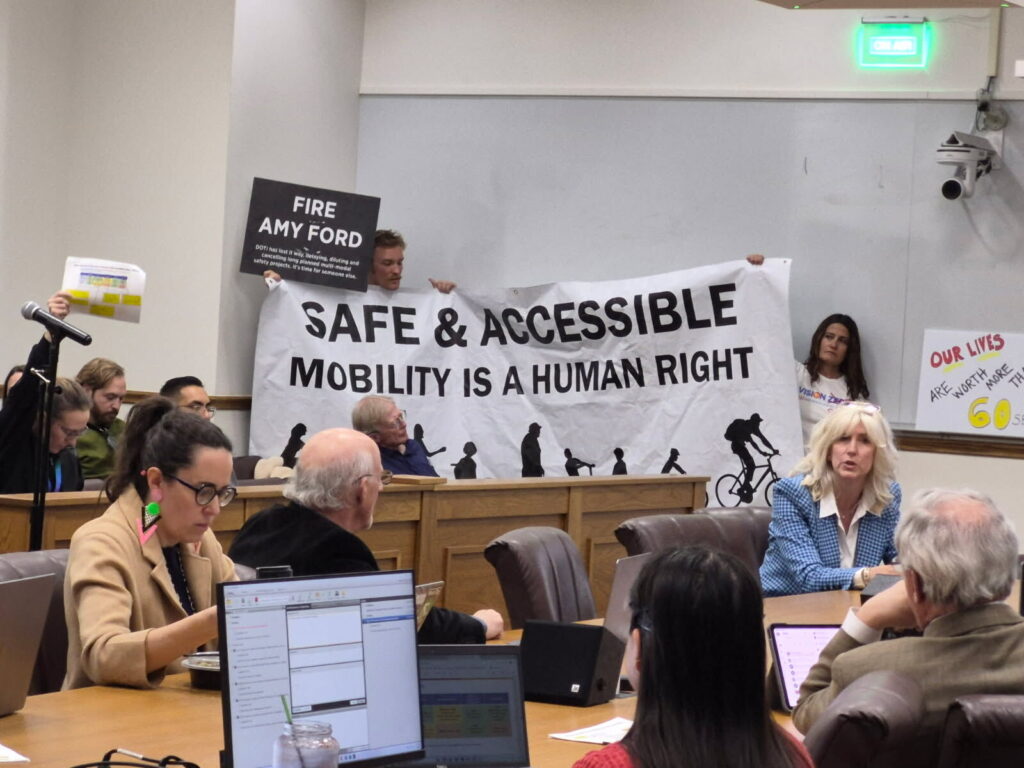
Denver streets official pressed by councilmembers on change of plans along Alameda Avenue
Mark Samuelson
mark-samuelson@denvergazette.com
Updated 4 days ago
Denver City Councilmembers pressed Amy Ford, executive director of Denver’s Department of Transportation and Infrastructure, for details following a public outcry over changes to its “lane repurposing project” on East Alameda Avenue. Councilmembers wrote Mayor Mike Johnston last week after...

Mark Samuelson
Reporter

Colorado farmers warn U.S. Sen. John Hickenlooper tariffs and research cuts endanger agriculture
Marianne Goodland
marianne-goodland@denvergazette.com
Updated 5 days ago
Northern Colorado farmers told U.S. Sen. John Hickenlooper this week that tariffs and President Donald Trump’s decision to import $40 billion worth of beef from Argentina have hurt Colorado’s agricultural industry. But the administration’s cuts to scientific research are almost...
Marianne Goodland
Reporter
PREV
PREVIOUS

Monarch Mountain's long-dreamed No Name Basin set to debut
The trails have been cut. The chairlift is ready. And finally, the snow came. It’s time for perhaps the most anticipated terrain expansion in Monarch Mountain’s 87 years. An opening celebration is set for No Name Basin on Thursday — what the ski area described as “a historic milestone” in its announcement. That morning, the […]

National Western Stock Show breaks attendance record
The 120th year of the National Western Stock Show was a bucking success, breaking the previous attendance record set in 2006. “This year was bigger than ever, and Denver came together to celebrate the Western way of life, helping us crush the all-time attendance record,” said Wes Allison, first-year president and CEO of the NWSS, […]