




Will Colorado’s snowpack be stuck at record lows by late-February? Here’s a look at what to expect
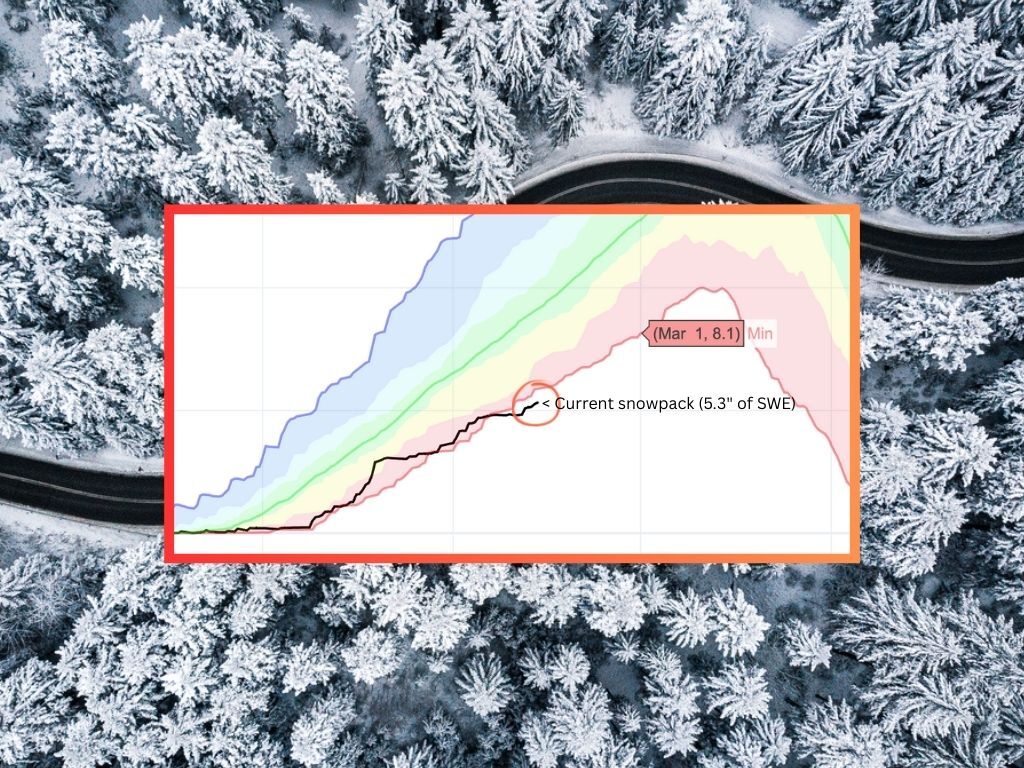
It’s getting a bit repetitive to even mention it at this point, but Colorado’s snowpack remains at an all-time low for the date. With records starting in 1987, no winter season has had less of a statewide snowpack by January 28 than this one – currently, it’s at about 58 percent of the what’s normal for this point in the year. That said, the oft-snowy month of February is around the corner, and weather maps predict a scenario that skiers and snowboarders can be optimistic about.
For starters, there is a small amount of snow expected in Colorado this week. National Weather Service mapping, however, restricts this snowfall to northern Colorado, with Steamboat Springs being the only area that will really benefit, getting about six to eight inches of snow between Wednesday and Saturday morning in the most likely scenario. The OpenSnow forecast echoes this prediction, showing that Steamboat Resort should get about eight inches of snow over the next five days – the most compared to any major resort. Other major resorts get a maximum of two inches or less (see the full OpenSnow five-day breakdown here). Meanwhile, Pivotal Weather‘s ECMWF-AIFS snowfall prediction map – which tends to be a bit more conservative when it comes to predictions – calls for a maximum of about two inches of snow through the end of the weekend in northern Colorado.

In other words, don’t expect much snow through the end of January – and if it does land, it won’t be very widespread. That said, there’s better news related to coming weeks.
Mapping from the NOAA shows a good chance for some decent precipitation from February 3 to February 4. This is reflected in OpenSnow and Pivotal Weather reporting, too. Pivotal Weather – again, tending to be more conservative – only shows a couple inches in this wave, but that snow should be widespread. Plus, more snow lies ahead.
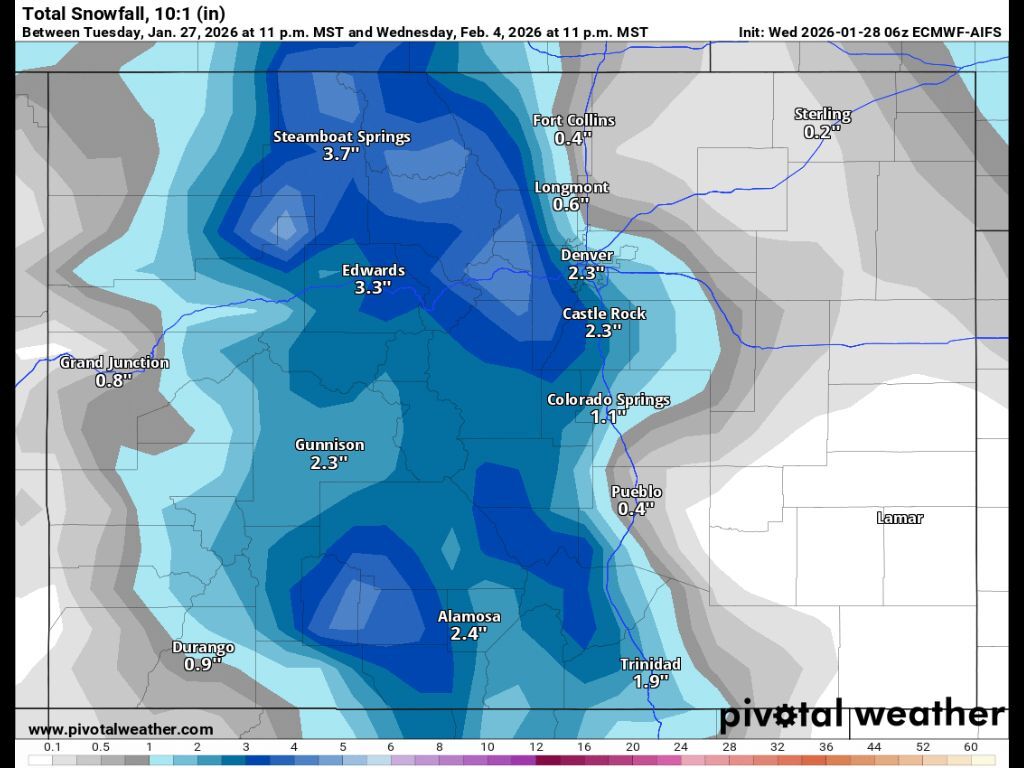
According to Pivotal Weather, more snow should start hitting on February 9, adding to the few inches of snow that’s accumulated over the prior days to mean a total accumulation of about 11 inches on northern Colorado peaks and those in the southwest through the evening February 11. It’s also worth noting that OpenSnow forecaster Joel Gratz is calling for this “stormier weather” to be the start of a shift that could last into late-February.

Long story short, it’s looking like while the next couple of weeks don’t show much snow in the forecast, a turnaround could occur in mid-February. Be warned that while this might mean some fresh powder on the slopes, Colorado’s statewide snowpack may still be stuck at all-time lows. Snow-water equivalent is currently at 5.3 inches, below the previous all-time low record for the date of 5.9 inches that was recorded in 2018. In order to reach all-time lows by February 9 – when the next significant widespread snowfall is expected to start – snow-water equivalent will need to reach 6.6 inches and all signs point to that not happening. If Colorado is to exit February ahead of all-time lows, snow-water equivalent will need to climb above 8.1 inches by March 1.
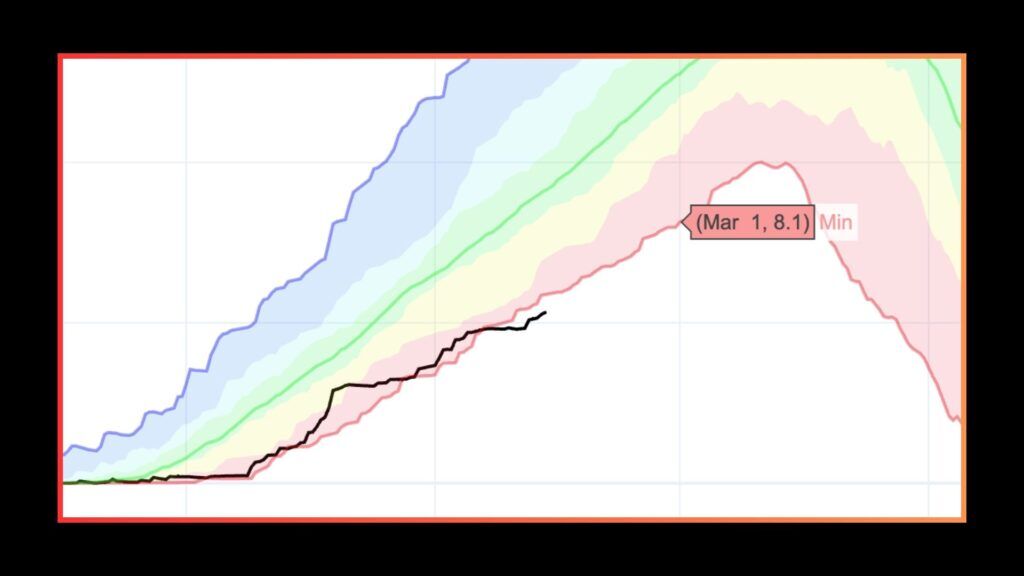
Is beating all-time snowpack lows by the end of February impossible? Not quite. During a similar low-snowpack year in 2018, snow-water equivalent climbed from 6.7 inches on February 10 to 9.3 inches by February 26. That’s a jump of 2.6 inches, just shy of the 2.9 inches of snow-water equivalent Colorado will need to beat all-time lows by the start of March.
The 50 percent chance projection from the USDA shows Colorado inching above all-time low snowpack during the month of February, hitting a peak snow-water equivalent of 12.3 inches by April 8 – still significantly lower than the median peak snow-water equivalent for the season of 16.7 inches, but a healthy amount above all-time lows. Granted, that means Colorado will need to buck its trend of dryness – a potential stretch of bigger snowfall during the second half of February could play a key role in that shift.
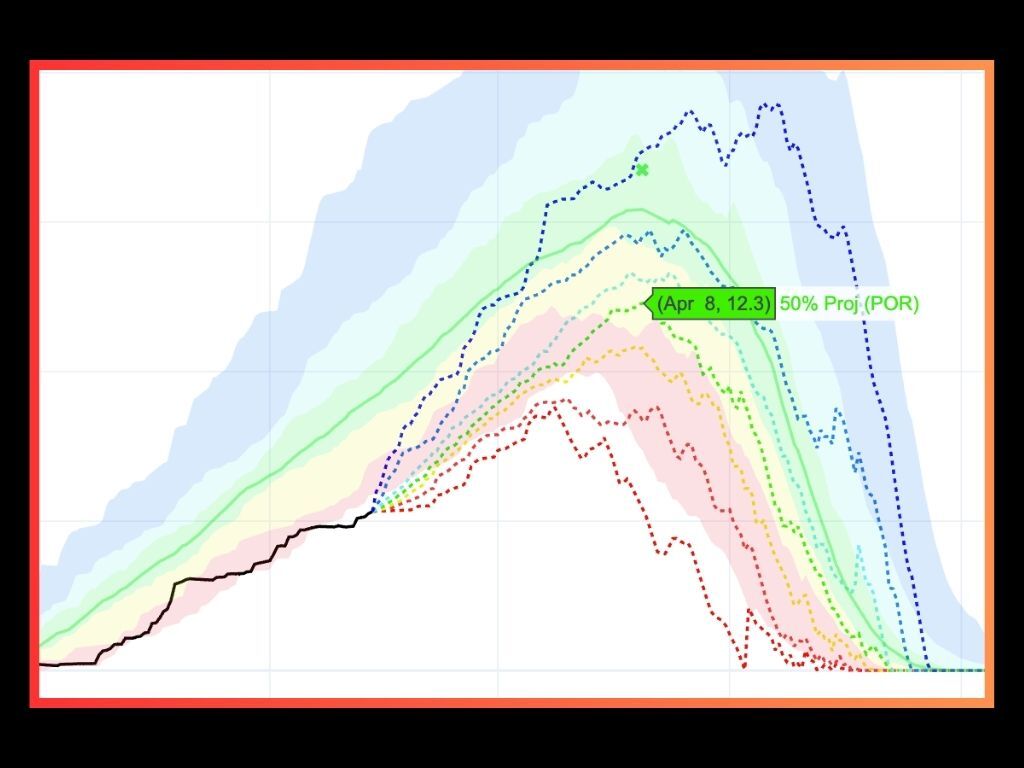
Will the 2025-2026 snow season bring the lowest snowpack on record? We’ll have to wait and see.
Find additional forecasting information on the National Weather Service website.
STAY INFORMED: Get free Colorado news with our daily newsletter (Click here)
Get OutThere
Signup today for free and be the first to get notified on new updates.
PREV
PREVIOUS

Colorado Parks and Wildlife rescue bighorn sheep that fell through ice near Gunnison
A Rocky Mountain bighorn sheep found itself in a chilling situation after falling through the ice on the Taylor River just outside Gunnison, according to the Colorado Parks and Wildlife Southwest Region’s X account. Parks and wildlife received reports of the stuck ewe on Monday afternoon and sent district wildlife managers Codi Prior and Clayton […]

Motorcyclist arrested for vehicular homicide 9 months after crash resulting in cyclist's death
A 61-year-old motorcyclist has been arrested as a suspect in a case involving the 2025 death of a 68-year-old bicyclist in Larimer County. On April 27, 2025, Colorado State Patrol responded to a crash that involved a motorcyclist and a bicyclist on Larimer County Road 38E near Milner Mountain Ranch Road. The initial investigation into […]