







Appeals judge argues prior decision on defendant’s ‘3-strikes’ sentence was wrong
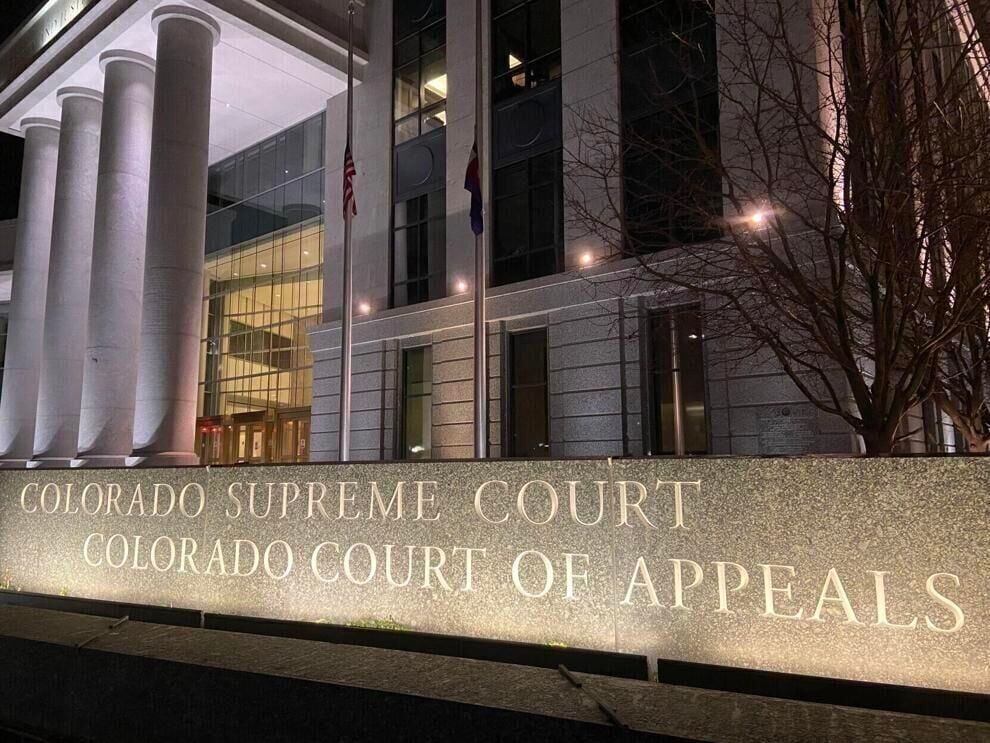
A member of Colorado’s second-highest court argued on Thursday that a defendant stands wrongfully sentenced under the state’s “three-strikes” law, and an earlier appellate decision saying otherwise was incorrect.
A three-judge Court of Appeals panel agreed that Kiki Lamount Douglas’ 96-year prison sentence was likely excessive. Originally, Douglas’ trial judge multiplied the maximum sentence as required by state law because Douglas seemingly had five prior felony convictions that triggered an enhanced punishment. But the panel concluded that three of those prior offenses could not be used against Douglas after all. Therefore, it was necessary to review the proportionality of his lengthy sentence.
Judge Elizabeth L. Harris, writing separately, went further. She believed it was not enough to return Douglas’ case to the trial court to reconsider the severity of his sentence. Instead, Harris contended the panel should order the trial judge to resentence Douglas outright to a lesser prison term.
It should not matter, she added, that a prior Court of Appeals panel believed a three-strikes sentence was warranted.
“It seems odd to say that because the error could not be corrected earlier, it should not be corrected now,” Harris wrote.
Case: People v. Douglas
Decided: January 29, 2026
Jurisdiction: Denver
Ruling: 3-0
Judges: Terry Fox (author)
Timothy J. Schutz
Elizabeth L. Harris (concurrence)
Under Colorado’s three-strikes law, a “habitual criminal” defendant must be sentenced to three or four times the maximum punishment if they have multiple qualifying prior convictions. Because there is a possibility the sentence might be “grossly disproportionate” to the crimes — and constitute cruel and unusual punishment — defendants may seek a proportionality review that factors in an offense’s seriousness.
A Denver jury convicted Douglas in 2016 for attempted murder and assault. At the time, the prosecution asserted Douglas had five prior felonies that all qualified for a habitual criminal sentence. The trial judge agreed and imposed a 96-year sentence for attempted murder, running concurrently with the assault sentence.
In 2019, a Court of Appeals panel addressed Douglas’ sentence for the first time. The defense argued that two of his prior drug convictions and a third conviction for attempting to escape from a correctional facility could not be used against him. While the appeal was pending, the legislature had removed attempted escape from the list of offenses that could trigger a three-strikes sentence. Further, a new Supreme Court precedent affected how Douglas’ drug possession offenses should be treated for sentencing.
The panel believed it was proper to use the attempted escape offense for Douglas’ habitual criminal sentence. However, it returned the case to the trial court to consider whether the Supreme Court’s new precedent rendered Douglas’ sentence excessive.

In June 2022, then-District Court Judge Brian R. Whitney declined to resentence Douglas. While he recognized that not all of Douglas’ prior convictions were “grave and serious,” he wrote that the 96-year sentence was “not grossly disproportionate to the offenses.”
Douglas appealed once again. After the defense and the prosecution submitted their briefs, the Court of Appeals panel noted there were “questions about the validity of Douglas’ habitual criminal adjudication.” The prosecution had acknowledged that two of Douglas’ drug convictions could not trigger a three-strikes sentence, and Douglas continued to dispute whether his attempted escape conviction could be used against him.
The panel asked the parties to address whether it could rule that Douglas was not a habitual criminal after all, contrary to the 2019 panel’s decision.
If the new panel believes the earlier panel got it wrong, “and a defendant is facing a functional life sentence in prison because of it, this Court has an obligation to say so and let our Supreme Court make the final call,” responded public defender Joseph P. Hough.
In the Jan. 29 opinion, the panel’s majority concluded it could not address whether Douglas’ designation as a habitual criminal was proper. Nonetheless, it agreed with Douglas that his conviction for attempted escape from a correctional institution could not be counted as a prior offense. Without it, and without the two drug possession convictions, Douglas lacked the necessary priors for a three-strikes sentence.
Comparing his convictions “to the harshness of his mandatory ninety-six-year habitual criminal sentence raises an inference of gross disproportionality,” wrote Judge Terry Fox for herself and Judge Timothy J. Schutz, returning Douglas’ case to the trial court for another review of his sentence.

Harris disagreed that the panel must uphold Douglas’ designation as a habitual criminal because a prior panel said so.
That “does not prevent us from revisiting the prior (panel’s) habitual criminal adjudication ruling if we are convinced that the ruling rests on a legal error,” she argued. It is problematic, “particularly where the erroneous judgment might consign a person to die in prison when he should not have to.”
Harris also looked in depth at Douglas’ prior convictions. She determined Whitney, the trial judge who upheld Douglas’ 96-year sentence, characterized the offenses as more severe than the evidence showed them to be. For example, in Whitney’s description of Douglas’ felony conviction for being an accessory to a crime, Whitney wrote that Douglas was a passenger in a hit-and-run that resulted in the death of another motorist.
The “evidence in the record shows that Douglas was not in the car at the time of the accident,” Harris wrote.
Still, a detailed review of Douglas’ convictions and sentence for proportionality would not fix the underlying problem, she continued, as Douglas was wrongly designated a habitual criminal.
Upon return to the trial court, “Douglas’s unlawful life sentence could be reimposed — an egregious and unacceptable result,” she concluded.
The case is People v. Douglas.


Federal judge green-lights excessive force trial against Fort Collins officers
Michael Karlik
michael-karlik@denvergazette.com
Updated 13 hours ago
A federal judge concluded last week that a jury will need to resolve whether two Fort Collins police officers violated a man’s constitutional rights by using excessive force after he refused to accept a citation. In a Jan. 21 order,...
Michael Karlik
Reporter

Federal judge declines to dismiss strike-breaking nurses’ lawsuit over wage violations
Michael Karlik
michael-karlik@denvergazette.com
Updated 13 hours ago
A federal judge last week declined to dismiss 39 nursing employees’ claims for compensation against a Greenwood Village-based company for its alleged violations of state and federal law. U.S. Nursing Corporation employs health care professionals to cross the picket lines...
Michael Karlik
Reporter

DA touts accomplishments from first year in office but she also faced backlash
Kyla Pearce
kyla-pearce@denvergazette.com
Updated 20 hours ago
District Attorney Amy Padden celebrated one year in office this week by touting her accomplishments, major convictions and “increased accountability” in a news release. Padden, who was elected in 2024 and took the helm of the 18th Judicial District office...

Kyla Pearce
Reporter

Denver backs Minnesota’s legal action to end ICE deployment
Deborah Grigsby
deborah.smith@denvergazette.com
Updated 1 day ago
The City of Denver has joined dozens of U.S. cities and counties in filing an amicus brief backing Minnesota’s legal action seeking to end “Operation Metro Surge” and the deployment of thousands of federal immigration agents to Minnesota. The brief...

Deborah Grigsby
Reporter

Federal judge blocks USDA ‘pilot project’ affecting Colorado food assistance
Michael Karlik
michael-karlik@denvergazette.com
Updated 3 days ago
A federal judge blocked the U.S. Department of Agriculture on Wednesday from proceeding further with a “pilot project” that would require five Colorado counties to rapidly recertify more than 100,000 households for food assistance. In a brief ruling from the...
Michael Karlik
Reporter

Fort Carson soldier’s wife could be deported
Carol McKinley, Special to the Denver Gazette
carol.mckinley@denvergazette.com
Updated 1 week ago
As the country’s largest immigration enforcement crackdown continues in Minnesota’s Twin Cities, a Fort Carson sergeant is fighting a personal immigration crisis — one that may implode his family. Sgt. Tyler Garza’s wife, Jennifer Maradiaga Baca, is not a legal...


Elizabeth School District dismisses challenge to book-ban injunction on eve of appellate arguments
Michael Karlik
michael-karlik@denvergazette.com
Updated 1 week ago
An Elbert County school district has dismissed its challenge to a judge’s injunction ordering it to return banned books to library shelves, days before the Denver-based federal appeals court was set to hear oral arguments this week. Although a three-judge...
Michael Karlik
Reporter

Man sentenced to 13 years in prison for Golden police officer’s death
Sage Kelley
sage.kelley@denvergazette.com
Updated 1 week ago
Stephen Geer, the man responsible for the death of 33-year-old Golden police officer Evan Dunn — the first on-duty death in the Golden Police Department’s history — was sentenced to 13 years in prison on Wednesday. Geer pleaded guilty to...

Sage Kelley
Reporter

Federal judge says prisoner cannot sue for dog-bite injury
Michael Karlik
michael-karlik@denvergazette.com
Updated 1 week ago
A federal judge concluded last week that a man cannot sue the government for injuries he sustained when a dog allegedly attacked him while he participated in a prison program. Kenneth M. Chandler, representing himself, was participating in the “FIDOS”...
Michael Karlik
Reporter

Federal judge recommends dismissing trans athletics lawsuit by area school districts
Eric Young
eric-young@denvergazette.com
Updated 2 weeks ago
A judge has recommended dismissing a federal lawsuit filed by multiple school districts against the Colorado Attorney General’s and Civil Rights Offices over their policies dictating students’ participation in athletics and activities based on their biological sex rather than gender...

Eric Young
Reporter
PREV
PREVIOUS

Ruby Hill Rail Yard to offer free snowboard rentals Friday, open Sunday
Last weekend’s snowfall has already disappeared from most of Denver’s sidewalks and yards. But there’s enough at the Ruby Hill Rail Yard for it to officially open for the season this weekend. The free terrain park, open to both skiers and snowboarders, will offer free beginner snowboard rentals between 10 a.m. and 3 p.m. Friday […]

Conflict-of-interest safeguards at Cherry Creek Schools lacked clear oversight, memo shows
To avoid a conflict of interest, the wife of Cherry Creek Schools Superintendent Chris Smith — who resigned this week amid allegations of a toxic work environment — was supposed to report to Deputy Superintendent Jennifer Perry. In the wake of Smith’s resignation Wednesday, Perry was named interim superintendent. According to a Denver7 investigation, insiders […]