







Federal judge declines to dismiss strike-breaking nurses’ lawsuit over wage violations
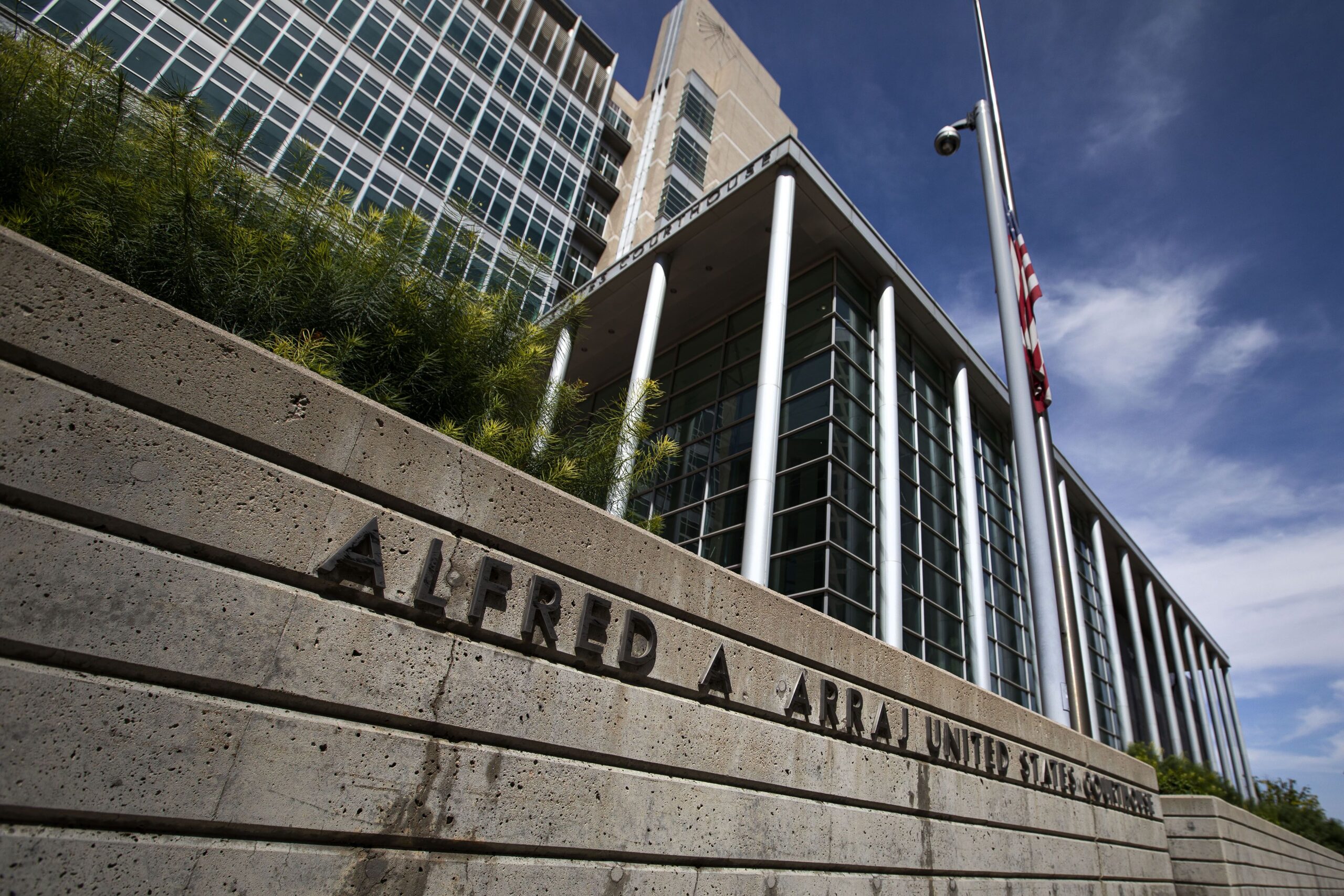
A federal judge last week declined to dismiss 39 nursing employees’ claims for compensation against a Greenwood Village-based company for its alleged violations of state and federal law.
U.S. Nursing Corporation employs health care professionals to cross the picket lines during strikes. During a three-day strike in October 2023 at Kaiser Permanente facilities, USN sent the plaintiffs to work in California. However, the company allegedly failed to compensate the plaintiffs in accordance with the law and did not immediately pay them upon discharge, as California requires.
USN moved to dismiss the lawsuit in Colorado’s federal court, arguing the plaintiffs failed to sufficiently allege how the company violated each of their rights individually.
“No Plaintiff alleges that they worked more than 40 hours in a workweek, and, if so, by how much,” wrote lawyers for USN. “USN has no way of knowing which Plaintiff alleges underpayment based on which theory. Without individual facts, no individual Plaintiff states a plausible claim.”
The plaintiffs responded that they had described receiving partial onboarding pay, being ordered to report early without pay, being denied lawful meal periods, and being “systematically shorted on their final wages.”
“Taken together, Plaintiffs allege 66.75–72.75 compensable hours in a single workweek. That is not close to the margin — it is 26.75–32.75 hours beyond the (Fair Labor Standards Act) threshold, and it independently triggers California’s daily overtime and double-time protections,” wrote attorney Rod M. Johnston. “Plaintiffs identify the workweek, the dates, the shift lengths, the uncompensated tasks, and the resulting totals.”
In a Jan. 23 order, U.S. Magistrate Judge N. Reid Neureiter agreed with the nursing employees.
“Plaintiffs allege that, pursuant to a common USN policy, they each worked substantially more than 40 hours per work week without at least some overtime pay, and they have provided an estimate of the number of overtime hours worked. That is sufficient at this stage of the litigation,” he wrote.
The case is Alvarez et al. v. U.S. Nursing Corporation.


Federal judge green-lights excessive force trial against Fort Collins officers
Michael Karlik
michael-karlik@denvergazette.com
Updated 10 hours ago
A federal judge concluded last week that a jury will need to resolve whether two Fort Collins police officers violated a man’s constitutional rights by using excessive force after he refused to accept a citation. In a Jan. 21 order,...
Michael Karlik
Reporter
Appeals judge argues prior decision on defendant’s ‘3-strikes’ sentence was wrong
Michael Karlik
michael-karlik@denvergazette.com
Updated 10 hours ago
A member of Colorado’s second-highest court argued on Thursday that a defendant stands wrongfully sentenced under the state’s “three-strikes” law, and an earlier appellate decision saying otherwise was incorrect. A three-judge Court of Appeals panel agreed that Kiki Lamount Douglas’...
Michael Karlik
Reporter

DA touts accomplishments from first year in office but she also faced backlash
Kyla Pearce
kyla-pearce@denvergazette.com
Updated 17 hours ago
District Attorney Amy Padden celebrated one year in office this week by touting her accomplishments, major convictions and “increased accountability” in a news release. Padden, who was elected in 2024 and took the helm of the 18th Judicial District office...

Kyla Pearce
Reporter

Denver backs Minnesota’s legal action to end ICE deployment
Deborah Grigsby
deborah.smith@denvergazette.com
Updated 21 hours ago
The City of Denver has joined dozens of U.S. cities and counties in filing an amicus brief backing Minnesota’s legal action seeking to end “Operation Metro Surge” and the deployment of thousands of federal immigration agents to Minnesota. The brief...

Deborah Grigsby
Reporter

Federal judge blocks USDA ‘pilot project’ affecting Colorado food assistance
Michael Karlik
michael-karlik@denvergazette.com
Updated 3 days ago
A federal judge blocked the U.S. Department of Agriculture on Wednesday from proceeding further with a “pilot project” that would require five Colorado counties to rapidly recertify more than 100,000 households for food assistance. In a brief ruling from the...
Michael Karlik
Reporter

Fort Carson soldier’s wife could be deported
Carol McKinley, Special to the Denver Gazette
carol.mckinley@denvergazette.com
Updated 1 week ago
As the country’s largest immigration enforcement crackdown continues in Minnesota’s Twin Cities, a Fort Carson sergeant is fighting a personal immigration crisis — one that may implode his family. Sgt. Tyler Garza’s wife, Jennifer Maradiaga Baca, is not a legal...

Elizabeth School District dismisses challenge to book-ban injunction on eve of appellate arguments
Michael Karlik
michael-karlik@denvergazette.com
Updated 1 week ago
An Elbert County school district has dismissed its challenge to a judge’s injunction ordering it to return banned books to library shelves, days before the Denver-based federal appeals court was set to hear oral arguments this week. Although a three-judge...
Michael Karlik
Reporter

Man sentenced to 13 years in prison for Golden police officer’s death
Sage Kelley
sage.kelley@denvergazette.com
Updated 1 week ago
Stephen Geer, the man responsible for the death of 33-year-old Golden police officer Evan Dunn — the first on-duty death in the Golden Police Department’s history — was sentenced to 13 years in prison on Wednesday. Geer pleaded guilty to...

Sage Kelley
Reporter
Federal judge says prisoner cannot sue for dog-bite injury
Michael Karlik
michael-karlik@denvergazette.com
Updated 1 week ago
A federal judge concluded last week that a man cannot sue the government for injuries he sustained when a dog allegedly attacked him while he participated in a prison program. Kenneth M. Chandler, representing himself, was participating in the “FIDOS”...
Michael Karlik
Reporter

Federal judge recommends dismissing trans athletics lawsuit by area school districts
Eric Young
eric-young@denvergazette.com
Updated 1 week ago
A judge has recommended dismissing a federal lawsuit filed by multiple school districts against the Colorado Attorney General’s and Civil Rights Offices over their policies dictating students’ participation in athletics and activities based on their biological sex rather than gender...

Eric Young
Reporter
PREV
PREVIOUS

Conflict-of-interest safeguards at Cherry Creek Schools lacked clear oversight, memo shows
To avoid a conflict of interest, the wife of Cherry Creek Schools Superintendent Chris Smith — who resigned this week amid allegations of a toxic work environment — was supposed to report to Deputy Superintendent Jennifer Perry. In the wake of Smith’s resignation Wednesday, Perry was named interim superintendent. According to a Denver7 investigation, insiders […]

Nike's Team USA Olympic collection features Colorado Springs landmarks
Befitting a city that performs most of its Olympic-related work behind the scenes, Colorado Springs will be represented every time an American reaches the awards podium during the Winter Games but in a way that is hidden from view. The Therma-FIT Air Milano Jacket from ACG and Nike that will uniformly serve as part of […]