







Aurora residents, officials discuss civilian police oversight committee
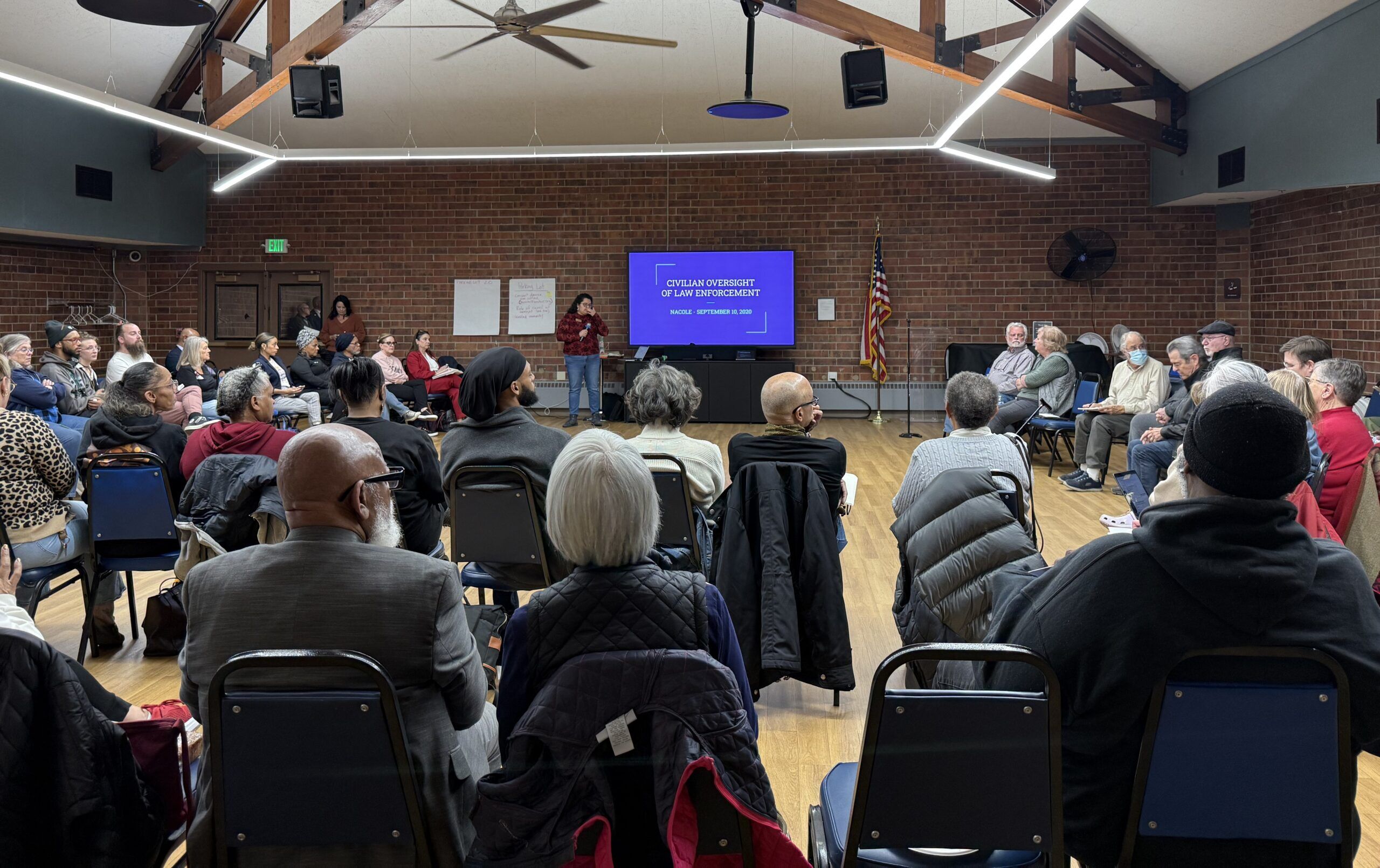
About 50 people attended a roundtable session in Aurora Thursday night to discuss details about a future civilian police oversight committee for the Aurora Police Department.
Attendees included Aurora residents, several Aurora City Council members, Mayor Mike Coffman, City Manager Jason Batchelor, representatives from Denver’s police oversight board, and people who have attended council meetings for more than a year to protest against the death of Kilyn Lewis in 2024.
It was the second of two community-based sessions on the subject led by new Councilmembers Gianina Horton and Amy Wiles.
The first session was held Jan. 13 and was mostly informational as Horton and Wiles talked about different types of oversight groups and took questions from attendees.
Thursday’s session was organized as a roundtable, with attendees grouped off to discuss specific questions about the logistics of an oversight committee.
Councilmember Alli Jackson led the discussion at her table of five, asking questions like: “What is effective oversight to you?”
Members of the group, who challenged each other’s ideas, discussed various concepts for the oversight committee, agreeing that its members should get access to unedited body camera footage from police incidents within 48 hours.
Jackson’s group also discussed having the committee act as the public voice for police incidents, such as officer-involved shootings, rather than the police chief holding a news conference.
The groups also shared their main takeaways, which included desires for the committee to be based on transparency, accountability and balance.
One group said the committee should have the power to hire and fire officers, make budgets and have subpoena power.
Another group said it’s important to balance supporting officers, while also holding them accountable.
The next step, Wiles and Horton said, is bringing in Bonycle Sokunbi, the Fort Worth Police Department monitor. Fort Worth has a similar structure to Aurora, officials said.
Sokunbi was scheduled to speak this week, but Texas weather delayed the event. Officials are working with her and will announce a new date.
While the timeline for a committee’s creation is not yet set in stone, Wiles told attendees Thursday that “this is not a process that is going to take several years.”
Talk of creating an independent oversight group for the APD is not new. For more than a year, protesters have attended every Aurora City Council meeting to demand action from the council following the death of Lewis, who was shot by a SWAT office. A team of officers had sought to arrest him on an attempted murder warrant. Lewis was not armed.
Both Horton and Wiles included the creation of such a group in their campaign goals when they ran for the City Council.
APD is also still under a consent decree.
The decree, which the city entered into with the Colorado Attorney General’s Office in 2021 to implement sweeping changes to policing — notably in the use of force and how officers engage with residents — came after the death of 23-year-old Elijah McClain in 2019 while being arrested by three officers.
Aurora agreed to make changes after an investigation by the Attorney General’s Office found patterns of bias and excessive force in policing. The investigation also found a pattern of using the sedative ketamine in violation of the law by the fire department, which has since stopped using the drug but has to comply with related mandates in the consent agreement if it ever resumes use.
Proponents of a civilian oversight group have insisted that the consent decree is not enough.
There are more than 160 oversight agencies across the U.S., which is “not nearly enough for the number of law enforcement agencies there are,” Horton said in the first public oversight meeting on Jan. 13.
Horton, who called herself “pro-oversight,” said independent police oversight is necessary because it protects human rights, promotes constitutional policing, increases public confidence and trust in police, ensures greater accountability, and enhances risk management.

Pressure mounts after Federal Heights city manager hit with no-confidence vote
Sage Kelley
sage.kelley@denvergazette.com
Updated 6 hours ago
Questions and concerns remain in Federal Heights after first responders called on city leaders for accountability and no immediate action was taken. Two unions — Federal Heights Professional Firefighters Local 4222 and the Federal Heights Police Lodge FOP 77 —...

Sage Kelley
Reporter
Denver to review $325K settlement for deputy misconduct case
Deborah Grigsby
deborah.smith@denvergazette.com
Updated 5 hours ago
On Monday, the Denver City Council will consider a resolution authorizing a $325,000 payment settling a claim involving the Denver Sheriff’s Department. The settlement stems from a 2019 incident in which a video captured Denver Sheriff’s Deputy Jason Gentempo punching...

Deborah Grigsby
Reporter
Colorado House launches ethics review of Rep. Ron Weinberg filed by fellow GOP legislator
Marianne Goodland
marianne-goodland@denvergazette.com
Updated 8 hours ago
The Colorado House will convene an ethics committee to review a complaint filed by Rep. Brandi Bradley, R-Roxborough Park, against fellow Republican Rep. Ron Weinberg, R-Loveland. It will be the first time since 2012 that the House has formed an...

Marianne Goodland
Reporter

Colorado lawmakers roll out bipartisan plan aimed at lowering home insurance risk
Marianne Goodland
marianne-goodland@denvergazette.com
Updated 7 hours ago
Rising homeowners’ insurance rates prompted a group of lawmakers to introduce a bill Wednesday aimed at reducing damage from hail and wildfire. The measure would encourage homeowners and homeowner associations to take additional mitigation steps and, in turn, could allow...
Marianne Goodland
Reporter
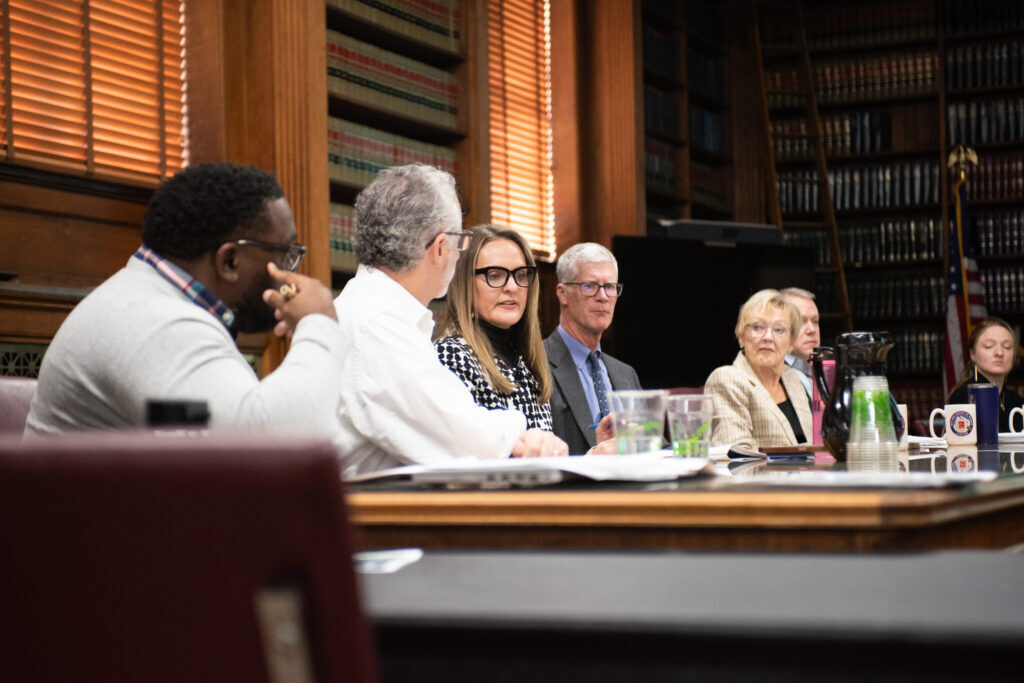
Denver seeks executive director for Department of Housing Stability
Deborah Grigsby
deborah.smith@denvergazette.com
Updated 13 hours ago
The City of Denver is on the hunt for its next Department of Housing Stability executive director, a role vacated late last year by Jamie Rife. Along with a generous benefits package, which includes a lifelong monthly pension after five...
Deborah Grigsby
Reporter
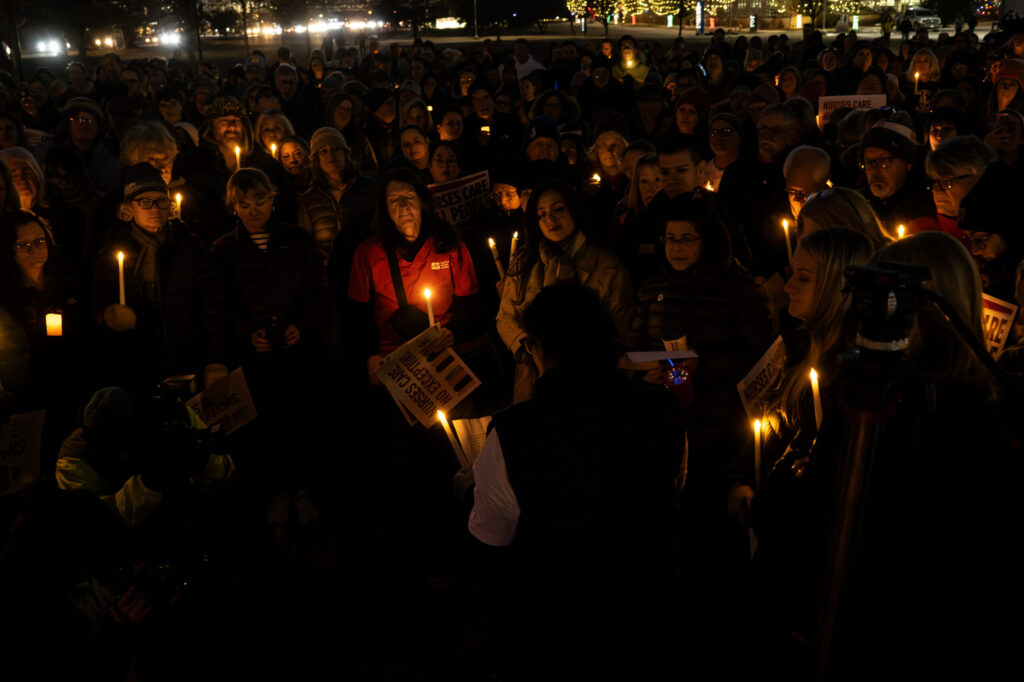
PHOTOS: National Nurses United Hold a Vigil in Aurora in Honor of Alex Pretti
Stephen Swofford
stephen-swofford@denvergazette.com
Updated 2 days ago

Stephen Swofford
Reporter
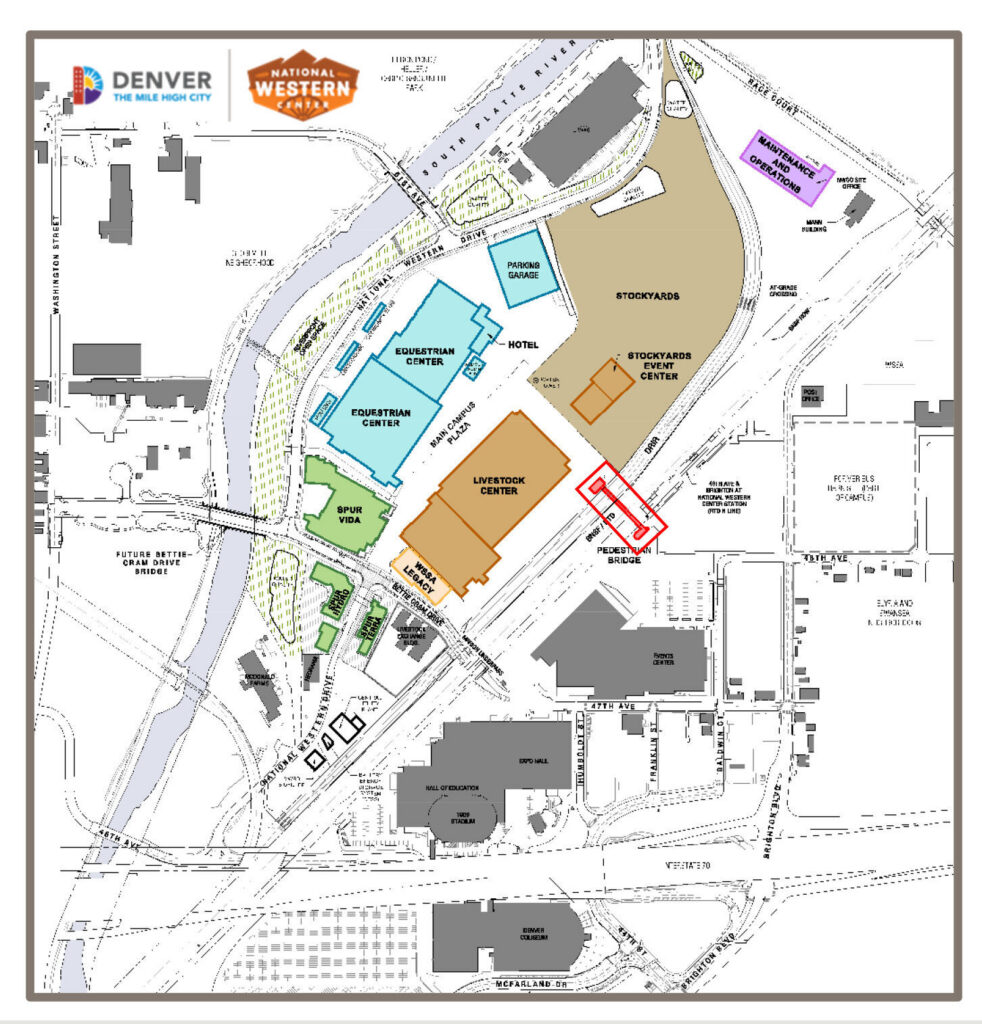
Contract for National Western Center pedestrian bridge advances
Deborah Grigsby
deborah.smith@denvergazette.com
Updated 2 days ago
Members of the South Platte River Committee voted on Wednesday to advance a $12.7 million contract with Ames Construction to construct a new pedestrian bridge at the National Western Center. City officials say the project will improve east-west campus and...
Deborah Grigsby
Reporter
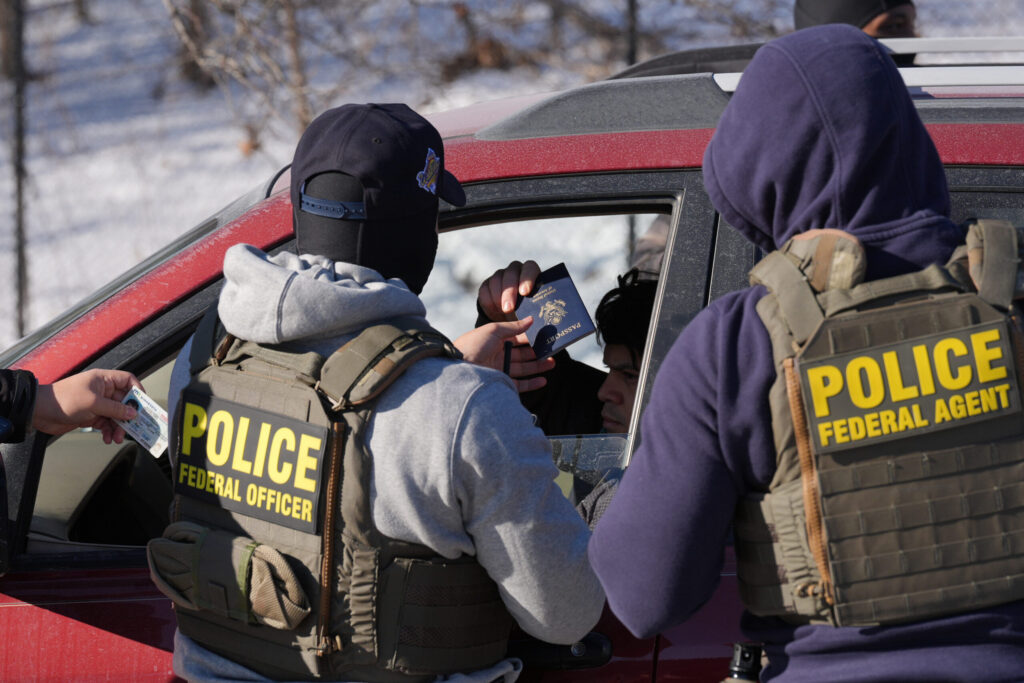
Denver backs Minnesota’s legal action to end ICE deployment
Deborah Grigsby
deborah.smith@denvergazette.com
Updated 17 hours ago
The City of Denver has joined dozens of U.S. cities and counties in filing an amicus brief backing Minnesota’s legal action seeking to end “Operation Metro Surge” and the deployment of thousands of federal immigration agents to Minnesota. The brief...
Deborah Grigsby
Reporter
Tax bill shock: Colorado homeowners could see property taxes jump by as much as 40%
Marianne Goodland
marianne-goodland@denvergazette.com
Updated 17 hours ago
Mike Fitz, 76, who lives in Centennial in a single-family home he has owned since 2001, paid $3,876.98 in property taxes to Arapahoe County two years ago. Fitz just learned after checking the website of the Arapahoe County Assessor’s Office...
Marianne Goodland
Reporter
Lakewood zoning changes heading to special election
Sage Kelley
sage.kelley@denvergazette.com
Updated 3 days ago
Lakewood’s long-debated zoning code changes will be heading to a vote this spring. The Lakewood City Council on Monday unanimously voted to send four of the new zoning code’s ordinances to a special election on April 7, putting the fate...
Sage Kelley
Reporter
PREV
PREVIOUS

Pressure mounts after Federal Heights city manager hit with no-confidence vote
Questions and concerns remain in Federal Heights after first responders called on city leaders for accountability and no immediate action was taken. Two unions — Federal Heights Professional Firefighters Local 4222 and the Federal Heights Police Lodge FOP 77 — unanimously voted “no confidence” in City Manager Jacquie Halburnt on Jan. 20, leading to an […]

Denver area events for Jan. 31
If you have an event taking place in the Denver area, email information to carlotta.olson@gazette.com at least two weeks in advance. All events are listed in the calendar on space availability. Saturday Derek Banach Quintet: A Modern Groove — 6:30-7:45 p.m. and 9-10:30 p.m., Nocturne Jazz and Supper Club, 1330 27th St., Denver, go online for prices. […]