Vision Zero: As Denver doubles down, fatalities keep climbing
A decade ago, Denver became one of many U.S. cities to adopt a bold, new model of traffic safety — one that envisioned an end to the hundreds of serious injuries and dozens of fatalities that plague the streets each year.
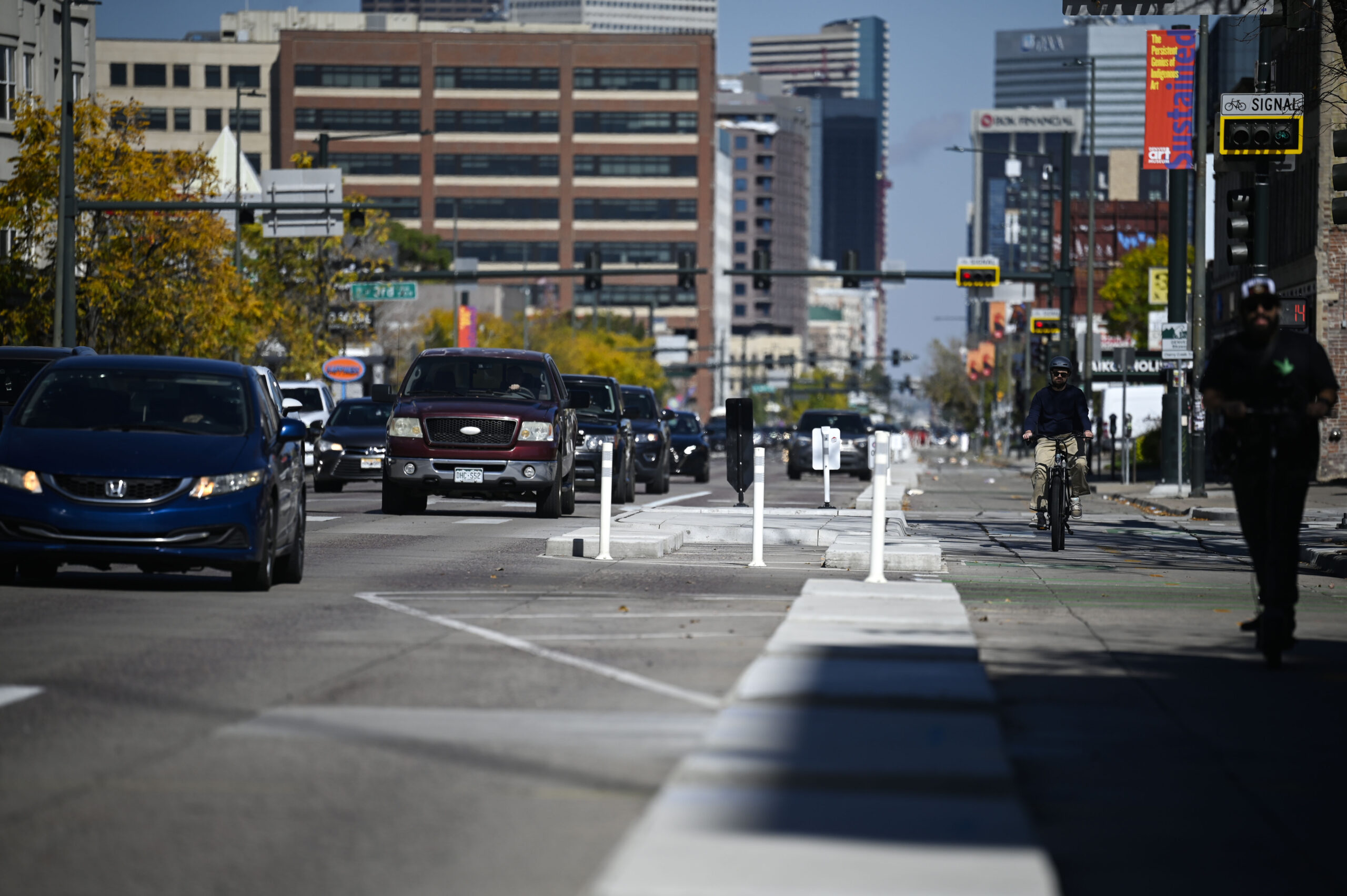
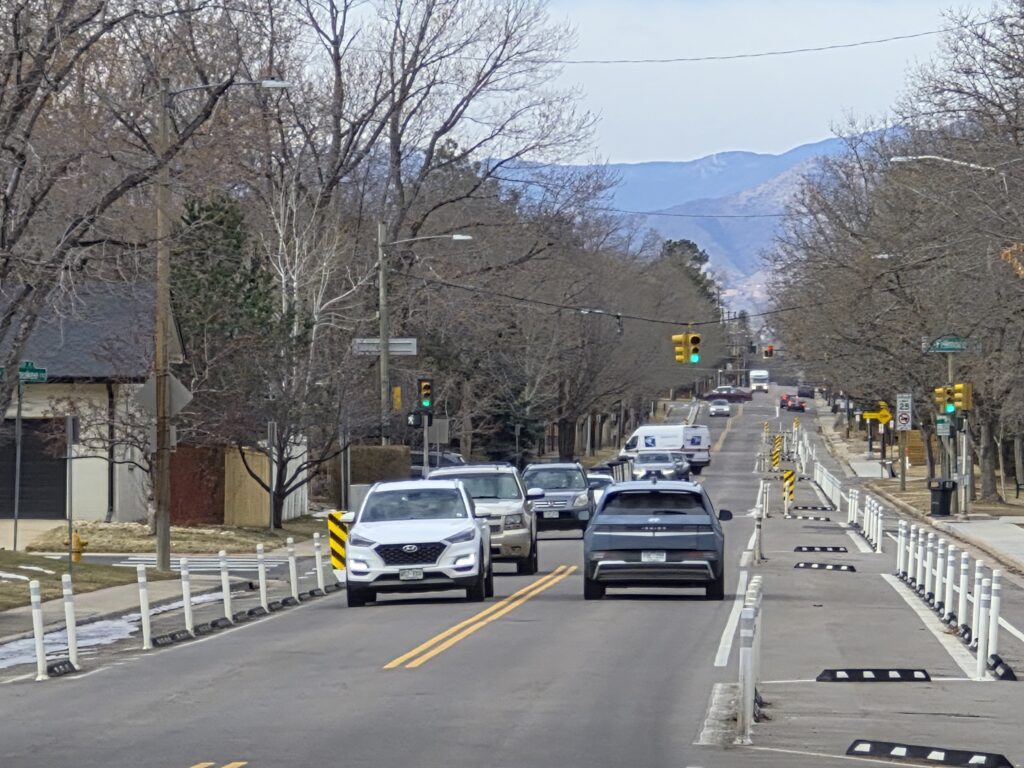
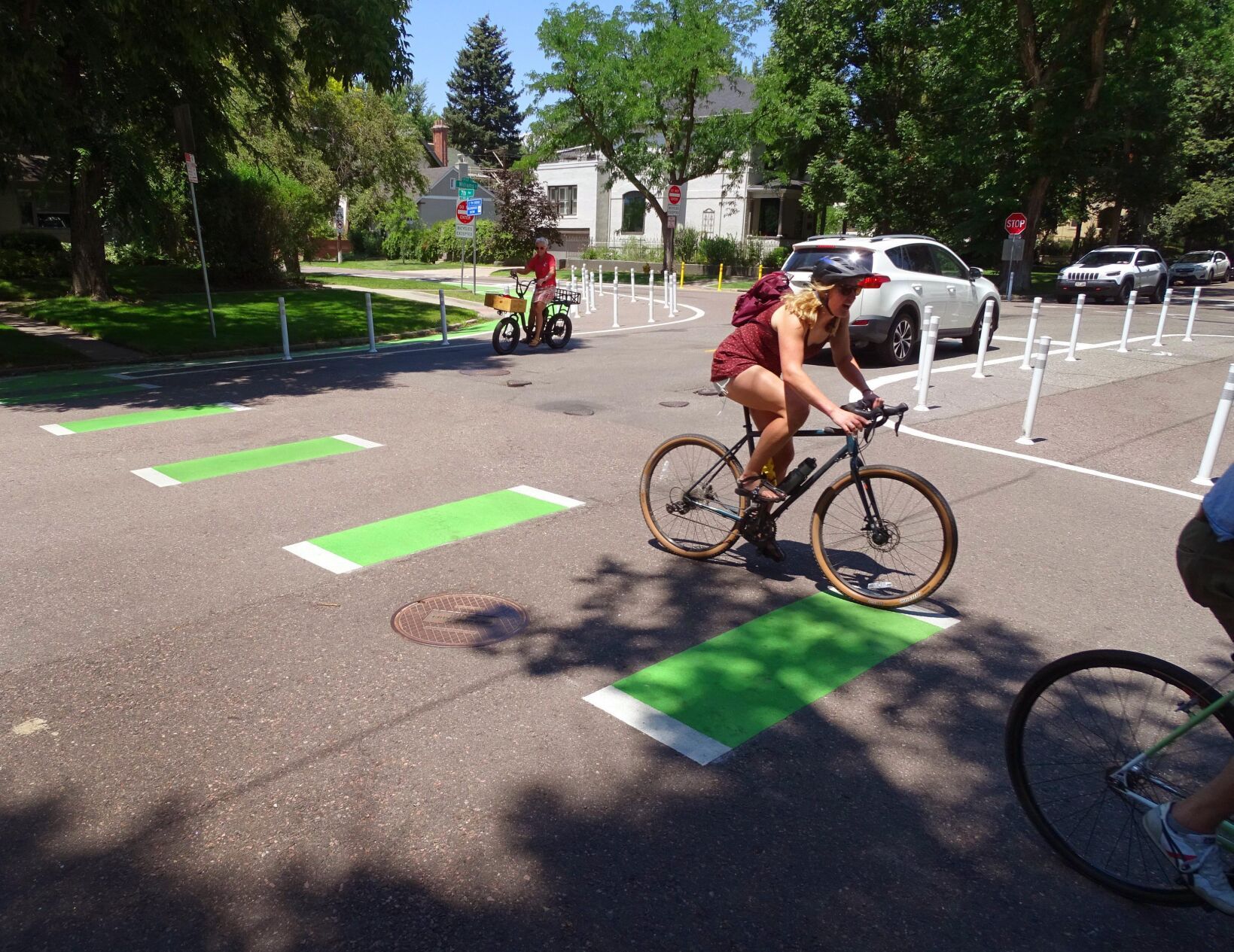
Fast forward to today, and Denver streets and intersections show a widening array of bollards, speed humps, and bright green hashmarks that are working to achieve “Vision Zero,” a Swedish-designed program that aims to bring an end to road deaths and severe injuries.
When Sweden adopted Vision Zero in 1997, it led to a dramatic drop in serious accidents, by some reports cutting fatalities by as much as 50% over the following three decades. Other European countries began posting their own successes, and when the World Health Organization echoed the message, American cities started signing on.
So, how is Vision Zero working out in Denver?
Newest data show that traffic fatalities in the city increased last year from 80 to 93. Over the span since 2017 when the Mile High adopted its Vision Zero plan, deaths in Denver are up 82%.
The data show serious bodily injuries in the city dropping last year — from 410 to 356. But during the program’s history in Denver, serious injuries from traffic accidents have climbed 22%.
ATTACK FROM TWO SIDES
Now the city is coming under attack from two sides — from longtime opponents of the measures who say that the program is wasteful and a mismatch to the traffic system here, and from proponents who claim Mayor Mike Johnston is failing to execute it to the full potential he promised on the campaign trail.
“Since Mayor Johnston took office in mid-2023, more than 200 people have been killed and over 1,000 have been seriously injured on Denver’s roadways,” the Denver Streets Partnership said in a “D” report card it issued the mayor last Friday. The report card was issued in consortium with the Denver Bike Lobby and other groups.
“In 2025 alone, 93 people died, making it the deadliest year since 2013,” the groups charged.
Meanwhile, a former Denver chief traffic engineer told The Denver Gazette that the entire Vision Zero initiative is misguided and misapplied, and it could actually be contributing to the rising numbers of serious accidents, rather that reducing them.
“These people do not understand the mentality of the average American driver,” said Dennis Royer, who had directed the design of many key features of the city’s traffic network, some of which are now being modified under Vision Zero.
“Drivers are used to getting from Point A to Point B in a certain time,” Royer said. He noted that he had just navigated a stretch of Monaco Parkway with traffic light sequencing that had been revised from what he had engineered.
“They’re not slowing them down, they’re stopping them,” Royer said of the traffic experience. “The bottom line is that people learn to step on the gas, more people are running lights, and you have more erratic drivers.”
Denver’s results with Vision Zero (VZ) actually track similarly to the experiences in other U.S. cities that have adopted their own VZ programs. Although some have seen declines, a larger number have reportedly seen no significant result or are witnessing a rise in fatalities since adopting VZ.
Particularly disturbing in Denver is the trend in who the latest victims are.
JUMP IN PEDESTRIAN FATALITIES
According to the Department of Transportation and Infrastructure (DOTI), which implements VZ and tracks those numbers, the Mile High City saw increases last year in pedestrian and cyclist fatalities, as well as an eight-fold jump in scooter deaths.
Pedestrian deaths climbed from 23 in 2021 to 26 in 2024, then jumped to 35 last year. Cyclist deaths have risen from four in 2021 to five last year.
Electric stand-up scooter deaths jumped to eight in 2025. A Moped-type scooter accounted for another death, up from zero in 2024.
Traffic accidents are complex and involve many variables that defy simple explanations. The Denver Gazette spoke to DOTI and to experts and activists with different perspectives to gain insight on the rising numbers.
VZ is not an exact template for how U.S. roadways should be designed. Rather, it poses a looser set of core values, including the belief that accidents are preventable, rather than inevitable, and that solutions require collaboration between various “stakeholders” involved in transportation systems.
But its core idea is about speed — that greater speed makes accidents more serious and deadly, and that reducing speed makes accidents safer.
Here in Denver, DOTI’s Safe Systems plan involves lowered speed limits, along with well delineated corridors for bikes and pedestrians, and implementing what both advocates and opponents call “road diets” — narrowing multi-lane streets and boulevards to fewer lanes in an effort to slow traffic and create safe, dedicated left-turn lanes.
DOTI practices are typically centered around speed reduction.
That includes on East Alameda Avenue in south-central Denver, where the avenue is one of the city’s few arterials reaching east and west, linking traffic from Broadway and I-25 to Cherry Creek and neighborhoods further east.
ROAD DIETS
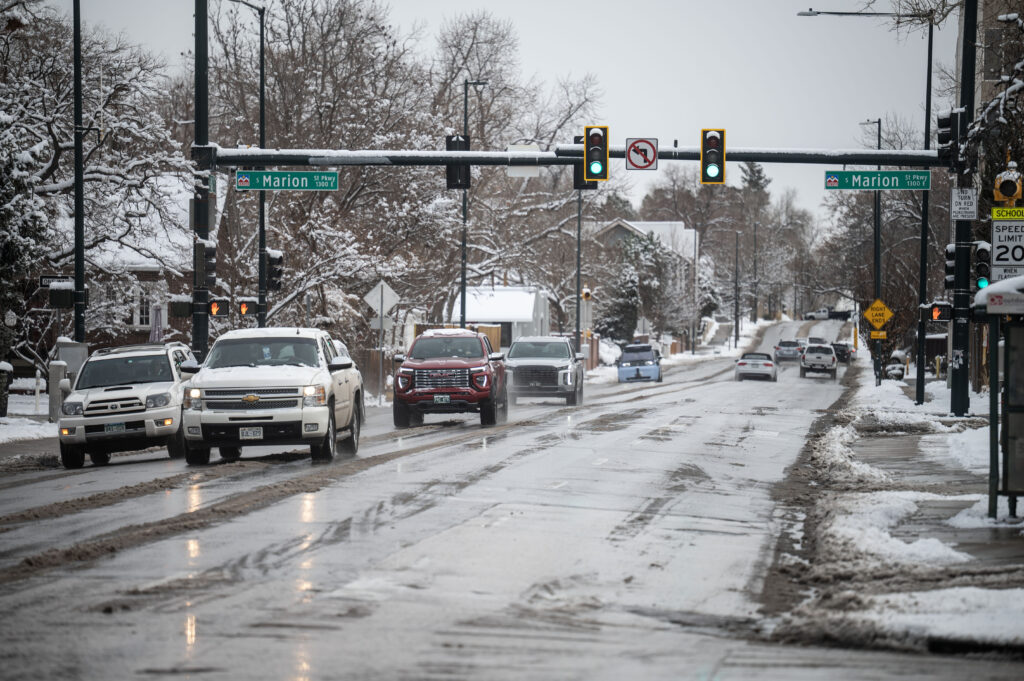
Last year, DOTI had planned a road diet for Alameda that would have reduced the avenue from four lanes of traffic to two along a stretch east of South Lincoln Street. The plan triggered protests from opposing neighborhood groups, one side petitioning that the measure would force traffic into quiet side streets, and the other charging that the city had caved to lobbying pressure while disregarding safety.
The plan has now been modified to do a partial lane reduction to three lanes of traffic, while focusing on other methods to reduce speed, including more use of automated speed management.
(Stephen Swofford, Denver Gazette)
Denver’s VZ prescriptions also focus on some quieter, single-lane streets, where it prefers bike traffic.
Three years ago, DOTI deployed an elaborate bike lane infrastructure on East Seventh Avenue south of Little Cheesman Park, involving dozens of signs and bollards at a single intersection. As the plan unfolded, disputes broke out between neighbors and bike advocates over the installations, and minor adjustments were made.
Other deployments on quieter streets included West 29th Avenue between Speer and Sheridan boulevards, one of a few commuter streets connecting western suburban areas to downtown. There, along a residential 2-mile stretch, the city replaced street parking on both sides with bike lanes lined by bollards and striped barriers.
In places, the installation approaches half the width of the original street. “Speed humps” are deployed all along the route.
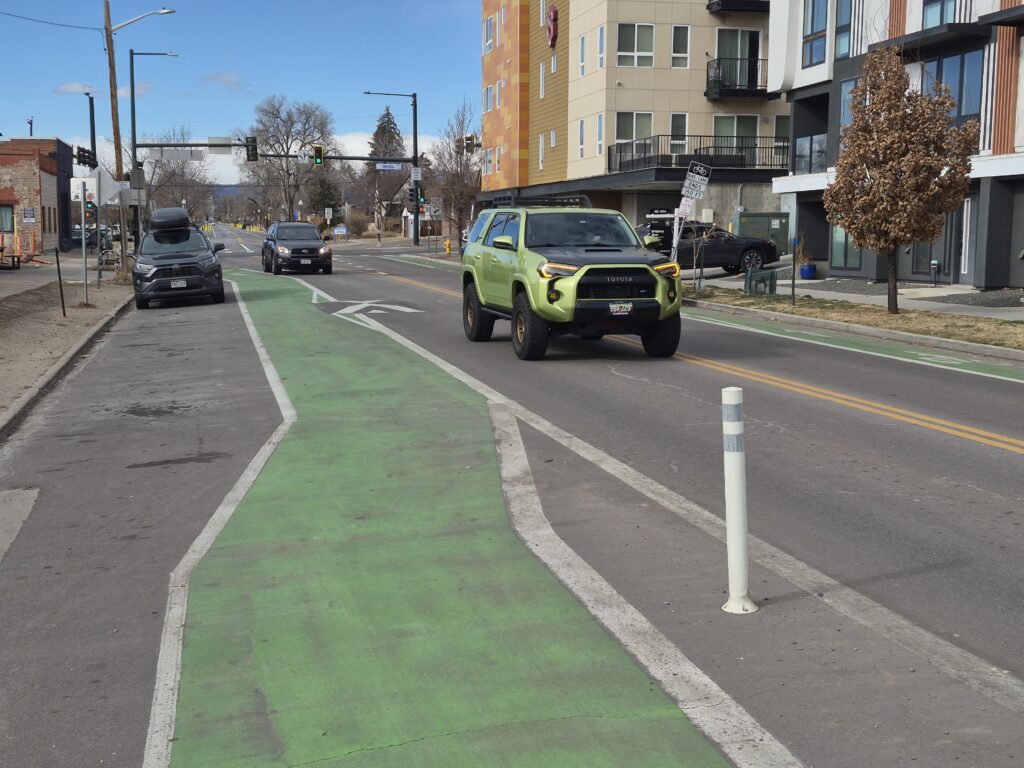
The imposing structures confine traffic flow while creating a separation between vehicles and bikes. Although parking has been totally removed from a broad stretch, last year the city modified its design to allow continued parking on stretches with businesses after protests by owners and residents.
Similar deployments of VZ can be seen on other avenues, including East Seventh, East Yale, East 16th and East 22nd avenues. When the city sought to impose bike lanes north-south along Kearney Street in East Denver, DOTI made extensive modifications to the plans after neighbors joined in opposition.
There is no debate, however, about the goals of VZ itself.
The initiative launched in 1995 by Swedish traffic director Claes Tingvall set out with a goal of zero deaths and zero serious injuries. Denver’s VZ web site says Vision Zero “means zero traffic fatalities or serious bodily injuries.”
The program’s successes, particularly in Europe, have been about significant reductions of deaths and injuries, not their complete elimination. Helsinki, Finland, is cited as a city that actually achieved zero deaths for a year.
According to the Vision Zero Network, a national promotional collaborative, successes in the U.S., included Madison, Wisc., with a 58% reduction in deaths from 2020 through 2024. Austin cites a 22% reduction in fatal and serious injury wrecks at 22 intersections where it applied VZ-inspired modifications, as opposed to other intersections where it marked a 1% increase.
New York, which launched VZ in 2013, reportedly cut traffic deaths by over 12% and pedestrian deaths by 45%. Washington, D.C., cites specific street-by-street drops where VZ was applied.
A 30% JUMP
However, the VZ network conceded that U.S. traffic deaths jumped 30% from 2014, when VZ began being adopted, to 2022, when accidents spiked during the COVID pandemic. Pedestrian deaths in the U.S., the network said, are the worst of 28 high-income countries studied.
That poor performance — failing to reduce deaths and serious injuries and actually succumbing to increases — has been typical in VZ cities in the U.S., according to some studies.
And that has decidedly been the case in Denver. The new fatality numbers, including recent leaps in pedestrian and scooter deaths, mark a 98% increase over the period since 2013, when U.S. cites began widespread adoption of VZ.
Why doesn’t VZ work the way it does in northern European counties like Sweden?
Posed with that question by The Denver Gazette, DOTI sent detailed responses outlining efforts to tackle deficits revealed by the growing fatalities and numbers of serious injuries.
“Safety is at the center of everything we do at DOTI and we remain committed to our Vision Zero goal of zero fatalities on city streets and investing in proven countermeasures to crashes and safety treatments that increase safety and curb preventable tragedies,” a DOTI spokesperson said in one response.
Those countermeasures, the transportation agency said, include a focus on high injury networks and a pilot SPEED program launched last year specifically for Federal Boulevard and for Alameda Avenue to address speeding. The measures include saturating the corridors with speed signage, adding electronic feedback signs, and adjusting signal timing.
DOTI is also looking at automated speed enforcement — automatic speed ticketing — as an additional measure to reduce speeds along those corridors. The agency hopes to expand SPEED to Colorado Boulevard this year, the spokesperson said.
BIKE ADVOCACY GROUPS
Bike advocates are less than satisfied with the city’s progress.
“It’s not surprising that the city has been tinkering around the edges but is hesitant to make the significant changes that will address the problem,” Jill Locantore, executive director of Denver Streets Partnership, which issued the “D” grade to the mayor last week, told The Denver Gazette.
“Arterials are designed like highways to move as many cars as possible,” Locantore said. “Reducing the amount of space for autos and increasing the space for people walking, biking and taking transit has been our ask for many years.”
Among factors working against greater safety, Locantore said, is vehicle size.
“That’s absolutely a factor,” she said. “(Vehicles) get bigger and heavier and have larger blind spots.”
Locantore said that along with “road diets” and other VZ solutions, new technology can be applied to the situation — including some measures already being weighed in other states. Those might include “super-speeder laws” that would require speed-limiter devices on the cars of repeat violators.
“Speed is the No. 1 factor,” Locantore added, noting that the technology already exists to reduce speeding and running red lights. “Mayor Johnston committed to it, but they’re not doing it anywhere in Denver.”
Royer, the former chief traffic engineer, said he agrees that speeding and light-running are likely behind the accident rates. But, he said, road diets and other VZ-inspired installations may be making violations more likely, not less.
“If you go to Sweden, if want to commute by bike they require you to get a license and take a class,” Royer told The Denver Gazette. “If you don’t, you can get a ticket and they’ll even confiscate the bike.”
“It’s a whole different thing over there,” he added. “Old European cities have narrow streets. They can’t do a lot of stuff we’re trying to do here.”
Royer cited one study done in 2022 surveying cities that had adopted VZ.
“Every major city that had adopted it saw an increase in fatalities,” Royer said. “They’re doing the wrong things.”
Royer is also among numbers of observers who point to a basic disparity in the way VZ measures are being deployed — the relative lack of bicycles in the newly created bike lanes.
“If you’re not under 40, you’re not commuting by bicycle,” Royer said.
The way that separated bike lanes play out, Royer added, is to give an artificial sense of security to the relatively small number of bike and scooter riders within those newly prominent lanes.
“They think they have total immunity,” Royer said.
“They can’t figure out why fatalities are going up. I took out all the crosswalks that weren’t at a controlled intersection, and the numbers went down,” he said. “I want pedestrians to act like it’s a railroad crossing, to stop, look and listen.”
Economist Randal O’Toole, who directs the Transportation Policy Center for the Denver-based Independence Institute and who has written extensively on the issue, agreed that more elaborate bike lanes, regardless of use, could make riders too confident in relatively dangerous situations.
“Most (bike-related accidents) happen at intersections,” O’Toole told The Denver Gazette. “They give people an unrealistic feeling of security.”
DISTRACTED DRIVING
He added that distracted driving, including use of smart phones, could be playing a role in urban areas.
“So all the Vision Zero things aren’t addressing those issues. Instead, they’re trying to punish all drivers. It obviously hasn’t saved lives,” he said.
O’Toole added that homelessness may be driving up serious traffic injuries and deaths.
DOTI’s latest statistics for 2025 indicated that pedestrian deaths included a number of pedestrians killed on the interstates in the city. Eight of 35 deaths, 23%, occurred on the freeway, according to DOTI’s spokesperson. There was just one such death in 2024.
Of the recent number, the spokesperson added, around half involved drivers trying to recover something dropped on the freeway, or who otherwise had pulled over. The remainder were pedestrians on the interstate.
DOTI had also reported an increased number of fatalities during November and December, which, the agency noted, were unseasonably warm months.
POLICE ENFORCEMENT
Are the police enforcing speed and other traffic laws the way they did a decade ago, when it was common to see speed traps on arterials and freeways, and when motorists were commonly ticketed for traveling 5 or 10 miles-per-hour over the posted limit?
Royer said the police increasingly view traffic stops as dangerous situations, one of the most dangerous for officers next to domestic disturbances.
“If you’re approaching a vehicle, you don’t want to do this,” Royer said.
The Denver Police Department replied to a Denver Gazette query regarding whether traffic laws are being enforced now as they were in years past.
“The approach of the Denver Police Department has not changed as it comes to traffic enforcement since the pandemic,” a reply from the agency said. “The department still conducts traffic stops as it relates to safety-related traffic violations, such as speeding or running red lights. Traffic enforcement did decrease due to various workload challenges, which are now being mitigated by increased staffing.”
“With the department stabilizing the workload, DPD is able to reinvest staffing in traffic, while also identifying improved road safety as a department level goal,” the agency said. “We encourage people to be safe on the roadways to help everyone make it to their destination safely.”


Colorado attorney general joins lawsuit against Trump energy emergency order
Scott Weiser
scott-weiser@denvergazette.com
Updated 3 hours ago
Colorado Attorney General Phil Weiser joined a multistate lawsuit challenging an executive order invoking the National Emergencies Act that President Donald Trump issued on the day of his inauguration. The order fast-tracks fossil fuel projects by bypassing or shortening environmental...

Scott Weiser
Reporter

Colorado’s federal judges slash motions backlog to lowest in years
Michael Karlik
michael-karlik@denvergazette.com
Updated 4 hours ago
Colorado’s federal trial judges collectively had 37 motions in civil cases that had been sitting on their dockets for at least six months without a ruling, as of Sept. 30. That is the smallest backlog the state’s U.S. District Court...

Michael Karlik
Reporter
Family of man fatally shot by DougCo deputy files wrongful death lawsuit
Michael Braithwaite
michael.braithwaite@gazette.com
Updated 5 hours ago
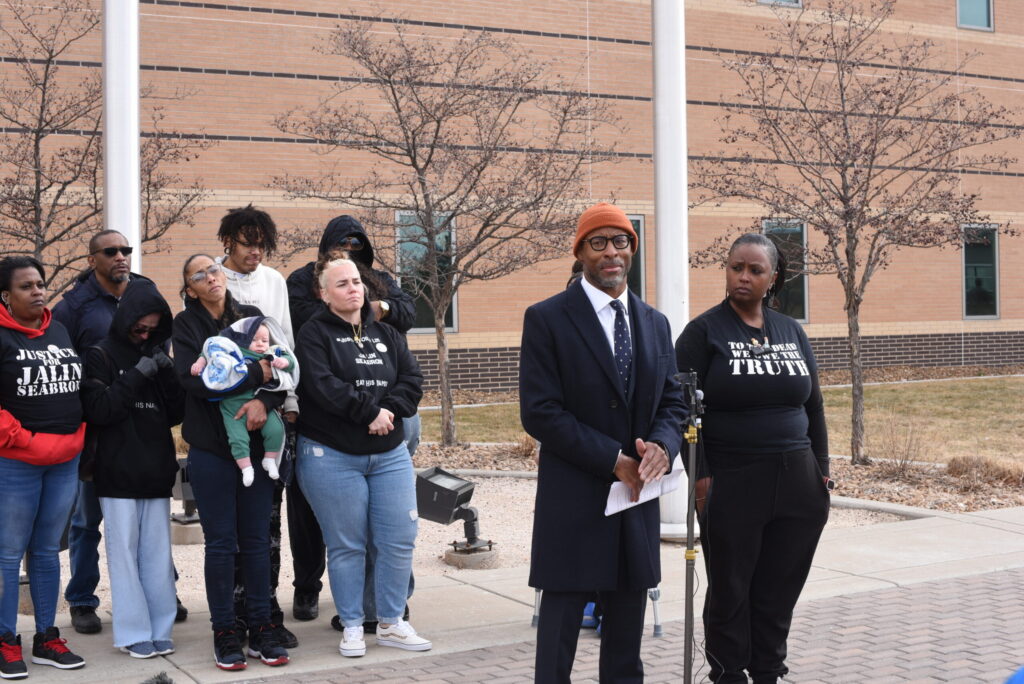
The family of a man who was fatally shot by a Douglas County Sheriff’s Office deputy while legally armed filed a wrongful death lawsuit against both the deputy and the department. Tyrone Glover, an attorney representing the family of Jalin...

Michael Braithwaite
Reporter

Second suspect sentenced in 2022 fatal Lakewood apartment fire
Sage Kelley
sage.kelley@denvergazette.com
Updated 4 hours ago
The 15-year-old boy charged with murdering a mother and daughter in an apartment fire years ago was finally sentenced last week. Jefferson County District Judge Lindsay VanGilder sentenced the juvenile to a maximum sentence of seven years in the Colorado...

Sage Kelley
Reporter
Colorado Supreme Court to review child custody decision
Michael Karlik
michael-karlik@denvergazette.com
Updated 4 hours ago
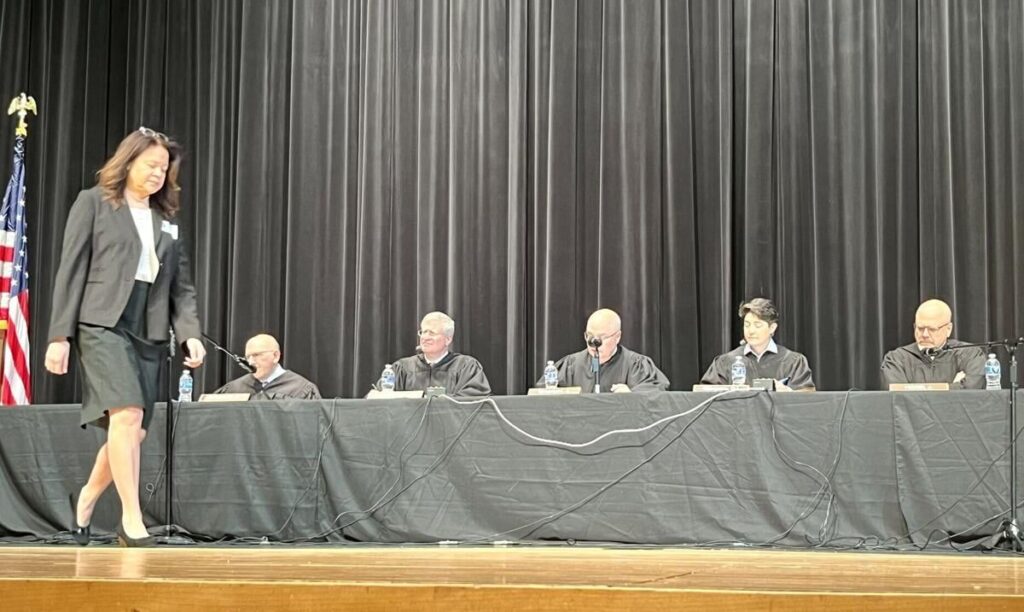
The Colorado Supreme Court announced on Monday that it will review whether the state’s second-highest court described the correct framework for deciding whether to terminate a parent’s legal rights over a child. At least three of the court’s seven members...
Michael Karlik
Reporter
Colorado justices reject defendant’s claim of race-based murder prosecution
Michael Karlik
michael-karlik@denvergazette.com
Updated 1 day ago
The Colorado Supreme Court rejected a convicted defendant’s argument on Monday that Arapahoe County prosecutors unconstitutionally singled out him and another Black teenager for murder prosecutions as adults, while offering lenient plea deals to their two non-Black co-defendants. Lloyd Chavez...
Michael Karlik
Reporter
Colorado justices find portion of anti-SLAPP law unconstitutional
Michael Karlik
michael-karlik@denvergazette.com
Updated 1 day ago
The Colorado Supreme Court ruled on Monday that a 2019 law designed to protect the exercise of First Amendment rights conflicts with the state constitution in certain scenarios involving appeals from county courts. Known as the “anti-SLAPP” law, which stands for...
Michael Karlik
Reporter

Jeffco counselor pleads guilty on sexual assault charge
Sage Kelley
sage.kelley@denvergazette.com
Updated 1 day ago
A Jeffco Public Schools counselor pleaded guilty to a sexual assault charge Monday morning following a multitude of delays. Chloe Castro — standing next to her defense attorney, Marshall Breit — pleaded guilty to one count of sexual assault on...
Sage Kelley
Reporter
Federal judge green-lights excessive force trial against Fort Collins officers
Michael Karlik
michael-karlik@denvergazette.com
Updated 4 days ago
A federal judge concluded last week that a jury will need to resolve whether two Fort Collins police officers violated a man’s constitutional rights by using excessive force after he refused to accept a citation. In a Jan. 21 order,...
Michael Karlik
Reporter
Federal judge declines to dismiss strike-breaking nurses’ lawsuit over wage violations
Michael Karlik
michael-karlik@denvergazette.com
Updated 4 days ago
A federal judge last week declined to dismiss 39 nursing employees’ claims for compensation against a Greenwood Village-based company for its alleged violations of state and federal law. U.S. Nursing Corporation employs health care professionals to cross the picket lines...
Michael Karlik
Reporter