







Denver Gazette reporter injured in scooter crash examines Denver’s e-scooter safety
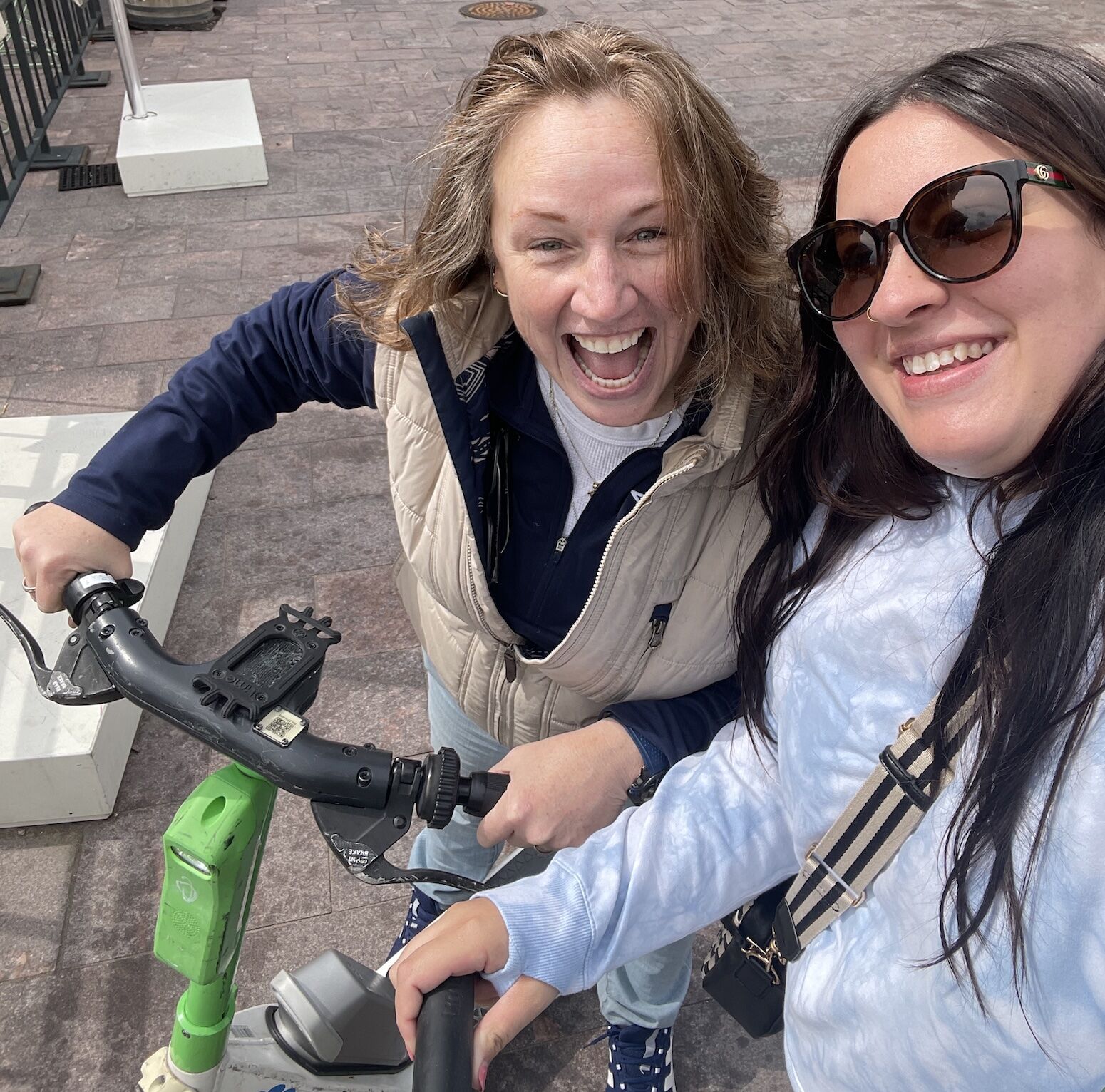
My last scooter ride was my last.
It ended the way far too many electric scooter rides in Denver do: in the hospital.
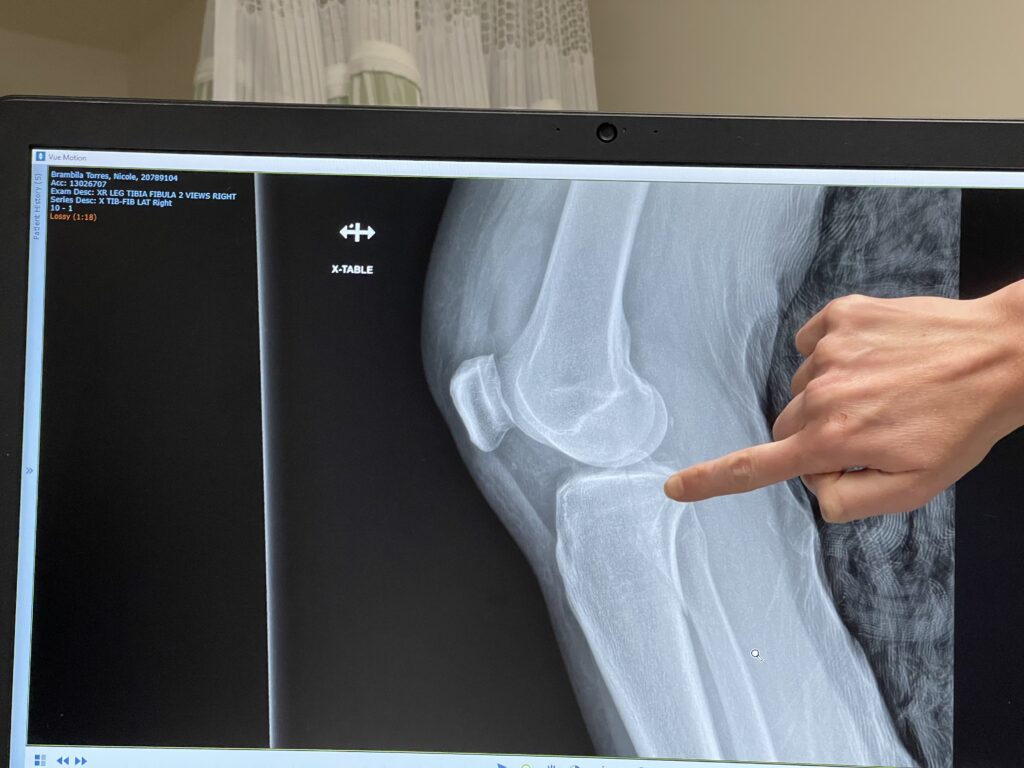
On New Year’s Eve — while much of the city was toasting with champagne or watching the fireworks downtown — I was recovering from surgery. In one split-second misjudgment I managed to fracture my tibial plateau. Not the worst the doctors at Denver Health have seen. But I wasn’t the luckiest, either.
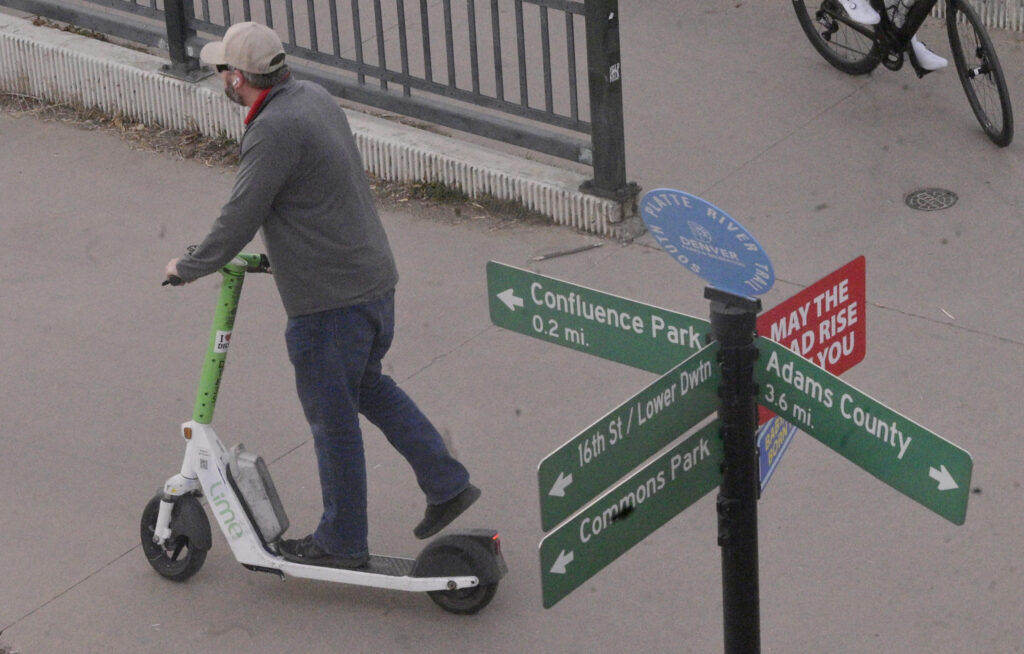
The prognosis: six-to-eight weeks with no weight on my right leg.
I am not alone.
As a Denver Health hospital transporter wheeled me back for X-rays, he told me I was his seventh scooter accident in four hours. The data backs him up. e-scooter injuries have nearly tripled since 2020, according to Denver Health data.
The metro area’s only Level I trauma center, Denver Health treats the majority of the region’s most serious injuries.
The injuries that land riders in the emergency department represent the most visible — but not the only — risk.
Fatal crashes remain a small fraction of Denver’s e-scooter rides, but are not anomalies. City data shows Denver typically records a handful of scooter-related deaths each year, but in 2024, that number spiked to eight.
In the majority of scooter-related deaths, the rider was struck by a vehicle, city data shows. In one recorded instance, the rider hit a raised curb, fell and hit his head.
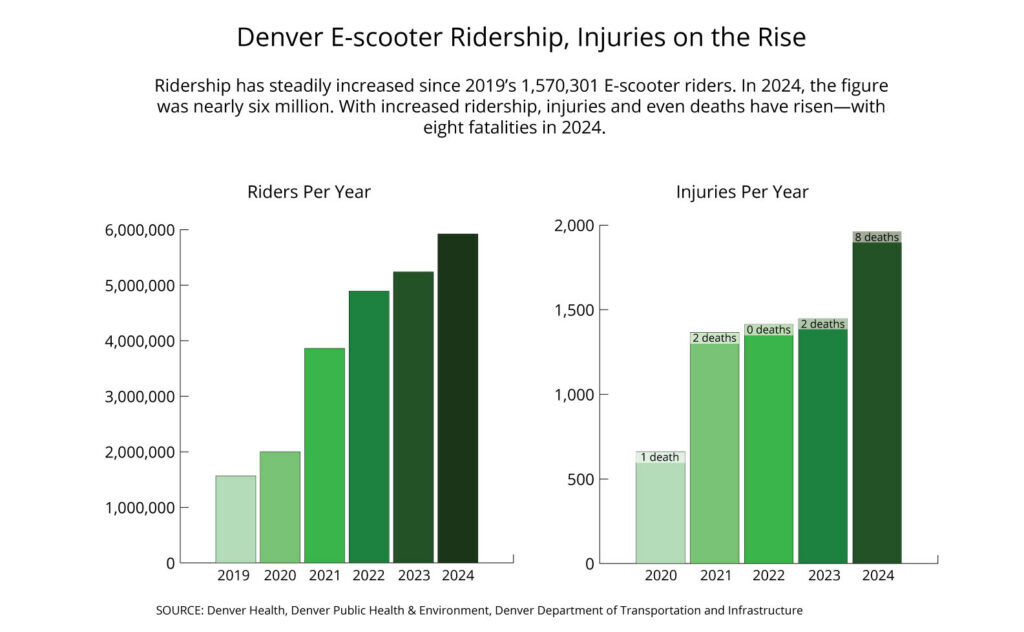
With scooter crashes and deaths on the rise, Denver is revamping its e-scooter program by adding new safety requirements riders did not previously face.
Starting this spring, Denver will replace Lime and Bird with a new operator, Veo. Under the contract, riders will be required to pass a safety quiz tailored to Denver’s laws before their first ride. It’s a requirement that didn’t exist when I stepped onto a scooter and into the emergency department three days after Christmas.
“At Veo, safety is our top priority and has been since we began designing, manufacturing, and operating shared bike and scooter systems in 2017,” Paige Miller, a Veo spokesperson, said in an email to The Denver Gazette.
“Veo’s track record over the past nine years shows that scooter and bike trips are overwhelmingly safe, with more than 99.99% of rides ending without a reported safety incident.”
Veo offers bike and scooter rides in more than 50 cities from Los Angeles to New York City.
‘Single-handedly keeping the hospital in business’
Education may be coming, but enforcement remains murky.
Denver’s city ordinance makes it unlawful to ride a bicycle or electric scooter on a sidewalk, with limited exceptions for city employees, newspaper delivery or sections designated as part of a bike route.
Violations of the sidewalk riding ordinance are enforced through a traffic summons under Denver’s municipal code, not as a criminal offense. Denver police declined to specify what fine riders could face and said the department does not readily track citations for sidewalk riding or other scooter-related violations, referring questions about broader enforcement data to the court system.
Denver police identified seven “DUI-type” charges involving scooter riders between 2020 and 2025 — in cases that involved either a crash or an injury, data in response to a records request show. The department said it did not identify any cases of intoxicated scooter riders without a resulting injury or motor-vehicle crash. And the department did not provide data on citations for sidewalk riding or other scooter-related violations.
The city’s vendor change comes as hospitals are grappling with a steady stream of scooter-related injuries, raising questions about whether education, enforcement or design can meaningfully reduce harm.
A National Library of Medicine study last year found 30% of all injuries were orthopedic and 12% of patients required a hospital admission. The median charge was about $7,000-$8,000 for those with orthopedic injuries.
Scooter crashes have become so common it’s often the subject of dark humor at Denver Health. One running line I repeatedly heard while admitted: Lime is single-handedly keeping the hospital in business.
Behind the joke is a measurable financial toll.
“Total hospital charges to treat these injuries are also increasing annually, with the highest charges observed during evening hours and in patients presenting with alcohol intoxication,” the study authors wrote.
Those high-cost cases tend to cluster during the same late-night and weekend hours when scooter use peaks, the study found.
At one trauma center in Denver alone, scooter-related injuries generated $10.4 million in hospital charges between 2020 and 2023.
Based on rider counts and hospital data, scooter-related injuries account for roughly 0.03% of all rides.
It’s a datapoint that underscores the tension for cities like Denver that have embraced e-travel: injuries are rare for individual rides, but frequent enough at scale to strain hospitals and raise safety concerns.
‘Practical benefits’
Health data also sheds light on who is getting hurt — and how.
Nearly half of the ER visits, 46% were classified as falls — meaning no vehicle or pedestrian was involved. My crash fell into that category.
Alcohol was noted in 11% of visits, according to the Denver Public Health & Environment.
Most patients injured on scooters were Denver residents— not tourists — one study found. Between 2019 and 2024, 62% of scooter-related ED visits involved Denver County residents. Just 18% listed a home address outside the state.
Because these studies relied on ED visits, the data likely undercounts the true number of injuries as many riders involved in scrapes and crashes likely sought care outside the emergency department or did not seek medical attention at all.
Denver launched its e-scooter program in 2018 as an alternative transportation option.
I understand the appeal.
Zipping around on these things made my heart sing. On a scooter, Denver felt smaller — offering the kind of freedom motorcyclists always romanticize: the wind in my hair, the pavement humming beneath my feet, the city rushing past.
The practical benefits are just as real.
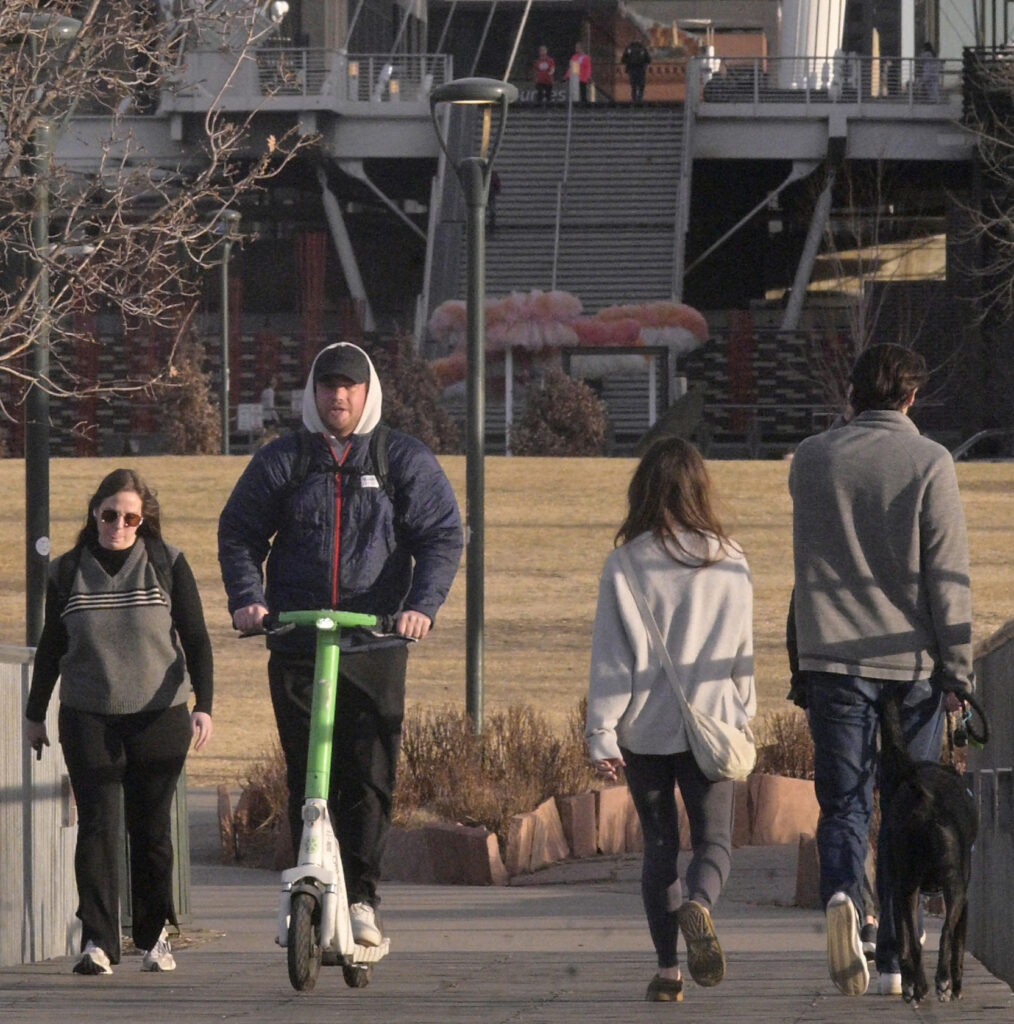
On a scooter, I could avoid traffic and slip through downtown without circling for a parking spot, all while knowing I was leaving a far smaller carbon footprint than I would in my Jeep.
But then, a scooter ride turned into medical leave.
I wrote about the accident, my recovery and the friends who showed up along the way in a personal blog post last month.
As Denver prepares to roll out a new scooter operator and safety requirements this spring, the question is not whether scooters belong in the city — they already do.
It’s whether education, enforcement and our street designs can keep pace with a transportation strategy meant to expand access and reduce car dependence — even as injuries continue to mount.
Infrastructure gaps might be one of the biggest challenges. In a 2024 survey, Veo found the absence of bike lanes often leaves riders with the difficult decision of choosing between unsafe traffic or crowded sidewalks.
“(S)hared micromobility already helps people live car-free or car-lite, and represents the best option available today for replacing a significant share of short car trips in U.S. cities,” the report said.
“But scaling this impact depends on addressing persistent barriers and building public confidence in the stability of these programs.”



Colorado budget writers put Medicaid caregiver pay cuts on hold
Marissa Ventrelli
marissa-ventrelli@denvergazette.com
Updated 12 hours ago
The Colorado General Assembly’s budget decision-makers have put proposed pay cuts on hold for people who care for a family member with a disability who receives Medicaid. The Joint Budget Committee made the decision after hours of testimony from family...

Marissa Ventrelli
Reporter
As federal vaccine guidance shifts, Colorado legislator favor recommendations from pediatric groups
Marianne Goodland
marianne-goodland@denvergazette.com
Updated 22 hours ago
Colorado legislators are pushing to codify a practice adopted by some 20 states to use guidance from the American Academy of Pediatrics and other medical associations when setting vaccine policies and immunization schedules. In some cases, the move supplements or...

Marianne Goodland
Reporter

Food Bank of the Rockies opens new Aurora distribution center
Kyla Pearce
kyla-pearce@denvergazette.com
Updated 4 days ago
Shelves of food tower to the ceiling in Food Bank of the Rockies’ new distribution center, which now houses all of the hunger-relief organization’s operations. FBR officials celebrated the 270,000-square-foot facility’s grand opening Thursday, leading visitors through room after room...

Kyla Pearce
Reporter

Arapahoe County adopts new approach to opioid abatement funding, invests $4M in service building
Kyla Pearce
kyla-pearce@denvergazette.com
Updated 5 days ago
Arapahoe County officials are investing more than $4 million in opioid harm reduction programs, with the latest phase of funding taking a new approach, according to a news release. Normally, county officials seek out fully built programs to fund through...
Kyla Pearce
Reporter
Avian flu spreads to backyard flocks in Larimer and Logan counties
Nicole C. Brambila nico.brambila@denvergazette.com
nico.brambila@denvergazette.com
Updated 1 week ago
The new cases follow last week’s disaster declaration tied to a commercial outbreak in Weld County. The Colorado Department of Agriculture confirmed three additional cases of the highly pathogenic avian flu in backyard flocks in Larimer and Logan counties, in...

We tested vapes in Colorado for signs of hemp. This is what we found.
Chris Osher
chris.osher@gazette.com
Updated 2 weeks ago
This article was produced for ProPublica’s Local Reporting Network in partnership with The Denver Gazette. Sign up for Dispatches to get our stories in your inbox every week. Leaders in the Colorado marijuana industry have complained in recent years that...

Chris Osher
Reporter
Shoveling snow? Over-exertion and cold temps can raise your heart risks
The Associated Press
the-associated-press@denvergazette.com
Updated 2 weeks ago
Digging out from the weekend’s massive snow and ice storm could be hazardous to your heart. Pennsylvania health officials announced three snow-removal related deaths Sunday. All were between the ages of 60 to 84. The Lehigh County coroner’s office cautioned...

The Associated Press
Reporter

Powdered whole milk could be a culprit in the ByHeart botulism outbreak, tests show
The Associated Press
the-associated-press@denvergazette.com
Updated 2 weeks ago
Powdered whole milk used to make ByHeart infant formula could be a source of contamination that led to an outbreak of botulism that has sickened dozens of babies, U.S. health officials indicated Friday. Testing by the U.S. Food and Drug...
The Associated Press
Reporter

ACA enrollment in Colorado sees slight dip amid rising costs
Nicole C. Brambila nico.brambila@denvergazette.com
nico.brambila@denvergazette.com
Updated 2 weeks ago
Despite handwringing over enhanced federal subsidies going away for many Coloradans enrolled in health insurance on the state’s marketplace, officials reported Friday just a 2% enrollment dip. More than 277,000 Coloradans enrolled in health insurance through the Affordable Care Act...

Former medical executives, Colorado residents charged with $873M fraud
Michael Braithwaite
michael.braithwaite@gazette.com
Updated 2 weeks ago
Two former medical device company executives were charged with a near-$900 million fraud scheme in a federal grand jury indictment unsealed Wednesday. Thomas Sandgaard, 67 of Castle Rock, and Anna Lucsok, 39 of Denver, face nine counts of health care...

Michael Braithwaite
Reporter
PREV
PREVIOUS

Colorado landscape plants, trees, need winter watering during warm, dry weather
Dry, sunny, warm and windy winter conditions have left many Colorado landscape plants short of moisture, and Colorado State University Extension specialists recommend supplemental watering to prevent root damage and promote healthier spring growth. Evergreens, newly planted trees and shrubs, grasses, and plants in exposed or south-facing sites face the highest risk from winter drought, […]

President Pro Tem Sen. Dafna Michaelson Jenet announces resignation from Colorado Senate
President Pro Tem Sen. Dafna Michaelson Jenet of Commerce City, who has served in the General Assembly since 2017, announced to her Senate Democratic colleagues Tuesday that she is resigning to take a new job. Her last day is Friday. She will become the director of the David and Laura Merage Foundation for Combating Antisemitism. […]