







MAGA vs moderate fight over SAVE Act divides Utah senators
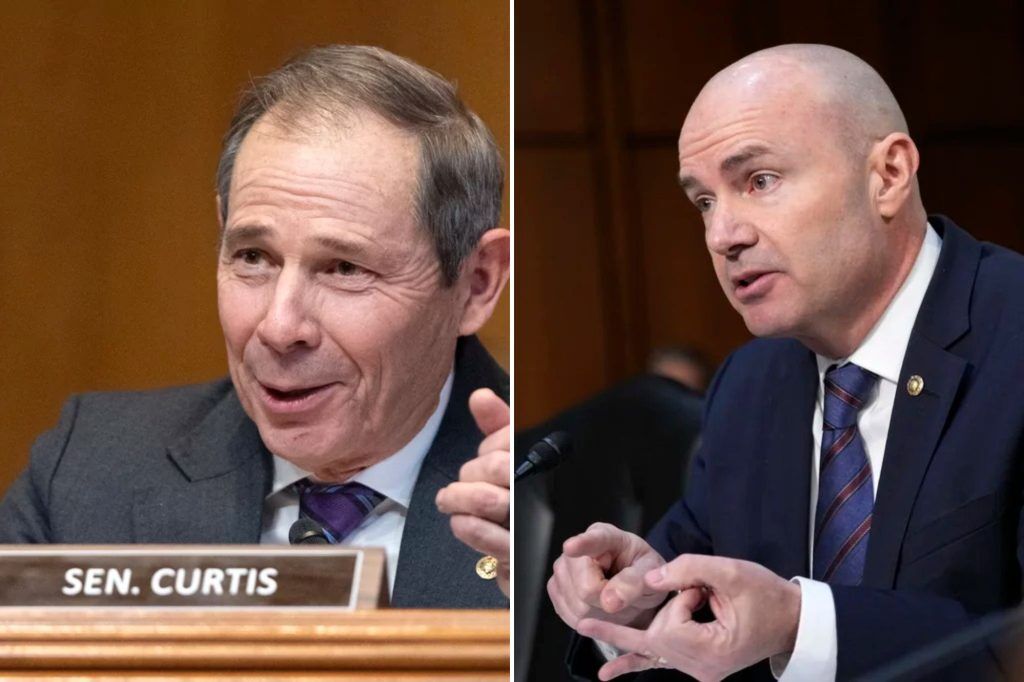
A growing divide between MAGA and traditional Republicans is playing out in Utah, a state known for its comity and Mormon genteelism, as its two GOP senators stake out opposing sides of a fight over the filibuster.
Sen. Mike Lee wants the Senate to revert to a “talking filibuster” to pass the SAVE Act, which would require proof of citizenship when registering to vote. His Utah colleague, Sen. John Curtis, falls in a camp of Republicans who view the strategy, which sidesteps the 60 votes needed for most legislation, as a slippery slope.
Democrats could still hold up the legislation for days, or even weeks, with a marathon of floor speeches, but Republicans would eventually be able to pass the bill with a simple majority vote, a move Curtis says defies the spirit of the filibuster as it functions today.
He listened to a presentation Lee delivered at a Tuesday policy lunch on the Safeguard American Voter Eligibility Act and is a cosponsor of the legislation, like almost every other Senate Republican, but told the Washington Examiner that he is unwilling to weaken the filibuster to pass it.
“To me, that’s no different than ending the filibuster,” Curtis said. “So, it’s a nonstarter for me.”
“I have a tremendous amount of respect for Sen. Lee, and certainly listen to all points, but I just have a strong philosophical support of the filibuster,” he said.
The disagreement is the latest between Lee and Curtis, who despite representing the same state have taken different approaches to everything from President Donald Trump’s saber-rattling over Greenland to the fatal shooting of Alex Pretti in Minneapolis. Most recently, Curtis voted to fund most of the government even as Lee voted “no” over its earmarks.
The disagreement is also a microcosm of the debate playing out between Trump’s MAGA allies, who want to pass his agenda at all costs, and more institutionalist members focused on preserving the chamber’s rules and traditions.
A majority of Senate Republicans still support the filibuster and believe it benefits them disproportionately when they are in the minority. But House rebels, egged on by Trump, have joined forces with Lee to paint the filibuster as an obstacle to secure elections, mounting a pressure campaign that has the backing of House GOP leadership.
Senate Republicans used a half-day retreat to again discuss the talking filibuster Wednesday, the same day the House is voting on a revised version of the SAVE Act that also incorporates a photo ID requirement.
Senate Majority Leader John Thune (R-SD) and others who want to see the filibuster preserved argue that Lee’s workaround would consume weeks of floor time and, due to the way debate is structured, inadvertently give Democrats the ability to force politically risky votes.
But Lee’s reasoning is that the Senate has always been cumbersome to navigate and that the modern filibuster and its 60-vote threshold would still be used out of convenience for most legislation.
“My point is, nothing in the Senate’s an easy move. This one’s certainly not,” Lee said of the SAVE Act. “But if we want to do this, this is how we have to go about it.”
Curtis enjoys a cordial relationship with Lee and has worked with him on land use and other matters important to the Utah delegation since his election to the Senate in 2024. They loosely represent two wings of the party, however, with Curtis embracing traditional conservatism and Lee more readily aligning himself with the president.
Lee, though he has long been a thorn in the side of leadership, once fit more neatly in Curtis’s camp, and was even publicly on the fence about weakening the filibuster when Trump rekindled the debate last year.
But he has shifted right since Trump’s election to a second term, giving the president more flexibility on war powers, one of his signature issues, and supporting the White House at times when Curtis has registered muted criticism.
Curtis has been careful to avoid comparisons to his predecessor, Trump critic Mitt Romney, and has been a reliable vote for the president, but he has, at times, pushed back on the White House, rebuffing the idea of a military invasion of Greenland and criticizing Secretary of Homeland Security Kristi Noem’s “premature” comments on the fatal shooting of Pretti by immigration agents last month.

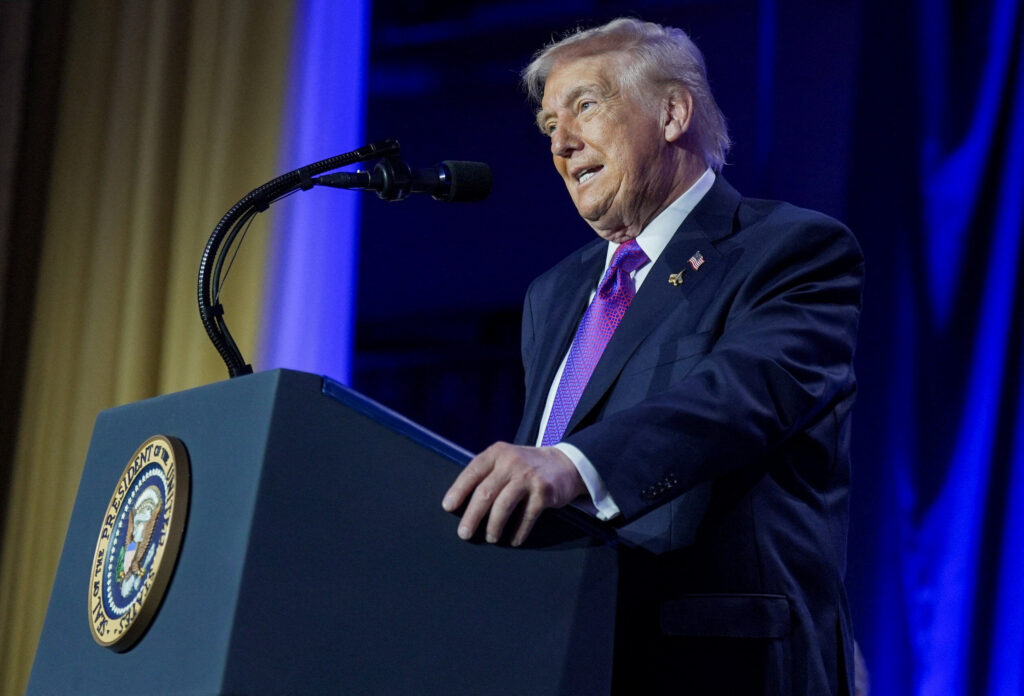
NATO enhances military defense of Arctic region after amicable meeting with Trump
David Zimmermann, Washington Examiner
david.zimmermann.washington.examiner@gazetteedit.wpenginepowered.com
Updated 4 hours ago
NATO announced a new military effort to boost its defensive capabilities on Wednesday in the Arctic region after its leader came to an understanding with President Donald Trump last month. The series of military exercises under the newly announced “Arctic...


The three House Republicans who bucked Trump on tariffs
David Zimmermann, Washington Examiner
david.zimmermann.washington.examiner@gazetteedit.wpenginepowered.com
Updated 4 hours ago
A House GOP bid to block future votes on President Donald Trump’s tariffs until the end of July failed on Tuesday after three House Republicans joined Democrats in blocking the procedural measure. Reps. Thomas Massie (R-KY), Don Bacon (R-NE), and...
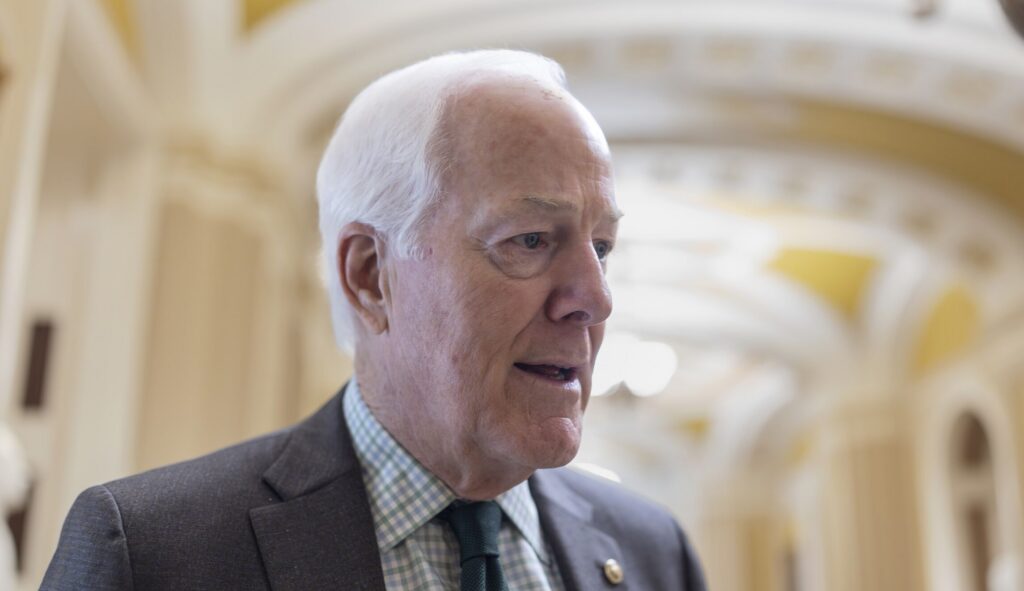
Immigration fraud faces congressional scrutiny following massive Somali scams
Mia Cathell, Washington Examiner
mia.cathell.washington.examiner@gazetteedit.wpenginepowered.com
Updated 4 hours ago
Senate Republicans set their sights on immigration fraud at a judiciary hearing on Tuesday, assembling witnesses who highlighted widespread abuse of immigrant-tied government benefits in the midst of Minnesota’s massive Somali fraud scandal. Sen. John Cornyn (R-TX), chairman of the...

Mia Cathell, Washington Examiner
Reporter

FAA lifts flight restrictions over El Paso and New Orleans hours after instituting closure
Brady Knox, Washington Examiner
brady.knox.washington.examiner@gazetteedit.wpenginepowered.com
Updated 4 hours ago
The Federal Aviation Administration lifted its airspace closure over El Paso and New Orleans just hours after instituting it. The FAA originally instituted the shutdown for 10 days, through Feb. 21, but it was lifted after a few hours, according...

Brady Knox, Washington Examiner
Reporter

Healthcare fraud has proliferated nationwide, House Republicans warn
Mia Cathell, Washington Examiner
mia.cathell.washington.examiner@gazetteedit.wpenginepowered.com
Updated 5 hours ago
EXCLUSIVE — House Republicans have uncovered a nationwide “epidemic” of healthcare fraud extending far beyond the fraud-fraught states of Minnesota and California, according to congressional research into underreported cases of Medicare and Medicaid abuse shared with the Washington Examiner. For...
Mia Cathell, Washington Examiner
Reporter

Bondi and Noem sued for ‘strong-arming’ tech companies to target ICE monitoring
Emily Hallas, Washington Examiner
emily.hallas.washington.examiner@gazetteedit.wpenginepowered.com
Updated 5 hours ago
A civil rights organization is suing the Trump administration for pressuring major technology companies to remove information tracking Immigration and Customs Enforcement, arguing Washington violated free speech rights. The Foundation for Individual Rights and Expression, a free speech absolutist group,...

Emily Hallas, Washington Examiner
Reporter

Netanyahu signs Israel onto Board of Peace in meeting with Marco Rubio
Timothy Nerozzi, Washington Examiner
timothy.nerozzi.washington.examiner@gazetteedit.wpenginepowered.com
Updated 5 hours ago
Despite months of opposition to key points of President Donald Trump‘s international Board of Peace, Israel has officially joined the club. Israeli Prime Minister Benjamin Netanyahu signed Israel’s agreement with the international body on Wednesday during a meeting with Secretary...

Timothy Nerozzi, Washington Examiner
Reporter

A person has been detained for questioning in disappearance of Nancy Guthrie, sheriff’s office says
John Seewer
john.seewer@associatedpress.com
Updated 11 hours ago
RIO RICO, Ariz. (AP) — A person was detained for questioning Tuesday in the kidnapping of Nancy Guthrie, hours after the FBI released surveillance videos of a masked person wearing a handgun holster outside Guthrie’s front door the night she...

John Seewer
Reporter
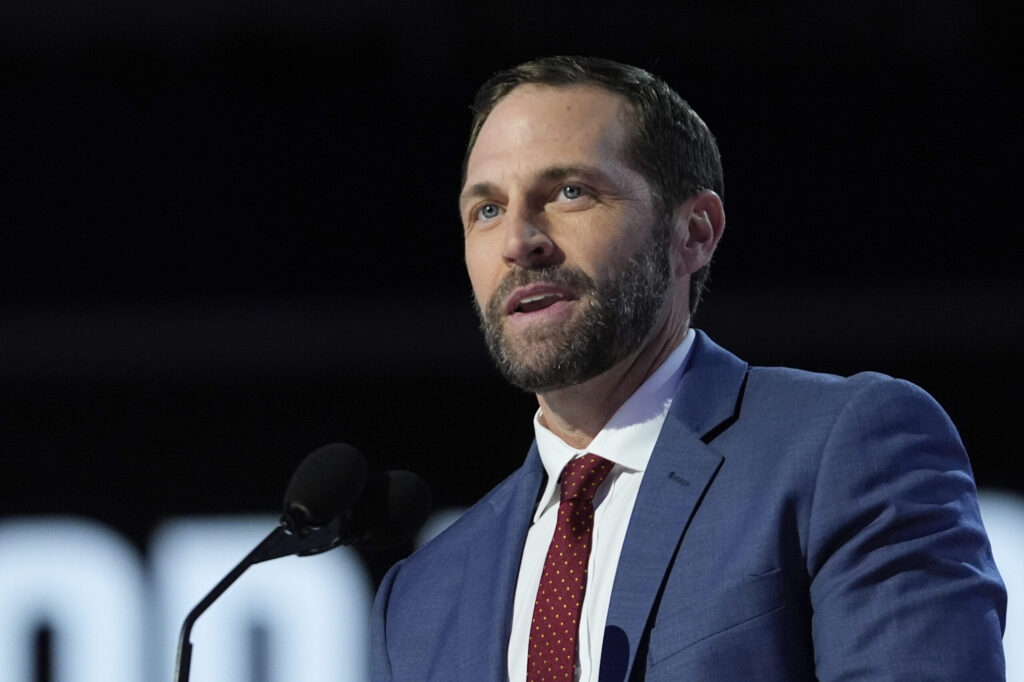
Grand jury refuses to indict Democratic lawmakers in connection with illegal military orders video
Eric Tucker
eric.tucker@associatedpress.com
Updated 8 hours ago
WASHINGTON (AP) — A grand jury in Washington refused Tuesday to indict Democratic lawmakers in connection with a video in which they urged U.S. military members to resist “illegal orders,” according to a person familiar with the matter. The Justice...

Eric Tucker
Reporter
Trump admin. to revoke climate change regulations
The Associated Press
the-associated-press@denvergazette.com
Updated 14 hours ago
WASHINGTON — The Trump administration on Thursday will revoke a scientific finding that long has been the central basis for U.S. action to regulate greenhouse gas emissions and fight climate change, the White House announced. The Environmental Protection Agency will issue a final...

The Associated Press
Reporter
PREV
PREVIOUS

Bondi and Noem sued for ‘strong-arming’ tech companies to target ICE monitoring
A civil rights organization is suing the Trump administration for pressuring major technology companies to remove information tracking Immigration and Customs Enforcement, arguing Washington violated free speech rights. The Foundation for Individual Rights and Expression, a free speech absolutist group, is representing two plaintiffs who filed the lawsuit against the Departments of Homeland Security and […]

Healthcare fraud has proliferated nationwide, House Republicans warn
EXCLUSIVE — House Republicans have uncovered a nationwide “epidemic” of healthcare fraud extending far beyond the fraud-fraught states of Minnesota and California, according to congressional research into underreported cases of Medicare and Medicaid abuse shared with the Washington Examiner. For instance, in Florida, a foreign national from Cuba was federally sentenced in May 2025 for […]