







Aurora emergency responders adopt telehealth service for non-emergency medical calls

Aurora Fire Rescue recently adopted a new response program that integrates telehealth into 911 dispatch, connecting non-emergency medical callers with physicians.
The new service, Aurora Clinical Navigation, uses a platform called MD Ally to connect 911 callers experiencing non-emergency medical issues with a doctor online, Aurora Fire Rescue Deputy Chief Mark Hays said in a presentation to the Public Safety, Courts and Civil Service Policy Committee Thursday.
MD Ally has been live since Feb. 4, Hays said. It is free for callers and services are available in about 250 languages.
Every year, millions of people in the United States call 911 for non-emergency medical conditions, according to Hays’ report on MD Ally.
The average cost of an ambulance ride before insurance is $1,277, Hays said, and the average cost of an emergency room visit is $2,200.
Implementing a system like MD Ally saves patients money and time while taking some strain off of dispatch center staff and decreasing ambulance response times for life-threatening issues, Hays said.
“(Falck) does not have thousands of ambulances just sitting there … they have a finite number,” Hays said. “The more they send on low acuity calls, the less they have available for high acuity calls.”
Callers who get referred to MD Ally are connected via video or phone call with a board certified physician in the United States who can connect callers to mental health or crisis support services, refill patient prescriptions and help treat conditions like mild infections, minor injuries and chronic pain.
In the first week of MD Ally implementation, 23 of 58 calls were diverted to MD Ally, AFR Division Chief Jon Hill said.
“That means there are 23 people who did not get an ambulance bill, did not get an emergency room bill and had their situation handled appropriately to whatever their needs were,” Hill said. “There were 40 hours of apparatus or ambulance use that were not needed and 92 hours of emergency room time avoided.”
Other cities in Florida, Arizona and California have also adopted MD Ally services.
Currently, the contract with MD Ally is for one year, Hays said. The contract cost AFR $270,000, a spokesperson said.
“Everybody’s emergency is an emergency to them, but if we can make sure the car accidents, the strokes, the chest pains, heart attack victims get the quickest response … that’s ultimately the goal,” Hill said.
Aurora Clinical Navigation is another tool AFR has adopted in its Right Response Approach, which the department adopted in 2023 to streamline 911 responses.


Cherry Creek orders outside audit, tightens contract oversight amid leadership shakeup
Nicole C. Brambila nico.brambila@denvergazette.com
nico.brambila@denvergazette.com
Updated 1 hour ago
Amid heightened public scrutiny following recent leadership upheaval, the Cherry Creek School District will launch an independent audit of its internal controls and impose stricter contract approval rules, lowering the dollar threshold for board oversight and requiring additional executive and...


Denver City Council to consider $24M Motorola contract for emergency services
Deborah Grigsby
deborah.smith@denvergazette.com
Updated 55 minutes ago
It may be a short work week, but the Denver City Council will still have a robust agenda on Tuesday after Presidents’ Day. For those following Council Bill 26-0125, the Safety and Transparency in Public Authority Act, which proposes to...

Deborah Grigsby
Reporter

Holiday weekend to bring dangerous avalanche conditions, officials warn
Kyla Pearce
kyla-pearce@denvergazette.com
Updated 2 hours ago
Colorado avalanche officials warn of a dangerous Presidents’ Day weekend in the backcountry, aligning with historic trends in the state. The long weekend is expected to bring the highest levels of avalanche danger Colorado has seen so far in February,...
Kyla Pearce
Reporter
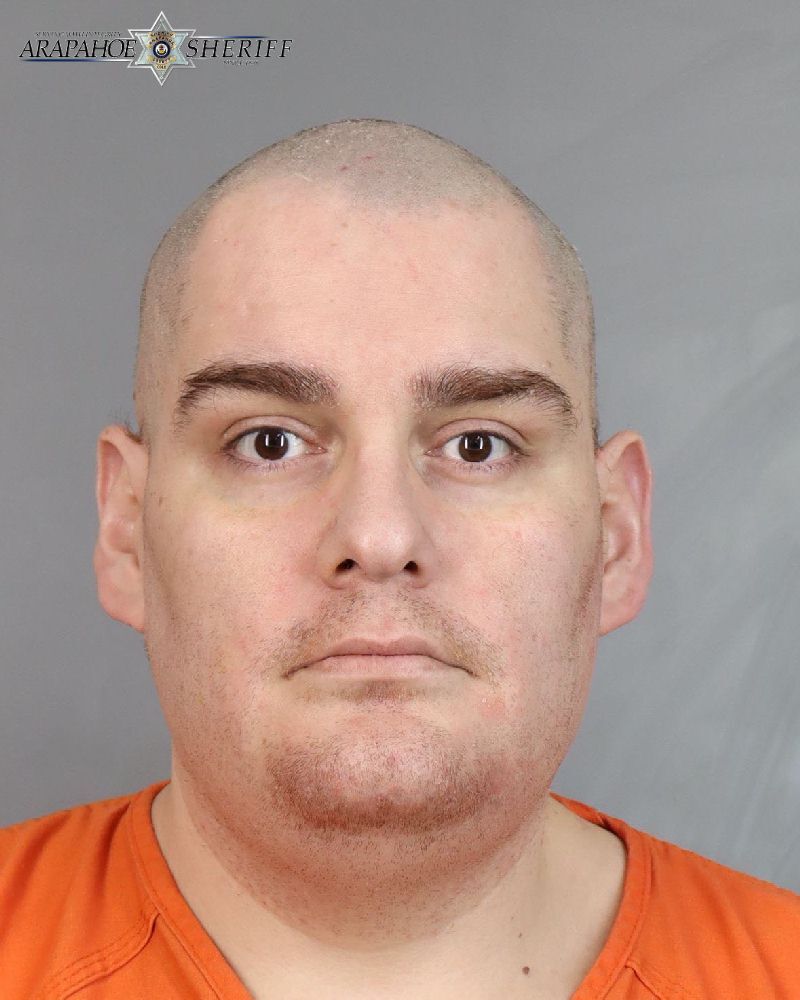
Denver man gets 40 years in prison for plotting wife’s murder
Michael Braithwaite
michael.braithwaite@gazette.com
Updated 1 hour ago
A Denver man was sentenced to 40 years in prison Friday for a murder-for-hire plot against his wife while he was in jail. Yaury Hill, 34, pleaded guilty Feb. 6 for trying to convince his roommate to kill his wife...

Michael Braithwaite
Reporter

Man arrested for attempted murder after Thornton police chase
Michael Braithwaite
michael.braithwaite@gazette.com
Updated 2 hours ago
Thornton Police Department officers arrested a man on suspicion of attempted murder Wednesday after he led them on a chase. Ismael Barajas Aguilar, 39, faces attempted murder, assault, domestic violence and resisting arrest charges after he allegedly shot a woman...
Michael Braithwaite
Reporter

HF Sinclair gives state regulators preliminary report on contaminated fuel incident
Dennis Huspeni
dennis.huspeni@gazette.com
Updated 3 hours ago
HF Sinclair has provided regulators with the state’s Division of Oil and Public Safety a preliminary report on the cause of the Jan. 7 contaminated fuel fiasco that impacted more than 1,000 motorists, but the investigation is still weeks from...

Dennis Huspeni
Reporter

Push to regulate high concession prices in Colorado could hurt vendors, critics warn
Bernadette Berdychowski
bernadette.berdychowski@denvergazette.com
Updated 6 hours ago
High food and drink prices have long been a staple of going to a sports game, concert, festival or even the airport. But as inflation has increasingly pinched people’s wallets, pushback against excessive concession prices is growing. The issue has...

Bernadette Berdychowski
Reporter

Arvada man sentenced for tampering with woman’s dead body
Sage Kelley
sage.kelley@denvergazette.com
Updated 3 hours ago
An Arvada man will spend a decade in prison after tampering with a 29-year-old woman’s dead body. Jefferson County District Court Judge Megan Miloud sentenced 41-year-old Daniel Ryan Clark to 10 years Wednesday after Clark pleaded guilty to a charge...

Sage Kelley
Reporter

Denver taps Jonathan Norloff as new county assessor
Deborah Grigsby
deborah.smith@denvergazette.com
Updated 1 hour ago
Denver named Jonathan Norloff as its new county assessor, according to a statement Thursday by the Department of Finance. Norloff, who has been with the Assessor’s Office since 2012, has served as deputy county assessor since 2024. He replaces former...
Deborah Grigsby
Reporter

4 killed in plane crash near Steamboat Springs
9News
9news@denvergazette.com
Updated 2 hours ago
The FAA says the plane crashed under “unknown circumstances” just after midnight Friday. STEAMBOAT SPRINGS, Colo — Four people were killed when a small plane crashed near Steamboat Springs early Friday. According to a preliminary report from the FAA, the...

9News
Reporter
PREV
PREVIOUS

Denver man gets 40 years in prison for plotting wife's murder
A Denver man was sentenced to 40 years in prison Friday for a murder-for-hire plot against his wife while he was in jail. Yaury Hill, 34, pleaded guilty Feb. 6 for trying to convince his roommate to kill his wife in a letter Hill sent while he was in the Arapahoe County Jail on Oct. […]

Holiday weekend to bring dangerous avalanche conditions, officials warn
Colorado avalanche officials warn of a dangerous Presidents’ Day weekend in the backcountry, aligning with historic trends in the state. The long weekend is expected to bring the highest levels of avalanche danger Colorado has seen so far in February, a news release from the Colorado Avalanche Information Center said. Presidents’ Day weekend is historically […]