







Push to regulate high concession prices in Colorado could hurt vendors, critics warn

High food and drink prices have long been a staple of going to a sports game, concert, festival or even the airport. But as inflation has increasingly pinched people’s wallets, pushback against excessive concession prices is growing.
The issue has reached Colorado’s Capitol this year.
A group of Democrat policymakers seek to curb expensive game day beers and hot dogs with a bill proposing to stop concessions from charging substantially more than the average price of the product in the county it’s sold in.
But the effort targeting high concession prices statewide has sparked concerns from business advocates and all of Colorado’s major league sports teams who worry about the bill’s vague language and the unintended consequences it could bring.
Most of all, it would hurt local vendors, opponents say.
“It’s actually anti-consumer choice,” said Leslie Oliver, vice president of external affairs for the Denver Metro Chamber of Commerce, which lobbies for business interests in Colorado’s largest urban region.
Concessions often have to pay a fee to participate in major events or be in high-traffic areas like a sports arena or the airport, she said, which is why they offset the costs with higher prices. Vendor fees also help pay for the infrastructure to host festivals.
If passed, the chamber worries the bill could drive away smaller concessions, Oliver said, giving people fewer locally-based options at games and events.
“If they can’t set their own prices for that, then they’re not going to be a part of this,” Oliver said. “And this dilutes and diminishes the consumer experience or the fan experience.”
ADDRESSING THE “CAPTIVE CONSUMER” PROBLEM
The case for the bill hinges on an economic argument that airports and sports venues act as monopolies once they catch a person through their gates.
A “captive consumer” is a term used to define people who have limited choices of goods or services and are susceptible to markups due to the lack of competition. In theory, airports, sports venues, festivals, hospitals and prisons are considered areas where consumers have limited choices.
In airports, travelers aren’t allowed to bring in drinks past security and can’t leave without having to go through security again — leaving them only to choose from the airport’s concessions while waiting for their flight or in between transfers. Sports venues also don’t allow outside food and beverage for game days and concerts.
The effort in Colorado, HB26-1012, would forbid businesses from charging captive consumers “unreasonably excessive prices” and give the attorney general’s office power to implement guidelines on what is considered unfair for consumers.
It would also require delivery apps like Doordash to disclose and compare the price of a product online to its in-store location.
Bill HB26-1012 is sponsored by Democratic lawmakers Rep. Yara Zokaie, Rep. Kyle Brown, Sen. William Lindstedt and Sen. Mike Weissman. It’s set to go before the judiciary committee on Feb. 25.
One of the lawmakers said she’s pushing for this bill because many Coloradans believe things are just too expensive, Zokaie told The Denver Gazette.
Places like airports and sports venues are “price gouging” customers, the state representative for Larimer County said.
“The entire idea of capitalism in a free market is that we have sources competing against each other and that truly reflects the free market pricing,” Zokaie explained. “But we don’t see that in certain captive scenarios.”
There’s a long list of prominent organizations in the state that are against the bill.
Many chambers of commerce and industry associations representing Colorado, South Denver, Golden, Parker, Colorado Springs, Douglas County and the state’s restaurant industry are opposed to it.
Entertainment leaders have also voiced their opposition from The National Western Stock Show, Live Nation Entertainment, Denver Center for Performing Arts to AEG Presents.
The Anschutz Entertainment Group is a subsidiary of The Anschutz Corp., which owns Clarity Media Group, parent company of The Denver Gazette.

The Denver Broncos, Denver Nuggets, Colorado Rockies, Colorado Avalanche, Colorado Rapids and Colorado Mammoths issued a rare joint statement to The Denver Gazette voicing their concerns over the proposed legislation.
“We recognize that affordability is important to our fans and have made it a priority throughout our respective venues,” the joint statement said. “However, a government-mandated pricing model with added regulatory oversight would only discourage new vendors and partners at Colorado’s premier venues, severely limiting the variety and quality of concessions.”
A spokesperson for the Denver Center for the Performing Arts said the bill raises concerns because their concessions help fund DCPA’s performances, educational programming, community outreach and job opportunities for artists.
“Policies that reduce flexibility for arts and cultural venues risk diminishing the diversity, accessibility, and vibrancy of live performance in Colorado,” the organization said in a statement.
DCPA asked lawmakers to consider how “broad pricing mandates” could impact the state’s cultural institutions, as well.
The Denver Metro Chamber also pointed that this legislation would add more burdens to businesses that are still adjusting to new pricing laws put into effect last month targeting junk fees, saying those regulations haven’t had enough time to be studied yet.
“Before imposing new rules, maybe we should look and get a feel for how some of the ones we’ve already done are taking shape and being implemented,” Oliver said.
When asked about the rising concerns from many top institutions in the business community, Zokaie defended the bill.
At the end of the day, she said she’s asking stadium owners who make billions each year to make less profit and stop taking money from vendors. People are fed up with the high prices, she said.
“Quite frankly, I don’t think that’s a big ask for a stadium owner…” she said. “Stop gouging people, and let a middle-income family be able to have fun and be able to do the things that they were able to do just 10 years ago.”
She added she understands many businesses in Colorado feel burdened by regulations and welcomes their input in making sure the law is feasible for everyone.
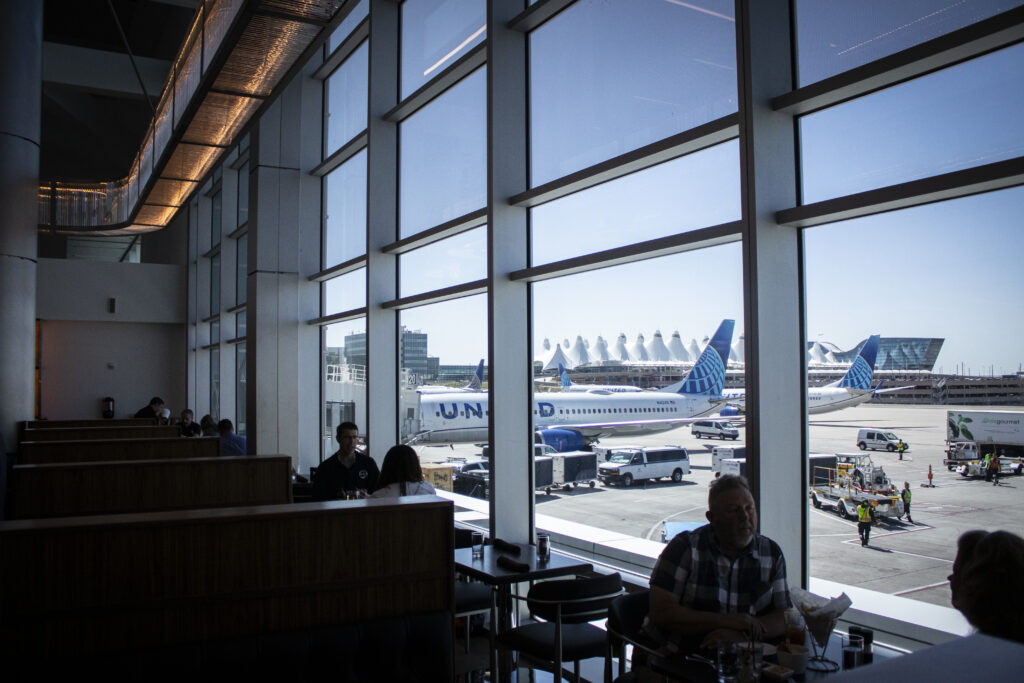
SOME STADIUMS AND AIRPORTS SET PRICE LIMITS THEMSELVES, BUT CALL FOR GOVERNMENT INTERVENTION GROWS
There’s a push to install “street pricing” policies in captive consumer areas nationwide, especially for publicly funded venues.
“Under this rule, concessionaires would be required to charge the same prices they do outside the venue — no excessive markups, no shrinking portion sizes, just fair prices for travelers and fans alike,” according to the Groundwork Collaborative, a progressive economic think tank in Washington D.C.
Limiting vendors from overcharging at publicly-funded venues is popular across the political spectrum, with 76% support from Republicans, 78% from independents and 67% from Democrats, according to the think tank’s poll of more than 1,100 U.S. voters last year.
Yet, airports and stadiums sometimes limit prices on their own.
Advocates for street pricing point to the Mercedes-Benz Stadium for introducing “fan first pricing” when it opened in 2017 as proof it can be feasible to offer lower prices.
Denver’s Ball Arena is also in its first year of testing a “fan-friendly menu” after complaints its prices were too high. Now the venue offers stadium staples like hot dogs, nachos, fries and pretzels for $5.
Airports, like Denver International Airport, have their own internal street pricing policies that limit concession prices.
Denver International Airport has a concessions policy requiring vendors to not charge more than 15% of the price of a product at the nearest similar location to the airport, though a 9News investigation found the policy had a lot of leeway, allowing many items to be marked up more than 15%, even as high as 114%.
Airport officials are “monitoring” the bill, a spokesperson for DIA said in an email.
“Our airport concessions policy currently requires value pricing as the cost of doing business at DEN is higher than a typical store in the Denver metro,” the airport spokesperson said.
The airport’s growing concession program has more than 200 vendors at “varying price points,” the spokesperson added.
Yet, the bill’s sponsor doesn’t believe it’s enough.
“The reason why we have to bring legislation is because these internal policies do not follow through with them until there’s some teeth behind it,” Zokaie said.

SMALLER PORTIONS, FEWER OPTIONS?
It can be misleading to say events and airports “price gouge,” said Ovunc Yilmaz, an expert on revenue management and pricing at the University of Colorado Boulder, about the bill.
Regulations targeting price gouging typically go after businesses that raise prices for emergency goods during unplanned disasters. For example, water selling for five times its original price following a wildfire.
It’s not price gouging if a product is consistently a higher price at a specific location, Yilmaz said.
He explained the higher costs come from the increased costs of doing business at events or stadiums. Plus, many vendors only get the surge of business for a short burst of time as concessions aren’t open every day like a traditional store.
Consumers also have more choices than it seems, such as not buying the fancy beer and eating before or after leaving the venue.
Still, he added, prices at places like sports games have become extreme in some cases.
“I think the spirit is there,” Yilmaz said about the bill. “I just don’t think this solution is going to work.”
Bills like the one proposed in Colorado put more responsibility on the vendors than event organizers, stadiums or airports. It could push businesses to offer lower quality products, smaller portion sizes and limited menus to meet regulations, Yilmaz said.
It would be more effective to go after how the market operates — whether it’s setting ground rules for what kind of contracts venues offer vendors or asking businesses to show proof for how their costs determine their price — Yilmaz said.
“Just attacking the prices is not going to solve anything,” he said. “We will actually see businesses just losing money and then closing.”
WHAT DOES A CONCESSIONAIRE THINK?
The owner of Nola Jane, a cajun food stand in Ball Arena, said he already aims to keep his prices and portions as close to the restaurant’s main storefront in Lower Downtown — but some adjustments have to be made.
“There are things that you do differently just to make it a little more affordable and a little more cost-effective for both the consumer and for us,” said Mike Goldman, Nola Jane’s owner and executive chef.
He explained he has a good contract where he doesn’t have to pay rent to be in the sports venue, rather they have a sales-sharing agreement with the arena’s vendor partner Legends Global, which helps lower costs. The restaurant does tweak some of its goods, such as the Debris Poboy sandwich, which is slightly smaller at games than at the restaurant.
For items with less flexible portion sizes, like Nola Jane’s fried okra, he said requiring to match prices can hurt their bottom line.
“We’re going to see lost margins there, for sure,” Goldman said.
Yet he’s not necessarily opposed to the bill, the chef said. Keeping costs down is a good thing, but restaurants already deal with very tight profit margins.
“When we have things like this come up that could either help or make it worse, who knows?” he said. “We’re already a restaurant in a major area, we’re already clinging on for dear life… we’re just trying to stay alive.”
As other laws such as minimum wage for restaurant workers tied to inflation have driven Denver’s labor costs to be among the highest in the nation, as well as tariffs impacting the cost of food, Goldman said he’d be more supportive of the measure if restaurants could get relief.
“If we’re bringing down the cost of something, which I’m all for doing,” he said, “we have to bring down our expense on the other end in some capacity.”


HF Sinclair gives state regulators preliminary report on contaminated fuel incident
Dennis Huspeni
dennis.huspeni@gazette.com
Updated 2 hours ago
HF Sinclair has provided regulators with the state’s Division of Oil and Public Safety a preliminary report on the cause of the Jan. 7 contaminated fuel fiasco that impacted more than 1,000 motorists, but the investigation is still weeks from...

Dennis Huspeni
Reporter
Mountain resorts feel the pinch as brokers pray for snow
Mark Samuelson
mark-samuelson@denvergazette.com
Updated 52 minutes ago
As Colorado’s mountain resorts headed into the holiday weekend hoping for more white stuff, brokers in those markets were lamenting the effect of a dry winter on real estate sales. “We’ve seen the impact from the lack of snow for...

Mark Samuelson
Reporter

9NEWS compared food prices inside and outside Denver’s airport
9News
9news@denvergazette.com
Updated 12 hours ago
By Steve Staeger, Anna Hewson Every business that sells products inside Denver International Airport is subject to a policy little known by the public – an attempt to keep prices down for the passengers traveling through. Items inside the airport...

9News
Reporter

Restaurants take Girl Scout cookies to a new level | NONPROFIT REGISTER
Joanne Davidson Special to Colorado Politics
joanne-davidson-special-to-colorado-politics@denvergazette.com
Updated 1 day ago
GIRL SCOUTS OF COLORADO Denver News: Girl Scout Cookie season is in full swing, and Girl Scouts of Colorado CEO Leanna Clark is once again pleased to announce that enjoyment of the sweet treats can be enhanced by dining at Denver’s...


Hail drives up to 54% of homeowners’ insurance premiums in parts of Colorado
Marissa Ventrelli
marissa-ventrelli@denvergazette.com
Updated 2 days ago
Hail is the largest cost driver of homeowners’ insurance spikes in many parts of the state, according to data collected by the Colorado Division of Insurance. The department requested data from 20 homeowners’ insurance carriers to calculate average premiums and...

Marissa Ventrelli
Reporter
CU Boulder, state launch economic research in coal-transition areas
Scott Weiser
scott-weiser@denvergazette.com
Updated 1 day ago
Communities in northwest Colorado built on coal mining and power plants are losing hundreds of high-paying jobs and a major share of their tax revenue as operations wind down. In a yearlong effort, the University of Colorado Boulder is teaming...

Scott Weiser
Reporter
‘Don’t give up on Symes Building’: Office-to-housing conversion on hold
Mark Samuelson
mark-samuelson@denvergazette.com
Updated 1 day ago
The eight-story Symes Building at 16th and Champa Streets was the tallest in Denver when it topped off in 1906, and Coloradans knew it for decades for its F.W. Woolworth’s five-and-dime store and lunch counter. Now it could become apartments,...
Mark Samuelson
Reporter
Pop-top’s romantic primary suite lies five blocks from Wash Park
Mark Samuelson
mark-samuelson@denvergazette.com
Updated 12 hours ago
If you’re looking for a romantic dining spot for Saturday night, you’re too late for a table at Bon Ami Bistro at east Alameda Avenue and Pennsylvania Street in West Wash Park — already booked up for Valentine’s evening. If,...
Mark Samuelson
Reporter

Every Colorado restaurant is now eligible for Michelin stars
Bernadette Berdychowski
bernadette.berdychowski@denvergazette.com
Updated 2 days ago
The Michelin Guide announced Wednesday it will expand its awards to the entire state of Colorado. The acclaimed restaurant guide was first introduced to Colorado in 2023 but limited to the cities of Denver, Boulder, Aspen, Snowmass Village, Vail and...
Bernadette Berdychowski
Reporter

Lakewood City Council urges residents to keep zoning changes
Sage Kelley
sage.kelley@denvergazette.com
Updated 2 days ago
Lakewood’s long-running zoning fight is headed for a spring showdown at the ballot box, spearheaded by a new resolution from the City Council. The Lakewood City Council amended and confirmed a resolution on Monday expressing the councilmembers’ desire for residents...

Sage Kelley
Reporter
PREV
PREVIOUS

Arvada man sentenced for tampering with woman's dead body
An Arvada man will spend a decade in prison after tampering with a 29-year-old woman’s dead body. Jefferson County District Court Judge Megan Miloud sentenced 41-year-old Daniel Ryan Clark to 10 years Wednesday after Clark pleaded guilty to a charge of tampering with a deceased human body. Clark will also have to a serve a […]

No deal: Basin states remain deadlocked as Colorado River negotiations collapse again
With a Feb. 14 deadline looming, the seven states in the Colorado River Basin have not reached an agreement on how to manage the river after the 2026 operating guidelines expire later this year, and John Entsminger, Nevada’s chief negotiator, said there is no deal in place. “The seven Colorado River basin states have failed […]