







Ken Salazar donates archives to Borderlands project, hoping history helps unify country
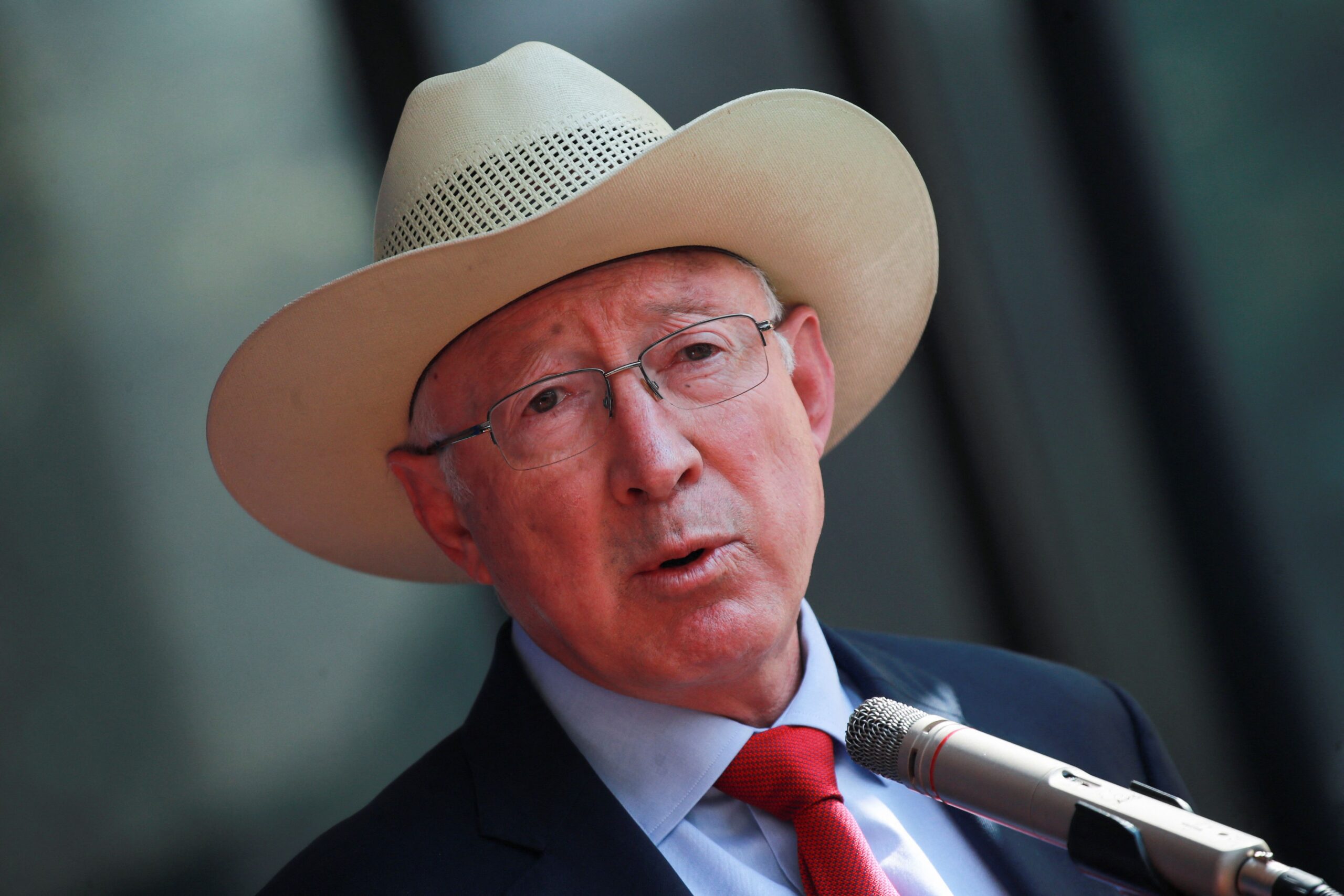
About the same time the Pilgrims were setting up shop 400 years ago in Plymouth, Ken Salazar’s family was scratching out a toehold in what is now New Mexico, helping to establish the city of Santa Fe.
The Salazars had already been in the Southwest 250 years when the Treaty of Guadalupe Hidalgo ended the U.S.-Mexico War in 1848 and ceded vast territories to the United States. Suddenly, the border moved from the Arkansas River down to the Rio Grande, and Salazar’s family became American.
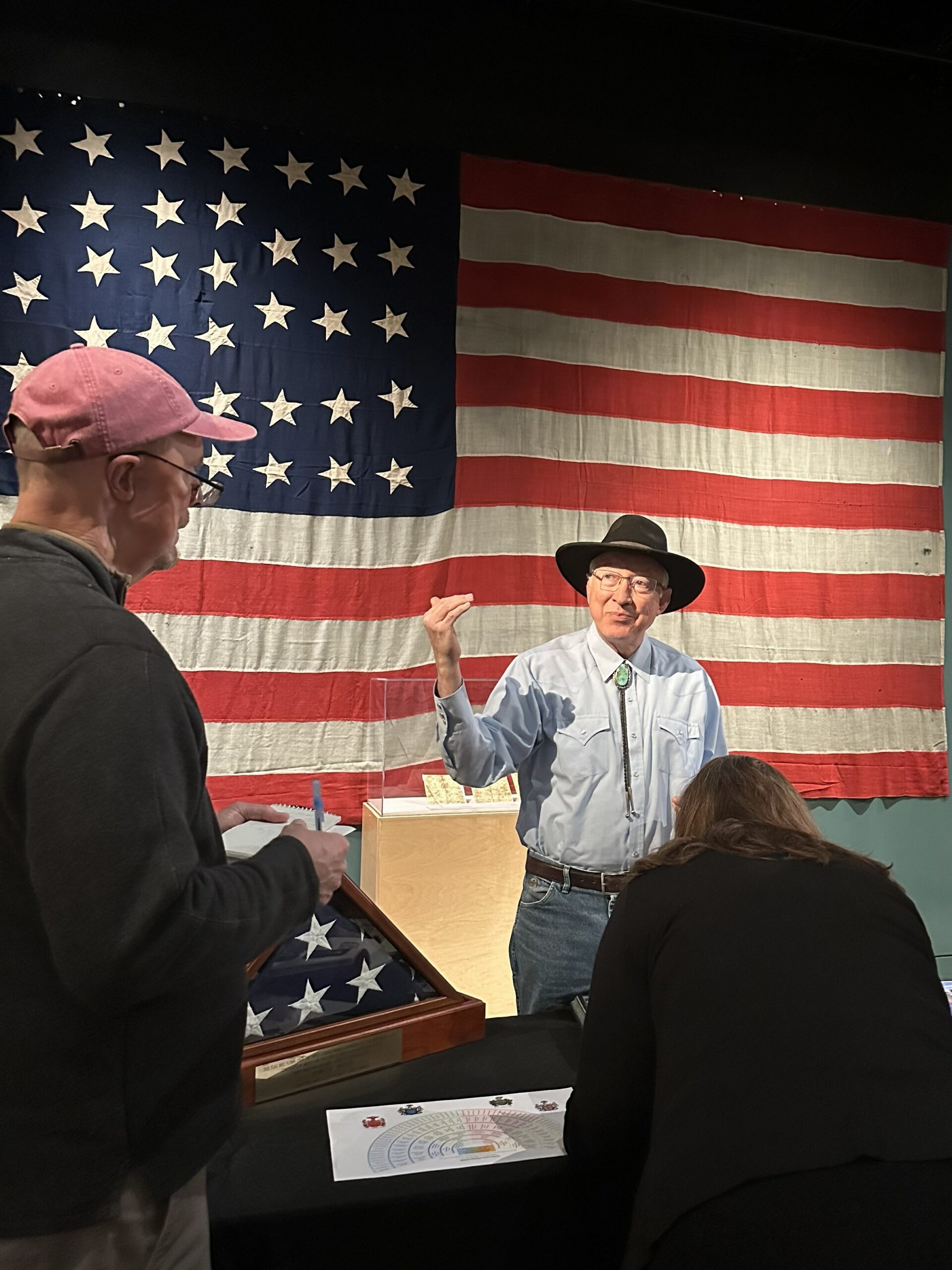
In the 1850s, as the Eastern states were barreling toward civil war, Salazar’s family established El Rancho Salazar in the San Luis Valley in what is now Colorado. And it’s still there.
Salazar, who went on to become a U.S. senator, U.S. interior secretary and ambassador to Mexico, says his long roots here speak to a parallel American history that is too often overlooked and misunderstood. While English colonies on the East Coast often get treated as the “beginning,” Spanish society in the Southwest was already well established, with towns, churches and mixed Indigenous-Spanish cultures developing at the same time (and earlier).
“Everybody’s history is important, and everybody’s identity is important,” he said in an interview. “Everybody ought to be able to celebrate it. No one’s history or identity is better than anybody else. But we need to understand that history in order to unite our country and our state more so than today.”
To ameliorate that misunderstood history some, Salazar has just donated more than 350 boxes of papers and artifacts from his extensive political career and his family’s history in the area to expand the ongoing History Colorado project called Borderlands of Southern Colorado.
The gift was announced on Feb.2, the anniversary of the Treaty of Guadalupe Hidalgo.
He believes there’s no surer way of arriving at a better understanding of today’s issues around migration than to lift up the story of the borderlands and its legacy of overlapping cultures.
“Borderlands are about connectivity, about the people, the landscape … It’s about the border being more than just a physical, political barrier,” Salazar said.
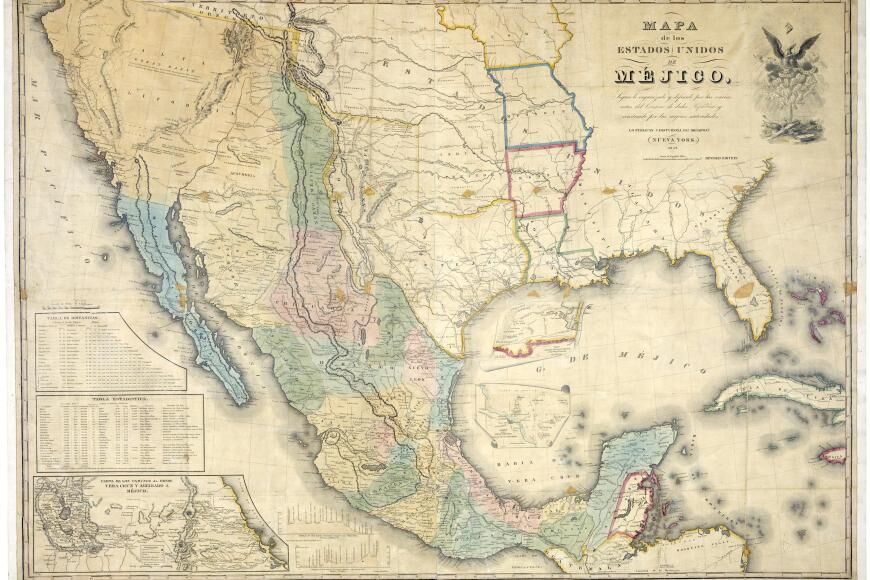
History Colorado president and CEO Dawn DiPrince, who grew up in southern Colorado and started the Borderlands initiative in 2017, couldn’t agree more.
“Where we come from matters, the way we are rooted in this place matters,” she said. “The ways we are bound to each other and connected to each other makes a difference. We’re woven together, both to each other and to the land, the history, the geography. All of that shapes us, they shape our present, they’re certainly going to shape our future. We owe it to ourselves to understand that.”
Salazar’s gift injects new life into the Borderlands initiative, she said.
“His life is a perfect example,” she said. “He’s rooted in this beautiful place of southern Colorado, but then his life work extends from there and connects out to all of these places. So it just really gives us an opportunity to build new knowledge and explore what all of those connections mean.”
Salazar points out that the seventh generation of his family, his children and grandchildren, are still working the ranch in southern Colorado.
“We’re all still there. We still farm and ranch there, my house is there. We have a ranch that’s a cattle, hay, barley and potato operation. And just very proud of that place because of its history.”
Salazar and seven brothers and sisters all became the family’s first generation of college graduates, with Ken earning a degree in political science from Colorado College in 1977 and four years later a law degree from the University of Michigan. He then served as chief legal counsel in Gov. Roy Romer’s cabinet, headed the Colorado Department of Natural Resources and was soon elected as state attorney general, the first Hispanic American elected to statewide office. In a skyrocket rise, roles as U.S. senator, interior secretary and ambassador to Mexico followed.
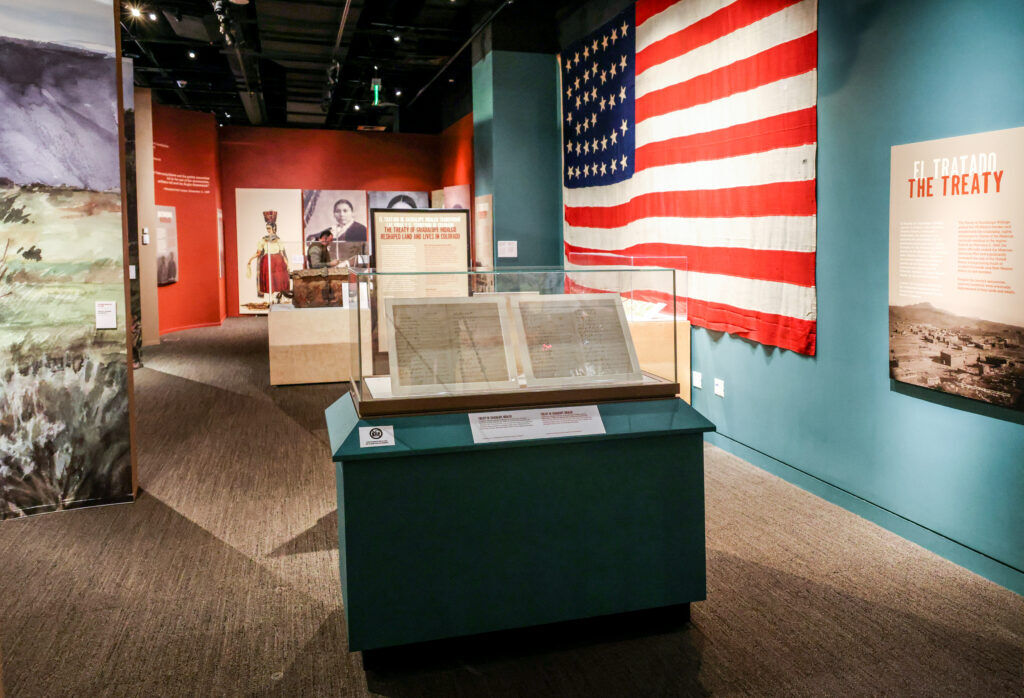
Among his donated artifacts are photos by the late John Fielder of his family’s ranch in the San Luis Valley, signed photos from President George W. Bush, and the flag that flew over the U.S. embassy in Mexico City while he was ambassador.
When he was secretary of the interior, he said his staff tried mightily to tell a story about everybody in America. “And somehow, the forces that have been in place the last eight years or so have really brought about a great division in this country. We’re not going to overcome that division unless we get back to the fundamentals of understanding each other and respecting each other and listening to opinions that are different without having to demonize the enemy.”
Salazar believes the more we know our history, the more we understand that diversity is America’s superpower.
“If you look at Ronald Reagan’s farewell address, as he is looking out a window in the White House, he talks about the shining city on the hill, really reflecting on the United States, and about how we come together and celebrate the greatness of our country that is our diversity.”
‘A border is a dividing line, a narrow strip along a steep edge. A borderland is a vague and undetermined place created by the emotional residue of an unnatural boundary. It is in a constant state of transition.’
-Gloria E. Anzaldúa
Salazar sees Colorado’s 150th birthday celebration coming up in August as an opportunity for us to take stock of our history, better understand who we are, and try to figure out how Colorado continues to lead the nation in the future.
“We live today in a very divided country. The politics are aggressive, and I think very dangerous to American democracy. So understanding our history is really important for the future of this country, the future of our state.”
Speaking of history, “My father was a soldier in World War II,” he noted. “What did they give up their lives for? It was to create a United States of America, not a divided States of America.”
Vince Bzdek, executive editor of The Gazette, Denver Gazette and Colorado Politics, writes a weekly news column that appears on Sunday.