







Audit finds Caring for Denver Foundation misused taxpayer funds

An audit of a nonprofit contracted by Denver to manage a fund intended for social services found the organization misused taxpayer dollars.
The Caring for Denver Foundation, under a contract by the Denver Department of Public Health and Environment (DDPHE), used taxpayer funds for meals and alcohol, awarded grants for illegitimate purposes and did not verify the accuracy of grantee data, Denver Auditor Tim O’Brien said in a report released on Thursday.
“It is troubling that Caring for Denver is not always verifying grantees are telling the truth nor confirming grantees are spending money as voters intended,” O’Brien said in a corresponding Thursday news release. “The foundation’s approach to trust grantees but not perform thorough due diligence is careless. It harms the city’s and Caring for Denver’s reputation as good stewards of taxpayer money.”
The Caring for Denver Foundation was established after voters approved a 2019 ballot measure that granted a 0.25% sales and use tax increase for mental health services, drug abuse prevention and facilities for those with mental health needs, according to the report. The fund is administered through DDPHE and awarded more than $185 million in grants to 270 organizations last year.
The auditor began looking into Caring for Denver after media reports in December 2024 began raising concerns about the organization’s funding, including that it was giving money to organizations that had no history providing mental health or behavioral resources and had questionable tax records, according to the report.
Through reviewing 734 expense reports from January 2022 through January 2025, O’Brien found that 81% were related to meal reimbursements, while the remainder was for more official uses. Additionally, 94% of all the expenses did not have the proper documentation — including transaction date, amount, description and approval — necessary to support them based on city rules.
Additionally, 11% of the expenses were completely not allowable under city fiscal rules, as they did not constitute official city business nor were they necessary to carry out the agency’s mission, according to the report. One executive of the foundation also claimed at least 75 meals that included alcohol, amounting to more than $3,000 spent on drinks alone.
While, as an independent organization, Caring for Denver does not need to automatically comply with the financial accountability rules, DDPHE already requires the foundation to comply with grantmaking rules in that contract in an apparent understanding of the importance of holding taxpayer-funded organizations accountable, according to the report.
When asked about the expenses, staff said they were integral to the organization’s work, as the meetings were needed to build relationships and aligned with “foundation best practices.” But they did not say why those meetings needed to take place over a meal or with alcohol.
When presented with the recommendation to amend the contract between the city and foundation to keep Caring for Denver in better compliance with Denver’s fiscal accountability rules, the agency disagreed, saying that, as a nonprofit, the organization does not have to comply with the city’s fiscal responsibility rules but rather those implemented by health department.
The agency’s leadership agreed, however, to revise its reimbursement policies and implement new procedures to approve expenditures.
Officials with DDPHE did not respond to a request for comment on the report, nor a request to provide the contact information of Caring for Denver’s leadership.
As for the other findings, O’Brien noted that Caring for Denver did not consistently review grant applications and awarded taxpayer funds to organizations that may not have been the most efficient in carrying out the agency’s mission.

Of 35 grant applications issued for 15 organizations from January 2022 through January 2025, only nine did not have any issues, according to the report. Of the others, five were not registered with the Colorado Secretary of State’s Office, three grantees had falsely reported partnerships with other city agencies and all seven grants made by the foundation back to itself did not follow the correct due diligence process.
At least one grantee’s application listed a partnership directly tied to its funding request that did not exist and was awarded $310,000 over two years for the non-existent program, according to the report. Moreover, 14 of the 35 applications were completely missing required financial documents.
Two grants totaling $26,000 went to two grantees for self-care, wellness, quarterly full-day staff retreats, healing circles, hazard pay, and paid time off for their staff, according to the release.
The seven grants the agency gave itself totaled nearly $1 million. Managers said that the money was used to pay for services that would be provided to grantees, according to the report. Additionally, at least five of the grants Caring for Denver awarded to itself were reviewed by the same staff member who submitted them — a violation of the organization’s own policies.
While responding to the recommendation that they should expand their due diligence processes to conduct financial and legal background checks on applicant staff members, Caring for Denver officials disagreed, saying that those practices were not standard among their peers.
The agency also disagreed that it should be required to work with the Denver City Council to propose an amendment to define what is allowed for grants, saying that the council and the mayor’s office have been reviewing sales tax initiatives and that revisions to the ordinance are expected before Caring for Denver’s contract expires in 2027.
In the final part of the report, O’Brien found reliability issues in the data gathered from the organization’s grantees, noting that Caring for Denver did not verify it before sharing it with city officials, according to the report.
A review of geographic and demographic data used by the agency in its annual reports found that the data came from grantees’ applications and was inconsistent, as the organization did not have a standard set of requirements for what data needed to be submitted. Additionally, the foundation does not have access to the source data and can only rely on what the grantees choose to report.
In response to the recommendation to incorporate more data-sharing agreements into its grantmaking process, Caring for Denver also disagreed, saying that those agreements are not standard practice and would create unnecessary administrative barriers. The auditor, in another report, said that industry leaders maintain that standard is necessary for transparency and that agreements already exist between nonprofits and city agencies.
“Voters approved millions of tax dollars to help Denver residents, but Caring for Denver doesn’t ensure its spending is effective or even appropriate at times,” O’Brien said in the release.


U.S. Sen. Michael Bennet: ‘It’s right to suspend’ wolf program in Colorado
Marianne Goodland
marianne-goodland@denvergazette.com
Updated 5 hours ago
U.S. Sen. Michael Bennet, who is running for governor, told a newspaper this month that he favors suspending Colorado’s wolf reintroduction program, though he sounded less certain in another interview a few days later. “I think it’s right to suspend...

Marianne Goodland
Reporter

Colorado legislators challenge lottery rules allowing credit card purchases
Marianne Goodland
marianne-goodland@denvergazette.com
Updated 6 hours ago
Back in November, legislators told the Colorado Lottery Commission to hold off on rules that would allow, for the first time, purchases of lottery products with credit cards. The commission went ahead anyway and approved those changes. And now lawmakers...
Marianne Goodland
Reporter

Rep. Ron Weinberg denies allegations in response to House ethics complaint
Marianne Goodland
marianne-goodland@denvergazette.com
Updated 4 hours ago
A legislator from Loveland has denied allegations made against him by a fellow Republican in his response to an ethics committee looking into the claims. In his Feb. 6 response, Rep. Ron Weinberg said the complaint “appears (to be) politically...
Marianne Goodland
Reporter

Colorado Medicaid spending doubled over the past decade, study finds
Nicole C. Brambila nico.brambila@denvergazette.com
nico.brambila@denvergazette.com
Updated 9 hours ago
Spending by Colorado’s Department of Health Care Policy and Financing reached $16 billion in 2025 — a 101% increase from 2015 — while Medicaid enrollment has returned to nearly its 2015 level, according to an analysis by the Common Sense...


Colorado joins California in lawsuit to restore federal clean energy funding
Scott Weiser
scott-weiser@denvergazette.com
Updated 8 hours ago
Colorado has joined a multi-state lawsuit challenging the Trump administration’s termination of more than $600 million in congressionally approved clean energy grants for Colorado projects, Colorado Attorney General Phil Weiser and California Attorney General Rob Bonta announced Wednesday. The suit,...

Scott Weiser
Reporter

Democrats want to decouple Colorado from federal tax breaks
Marissa Ventrelli
marissa-ventrelli@denvergazette.com
Updated 1 day ago
Democratic members of Colorado’s House and Senate on Tuesday announced the introduction of a slew of bills that would reduce corporate tax deductions and sever Colorado’s tax regime from recent federal changes to the tax code. The federal tax changes...

Marissa Ventrelli
Reporter

Wheat Ridge adopts muffler requirements to combat noise
Sage Kelley
sage.kelley@denvergazette.com
Updated 1 day ago
Wheat Ridge is working to muffle automotive noise. The City Council unanimously approved a new ordinance on Feb. 9 that amends the city’s code regarding mufflers, ultimately allowing for the police department to enforce rules surrounding vehicular exhaust noise. The...

Sage Kelley
Reporter
As Denver mulls ending Flock contract, options are limited
Deborah Grigsby
deborah.smith@denvergazette.com
Updated 12 hours ago
With Denver’s contract with automated license plate reader company Flock Safety set to expire at the end of March, few alternative vendors have surfaced. Meanwhile, Denver City Auditor Tim O’Brien is refusing to countersign the contract, citing concerns over “a...

Deborah Grigsby
Reporter
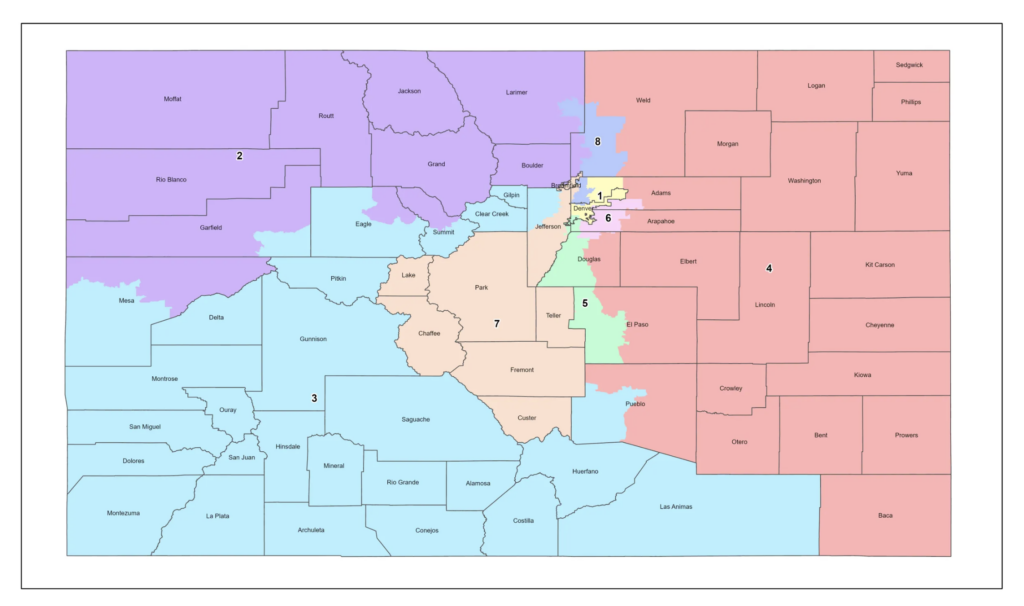
National redistricting fight reaches Colorado with ballot measures targeting GOP-held congressional districts
Marianne Goodland
marianne-goodland@denvergazette.com
Updated 1 hour ago
A Democratic-aligned group backed by the House Majority PAC filed four versions of a 2026 ballot measure Tuesday that would temporarily suspend Colorado’s independent congressional redistricting commission and redraw the state’s map in an effort to flip three Republican-held U.S....
Marianne Goodland
Reporter

Colorado senators review budget as Medicaid costs drive $776 million increase
Marianne Goodland
marianne-goodland@denvergazette.com
Updated 10 hours ago
Colorado senators this week are reviewing revisions to the current state budget, which has been reduced by hundreds of millions of dollars in each round of cuts. The bottom line is that, because of Medicaid costs, the state will spend...
Marianne Goodland
Reporter
PREV
PREVIOUS

Aurora police gun violence team expands investigative reach as nonfatal shootings decline
Aurora Police Department officials touted the success of its recently expanded Gun Violence Suppression Team after the team’s first shooting investigation ended in an arrest this week. The team, which expanded its focus to all nonfatal shooting investigations in late January, made what the department called a “first-of-its-kind” arrest Tuesday, according to an APD news […]

U.S. Sen. Michael Bennet: 'It’s right to suspend' wolf program in Colorado
U.S. Sen. Michael Bennet, who is running for governor, told a newspaper this month that he favors suspending Colorado’s wolf reintroduction program, though he sounded less certain in another interview a few days later. “I think it’s right to suspend it for now and to try to see whether there’s any way to get back […]