







Colorado Medicaid spending doubled over the past decade, study finds

Spending by Colorado’s Department of Health Care Policy and Financing reached $16 billion in 2025 — a 101% increase from 2015 — while Medicaid enrollment has returned to nearly its 2015 level, according to an analysis by the Common Sense Institute.
The report points to 182 health care bills Colorado lawmakers enacted since 2019, which it says cost the state $858 million annually. The authors argue much of the spending growth stems from expansive policy choices rather than enrollment or medical inflation alone.
Marc Williams, a Department of Health Care Policy and Financing spokesperson, responded to The Denver Gazette’s request for comment but did not answer any questions.
He previously pointed to the state’s “Medicaid Sustainability Framework,” which argues the program’s growth consistently outpaces revenue growth allowed under TABOR, creating structural budget pressure.
HCPF manages the state’s Medicaid program, which serves about 1.2 million low-income Coloradans, including children, people with disabilities and seniors.
Williams also identified far fewer pieces of legislation with a fiscal impact: 51 from 2019 through 2024.
“One program in particular was/is Cover All Coloradans — the fiscal note was based on data at the time of the bill (2022) but no one knew then how the Biden administration’s open border policy would impact Colorado and this program when it took effect in January 2025,” Williams said in an email to The Denver Gazette.
But what he did not answer: If he agreed with the CSI estimate, how the department could slow spending growth without reducing eligibility or how HCPF justified staffing growth relative to a flat caseload growth.
The report groups recent cost drivers into broad categories, including Medicaid eligibility expansions, new or expanded services, and mental health and telehealth expansions.
Thirty-six percent of the $858 million is covered by federal spending, according to the CSI analysis.
Between 2015 and 2025, HCPF spending grew 101% — compared with 64% growth in the rest of the state budget.
“CSI’s analysis suggests that much of HCPF’s last decade of spending increases could have been avoided in the absence of expansive policy and other nonessential spending,” the authors wrote. “The agency’s total spending growth over that period, 101%, is higher than the combined growth rates of Medicaid enrollment, medical inflation, and obesity (a proxy for public ill-health).
“In the absence of some other nondiscretionary cost driver, this means that HCPF is spending more than is strictly necessary to deliver its services.”
Between 2018 and 2024, Medicaid enrollment rose by 7.6%, while total HCPF employment increased 78%.
“Knowing that TABOR is in place, more concerted efforts should have been made to keep a closer eye on spending and attempt to work within closer confines of a budget,” said Greg D’Argonne, who co-authored the CSI report. “It doesn’t appear this was the case.”


U.S. Sen. Michael Bennet: ‘It’s right to suspend’ wolf program in Colorado
Marianne Goodland
marianne-goodland@denvergazette.com
Updated 4 hours ago
U.S. Sen. Michael Bennet, who is running for governor, told a newspaper this month that he favors suspending Colorado’s wolf reintroduction program, though he sounded less certain in another interview a few days later. “I think it’s right to suspend...

Marianne Goodland
Reporter

Audit finds Caring for Denver Foundation misused taxpayer funds
Michael Braithwaite
michael.braithwaite@gazette.com
Updated 2 hours ago
An audit of a nonprofit contracted by Denver to manage a fund intended for social services found the organization misused taxpayer dollars. The Caring for Denver Foundation, under a contract by the Denver Department of Public Health and Environment (DDPHE),...

Michael Braithwaite
Reporter

Colorado legislators challenge lottery rules allowing credit card purchases
Marianne Goodland
marianne-goodland@denvergazette.com
Updated 4 hours ago
Back in November, legislators told the Colorado Lottery Commission to hold off on rules that would allow, for the first time, purchases of lottery products with credit cards. The commission went ahead anyway and approved those changes. And now lawmakers...
Marianne Goodland
Reporter

Rep. Ron Weinberg denies allegations in response to House ethics complaint
Marianne Goodland
marianne-goodland@denvergazette.com
Updated 3 hours ago
A legislator from Loveland has denied allegations made against him by a fellow Republican in his response to an ethics committee looking into the claims. In his Feb. 6 response, Rep. Ron Weinberg said the complaint “appears (to be) politically...
Marianne Goodland
Reporter

Colorado joins California in lawsuit to restore federal clean energy funding
Scott Weiser
scott-weiser@denvergazette.com
Updated 7 hours ago
Colorado has joined a multi-state lawsuit challenging the Trump administration’s termination of more than $600 million in congressionally approved clean energy grants for Colorado projects, Colorado Attorney General Phil Weiser and California Attorney General Rob Bonta announced Wednesday. The suit,...

Scott Weiser
Reporter

Democrats want to decouple Colorado from federal tax breaks
Marissa Ventrelli
marissa-ventrelli@denvergazette.com
Updated 1 day ago
Democratic members of Colorado’s House and Senate on Tuesday announced the introduction of a slew of bills that would reduce corporate tax deductions and sever Colorado’s tax regime from recent federal changes to the tax code. The federal tax changes...

Marissa Ventrelli
Reporter

Wheat Ridge adopts muffler requirements to combat noise
Sage Kelley
sage.kelley@denvergazette.com
Updated 1 day ago
Wheat Ridge is working to muffle automotive noise. The City Council unanimously approved a new ordinance on Feb. 9 that amends the city’s code regarding mufflers, ultimately allowing for the police department to enforce rules surrounding vehicular exhaust noise. The...

Sage Kelley
Reporter
As Denver mulls ending Flock contract, options are limited
Deborah Grigsby
deborah.smith@denvergazette.com
Updated 11 hours ago
With Denver’s contract with automated license plate reader company Flock Safety set to expire at the end of March, few alternative vendors have surfaced. Meanwhile, Denver City Auditor Tim O’Brien is refusing to countersign the contract, citing concerns over “a...

Deborah Grigsby
Reporter
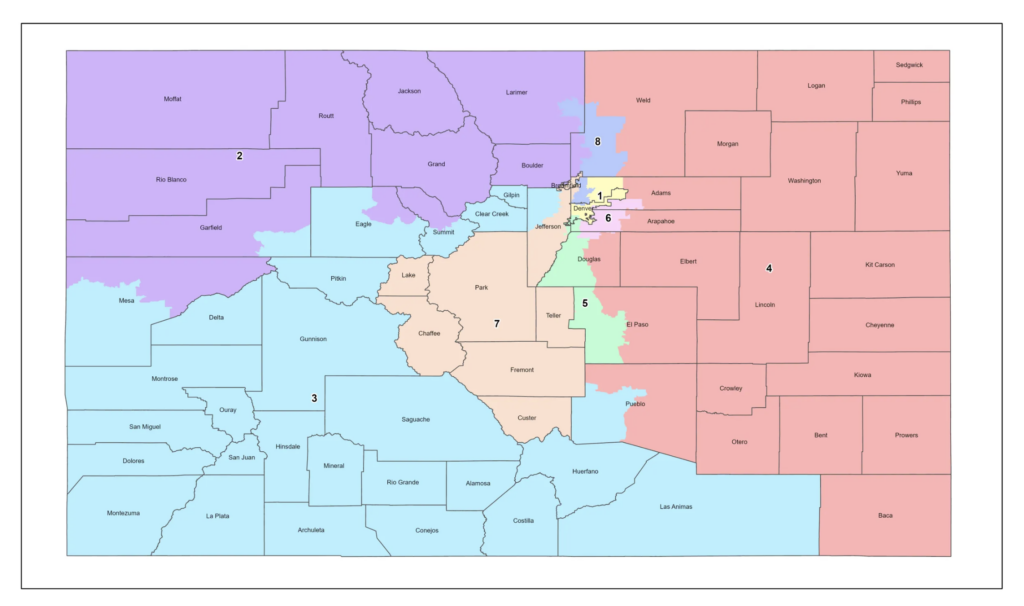
National redistricting fight reaches Colorado with ballot measures targeting GOP-held congressional districts
Marianne Goodland
marianne-goodland@denvergazette.com
Updated 3 hours ago
A Democratic-aligned group backed by the House Majority PAC filed four versions of a 2026 ballot measure Tuesday that would temporarily suspend Colorado’s independent congressional redistricting commission and redraw the state’s map in an effort to flip three Republican-held U.S....
Marianne Goodland
Reporter

Colorado senators review budget as Medicaid costs drive $776 million increase
Marianne Goodland
marianne-goodland@denvergazette.com
Updated 9 hours ago
Colorado senators this week are reviewing revisions to the current state budget, which has been reduced by hundreds of millions of dollars in each round of cuts. The bottom line is that, because of Medicaid costs, the state will spend...
Marianne Goodland
Reporter
PREV
PREVIOUS

Colorado joins California in lawsuit to restore federal clean energy funding
Colorado has joined a multi-state lawsuit challenging the Trump administration’s termination of more than $600 million in congressionally approved clean energy grants for Colorado projects, Colorado Attorney General Phil Weiser and California Attorney General Rob Bonta announced Wednesday. The suit, filed in the U.S. District Court for the Northern District of California by a coalition […]

Rep. Ron Weinberg denies allegations in response to House ethics complaint
A legislator from Loveland has denied allegations made against him by a fellow Republican in his response to an ethics committee looking into the claims. In his Feb. 6 response, Rep. Ron Weinberg said the complaint “appears (to be) politically motivated and timed to coincide with my pursuit of a leadership position.” “It is filled […]