







Researchers to study universal health care, as Coloradans face $1 billion in medical debt

Colorado residents owe about $1 billion in medical debt.
The sky-high number is a small portion of the nation’s medical debt estimated around $220 billion, according to a 2024 analysis by Peterson Center on Healthcare and KFF, formerly the Kaiser Family Foundation.
As more people nationally are expected to lose their health insurance following planned cuts and changes to Medicaid in January 2027, the Colorado School of Public Health is starting work on a study to analyze how the state could set up a single-payer health insurance program that would be run at the state level. Such a system could simplify the complicated private insurance system and ensure all state residents have coverage.
“It would be simple. It would be fair,” said Marsha Thorson, a board member with the Colorado Foundation for Universal Health Care. Thorson also helped her husband found and run his private family medical practice.
The foundation announced earlier this month it helped raise $750,000 for the Colorado School of Public Health to study a statewide single-payer health care system. The Colorado legislature mandated the study last year but did not fund it.
After managing the medical billing for her husband’s practice, Thorson saw all the problems with the current system for years. In one case, a mother who brought her little boy into the practice for care ended up with over $1 million in medical bills after he had to travel by helicopter from Gunnison to Children’s Hospital in Denver. The boy lived, but it placed a huge burden on the family, she recalled.
“It was just devastating,” Thorson said.
She is hopeful the newly funded study will show whether a single-payer system is a viable option and, if it’s not, she will work on finding different solutions.
The study is expected to provide answers about a single-payer system that residents did not have when they voted down Amendment 69, a ballot initiative to create universal health care in 2016. It would have created a new payroll tax for funding and failed 78% to 21%.
Researchers expect to build a new computerized model to help understand how a single-payer system would work, said Dr. Greg Tung, associate professor of Health Systems, Management & Policy at the Colorado School of Public Health.
“We’ll have a very good estimate of what would be the cost, health and financial implications,” Tung said.
The researchers are going to model the system by building a data base of every residents in the state and their current health insurance and how much they use the health care system and how much that costs, explained Dr. Glen Mays, chair and a professor of health systems, management and policy at the Colorado School of Public Health. When complete, it will be a large mathematical and statistical model.
The computer model will allow researchers to see how costs and utilization of health care might shift if residents without insurance gain coverage or if those on a high-deductible plan move to a more comprehensive insurance plan, he said.
The single-payer system would incorporate Medicare patients, Medicaid patients and those on employer provided insurance, they said, with the revenue from those systems funneling through one centralized administrative system.
The federal government would have to approve waivers to allow Medicare and Medicaid dollars to go through the new system, Mays said. While the state would need to use either a regulatory system or a tax-incentive system to draw employer-based plans into the single-payer system. Two-thirds of Coloradans receive their health insurance through their employer.
Many employers provide through companies such as United Healthcare and BlueCross BlueShield. But there are well over 1,000 private health insurance companies in the U.S. all with different rules that create an overwhelmingly complex system for small doctors’ offices to navigate, Thorson said. Those companies sometimes take months to determine if they are going to pay medical providers.
The researchers are required to finish their work by the end of the year, according to the legislation. But once the model is built, it can be used to answer additional policy questions from lawmakers.
While the research on a single-payer system is ongoing, those with medical debt in Colorado could see it show back up on their credit reports.
In November, The Association of Credit and Collection professionals sued the state of Colorado over a 2023 law that keeps medical debt off credit reports for residents.
The law helps ensure that residents with medical debt can still purchase cars and meet other critical needs, said Adam Fox, deputy director of the Colorado Consumer Health Initiative.
Including the medical debt is not a good measure of a resident’s credit worthiness because medical bills are typically costs that people cannot predict or anticipate, he said.
The lawsuit argues that hiding the $1 billion that Colorado residents owe from lenders prevents lenders from making good decisions about an applicants ability to repay their debts.
“The credit economy relies on that transparency and efficiency to make loans based on credit reports,” the lawsuit reads.
While the legal outcome will have real consequences, the fight over debt is a symptom of the larger problem: the high cost of health care.
To help those who cannot pay back their debts, national nonprofit Undue Medical Debt, purchases old debts for $1 for every $100 owed, said Eva Stahl, vice president of public policy and program management for the nonprofit. It’s a powerful message to philanthropists, that a $1 can abolish $100 worth of debt for patients.
“Medical debt is not a debt of choice,” she said. “Nobody asked to get sick or injured.”
Those who benefit from the nonprofits’ assistance earn at or below 400% of the federal poverty level or who have debts that are more than 5% of their income, Stahl said. 15A single person earning $63,840 is making four times the federal poverty level.
The nonprofit sends out letters informing beneficiaries that their debts have been paid and they typically hear back from single parents and caregivers who are relieved of financial stress, she said.
“Relieving that mental burden is really important,” she said.
It also increases the likelihood that those people will go back to the doctor and get the care they need, she said. Since the nonprofit was founded, it has paid off $168 million in debts for about 140,000 Colorado residents.
But charity through the nonprofit and other sources is not a solution for the $220 billion Americans owed as of 2021.
One of the most important priorities needs to be tackling the overall cost of health care, Stahl said, although the nonprofit has not taken a position on how to lower that cost. She also thinks there will be increasing interest in solving the problem as more people lose their health insurance.
“We really need affordable robust health coverage for people,” she said.
This story has been updated to say that advocates raised $750,000 for the universal health care study through the Colorado School of Public Health.


The Braun brother arrives
John Moore
john.moore@denvergazette.com
Updated 6 hours ago
For this tight-knit basketball brood representing the Nuggets and Roadrunners, it’s family first It’s wild to think that Christian and Landon Braun, two tightly bonded basketball brothers from Burlington, Kan., play their home games about 1,000 feet apart in Denver....

John Moore
Reporter

ABA series screening soars ‘above the rim’
John Moore
john.moore@denvergazette.com
Updated 6 hours ago
‘Soul Power’ gathering brings players, fans, family and media to sold-out Sie FilmCenter for nostalgic look back at Denver’s renegade basketball past “Bring back the ball!” That was Hall of Fame coach George Karl’s message to the NBA at Wednesday’s...
John Moore
Reporter
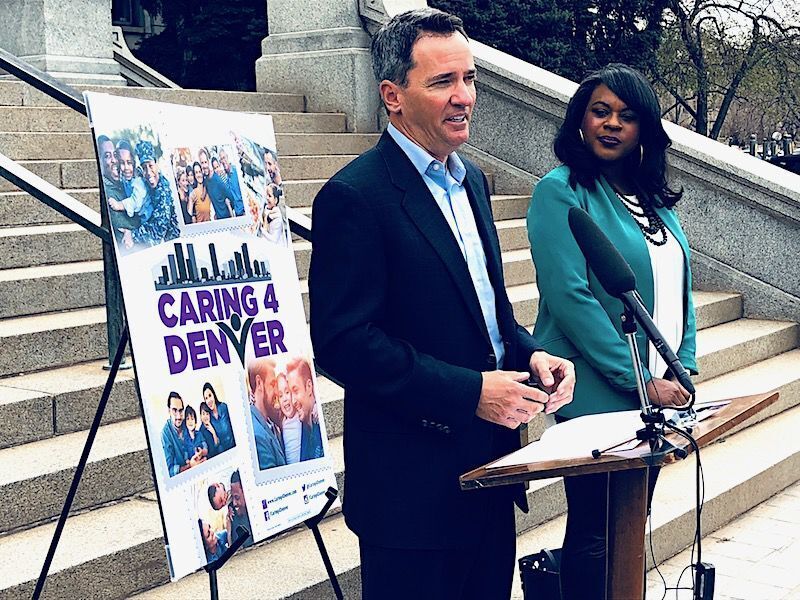
Audit finds Caring for Denver Foundation misused taxpayer funds
Michael Braithwaite
michael.braithwaite@gazette.com
Updated 8 hours ago
An audit of a nonprofit contracted by Denver to manage a fund intended for social services found the organization misused taxpayer dollars. The Caring for Denver Foundation, under a contract by the Denver Department of Public Health and Environment (DDPHE),...

Michael Braithwaite
Reporter
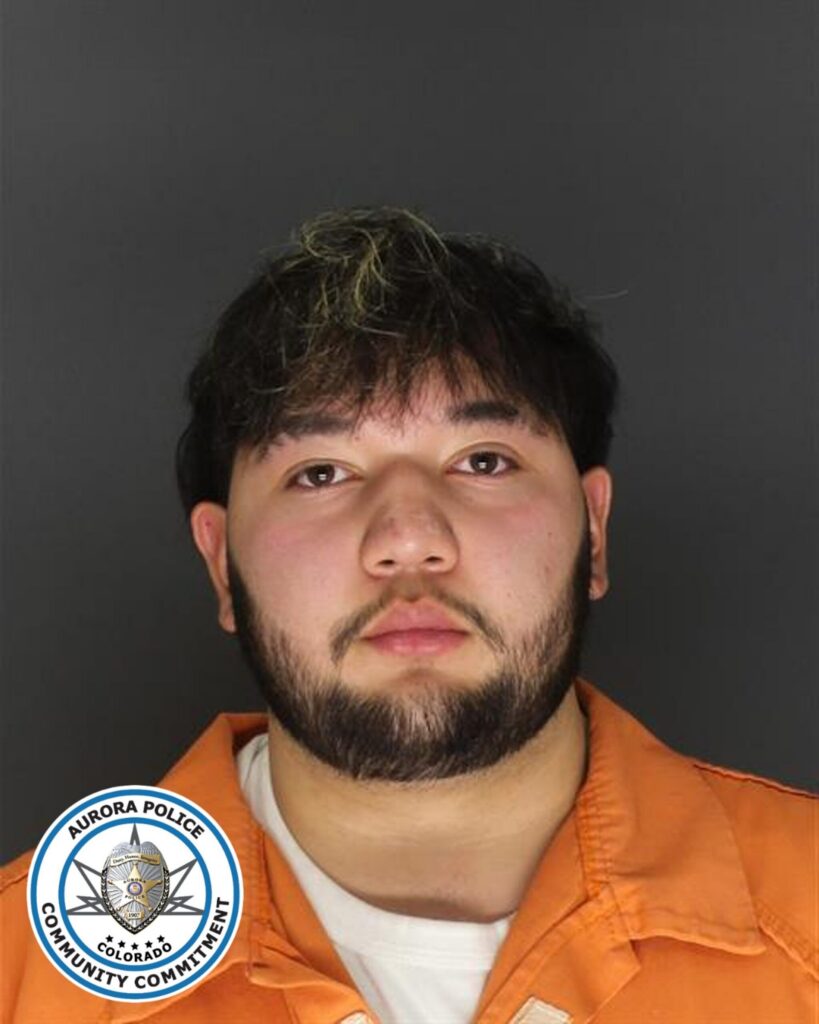
Aurora police gun violence team expands investigative reach as nonfatal shootings decline
Kyla Pearce
kyla-pearce@denvergazette.com
Updated 11 hours ago
Aurora Police Department officials touted the success of its recently expanded Gun Violence Suppression Team after the team’s first shooting investigation ended in an arrest this week. The team, which expanded its focus to all nonfatal shooting investigations in late...

Kyla Pearce
Reporter

Denver heads for full ‘road diet’ on Alameda Avenue as councilmembers question rising city traffic deaths
Mark Samuelson
mark-samuelson@denvergazette.com
Updated 6 hours ago
The rise in traffic deaths in the Mile High City over the past year has caught the attention of councilmembers, as the Denver’s transportation agency is doubling down on its Vision Zero strategy for ending fatalities. That issue came to...

Mark Samuelson
Reporter

They surrendered their pets that turned aggressive, then they got sued for thousands of dollars by a dog rescue group
9News
9news@denvergazette.com
Updated 12 hours ago
Court records reveal 2 Blondes All Breed Rescue has filed multiple lawsuits for breach of contract, costing their former clients thousands of dollars. DENVER — For Cody Backer, surrendering his beloved dog was one of the most heart-wrenching experiences of...

9News
Reporter

Colorado Medicaid spending doubled over the past decade, study finds
Nicole C. Brambila nico.brambila@denvergazette.com
nico.brambila@denvergazette.com
Updated 13 hours ago
Spending by Colorado’s Department of Health Care Policy and Financing reached $16 billion in 2025 — a 101% increase from 2015 — while Medicaid enrollment has returned to nearly its 2015 level, according to an analysis by the Common Sense...


Colorado joins California in lawsuit to restore federal clean energy funding
Scott Weiser
scott-weiser@denvergazette.com
Updated 13 hours ago
Colorado has joined a multi-state lawsuit challenging the Trump administration’s termination of more than $600 million in congressionally approved clean energy grants for Colorado projects, Colorado Attorney General Phil Weiser and California Attorney General Rob Bonta announced Wednesday. The suit,...

Scott Weiser
Reporter

State seizes Denver deli Leven Supply for nonpayment of taxes
Angela Case
angela-case@denvergazette.com
Updated 15 hours ago
The Colorado Department of Revenue has seized Leven Supply for nonpayment of taxes, according to a notice on the door of the Washington Park West cafe. The notice says the restaurant owes more than $138,000 in taxes. In a statement...

Angela Case
Reporter

Long-dreamed Ute Pass Trail to expand in hills west of Colorado Springs
Seth Boster
seth-boster@denvergazette.com
Updated 11 hours ago
For more than 20 years, El Paso County has worked to build a trail roughly following a historic route of tribal people ー a seasonal hunting route now defined by U.S. 24 through the foothills between Manitou Springs and Teller...

Seth Boster
Reporter
PREV
PREVIOUS

Colorado senators initially push for — then drop 'identity' factor in parenting time decisions
The sponsors of a proposal that would require suppression of records in name-change petitions for minors removed a provision that would have mandated the courts to factor in the issue of “identity” when allocating parenting time. In its original form, Senate Bill 018, included a requirement that family courts consider whether parents recognize their child’s […]

ABA series screening soars 'above the rim'
‘Soul Power’ gathering brings players, fans, family and media to sold-out Sie FilmCenter for nostalgic look back at Denver’s renegade basketball past “Bring back the ball!” That was Hall of Fame coach George Karl’s message to the NBA at Wednesday’s joyful, sold-out screening of “Soul Power” at the Sie FilmCenter. The new, four-part documentary series […]