One small step for dialing back partisanship
Much ink, including a good deal of my own, has been spilled on the excesses of super-charged, toxic partisanship in this current era. Except for true believers along with those who profit from this all-consuming poison, there is broad agreement that it needs to be toned way down and dialed far back.
The nearly 51 percent of Colorado voters who have opted not to affiliate with either party speak to the widespread disdain for the venomous status quo. This number has increased steadily over recent years and the trend shows no signs of abating.
The broad consensus is clear in favor of reducing, even minimizing, the burning division. The challenge lies in how to meaningfully, practically make this happen.
Let me propose a couple of places to start.
Again with the exception of the most distorted among us, I suspect there is broad, even overwhelming, agreement that elections should be managed in a fair, even-handed, nonpartisan manner.
Which begs the question of why we select those top election officials, specifically the Colorado Secretary of State and county clerks, on a partisan basis.
All around us, we witness the perils of the hyper-politicization of the election process. As usual, it starts with the current occupant of the Oval Office and his “perfect” phone call back in 2020 to the Georgia Secretary of State asking him to find 11,780 votes. Election interference does not get much more blatant.
Staring at what could well be a difficult mid-term election, President Donald Trump, with a track record of not being exactly shy about meddling with election infrastructure, is openly talking of “nationalizing” this November’s affair.
We will see what the courts say about that. Though it would appear to be in direct violation of vast amounts of law and tradition giving that responsibility for the conduct of elections to the 50 states.
While Trump may be the abuser-in-chief, he is not alone in injecting raw partisanship into what should be an ultimately straight-forward, impartial process.

Here at home, Democrat Jena Griswold has been the most stridently political Secretary of State anyone can recall. Even as a dishonorable mention in this context goes to Republican Scott Gessler who held the office more than a decade back.
Then, of course, there were the exploits of former Mesa County Clerk Tina Peters which earned her an extended stay in the Colorado prison system.
Each side points across the aisle at their hated opposites as being responsible for injecting raw politics into the administration and oversight of elections. Partisans are programmed to never direct the finger inward.
Here’s the suggestion, rather elemental when you think about it. Why not hold elections for Secretary of State and county clerk positions on a nonpartisan basis and remove the D or R following the name of each candidate?
This would put the premium on skills, character and a commitment to fairness while taking away the rewards for blind party loyalty and cheerleading. What’s not to like about that?
While we are in the reform mood and seeking to remove the partisanship from offices where it has no place, let’s turn to elected jobs in law enforcement. Specifically, why do candidates for Colorado’s 23 district attorney positions and 62 county sheriffs (Denver and Broomfield excluded) run as a member of team red or team blue?
Is there a Democratic way of prosecuting auto theft or a Republican approach to juvenile diversion? Does a Democratic county sheriff differ from a Republican counterpart in how they incarcerate or transport inmates?
Clearly, the answer is no. Accordingly, why force such candidates and officeholders, in most cases professional people as opposed to politicians, into a partisan box? How does that in any way advance the cause of justice?
Those who run our elections and those who enforce our laws essentially function as neutrals and referees. One group serves as the essential backbone of our democracy; the other has the job of safeguarding the fair and equal enforcement of our laws. We can aid in their impartiality by removing the partisan stripes from their uniforms.
Let us hope that those who fund and promote notable election reforms efforts in these parts look at such suggestions and step up to the plate. We will never get to the larger, more difficult tasks if we fail to first handle the easy, obvious stuff and pick off such low-hanging fruit.
Steroidal partisanship is the biggest contributor to our dysfunctional politics and the largest roadblock to solving our myriad problems. It is bad enough in those positions which will always have a partisan element. The least we can do is get rid of it in those other offices where it simply has no place.
Eric Sondermann is a Colorado-based independent political commentator. He writes regularly for ColoradoPolitics and the Gazette newspapers. Reach him at EWS@EricSondermann.com; follow him at @EricSondermann

Dems try to hijack Colorado’s congressional map | Dick Wadhams
Dick Wadhams
dick-wadhams@denvergazette.com
Updated 4 days ago
Colorado Democrats are hell bent to sideline the Independent Congressional Redistricting Commission in the 2026 election and ultimately steal three Republican congressional seats in 2028 and 2030. A hilariously named group that calls itself “Coloradans for a Level Playing Field”...

Dick Wadhams
Reporter
The raw realities of fighting fires in rural areas| Rachel Gabel
Rachel Gabel
rachel-gabel@denvergazette.com
Updated 12 hours ago
Fires on the Plains are not the roaring, mosaic burns in the mountains that leap across canyons and leave the skeletons of trees behind as monuments of destruction. In this country, the first gust of wind hits like a left...

Rachel Gabel
Reporter
PERSPECTIVE: Colorado’s victims of the drug trade
David Olesky
dolesky@gmail.com
Updated 21 hours ago
Two months ago, I crossed two milestones. It was 25 years since graduating the Drug Enforcement Administration (DEA) Academy. It was also the same day I turned 50. When I applied to DEA, I was still living in my New...

David Olesky
Reporter
The First Amendment protects the Second | Jon Caldara
Jon Caldara
jon-caldara@denvergazette.com
Updated 5 days ago
It’s not an attack on the Second Amendment, but the First Amendment. I know this is going to sound crazy but, there was a time when liberals, not conservatives, were the champions of free speech. Today? Now in Colorado it...

Jon Caldara
Reporter
Shedding tears over NREL’s demise | Pius Kamau
Pius Kamau
pius-kamau@denvergazette.com
Updated 4 days ago
Donald Trump’s attempts to unwind progress in environmental matters hasn’t met much resistance from scientific-minded Republicans. The former National Renewable Energy Laboratory, NREL, is now NLR – National Laboratory of the Rockies. Trump excised the RE bit claiming that climate change...

Pius Kamau
Reporter
The freest man in Colorado history | Vince Bzdek
Vince Bzdek
vince-bzdek@denvergazette.com
Updated 2 days ago
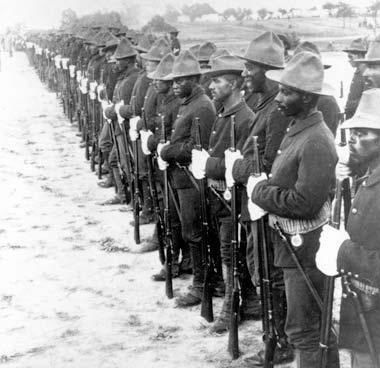
Every Coloradan should know the story of Buffalo Soldier John Taylor, who fought harder and longer than perhaps any man in our history to be truly free. Taylor’s story stands out above all others in a thought-provoking exhibit about Buffalo...

Vince Bzdek
Reporter
What Gallup polls teach us about presidents | Cronin and Loevy
Tom Cronin Bob Loevy
tom-cronin-bob-loevy@gazette.com
Updated 3 days ago
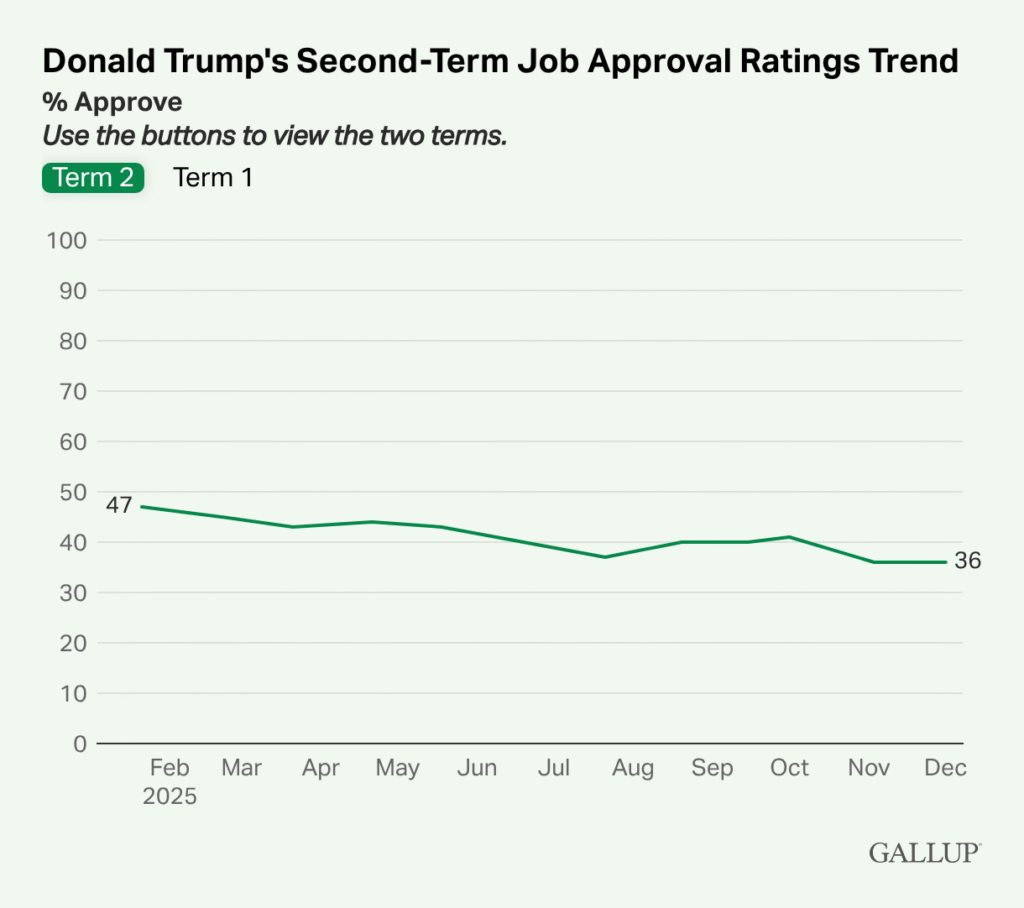
The Gallup organization, founded by George Gallup, announced on Feb. 11 they will no longer conduct their well-known polls that rate whether Americans approve or disapprove of the way presidents are handling their job. Gallup began these polls in the...

Tom Cronin Bob Loevy
Reporter

Keep Colorado out of national partisan power grab | Jimmy Sengenberger
Jimmy Sengenberger
jimmy-sengenberger@denvergazette.com
Updated 5 days ago
It’s billed as establishing “a level playing field” by “fighting back against Trump’s election-rigging.” But a campaign to get voters to throw out Colorado’s independent redistricting system would do exactly the opposite. The new political committee, Coloradans for a Level...

Jimmy Sengenberger
Reporter
GUEST COLUMN: Aurora City Council should stand with city’s youth
Alison Reidmohr
aReidmohr@gmail.com
Updated 4 days ago
I had just bought a home in Aurora three years ago when I found out I was going to become a mom. I quickly found out that the public perception of Aurora was that it was an unsuitable place to...

Alison Reidmohr
Reporter
GUEST COLUMN: Colorado’s once-in-a-generation opportunity — if we don’t regulate it away
Mark Witkiewicz
markwit@gmail.com
Updated 5 days ago
Colorado is at an inflection point. As lawmakers debate how to regulate data centers, which are the backbone infrastructure powering everything from cloud computing to artificial intelligence, we face a simple but consequential question: will Colorado help shape the next...

Mark Witkiewicz
Reporter