







Supreme Court protects Postal Service from being sued over intentionally undelivered mail
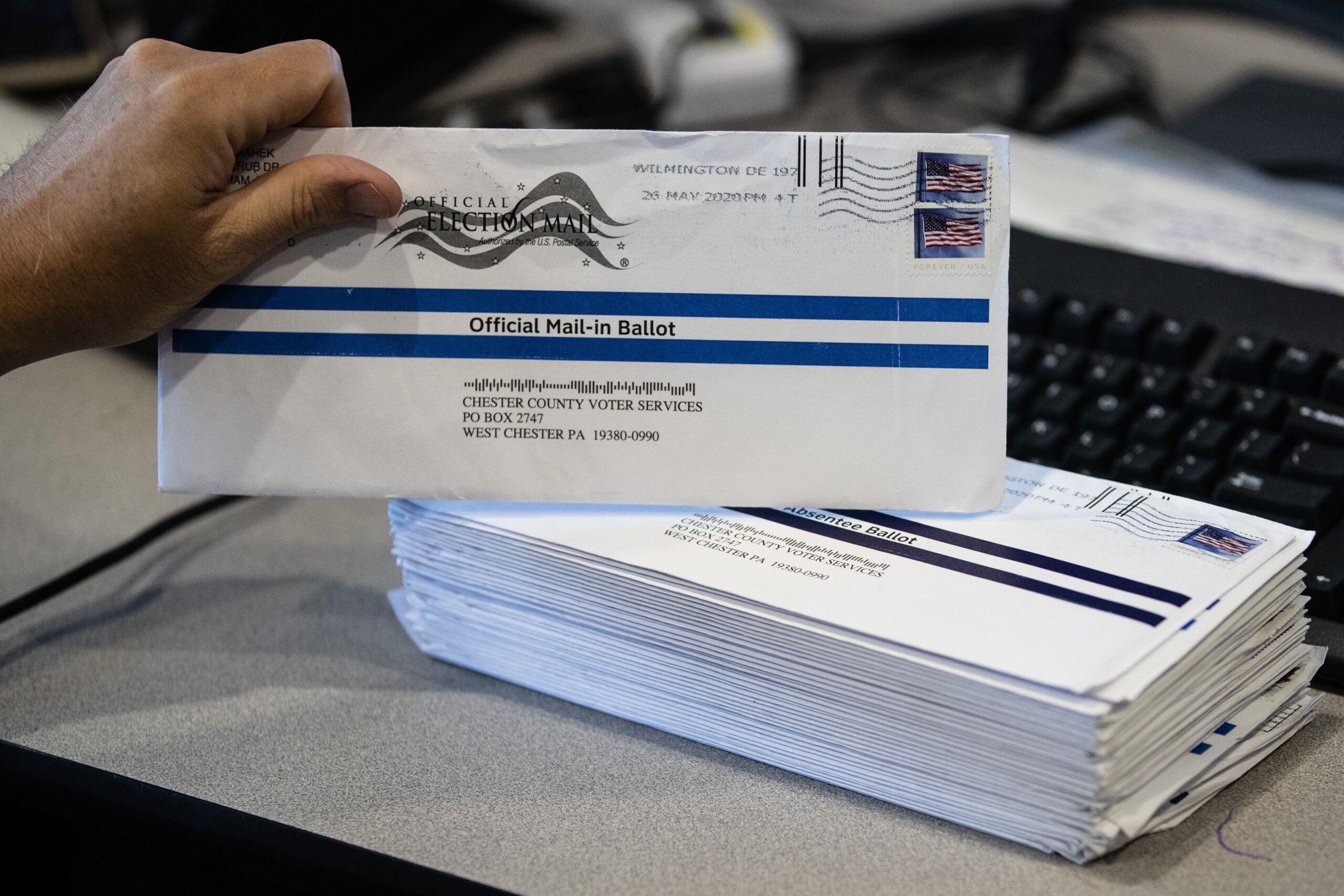
The Supreme Court sided with the Postal Service on Tuesday over its claims of immunity in a lawsuit filed by a landlord who claimed the USPS racially discriminated against her by intentionally not delivering her mail.
The justices ruled 5-4 in favor of the Postal Service, with Justice Clarence Thomas penning the majority opinion, which Chief Justice John Roberts, along with Justices Samuel Alito, Brett Kavanaugh, and Amy Coney Barrett, joined.
“Congress retained sovereign immunity for a wide range of claims about mail,” Thomas wrote for the majority. “Specifically, the [Federal Tort Claims Act’s] postal exception retains sovereign immunity for all claims ‘arising out of the loss, miscarriage, or negligent transmission of letters or postal matter.'”
“This case concerns whether this exception applies when postal workers intentionally fail to deliver the mail,” Thomas added. “We hold that it does.”
Lebene Konan filed the lawsuit against the USPS after she claimed that it intentionally did not deliver mail to two of her properties as part of a “campaign of racial harassment.” The USPS argued it was immune from the lawsuit under federal law, but also that the mail was not delivered for technical reasons, not racial ones. The immunity question was the only one before the justices at this stage of the case.
Thomas wrote in his opinion that even in cases in which the USPS intentionally fails to deliver mail to an address, it is immune from a lawsuit.
“Given the frequency of postal workers’ interactions with citizens, those suits would arise so often that they would create a significant burden for the Government and the courts,” Thomas wrote.
“And their cost to taxpayers would depend on the value and importance of the mail’s contents, over which the Government typically has no control,” he added.
The majority ruling reverses the finding of the U.S. Court of Appeals for the 5th Circuit, which had held the USPS was not immune to the lawsuit over intentionally undelivered mail.
Justice Sonia Sotomayor wrote the dissent, which was joined by Justices Elena Kagan, Neil Gorsuch, and Ketanji Brown Jackson. Sotomayor argued the high court’s majority opinion expands the scope of exceptions given to the USPS under the Federal Tort Claims Act.
“Today, the Court holds that one exception—the postal exception—prevents individuals from recovering for injuries based on a postal employee’s intentional misconduct, including when an employee maliciously withholds their mail,” Sotomayor wrote. “Because this reading of the postal exception transforms, rather than honors, the exception Congress enacted, I respectfully dissent.”
Sotomayor also argued that even if ruling in favor of Konan opened the door to more lawsuits against the Postal Service, “that would not provide this Court with authority to change the text Congress enacted.”
“Ultimately, this regime is the consequence of Congress’s choice to have the exception turn on certain types of misconduct, rather than providing the Postal Service with a blanket exception,” Sotomayor wrote. “It is not the role of the Judiciary to supplant the choice Congress made because it would have chosen differently.”
The Supreme Court is expected to announce at least one ruling on Wednesday, as the justices continue with arguments and rulings for their current term, which is expected to end at the end of June when final rulings are released.

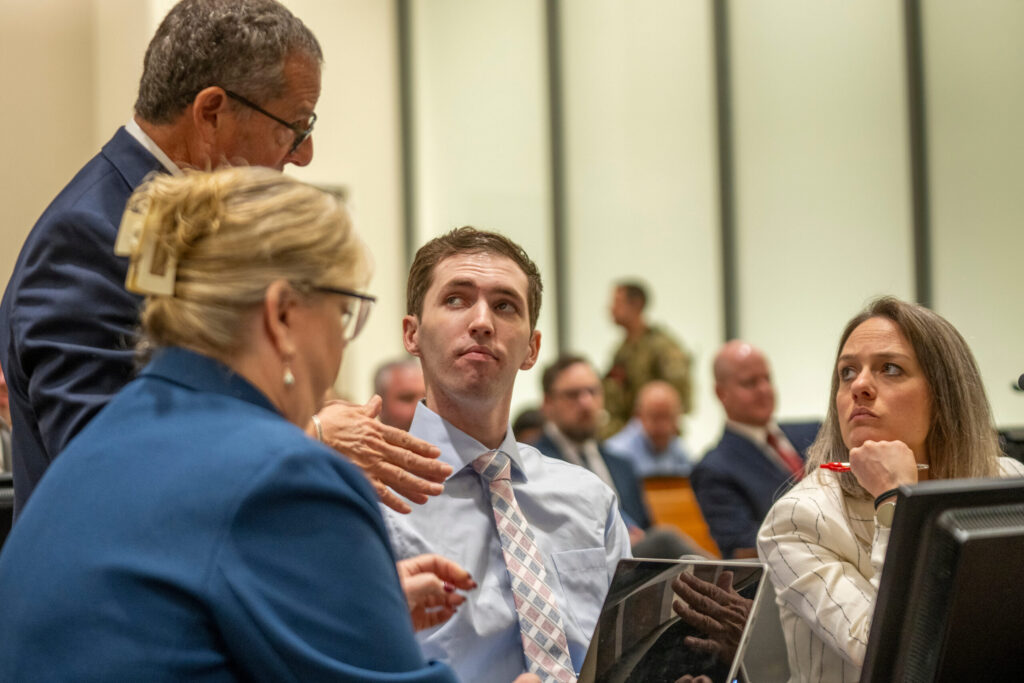
Judge declines to remove prosecutors from Tyler Robinson murder trial
Jack Birle, Washington Examiner
jack.birle.washington.examiner@gazetteedit.wpenginepowered.com
Updated 3 hours ago
A Utah judge denied efforts by the lawyers of Tyler Robinson, the alleged killer of Turning Point USA co-founder Charlie Kirk, to disqualify prosecutors over allegations of a conflict of interest related to Robinson’s upcoming trial on murder charges. Judge...
Jack Birle, Washington Examiner
Reporter

UK imposing ‘nearly 300 new sanctions on Russia’ over attacks on Ukraine
Washington Examiner Staff, Washington Examiner
washington.examiner.staff.washington.examiner@gazetteedit.wpenginepowered.com
Updated 3 hours ago
The United Kingdom announced what it described as a “landmark sanctions package” against Russia for its invasion and continued attacks on Ukraine. The “nearly 300 new sanctions on Russia,” targeting its energy revenues, are being hailed as the U.K.’s most...


Newsom office tells reporter to ‘f*** off’ for question on dyslexia diagnosis as governor under fire for allegedly racist comments
Claire Carter, Washington Examiner
claire.carter.washington.examiner@gazetteedit.wpenginepowered.com
Updated 3 hours ago
Gov. Gavin Newsom‘s (D-CA) office gave an expletive-laced response on Monday to a reporter who asked about the governor’s dyslexia diagnosis and backlash over allegedly racist comments. During the press interaction, a reporter asked the governor’s communications team a follow-up...

Claire Carter, Washington Examiner
Reporter
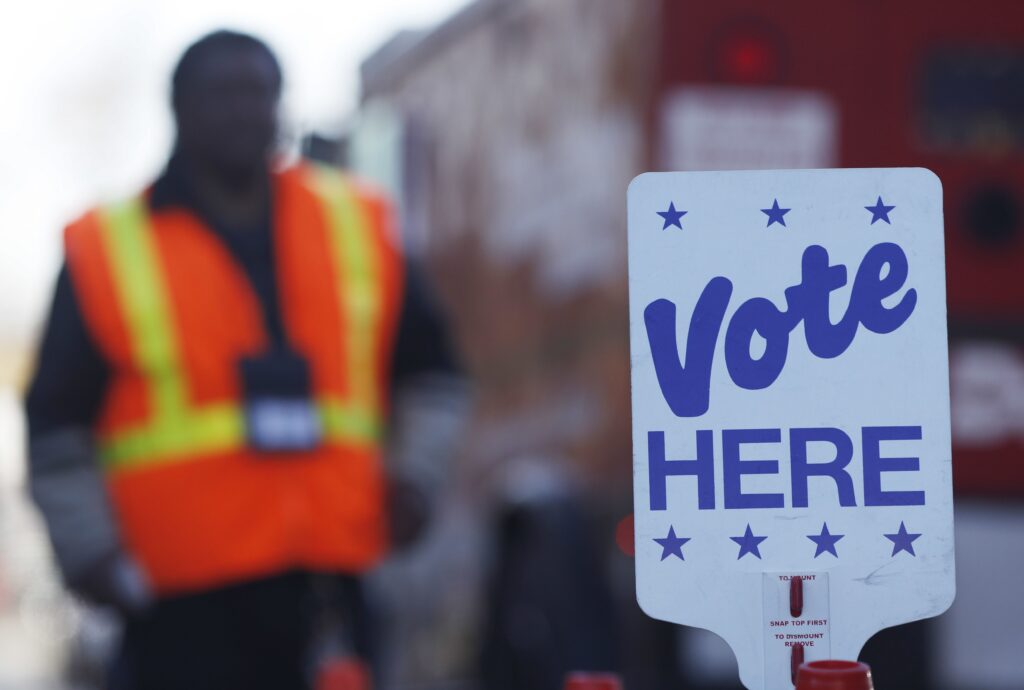
Here are some of the most pivotal races in the 2026 midterm elections
Claire Carter, Washington Examiner
claire.carter.washington.examiner@gazetteedit.wpenginepowered.com
Updated 1 hour ago
With control of Congress and several key governorships at stake, the 2026 midterm elections are already shaping up to hinge on a relatively smaller number of battleground states. With hundreds of seats on the ballot across the country this November,...
Claire Carter, Washington Examiner
Reporter

Winter storms collide with shutdown fight, putting pressure on FEMA
Samantha-Jo Roth, Washington Examiner
samantha-jo.roth.washington.examiner@gazetteedit.wpenginepowered.com
Updated 4 hours ago
Heavy snow, grounded flights, and school closures across the Northeast are adding urgency to Washington’s fight over Homeland Security funding, with the Federal Emergency Management Agency facing new operational strain as a partial shutdown drags on. The latest winter storm...

Democrats target Iowa, Arizona, and Pennsylvania races as seats to flip
Molly Parks, Washington Examiner
molly.parks.washington.examiner@gazetteedit.wpenginepowered.com
Updated 1 day ago
The campaign arm for House Democrats announced 12 districts across eight different states that it is seeking to flip from red to blue in the 2026 elections. The Democratic Congressional Campaign Committee launched the first batch of candidates that it...

Molly Parks, Washington Examiner
Reporter

Supreme Court declines to take up NRA free speech case
Jack Birle, Washington Examiner
jack.birle.washington.examiner@gazetteedit.wpenginepowered.com
Updated 1 day ago
The Supreme Court denied a petition seeking to revive the National Rifle Association’s free speech lawsuit against a former New York official, effectively ending the lawsuit from going forward. The high court issued an order list on Monday in which...
Jack Birle, Washington Examiner
Reporter

Kim Jong Un reelected as North Korean leader, teen daughter to serve as ‘missile chief’
Timothy Nerozzi, Washington Examiner
timothy.nerozzi.washington.examiner@gazetteedit.wpenginepowered.com
Updated 1 day ago
The Workers’ Party of Korea has reelected Kim Jong Un as the leader of their nation. While that might not be a surprise for the supreme leader, powerful allies say a “new chapter” is beginning. Korean Central Television, a North...

Timothy Nerozzi, Washington Examiner
Reporter
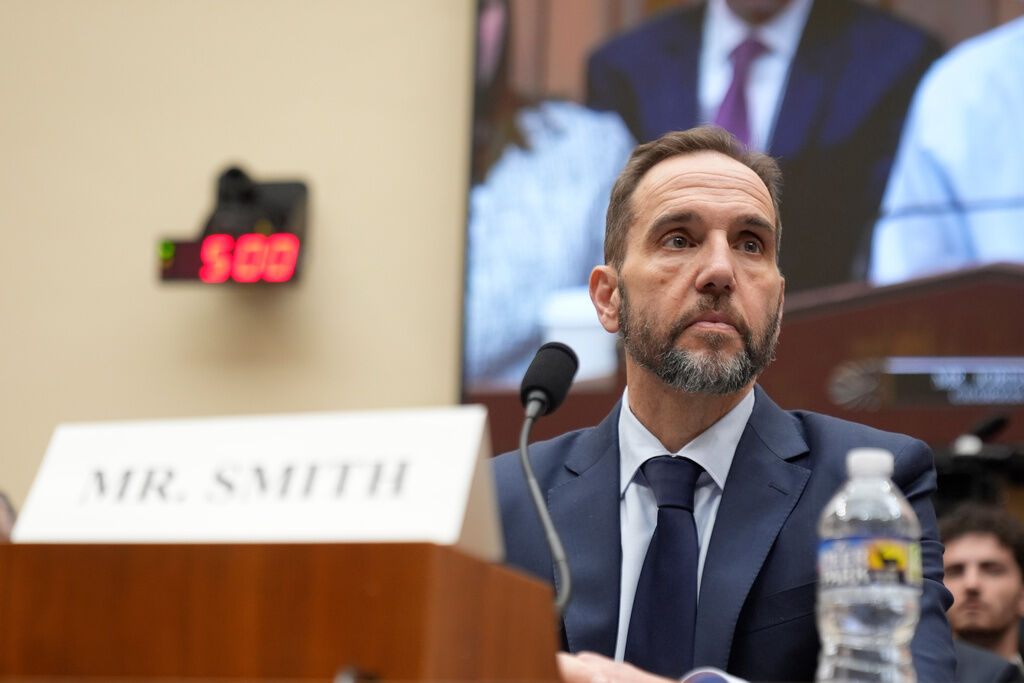
Judge permanently blocks release of Trump classified documents report
Kaelan Deese, Washington Examiner
kaelan.deese.washington.examiner@gazetteedit.wpenginepowered.com
Updated 23 hours ago
A federal judge permanently barred the Justice Department on Monday from releasing the portion of former special counsel Jack Smith’s final report detailing his investigation into President Donald Trump’s handling of classified documents, delivering a sharp rebuke of the prosecutor’s...

Kaelan Deese, Washington Examiner
Reporter
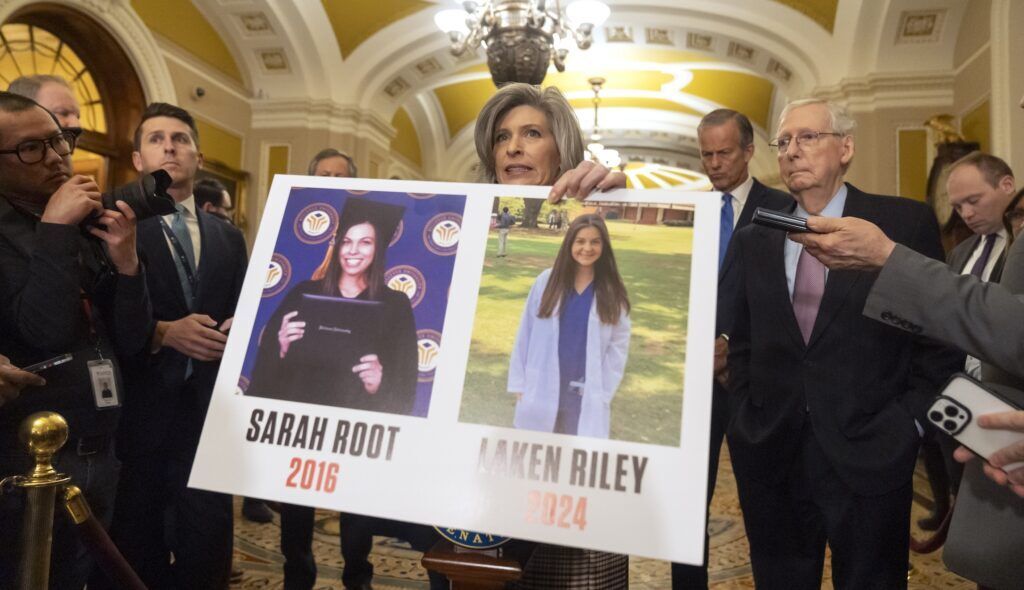
Trump declares National Angel Family Day for illegal immigrants’ victims
Mabinty Quarshie, Washington Examiner
mabinty.quarshie.washington.examiner@gazetteedit.wpenginepowered.com
Updated 1 day ago
President Donald Trump on Monday designated Feb. 22 as National Angel Family Day in honor of 62 people who were killed by illegal immigrants and two others who survived attacks. Trump signed a proclamation making the designation official at an...

PREV
PREVIOUS

UK imposing ‘nearly 300 new sanctions on Russia’ over attacks on Ukraine
The United Kingdom announced what it described as a “landmark sanctions package” against Russia for its invasion and continued attacks on Ukraine. The “nearly 300 new sanctions on Russia,” targeting its energy revenues, are being hailed as the U.K.’s most aggressive economic action against Russia since the start of the war. “The U.K. has announced a landmark […]
Judge declines to remove prosecutors from Tyler Robinson murder trial
A Utah judge denied efforts by the lawyers of Tyler Robinson, the alleged killer of Turning Point USA co-founder Charlie Kirk, to disqualify prosecutors over allegations of a conflict of interest related to Robinson’s upcoming trial on murder charges. Judge Tony Graf issued his ruling on Tuesday during a virtual court hearing, denying the motion […]