







State audit: Rape kit backlog reduced but more work needed to hit goal
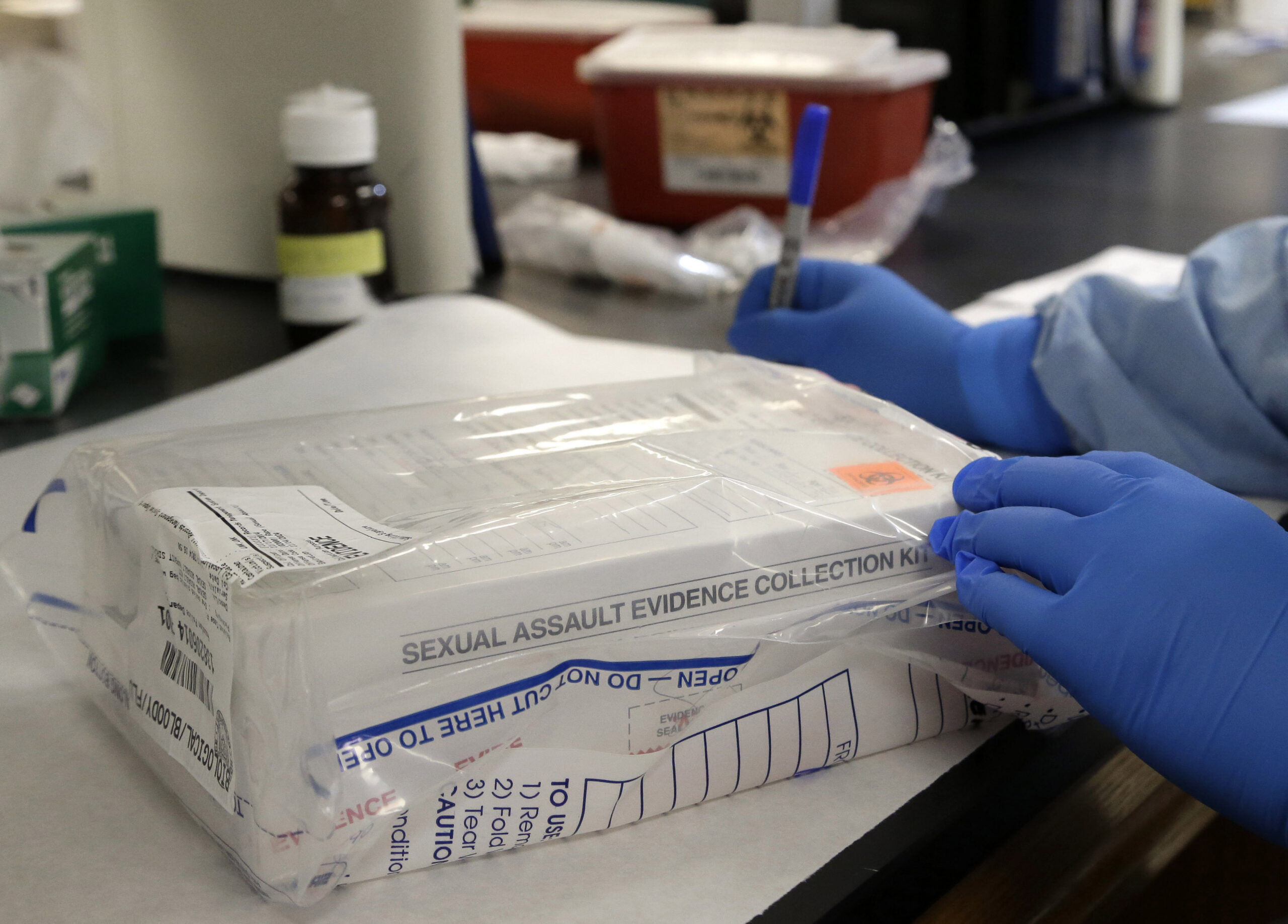
In the past year, the Colorado Bureau of Investigation has slashed the time it takes to process DNA collected in sexual assault cases, but the agency still is far short of its turnaround goal, the state auditor reported on Wednesday.
While praising the progress made in the past year, the audit showed that the 190 days currently needed to process DNA remains more than triple the benchmark set under a new state law and more than double the turnaround time the agency had set for itself internally.
The CBI forensic lab has been embroiled in an unprecedented scandal for more than two years after it was disclosed Yvonne “Missy” Woods, once one of its leading DNA scientists, was accused of altering or deleting data in criminal cases for decades.
Part of the fallout from that scandal was a growing backlog of cases where DNA was not being processed, most notably in sexual assault cases, because lab workers had been diverted to review Woods’ past work as part of CBI’s internal investigation.
But the breadth of the backlog was not known publicly until January 2025 when former CBI director Chris Schaefer admitted at a legislative committee meeting that the time it took to process DNA evidence for sexual assault cases had climbed to 517 days.
That acknowledgement sparked outrage and spurred legislative calls for action, including an audit of the agency.
The agency set an internal goal of a 90-day turnaround to process evidence. On June 3, Gov. Jared Polis signed into law a measure aspiring to drop that goal to 60 days.
The newly released audit Wednesday showed that as of Jan. 31, the average number of days for CBI to conduct DNA testing in general had dropped to 266 days. For rape kits, it is now 190 days, the audit found.
“CBI’s DNA case backlog and turnaround time remain elevated, but it has made significant progress since February 2025 in reducing the backlog, which should allow CBI to continue to reduce the turnaround time for testing that is currently in progress,” the audit said.
According to CBI’s public dashboard, the current number of waiting cases is 614. A year ago, it was 1,407.
“We are excited by the progress we have made but we know we have a lot more work to do,” CBI Director Armando Saldate III said in an emailed statement Wednesday. “We recognize the immense responsibility that remains. Our commitment is to eliminate the backlog and ensure timely justice for every victim.”

The statement added that the agency projects it can reach its 90-day turnaround goal by the end of 2027.
The audit found that the agency continues to be plagued by high turnover and staffing shortages, which result in gaps in managing and training its scientists. Additional vulnerabilities included software and programming problems, along with an increased volume of cases being referred by law enforcement for testing, the audit found.
CBI has proposed outsourcing about 1,900 cases to outside labs to help reduce the backlog.
The audit estimated a cost of roughly $2,000 per outsourced case. That translates to about $3.8 million.
“CBI cannot consistently rely on outsourcing cases to private labs to address long-term staffing shortages and testing demands,” the audit said.
The audit also noted staff needed a clearer understanding of expectations in productivity.
State Sen. Mike Weissman, D-Aurora, said the audit “shows meaningful progress has been made but we still have — at least — months to go” to hit the goals. He said he is advocating additional resources to CBI, which he acknowledges could be a challenge in the state’s current fiscal climate.


Mercy! Faith film takes center stage at Red Rocks
John Moore
john.moore@denvergazette.com
Updated 17 minutes ago
At a time when you can’t say anything without saying something controversial, I’m just going to come out and say it out loud: The world needs more movies like “I Can Only Imagine 2.” It’s the sequel to a faith-based...

John Moore
Reporter

Aurora officials look to Fort Worth in creation of police oversight office
Kyla Pearce
kyla-pearce@denvergazette.com
Updated 2 hours ago
As Aurora officials continue the process of creating a police oversight office, the police monitor of a Texas city similar to Aurora in size, demographics and structure told officials and residents Tuesday night that her office has built a strong...

Kyla Pearce
Reporter

Greeley voters halt landmark development project
Hap Fry, Special to The Gazette
hap-fry@gazette.com
Updated 1 minute ago
GREELEY – The landscape-altering Cascadia development project has been put on ice, according to unofficial results of a city referendum on the project Tuesday. The proposed Cascadia amenities included an 8,600-seat multiuse arena and ice center that would be the...

Hap Fry, Special to The Gazette
Reporter

Polis administration awards $7.2 million to cut emissions from large buildings
Scott Weiser
scott-weiser@denvergazette.com
Updated 3 hours ago
The Colorado Energy Office awarded $7.2 million Wednesday to help owners of large buildings across the state pursue high-impact projects that reduce greenhouse gas emissions through improved energy efficiency and electrification. The grants, drawn from federal Climate Pollution Reduction Grant...

Scott Weiser
Reporter

Denver Police arrest man, 20, in fatal Maple Avenue house party fight, shooting
Michael Braithwaite
michael.braithwaite@gazette.com
Updated 2 hours ago
Denver Police Department announced an arrest Tuesday in connection with a shooting a few weeks prior, during which one person was killed and another injured. Yeanbraiker Yriarte-Valera, 20, faces a first-degree murder charge after he allegedly shot and killed a...

Michael Braithwaite
Reporter
Report: Palantir exit could deal $178M blow to Colorado economy
Bernadette Berdychowski
bernadette.berdychowski@denvergazette.com
Updated 4 hours ago
Palantir Technologies’s decision to move its headquarters from Colorado to Florida is raising fresh concerns about the state’s business climate, with a new report warning the departure could shave hundreds of millions of dollars from Colorado’s economy and signal broader...

Bernadette Berdychowski
Reporter

Report: Palantir exit could deal $178M blow to Colorado economy
Bernadette Berdychowski
bernadette.berdychowski@denvergazette.com
Updated 48 minutes ago
Palantir Technologies’ decision to move its headquarters from Colorado to Florida is raising fresh worries about the state’s business climate, with a new report warning the departure could shave hundreds of millions of dollars from Colorado’s economy and signal broader...
Bernadette Berdychowski
Reporter

New Arvada Center CEO is Zoo’s Noelle DeLage
The Denver Gazette
the-denver-gazette@denvergazette.com
Updated 4 hours ago
The Arvada Center has named Noelle DeLage, chief communications and philanthropy officer of the Denver Zoo Conservation Alliance, as its next president & CEO. DeLage succeeds the retiring Philip Sneed effective July 1, just as the Arvada Center begins its...

The Denver Gazette
Reporter
House Ethics Committee dismisses some claims, advances others against Rep. Ron Weinberg
Marianne Goodland
marianne-goodland@denvergazette.com
Updated 3 hours ago
The House Ethics Committee voted on Wednesday to accept three allegations filed against Rep. Ron Weinberg, R-Loveland, but combined two into one subject area. The two issues involve inappropriate comments made to female lawmakers in two separate incidents and the...

Marianne Goodland
Reporter

Bipartisan opposition sinks eviction bill in Colorado
Marissa Ventrelli
marissa-ventrelli@denvergazette.com
Updated 52 minutes ago
Two Democrats sided with Republicans on a legislative panel to reject a proposal that would have made several changes to eviction filings and proceedings, including requiring judges to suppress court records. Sponsored by Rep. Junie Joseph, D-Boulder, House Bill 1047...

Marissa Ventrelli
Reporter
PREV
PREVIOUS

Aurora officials look to Fort Worth in creation of police oversight office
As Aurora officials continue the process of creating a police oversight office, the police monitor of a Texas city similar to Aurora in size, demographics and structure told officials and residents Tuesday night that her office has built a strong relationship with police and been successful in changing police policies. Bonycle Sokunbi, the Fort Worth […]

Mercy! Faith film takes center stage at Red Rocks
At a time when you can’t say anything without saying something controversial, I’m just going to come out and say it out loud: The world needs more movies like “I Can Only Imagine 2.” It’s the sequel to a faith-based film I knew nothing about that is named after a song I had never heard […]