







The U.S. will survive the demise of the penny | Mike Rosen

It’s worrisome enough that we have to live with the ever-present threat of nuclear war hanging over our head, the fiery extermination of humanity from global warming, a worldwide depression triggered by the U.S. defaulting on its $39 trillion national debt on its way to $50 trillion, to say nothing of an uptick in falls from Denver rent-a-scooters. On top of all that, yet another crisis has descended upon the American public: Donald Trump has ended the minting of our one-cent coin, affectionately known as the penny. Good grief!
Don’t panic, 240 billion of them are still in circulation. Actually, this is long overdue. “Seigniorage” is the revenue a government derives from the difference between the face value of a coin and the cost of its mintage. (Ignore paper currency.) The U.S. Mint stopped making quarters, half dollars, and dollars out of silver when inflation made the metal content more valuable than the face value of the coins. Minting a penny now costs 3.7 cents each. The penny is the only current U.S coin with negative seigniorage.
When I was a kid, a penny had some intrinsic value. You could actually buy something with it. Place one in a bubble-gum machine, turn the crank and a candy-covered gum ball would drop out. You could even put a 1-cent stamp on a penny post card. In 1857, the U.S. stopped minting half-cent coins, and the nation survived even though a half penny actually had some purchasing power; you could buy a half-dozen cigars for that.
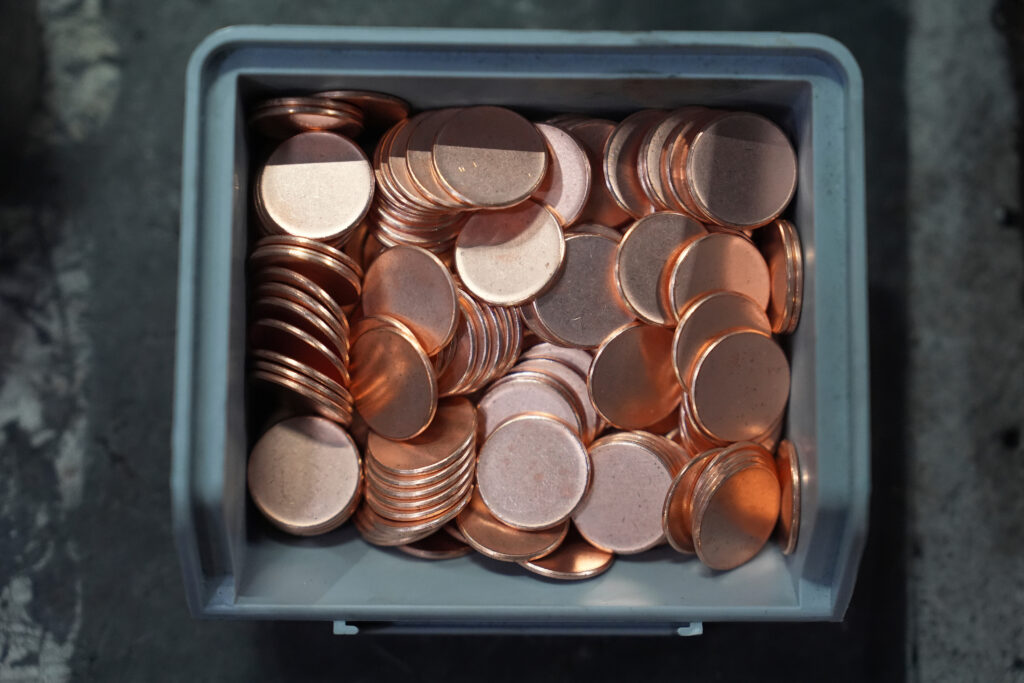
The cumulative inflation rate of 370% over the last 270 years since then has rendered the penny virtually worthless. Today, it isn’t worth the trouble of picking up off the sidewalk (especially if it’s face down; that’s bad luck). Dimes or quarters have replaced pennies in kids’ piggy banks. And credit cards, debit cards, PayPal, internet electronic transactions, crypto currency, automatic ACH billing, and mobile sports-betting, to name just a few alternatives, are increasingly displacing purchases with cash in general (with the exception of stacks of hundred-dollar bills in duffle bags for big illicit drug deals). Most people don’t even bother to carry coins in their pockets anymore. If you try to give the kid at the checkout counter a $5 dollar bill and three pennies for a $4.83 purchase, hoping for two dimes back, his eyes cross as he struggles to do the math in his head.
The sentimental case for keeping the penny is fading away as penny-laden references in our language such as “a penny for your thoughts,” “penny wise and pound foolish,” “penny-ante,” “penny pincher,” “pennies from heaven,” and “penny stocks,” are disappearing with generational change. Even penny loafers are out of style. Abraham Lincoln won’t be forgotten; his face will still grace the $5 bill. Canada has already eliminated its penny in 2012 (mostly to stop unruly hockey fans from throwing them onto the ice).
In your shopping cart at the supermarket, each individual item will still be priced in 1-cent increments. If you’re paying with plastic or a check you’ll pay the exact price, with no rounding necessary. Making a mountain out of a mole hill, some people are afraid retailers will cheat consumers by always rounding prices UP (which would be the to the nearest nickel, not the nearest dollar). This is ridiculous. Rounding will only apply if you’re paying with cash, and it will be on the total bill (not each item) rounded to that nearest nickel. So, a total purchase of, say, $89.01 or $89.02 could be rounded down to $89.00, saving you one or two cents. And a purchase of $89.03 or $89.04 could be rounded up to $89.05, costing you one or two cents more. This is small change and in the long run, it’ll all even out anyway.
Anti-business progressives are also stricken with UP-rounding paranoia that greedy capitalists will oppress consumers. Coming to the rescue, the (NCSLSLTTF) National Conference of State Legislatures’ State and Local Taxation Task Force (whew!) is proposing a government mandate requiring that purchases ending in 1, 2, 6 or 7 cents be rounded down to the nearest nickel, and purchases ending in 3, 4, 8 or 9 cents be rounded up. Please. This is a solution for a non-problem.
I doubt Safeway will make it corporate policy to always round up. That would be terrible public relations giving Wal-Mart the competitive opportunity to advertise they always round down (perhaps raising prices a few cents to make up for it).
Mike Rosen is a Denver-based American radio personality and political commentator.


Court hands Colorado a tariff ‘liberation day’ | Jimmy Sengenberger
Jimmy Sengenberger
jimmy-sengenberger@denvergazette.com
Updated 3 days ago
The U.S. Supreme Court’s decision striking down President Donald Trump’s expansive “Liberation Day” tariffs was the right call — and it spares Colorado economic pain, even as the politics surrounding the decision have already struck the state. On Friday, the...

Jimmy Sengenberger
Reporter

One small step for dialing back partisanship | Eric Sondermann
Eric Sondermann
eric-sondermann@denvergazette.com
Updated 3 days ago
Much ink, including a good deal of my own, has been spilled on the excesses of super-charged, toxic partisanship in this current era. Except for true believers along with those who profit from this all-consuming poison, there is broad agreement...

Eric Sondermann
Reporter

Dems try to hijack Colorado’s congressional map | Dick Wadhams
Dick Wadhams
dick-wadhams@denvergazette.com
Updated 7 days ago
Colorado Democrats are hell bent to sideline the Independent Congressional Redistricting Commission in the 2026 election and ultimately steal three Republican congressional seats in 2028 and 2030. A hilariously named group that calls itself “Coloradans for a Level Playing Field”...

Dick Wadhams
Reporter

The raw realities of fighting fires in rural areas| Rachel Gabel
Rachel Gabel
rachel-gabel@denvergazette.com
Updated 3 days ago
Fires on the Plains are not the roaring, mosaic burns in the mountains that leap across canyons and leave the skeletons of trees behind as monuments of destruction. In this country, the first gust of wind hits like a left...

Rachel Gabel
Reporter

PERSPECTIVE: Colorado’s victims of the drug trade
David Olesky
dolesky@gmail.com
Updated 4 days ago
Two months ago, I crossed two milestones. It was 25 years since graduating the Drug Enforcement Administration (DEA) Academy. It was also the same day I turned 50. When I applied to DEA, I was still living in my New...

David Olesky
Reporter

The First Amendment protects the Second | Jon Caldara
Jon Caldara
jon-caldara@denvergazette.com
Updated 1 week ago
It’s not an attack on the Second Amendment, but the First Amendment. I know this is going to sound crazy but, there was a time when liberals, not conservatives, were the champions of free speech. Today? Now in Colorado it...

Jon Caldara
Reporter

Shedding tears over NREL’s demise | Pius Kamau
Pius Kamau
pius-kamau@denvergazette.com
Updated 7 days ago
Donald Trump’s attempts to unwind progress in environmental matters hasn’t met much resistance from scientific-minded Republicans. The former National Renewable Energy Laboratory, NREL, is now NLR – National Laboratory of the Rockies. Trump excised the RE bit claiming that climate change...

Pius Kamau
Reporter
The freest man in Colorado history | Vince Bzdek
Vince Bzdek
vince-bzdek@denvergazette.com
Updated 5 days ago
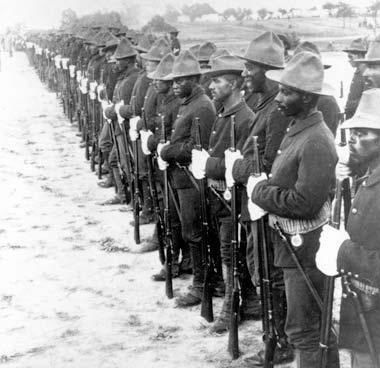
Every Coloradan should know the story of Buffalo Soldier John Taylor, who fought harder and longer than perhaps any man in our history to be truly free. Taylor’s story stands out above all others in a thought-provoking exhibit about Buffalo...

Vince Bzdek
Reporter
What Gallup polls teach us about presidents | Cronin and Loevy
Tom Cronin Bob Loevy
tom-cronin-bob-loevy@gazette.com
Updated 5 days ago
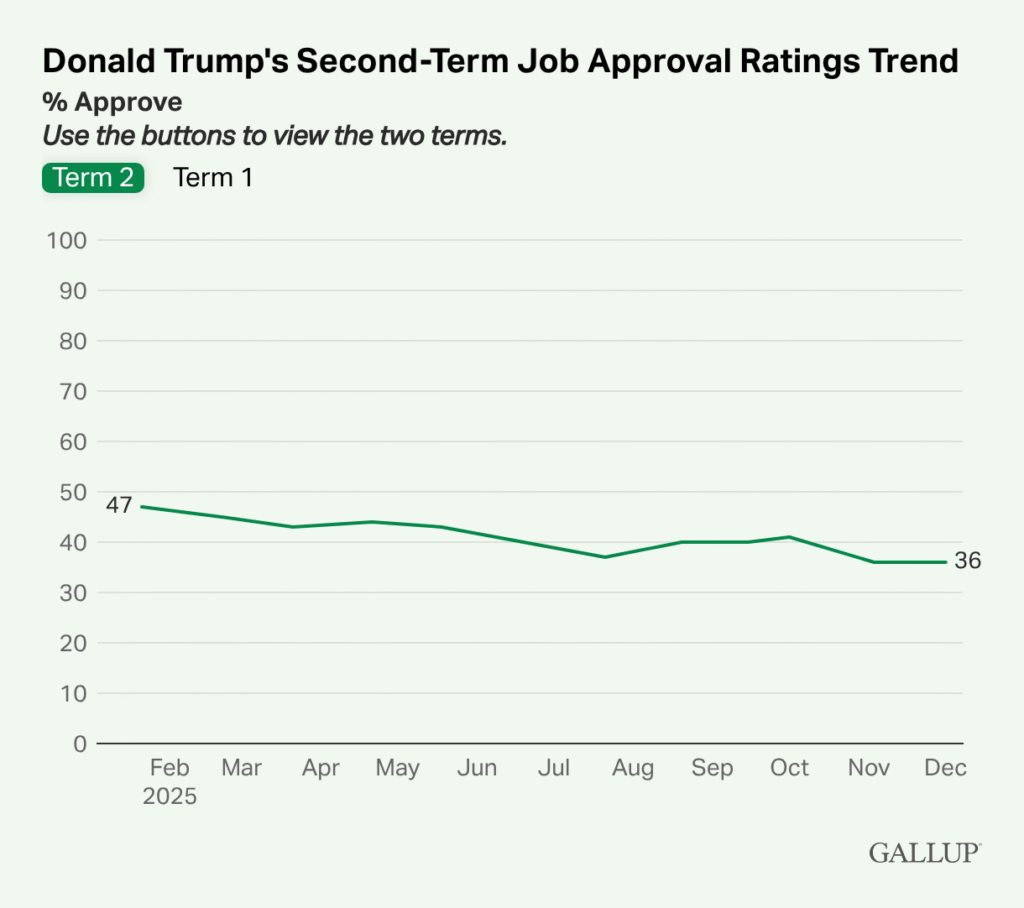
The Gallup organization, founded by George Gallup, announced on Feb. 11 they will no longer conduct their well-known polls that rate whether Americans approve or disapprove of the way presidents are handling their job. Gallup began these polls in the...

Tom Cronin Bob Loevy
Reporter

Keep Colorado out of national partisan power grab | Jimmy Sengenberger
Jimmy Sengenberger
jimmy-sengenberger@denvergazette.com
Updated 1 week ago
It’s billed as establishing “a level playing field” by “fighting back against Trump’s election-rigging.” But a campaign to get voters to throw out Colorado’s independent redistricting system would do exactly the opposite. The new political committee, Coloradans for a Level...
Jimmy Sengenberger
Reporter
PREV
PREVIOUS

EDITORIAL: Palantir’s exit is Colorado’s wake-up call
Much already has been written about Palantir Technologies’ abrupt and troubling announcement on X last week it was exiting Colorado. The high-profile artificial intelligence and software company, co-founded by tech and venture capital VIP Peter Thiel, had moved its headquarters from Palo Alto, Calif., to Denver only six years ago. Now, it will decamp for […]

EDITORIAL: Good intentions, poor accountability at Caring for Denver
In 2018, Denver voters authorized the Caring for Denver Foundation, establishing a 0.25% city sales tax increase for mental health and substance abuse services — and entrusting the foundation with distributing those funds responsibly. A city audit released last week found something very different. Rather than responsibly stewarding $40 million in annual taxpayer funds, the […]