







What is the state legislature trying to hide?| Vince Bzdek

What is it that the State Legislature is trying to hide?
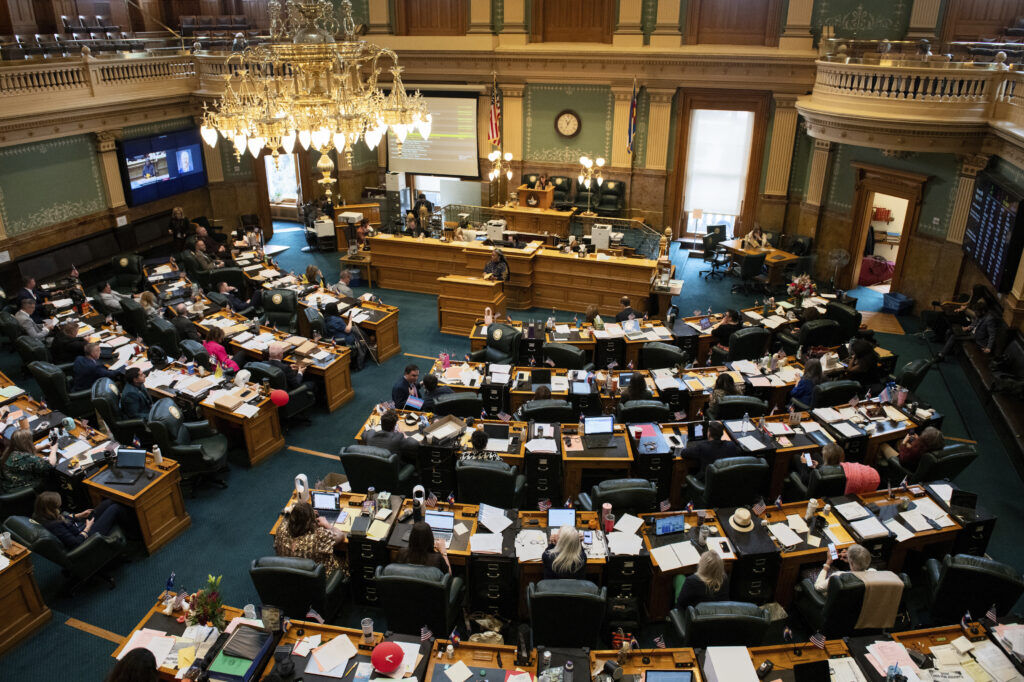
A bill that passed out of committee last week lets governments squirrel away important public notices on their own websites rather than publishing them in newspapers and other news sites that actually reach the public. That would mean the public isn’t really notified of much of anything if people don’t regularly look at the thousands of government websites in Colorado.
Which they don’t.
These public notices are an important way for governments to get the word out on new laws, public meetings, zoning and land changes, proposed budgets, property auctions and tax rate changes, not to mention election dates, polling locations and ballot initiatives.
The public notices proposal feels a little like letting the fox guard the henhouse. “When a government publishes notices only on its own website, it becomes both the subject of the notice and the gatekeeper of access,” Colorado Press Association CEO Tim Regan-Porter tells me.
“Public notice requires third-party publication so that the entity being noticed does not control the visibility, prominence, or permanence of the notice.”
Jeff Roberts, president of the Colorado Freedom of Information Coalition, said that if this bill is successful, it would be another blow of many recent blows to government transparency. “A lot of people in Colorado still rely on their printed local newspaper to stay informed about what’s happening in their communities,” Roberts said. “And when they flip through that paper, they might see a public notice that’s relevant to them. It’s less likely they will see it if it’s just on a government’s website.”
Legislators in recent years have erased decades of safeguards meant to ensure that the public’s business is conducted in public.
- In 2024, the legislature exempted itself from the Colorado Open Meetings Law to allow members to privately communicate about public business via email, text messaging and disappearing message systems like Signal. Jon Caldara of the Independence Institute told our reporter Marianne Goodland that the legislature exempting itself from the open meetings law is a “little like Weight Watchers exempting itself from calories.”
- Democrats recently have passed or proposed bills that lengthen wait times to as much as three weeks for records requests from journalists and ordinary folks trying to hold government agencies accountable. Their reason? “Vexatious requesters.” My question: “Says who?”
- Lawmakers have increased fees for such records to raise barriers to access. In recent years, we’ve been charged thousands of dollars at the Denver Gazette for some such requests.
- The legislature also recently passed another bill to make name, image and likeness (NIL) contracts between public universities and student athletes confidential. Ironically, Gov. Jared Polis, who noted at the time an “unfortunate trend of legislative proposals that ultimately impede access to official records,” signed the bill anyway.
Lawmakers generally argue such changes improve efficiency or modernize processes, but critics see them as limiting public oversight and access to government operations.
And let’s be clear: This lack of transparency is not at all what the public wants. Coloradans have repeatedly voted to require high levels of openness and transparency in the legislative process.
The Sunshine Amendment, adopted by voters in 1972, established strict rules for open meetings at the Capitol and laid the groundwork for a raft of other transparency measures over the years.
And it’s happening again: The cumulative perception of shrinking transparency has just sparked a citizen-led initiative to amend the Colorado Constitution to create a fundamental “right to know.”
So why the yawning gap between public will and legislative willfulness?
My colleague Eric Sondermann, political columnist and longtime political consultant in the state, blames Democrats’ dominance of state government.
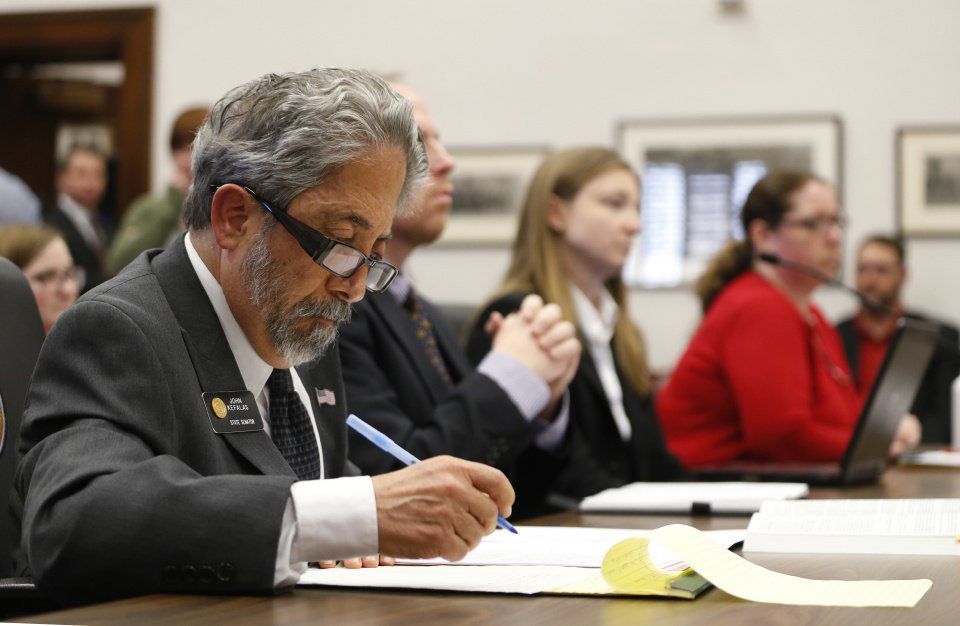
“Colorado’s emergence as a solidly blue, one-party bastion has inevitably produced, as night follows day, a certain degree of arrogance,” Sonderman recently wrote.
With a supermajority, Democrats see these public protections as hindrances and inconveniences to passing their agenda without challenge.
“One-party rule, regardless of the party, tends toward excess,” wrote Sondermann.
I also think the enormous number of lobbyists constantly pressuring legislators at the state Capitol interferes with the sacred connection between the public and their representatives. During a typical legislative session, approximately 500 to 600 lobbyists are registered to influence state lawmakers, our reporters have found, which means there are roughly five lobbyists for every legislator.
Interestingly, the brand-new transparency proposal aimed at the state ballot is an incredibly bipartisan effort, which includes such strange bedfellows as the conservative Independence Institute and the liberal League of Women Voters. The diverse alliance also brings together the Colorado Freedom of Information Coalition, Colorado Common Cause, the Colorado Broadcasters Association, the Colorado Press Association and the American Civil Liberties Union of Colorado.
“It’s either wildly encouraging or scary that the breadth of this coalition is truly ideologically opposed in every way, yet everyone sees the same danger,” Caldara told our reporter.
The proposal amends Article II of the state Constitution — the Bill of Rights. It declares that “because all political power is vested in and derived from the people, and by right all government originates from the people … the people have a fundamental right to know the affairs of all levels of state and local government.”
And because the General Assembly and other governing bodies and officials in Colorado “have increasingly infringed on the fundamental right to know,” the ballot initiative seeks to forever guarantee access to public proceedings and public records.
In the meantime, I’d urge you to reach out to your representative as soon as possible and remind them emphatically that they work for you.
And then this fall, you’ll get a chance to etch transparency more permanently into the state Constitution. My guess is the initiative will pass with flying colors.
The public, it seems, will have the last word after all.


Front Range Passenger Rail pitches to Colorado Springs ahead of possible ballot measure
Savannah Eller
savannah-eller@denvergazette.com
Updated 23 minutes ago
If all goes to plan, a measure for a sales tax to fund passenger rail service could be coming to Front Range ballots in 2026. “We have a plan that we think is viable, and we’ll actually be able to...

Savannah Eller
Reporter
Cute puppy overload and an audition of a different kind: Capitol M | Week of Feb. 28, 2026
Marianne Goodland
marianne-goodland@denvergazette.com
Updated 2 days ago
The lighter side of the Capitol, and most days, you ought to be really grateful for it. There’s a rumor (jk) floating around that an amendment is coming for the bill to legalize prostitution. The amendment would ban condoms made...

Marianne Goodland
Reporter

Competing overtime bills for agriculture workers split Colorado Democrats
Marianne Goodland
marianne-goodland@denvergazette.com
Updated 23 hours ago
Competing bills setting the overtime threshold for farmworkers have split legislators at the Colorado state Capitol, with one group saying a law passed in 2021 has harmed, rather than helped, farming operations and workers alike, while the other side insists...
Marianne Goodland
Reporter

PIKES PICK: A ‘K-Pop Demon Hunters’ day awaits
Linda Navarro
linda-navarro@denvergazette.com
Updated 5 days ago
It’s the music that makes you move and Black Sheep plans a dance party to the soundtrack of “K-Pop Demon Hunters” coming up April 18, 11 a.m. Costumes expected and it’s for all ages. $21.12-$24.21 at blacksheeprocks.com — Linda Navarro

Linda Navarro
Reporter

Report says Denver’s restaurant industry in need of intervention
Bernadette Berdychowski
bernadette.berdychowski@denvergazette.com
Updated 14 hours ago
Denver’s restaurant industry is struggling and facing “sustained structural pressure,” according to a report by local industry leaders. Last year, the city’s economic development department and Visit Denver created a six-month liaison program to research issues affecting the restaurant sector...

Bernadette Berdychowski
Reporter

Unvaccinated child in Boulder County tests positive for measles
Nicole C. Brambila nico.brambila@denvergazette.com
nico.brambila@denvergazette.com
Updated 15 hours ago
Public health officials have confirmed a measles case in Boulder County. The child was not vaccinated against measles, mumps and rubella and had not traveled outside the state or had a known exposure, according to state health officials. The case...


Aurora police chief creates team to improve communication between police, residents
Kyla Pearce
kyla-pearce@denvergazette.com
Updated 16 hours ago
In the midst of Aurora officials’ efforts to create a police oversight office, the department’s chief announced Thursday the creation of a community response team intended to improve communication between residents and police. Aurora Police Department officials lauded the formation...

Kyla Pearce
Reporter

Colorado’s congressional redistricting proposal could flip two Republican house seats | Analysis
Michael Braithwaite
michael.braithwaite@gazette.com
Updated 13 hours ago
A Democrat-backed proposal to redraw Colorado’s congressional map for the 2028 election could flip two Republican districts, including one that has never voted otherwise. The proposal, introduced by Coloradans for a Level Playing Field, is yet another effort in a...

Michael Braithwaite
Reporter

Jeffco teachers’ unions want guarantees on how mill levy money will be spent
Sage Kelley
sage.kelley@denvergazette.com
Updated 16 hours ago
Teachers’ unions in Jefferson County won’t back the school district’s mill levy override (MLO) attempts without guarantees on how the money will be spent. During the Jeffco Public Schools’ Board of Education meeting on Feb. 12, union leaders and teachers...

Sage Kelley
Reporter
Garfield County sheriff illegally collaborated with ICE, cease and desist letter claims
Michael Braithwaite
michael.braithwaite@gazette.com
Updated 14 hours ago
A cease and desist letter filed Wednesday alleged that the Garfield County sheriff intentionally violated state law by collaborating with the U.S. Immigration and Customs Enforcement (ICE). The letter, filed by the law firm Towards Justice, claimed that Garfield County...
Michael Braithwaite
Reporter
PREV
PREVIOUS
Additional thoughts on State of the Union address/rally | Cronin and Loevy
The U.S. Constitution’s Article II states that “He (the president) shall from time to time give to the Congress Information of the State of the Union, and recommend to their Consideration such Measures as he shall judge necessary and expedient … “ On Jan. 8, 1790, our first president, George Washington, appeared at Federal Hall […]

US and Israel launch a major attack on Iran and Trump urges Iranians to 'take over your government'
The U.S. and Israel launched a major attack on Iran on Saturday, and President Donald Trump called on the Iranian public to “seize control of your destiny” by rising up against the Islamic leadership that has ruled the nation since 1979. Some of the first strikes appeared to hit areas around the offices of Supreme Leader Ayatollah Ali Khamenei, and Iranian media […]