Another attempt at a fur ban? Still a ‘no’

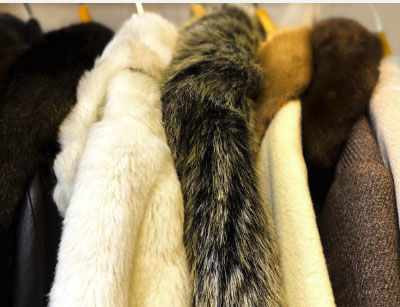
The Colorado Parks and Wildlife Commission (CPWC) will consider a petition to impose a statewide ban on the sale of fur at their March 4-5 or May 6-7 meetings. If youre a Denver voter hearing about this petition for the first time, then you might be asking yourself, “t we already decided this issue?”
You would be right to ask that question, and the answer is yes. In 2024, 60% of Denverites rejected Initiated Ordinance 308, which attempted to ban the commercial sale of fur in the county. Animal rights activists have now introduced essentially the same proposal, only this time the ban would apply to the entire state. Unlike 308, animal rights groups are not trying to put this new ban in front of voters; instead, theyre hoping it wins a majority vote from the Colorado Parks and Wildlife Commission, which is comprised of just a handful of politically appointed officials.
Admittedly, voters in the Denver Metro Area are not representative of what the rest of Colorado has to say on wildlife management issues. In 2024, Denver was one of only six counties to vote in favor of Proposition 127, which sought to ban mountain lion and bobcat hunting in Colorado. The states remaining 58 counties went on to reject Prop. 127, resulting in the hunting bans 10-point defeat.
After reflecting on the results of Ordinance 308 in Denver and the statewide totals for Proposition 127, I find it extremely hard to believe that a majority of our communities — or any, for that matter — would support this latest attempt to ban fur sales across the state. Yet these results from 2024 did make one thing abundantly clear: Coloradans want our wildlife to be managed through science, not politics.
If the latest scientific research from wildlife biologists at Colorado Parks and Wildlife showed we should impose a statewide fur ban to promote healthy wildlife populations, then that would at least be a fair proposal rooted in science and expert opinion. But trying to shoehorn a ban through an 11-person vote, on a proposal that was already rejected by Colorados most populous and eco-conscious city, seems like a terrible approach to wildlife management.
If anything, this new attempt is even worse than its predecessors, as it would jeopardize science-based management practices at Colorado Parks and Wildlife while also doing irreparable damage to the agencys overall reputation. Just the prospect of this fur ban being passed by the commission raises an alarming question: Why bother employing actual wildlife experts and biologists when politically appointed officials can impose new regulations in the absence of scientific research?
Its clear the organization behind this latest fur ban is not interested in doing whats best for Colorados wildlife through the best available science. In fact, the full petition is severely lacking in the scientific evidence department. The petition is just a last-ditch attempt to impose a rule that none of our communities wanted through a commission that is in no way accountable to the public. State wildlife management decisions certainly shouldnt be approved by a majority vote, and voters made that abundantly clear in the 2024 General Election. We emphatically agreed that we should leave these decisions up to the wildlife management experts. Still, when voters have already rejected something, it should at least hold some weight among our bureaucratic officials, especially when no new evidence has come to light to support the proposal.
As an active voter who loves our state and its wildlife, my message to the commission is clear: initiating a statewide fur ban through a commission vote would do irreparable damage to the agencys reputation and establish a dangerous precedent that would impede future science-based wildlife management efforts. I strongly encourage the commissioners to stand with the majority of Colorado and vote against this new fur ban. I also encourage my fellow Coloradans to attend the CPW Commissions upcoming meetings to speak out against this latest attack on science-based wildlife management.
Luke Wiedel is a longtime Arvada resident and wildlife conservationist. He has previously worked with Coloradans for Responsible Wildlife Management and the Rocky Mountain Elk Foundation.


Legislation on poison, poultry and prostitution dominate
Rachel Gabel
rachel-gabel@denvergazette.com
Updated 3 days ago
Many weeks, my search history is odd but the past two weeks might worry our county sheriff if he didn’t know me as well as he does. This week has been the week of poison, poultry, and prostitution. Not to...

Rachel Gabel
Reporter

Jailbreak
George Brauchler
george-brauchler@denvergazette.com
Updated 4 days ago
Colorado Democrats are working feverishly this legislative session to increase the rate at which convicted felons are released from our prisons back onto our streets. They claim they must, because of overcrowding and cost. Do not fall for that lie. ...

George Brauchler
Reporter

Are Colorado businesses leaving or evacuating? | Jon Caldara
Jon Caldara
jon-caldara@denvergazette.com
Updated 4 days ago
At this point, if you hear beeping downtown, it’s not a construction crew. It’s a company backing out. And look, I get it. Businesses relocate for all sorts of reasons: taxes, regulations, labor costs, office space, crime, commute times, the...

Jon Caldara
Reporter

GUEST OPINION: Generosity has defined Colorado for 150 years
Kyle Hybl
khybl1@gazette.com
Updated 3 days ago
What does it look like when a state takes care of its own? It looks like neighbors opening their homes to families displaced by wildfire. Volunteers standing shoulder to shoulder, offering food, clothing, and hope to people they have never...

Kyle Hybl
Reporter

Additional thoughts on State of the Union address/rally | Cronin and Loevy
Tom Cronin Bob Loevy
tom-cronin-bob-loevy@gazette.com
Updated 2 days ago
The U.S. Constitution’s Article II states that “He (the president) shall from time to time give to the Congress Information of the State of the Union, and recommend to their Consideration such Measures as he shall judge necessary and expedient...

Tom Cronin Bob Loevy
Reporter

What is the state legislature trying to hide?| Vince Bzdek
Vince Bzdek
vince-bzdek@denvergazette.com
Updated 2 days ago
What is it that the State Legislature is trying to hide? A bill that passed out of committee last week lets governments squirrel away important public notices on their own websites rather than publishing them in newspapers and other news...

Vince Bzdek
Reporter
Cute puppy overload and an audition of a different kind: Capitol M | Week of Feb. 28, 2026
Marianne Goodland
marianne-goodland@denvergazette.com
Updated 4 days ago
The lighter side of the Capitol, and most days, you ought to be really grateful for it. There’s a rumor (jk) floating around that an amendment is coming for the bill to legalize prostitution. The amendment would ban condoms made...

Marianne Goodland
Reporter

Union kills safeguards for Colorado schoolkids | Jimmy Sengenberger
Jimmy Sengenberger
jimmy-sengenberger@denvergazette.com
Updated 4 days ago
Without giving it a second thought, Democrats on the state Senate’s “kill committee” shot down a bill to keep dangerous public school employees from quietly moving between districts — even as supporters and critics alike urged amendments to make it work. Republican Sen. Mark Baisley, whose legislative...

Jimmy Sengenberger
Reporter

The U.S. will survive the demise of the penny | Mike Rosen
Mike Rosen
mike-rosen@denvergazette.com
Updated 4 days ago
It’s worrisome enough that we have to live with the ever-present threat of nuclear war hanging over our head, the fiery extermination of humanity from global warming, a worldwide depression triggered by the U.S. defaulting on its $39 trillion national...

Mike Rosen
Reporter
Court hands Colorado a tariff ‘liberation day’ | Jimmy Sengenberger
Jimmy Sengenberger
jimmy-sengenberger@denvergazette.com
Updated 6 days ago
The U.S. Supreme Court’s decision striking down President Donald Trump’s expansive “Liberation Day” tariffs was the right call — and it spares Colorado economic pain, even as the politics surrounding the decision have already struck the state. On Friday, the...
Jimmy Sengenberger
Reporter