







Denver mayor says his commute time tripled following ‘road diet’ change
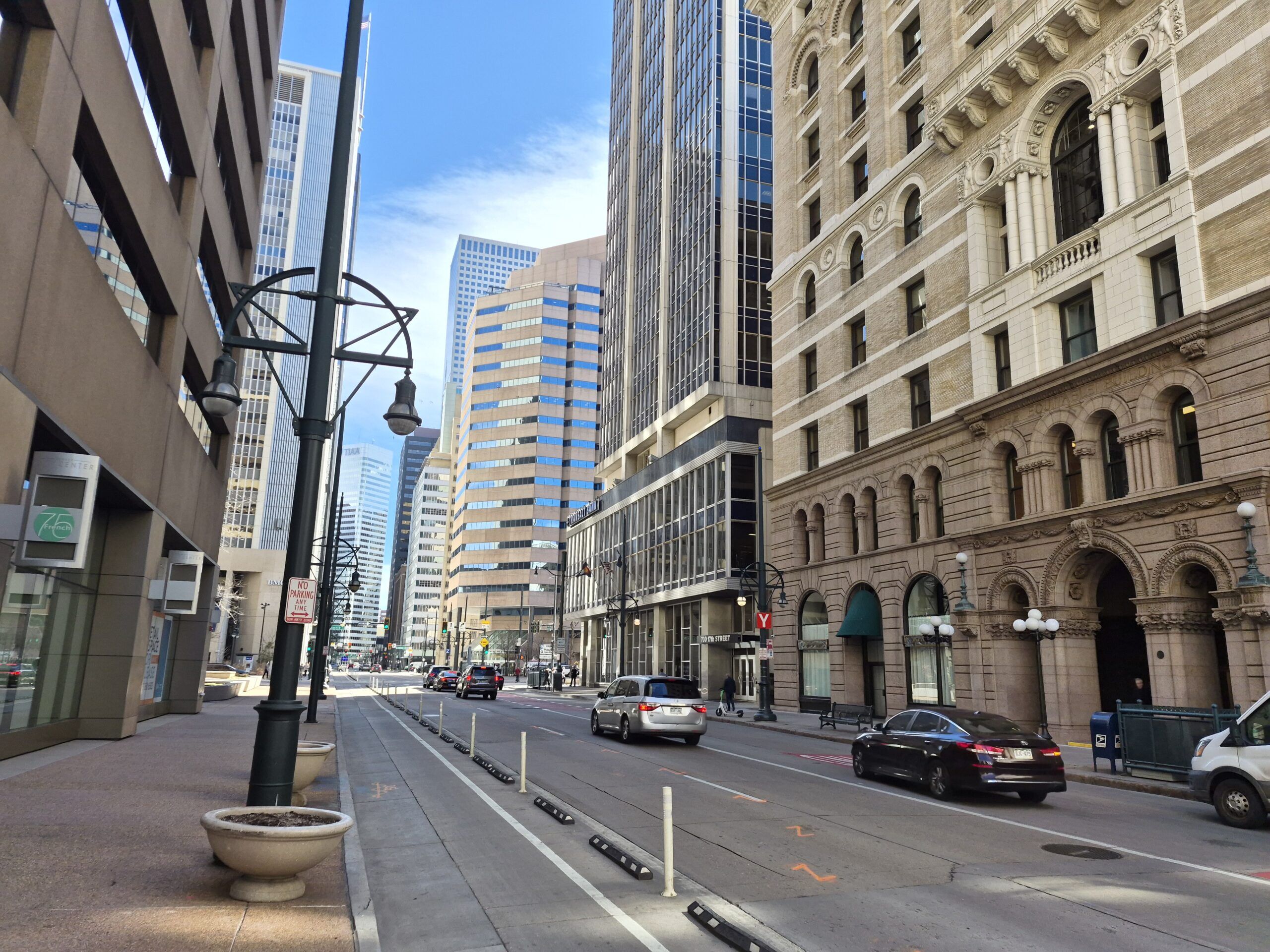
Mayor Mike Johnston is pushing back sharply against the claim by Denver councilmembers and bike activists that the city succumbed to lobbying pressure in revising a “road diet” plan for East Alameda Avenue, while noting that his own commute time has tripled following changes at another major artery.
He also said he’s worried that restricting road lanes would make it difficult for ordinary Denver residents — teachers, parents, etc. — to get to work.
As for the lobbying pressure claim, Johnston said it had “no fact basis” during a podcast last week.
Hosts of the podcast City Cast Denver pressed the mayor about whether a lobbyist had compromised a plan to narrow a 4-lane stretch of Alameda to three lanes, rather than two lanes as originally planned. The hosts cited an email by a Department of Transportation & Infrastructure engineer as evidence.
But Johnston said one side of the debate took the traffic engineering question and “(turned) it into a conspiracy story about personal attacks,” Johnston told hosts Bree Davies and Paul Karolyi.
Allegations of lobbying pressure emerged after the city announced a compromise plan in November. The revision followed a six-month battle between activists and competing neighborhood groups, one charging that narrowing would force traffic onto side streets, the other that the objective was to reduce speeds and that safety was being ignored.
Eight councilmembers wrote Johnston in January, calling for the city to reinstall its original plan for a full narrowing.
Podcast hosts questioned the mayor about the August memo from a DOTI engineer that stated: “We have been working with leadership to triage some high-level community and leadership concerns with constructing the project and recently received clear direction on a path forward.”
In Thursday’s podcast, Johnston said that the charges lacked a factual basis and failed to appreciate the tradeoffs required by traffic engineering decisions.
He also agrees, he said, that the cars have been pushed to the interior streets.
“Take Colfax,” the mayor said.
East Colfax is currently narrowed from four lanes of traffic to two as the city installs bus rapid transit down the arterial.
“The rough numbers are somewhere around 20,000 to 30,000 cars a day were on Colfax before we went to construction. Our current data is that there is now around half that,” the mayor said.
He noted that he commutes that stretch himself and said his own trip downtown had gone from 10 or 12 minutes to 30 minutes as the Colfax project unfolds.
“Where do you think those ten or fifteen thousand (cars) went? Do you think that those drivers decided to put their two kids and their drywall business on a bike and ride to and from work?” the mayor asked.
“Those are cars that are going on other streets to get to the same path,” he said.
“We know that going from four lanes to two lanes does make a street slower,” Johnston added. “If you also ask the Learned Lemur or anyone else on Colfax or on Alameda whether you would rather have the business of 25,000 people going by your door a day or 10,000 a day, they would say that’s also a difference in impact.”
Johnston expressed worries about the broader effects on transportation as “road diet” policies are pursued.
FOUR LANES TO TWO
“You can move Colfax from four lanes to two, but if you move Alameda from four to two, and Sixth from four to two, and 13th from four to two,” Johnston continued, “you would make every one of those individual streets easier to travel, but would make people getting to work to and from different parts of city much more difficult.”
“I don’t know how often you stand at the corner of Colfax and Colorado,” Johnston said. “When you watch the folks driving there, they are teachers going to their schools, they are parents dropping kids off at East High School, they are city inspectors that have to go to multiple locations, they are people with drywall businesses.”
He added: “Our job as a city is to get them to and from work safely and to get to and from work in a way that makes it possible to live and work here.”
Johnston criticized tactics used by some advocates in favor of the stricter measures, including “targeting city employees to make them lose their engineering license.”
“That is not the way you have a civil discourse,” Johnston said.
Johnston added that whether or not a full reduction of traffic on Alameda would impact side streets is a fair question.
“So, we’re going to pilot the version with two lanes and will see how much impact it has on the neighborhood,” he said.
The department would measure speeds, volumes, crashes and comfort, among other metrics. DOTI announced it would convene a working group of neighborhood and business representatives to “iron out additional details of the demonstration,” according to a statement from DOTI.

Denver among top 5 finalist cities for 2028 DNC
Deborah Grigsby
deborah.smith@denvergazette.com
Updated 25 minutes ago
Denver is among the five cities that could host the 2028 Democratic National Convention, the Democratic National Committee announced Monday. Along with Denver, Philadelphia, Atlanta, Boston and Chicago have advanced in the application process to host the next DNC, which...

Deborah Grigsby
Reporter
Colorado Senate swears in Adrienne Benavidez after SD 21 vacancy win
Marianne Goodland
marianne.goodland@coloradopolitics.com
Updated 3 hours ago
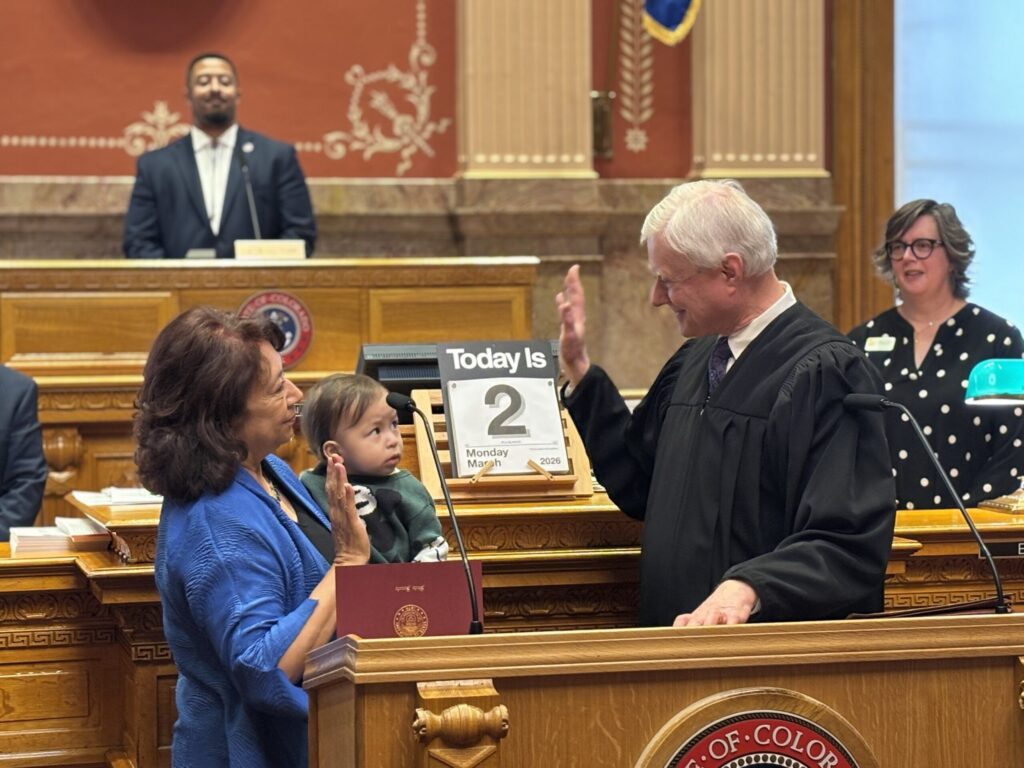
Sen. Adrienne Benavidez, D-Adams County, was sworn in Monday to the Colorado Senate, just four days after winning a vacancy election in District 21. She was sworn in by Colorado Court of Appeals Justice Lino S. Lipinsky de Orlov. Usually,...

Marianne Goodland
Reporter
Colorado Senate swears in Adrienne Benavidez after district vacancy win
Marianne Goodland
marianne.goodland@coloradopolitics.com
Updated 2 hours ago
Sen. Adrienne Benavidez, a Democrat from Adams County, was sworn in Monday to the Colorado Senate, just four days after winning a vacancy election in District 21. She was sworn in by Colorado Court of Appeals Justice Lino S. Lipinsky...
Marianne Goodland
Reporter

Aurora, Holmes reach settlement in First Amendment lawsuit
Kyla Pearce
kyla-pearce@denvergazette.com
Updated 3 hours ago
Aurora officials and activist MiDian Holmes (Shofner) announced a settlement Monday in a First Amendment lawsuit filed by Holmes almost a year ago. The lawsuit claimed the decision by Aurora City Council members to end public comment pending a decision...

Kyla Pearce
Reporter

Rural legislators, Colorado farmers defeat pollinator bill backed by Gov. Polis
Marianne Goodland
marianne.goodland@coloradopolitics.com
Updated 3 hours ago
A proposal to limit the use of neonicotinoid-coated crop seeds collapsed in the Senate Agriculture and Natural Resources Committee last week, as rural lawmakers, including two Democrats, joined Republicans to reject what they called an expensive, impractical mandate on farmers....
Marianne Goodland
Reporter

Competing overtime bills for agriculture workers split Colorado Democrats
Marianne Goodland
marianne-goodland@denvergazette.com
Updated 6 hours ago
Competing bills setting the overtime threshold for farmworkers have split legislators at the Colorado state Capitol, with one group saying a law passed in 2021 has harmed, rather than helped, farming operations and workers alike, while the other side insists...

Marianne Goodland
Reporter
Male wolf dies after capture attempt in Colorado
Marianne Goodland
marianne-goodland@denvergazette.com
Updated 10 hours ago
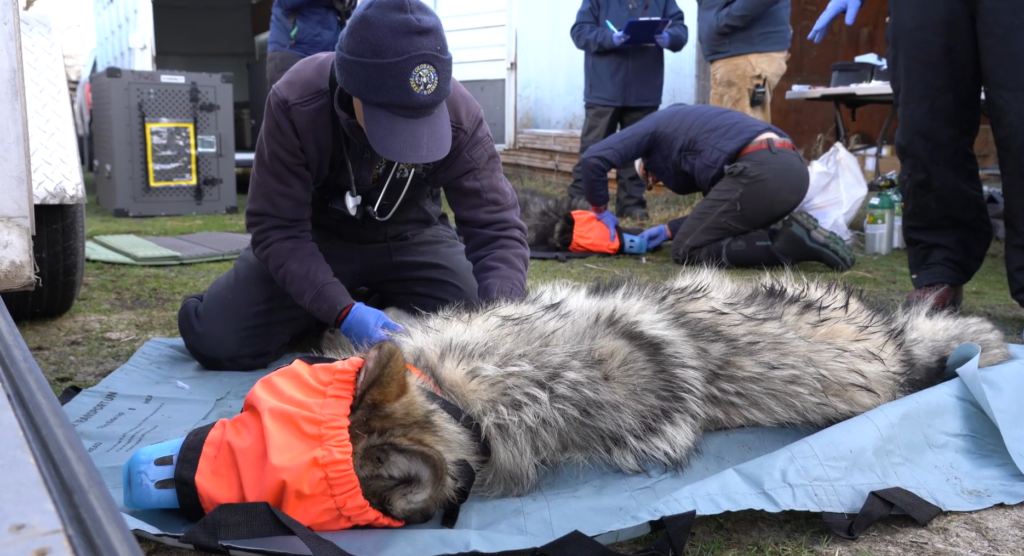
One of the original wolves brought to Colorado from Colorado has died after an attempt to capture it, the’s state wildlife agency said. The Colorado Parks and Wildlife identified the wolf as No. 2305 — meaning it was one of...
Marianne Goodland
Reporter

Additional thoughts on State of the Union address/rally | Cronin and Loevy
Tom Cronin Bob Loevy
tom-cronin-bob-loevy@gazette.com
Updated 2 days ago
The U.S. Constitution’s Article II states that “He (the president) shall from time to time give to the Congress Information of the State of the Union, and recommend to their Consideration such Measures as he shall judge necessary and expedient...

Tom Cronin Bob Loevy
Reporter
What is the state legislature trying to hide?| Vince Bzdek
Vince Bzdek
vince-bzdek@denvergazette.com
Updated 2 days ago
What is it that the State Legislature is trying to hide? A bill that passed out of committee last week lets governments squirrel away important public notices on their own websites rather than publishing them in newspapers and other news...

Vince Bzdek
Reporter
Cute puppy overload and an audition of a different kind: Capitol M | Week of Feb. 28, 2026
Marianne Goodland
marianne-goodland@denvergazette.com
Updated 4 days ago
The lighter side of the Capitol, and most days, you ought to be really grateful for it. There’s a rumor (jk) floating around that an amendment is coming for the bill to legalize prostitution. The amendment would ban condoms made...
Marianne Goodland
Reporter
PREV
PREVIOUS

Rural legislators, Colorado farmers defeat pollinator bill backed by Gov. Polis
A proposal to limit the use of neonicotinoid-coated crop seeds collapsed in the Senate Agriculture and Natural Resources Committee last week, as rural lawmakers, including two Democrats, joined Republicans to reject what they called an expensive, impractical mandate on farmers. Senate Bill 65 would have required farmers to obtain permission from third-party evaluators before using […]

Denver PrideFest moves locations with new events
The Center on Colfax announced a new location for Denver PrideFest and new activations in June. Denver Pride weekend will be held Saturday, June 27, and Sunday, June 28. PrideFest, a free festival, will be held on 16th Street from Arapahoe to Broadway, on Sunday, June 28, at 10 a.m. The Center on Colfax said shifting PrideFest […]