







Rural legislators, Colorado farmers defeat pollinator bill backed by Gov. Polis

A proposal to limit the use of neonicotinoid-coated crop seeds collapsed in the Senate Agriculture and Natural Resources Committee last week, as rural lawmakers, including two Democrats, joined Republicans to reject what they called an expensive, impractical mandate on farmers.
Senate Bill 65 would have required farmers to obtain permission from third-party evaluators before using crop seeds coated with neonicotinoid pesticides, also known as neonics.
But the committee’s rural lawmakers, including two Democrats, weren’t persuaded that the program sponsored by Democratic Sens. Katie Wallace of Longmont and Cathy Kipp of Fort Collins was the right step, killing the bill in a 2-5 vote last week.
Wallace claimed farmers are paying for a seed they don’t need. But farmers and advocates from the agriculture industry told the committee that forcing them into the program will result in poor crop yields and, worse, force already-narrow profit margins into the red.
The Colorado Department of Agriculture also took heat from lawmakers, who claimed the department didn’t work with farmers or seek a middle ground.
The proposed legislation also came with a cost that lawmakers were unlikely to approve in a budget year when the state faces a billion-dollar shortfall in funding existing programs.
The fiscal analysis for SB 65 said the Department of Agriculture would have to hire 160 third-party verifiers, expected to be specialists in entomology, who would inspect about 16,000 farms and millions of acres of farmland to determine whether the insects that damage crops were present. Under an amendment, the verifiers would have a week to turn around a report on whether to allow the farmer to use neonics.
The major crops affected by the program include corn and wheat — Colorado’s two largest crops — as well as alfalfa, barley, canola, millet, oats, rye, safflower, sorghum, soybeans and sunflowers.
Neonic-coated seeds are planted in the spring at the same time underground pests — most notably wireworms — are laying eggs and larvae are developing.
When the seeds germinate, the neonic protects the plant, making the insects “drunk and sleepy,” and they stop feeding. It’s a temporary solution while the crop is growing, as the pesticide doesn’t kill wireworms but gives the plant enough time to grow and survive, according to farmers.
Neonics contaminate groundwater, according to Wallace and environmentalists. Switching to non-coated seeds has worked in Quebec and Vermont, but that drew comments from lawmakers, some of whom are farmers, that Colorado’s agricultural environment is substantially different.
“This bill is about stewardship of our farmlands, our soil, our water, and our ecosystems as a whole,” Wallace said. “It is about recognizing that farmers deserve tools that work and not unnecessary expenses that primarily benefit chemical corporations.”
Kipp added that farmers who apply neonics every season, whether they need them or not, are hastening the day when the tool stops working entirely.
“Need-based use isn’t just better for our water and our children. It’s how you preserve an effective tool for future farmers who will actually need it,” Kipp said.
Sen. Byron Pelton, R-Sterling, pushed back on the claims that farmers don’t know what they’re doing.
“It’s a little bit insulting to tell a farmer he doesn’t know what’s best for his land when it comes to taking care and living off of the land,” he told the bill sponsors.
He also noted the bill would violate private property rights by forcing farmers to accept third-party verifiers onto their lands.
Wallace called the program a “partnership” and suggested that farm bureaus could participate. The Colorado Farm Bureau, however, opposed the bill.
Wallace also told the committee that the program’s operating costs would be paid by third-party verifiers and that farmers could spray to control pests.
Farmers who use neonics told Colorado Politics that the pests are underground and that spraying would not only be ineffective but also require considerably more chemicals.
“We believe in the stated outcomes sought by the bill sponsors and the proponents,” said Jordan Beezley, the lobbyist for the Department of Agriculture.
The bill drew the support of Gov. Jared Polis, who spoke in favor during his State of the State address in January.
Pelton reminded Beezley that the department’s mission is to support agriculture and added that not one farmer in his district supports the bill. He questioned why the department supports the measure, risking alienating farmers.
Beezley said the agency isn’t trying to alienate farmers and that the goal is to work with them to find a balance that minimizes impact on farmers and supports the environment.
Regarding who comes onto a farmer’s land, Beezley said farmers should hire someone they trust to do the verification work.
Farmers trust their bankers, seed dealers, and implement dealers, Pelton said. They don’t trust any layer of government that adds regulation and costs them more money, he added.
Former commissioner of agriculture Don Brown, whose family has been farming in Yuma County since 1908, told the committee that “there’s no bigger expert than somebody that has not done it for a living” and he’s done both, as a regulator and a farmer.
He pointed out numerous logistical problems with inspections and stated that the program needs much more thought.
Brown also addressed the fiscal analysis. The department based its estimate on an existing hemp program that Brown helped develop. He noted that a third-party verifier inspects, on average, about 38 acres per farm, but for neonics, the average would be closer to 26,000 acres.
“This hasn’t been well thought out,” Brown said.
Critics also questioned the science cited by the proponents of SB 65.
Darren Fields, Ph.D., an agronomist for Nutrien Ag Solutions, a seed dealer, told the committee that the likelihood of pollinator exposure is very low because crops are mostly planted in April and May, when adult pollinator populations are at their lowest.
Fields being planted have been cultivated to minimize vegetation, and as a result lack flowers that attract bees, he said.
“For a pollinator to encounter a treated seed, it would need to be present in the cool spring months in a field without flowers following behind equipment moving at five miles an hour, then burrowing below the surface into a closed furrow, which is just an unrealistic scenario,” he said.
Supporters — such as Drew Spini, who owns Drew Bee’s Honey and is president of the Pueblo County Beekeepers Association — cited the deaths of bee colonies.
In 2024, Spini left bees at a farm south of Pueblo. When he returned to get his bees, they were gone, he said.
“The boxes were empty. This wasn’t just any loss. This was complete collapse,” he said in written testimony.
He learned that corn was planted on a farm next to where his bees had been, and that neonic-coated seeds are used to plant corn. Beekeepers understand risk but, he said, “we must find new ways to coexist with farmers.”
“Bees and agriculture should not be enemies because bees are agriculture. Standing in a yard of 50 silent hives is a moment that stays with you,” he said.
Judy Smart, a professor at the University of Nebraska-Lincoln who specializes in pesticides and bees, pointed out that beekeeping operations have grown by more than 700%, from about 100 to over 1,000, since the late 1990s. But honey production has dropped by 22%, and the number of colonies that are providing pollination services has dropped 57%, from 25,000 colonies to only 11,000 colonies remaining as of 2024.
That shows that beekeeping can’t overcome the challenges posed by pesticide exposure, she said told the committee.
“The practice of pretreating seeds, despite questionable agronomic and economic benefit, forces growers into a chemical-dependent system,” she said.
After a hearing of more than three hours and dozens of witnesses, most of the committee wasn’t persuaded.
Sen. Nick Hinrichsen, D-Pueblo, said he heard universal opposition to the bill from the farmers in his district, which includes eastern Pueblo County.
There is a problem here, he said, and while he balks at regulation, he asked that people work on proposals and “not just a guttural rejection of regulations.”
Committee Chair Sen. Dylan Roberts, D-Frisco, said he was impressed by testimony by pediatricians who raised concerns about the impact of neonics on children’s health.
“I’m convinced we need to do something about toxins in our environment, bodies, and wildlife,” Roberts said.
The challenge of SB 65 is that the agriculture community and industry see the bill as a monumental change — and it is, Roberts said. Some measures seek little tweaks. SB 65, however, is a big step, and Roberts said the conversations on both sides haven’t happened.
He criticized the Department of Agriculture, saying it has had eight years to move forward with voluntary measures.
“If we’re going to make big changes in ag, they need to bring more people along,” he said.
To opponents of SB 65, Roberts said the issue isn’t going away.

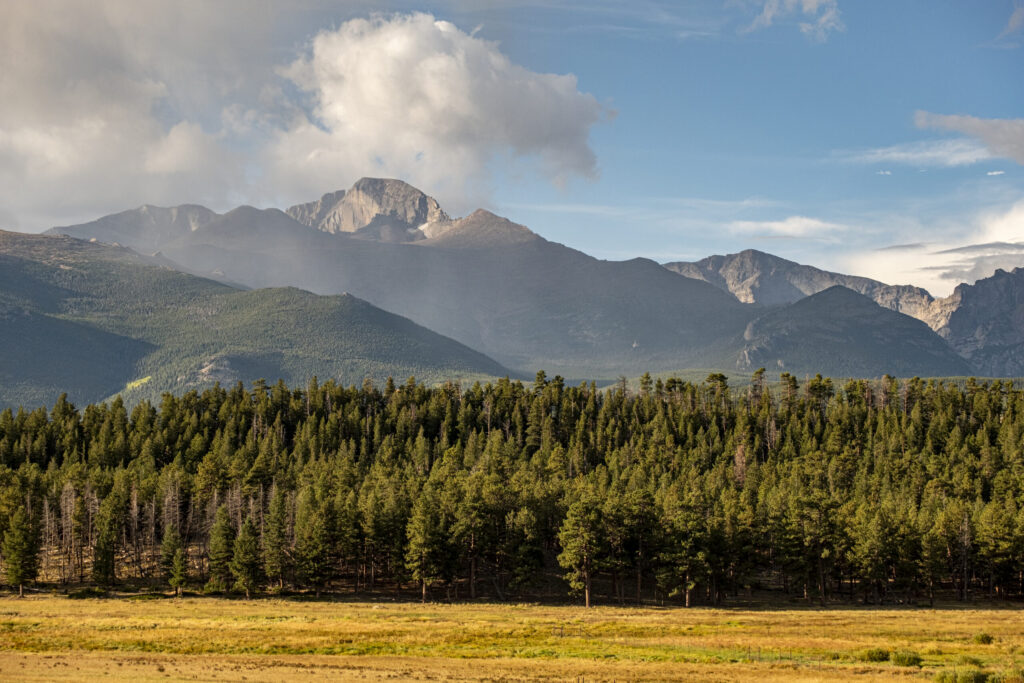
Metro Moves: Visit Estes Park names new executive
Bernadette Berdychowski
bernadette.berdychowski@denvergazette.com
Updated 1 hour ago
Welcome to the Denver Gazette’s Metro Moves. You’ll get the latest metro Denver openings, closings, hiring and promotion news here. To submit your company’s news, drop an email to bernadette.berdychowski@denvergazette.com. The tourism agency representing the gateway city into Rocky Mountain National...

Bernadette Berdychowski
Reporter

Denver police investigate homicide after man assaulted
Jacob Mauk
jacob.mauk@denvergazette.com
Updated 7 minutes ago
Denver police are investigating the death of a man killed in an assault early Sunday morning as a homicide. Just after 2 a.m., the police received a report of an assault in the 9700 block of East Hampton Avenue, said...

Jacob Mauk
Reporter
Colorado Senate swears in Adrienne Benavidez after SD 21 vacancy win
Marianne Goodland
marianne.goodland@coloradopolitics.com
Updated 2 hours ago
Sen. Adrienne Benavidez, D-Adams County, was sworn in Monday to the Colorado Senate, just four days after winning a vacancy election in District 21. She was sworn in by Colorado Court of Appeals Justice Lino S. Lipinsky de Orlov. Usually,...
Marianne Goodland
Reporter
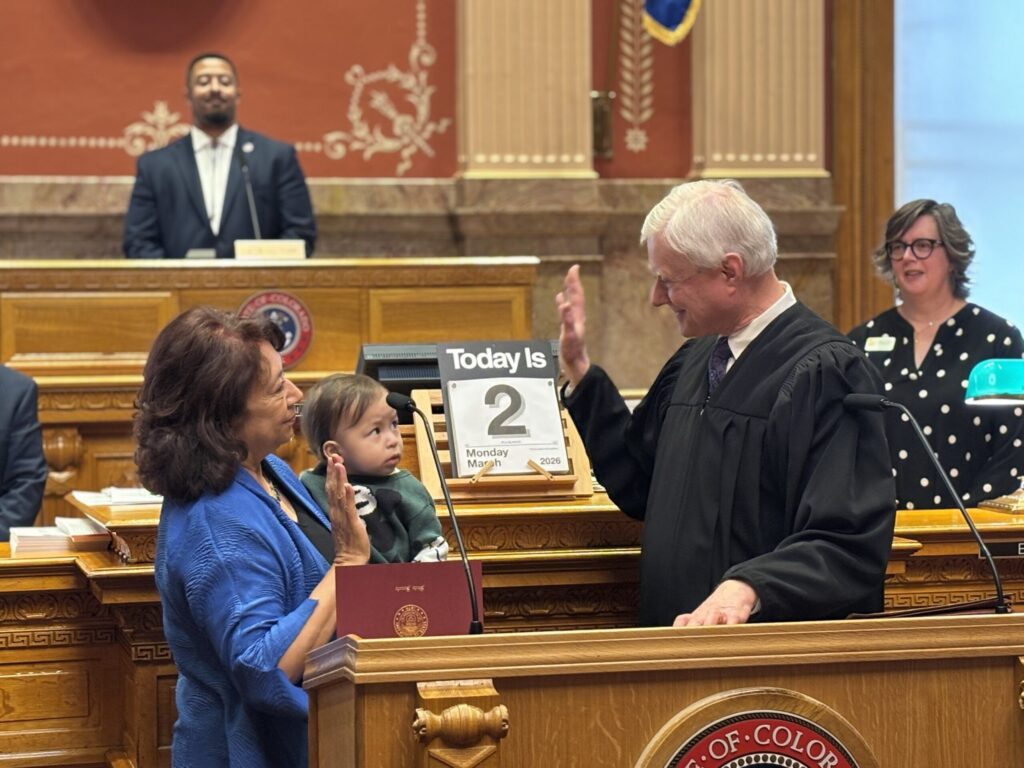
Colorado Senate swears in Adrienne Benavidez after district vacancy win
Marianne Goodland
marianne.goodland@coloradopolitics.com
Updated 1 hour ago
Sen. Adrienne Benavidez, a Democrat from Adams County, was sworn in Monday to the Colorado Senate, just four days after winning a vacancy election in District 21. She was sworn in by Colorado Court of Appeals Justice Lino S. Lipinsky...
Marianne Goodland
Reporter

Aurora, Holmes reach settlement in First Amendment lawsuit
Kyla Pearce
kyla-pearce@denvergazette.com
Updated 2 hours ago
Aurora officials and activist MiDian Holmes (Shofner) announced a settlement Monday in a First Amendment lawsuit filed by Holmes almost a year ago. The lawsuit claimed the decision by Aurora City Council members to end public comment pending a decision...

Kyla Pearce
Reporter

Man accused of killing wife, staging her suicide charged with first-degree murder
Kyla Pearce
kyla-pearce@denvergazette.com
Updated 4 hours ago
A grand jury announced the indictment Friday of 52-year-old Ronald Lowry, who is accused of killing his wife in October 2023 and staging the crime scene to look like a suicide. Lowry, who was arrested Friday in Morgan County, was...
Kyla Pearce
Reporter

Denver PrideFest moves locations with new events
9News
9news@denvergazette.com
Updated 4 hours ago
The Center on Colfax announced a new location for Denver PrideFest and new activations in June. Denver Pride weekend will be held Saturday, June 27, and Sunday, June 28. PrideFest, a free festival, will be held on 16th Street from Arapahoe to...

9News
Reporter

Denver mayor says his commute time tripled following ‘road diet’ change
Mark Samuelson
mark-samuelson@denvergazette.com
Updated 55 minutes ago
Mayor Mike Johnston is pushing back sharply against the claim by Denver councilmembers and bike activists that the city succumbed to lobbying pressure in revising a “road diet” plan for East Alameda Avenue, while noting that his own commute time...

Mark Samuelson
Reporter

Denver could challenge record-high temperature on Monday
Daniel Boniface
dan.boniface@denvergazette.com
Updated 9 hours ago
Near-record warmth is on tap in Denver on Monday, forecasters said. The National Weather Service in Boulder calls for a high of 72 degrees under partly sunny skies on Monday out at Denver International Airport, the city’s official weather monitoring...

Daniel Boniface
Reporter

Competing overtime bills for agriculture workers split Colorado Democrats
Marianne Goodland
marianne-goodland@denvergazette.com
Updated 6 hours ago
Competing bills setting the overtime threshold for farmworkers have split legislators at the Colorado state Capitol, with one group saying a law passed in 2021 has harmed, rather than helped, farming operations and workers alike, while the other side insists...

Marianne Goodland
Reporter
PREV
PREVIOUS

WATCH: Trump speaks on Iran
U.S. President Donald Trump spoke on Monday, March 2, 20026, about the conflict in Iran as he awards three U.S. soldiers the Medal of Honor. Watch the replay below.

Denver mayor says his commute time tripled following 'road diet' change
Mayor Mike Johnston is pushing back sharply against the claim by Denver councilmembers and bike activists that the city succumbed to lobbying pressure in revising a “road diet” plan for East Alameda Avenue, while noting that his own commute time has tripled following changes at another major artery. He also said he’s worried that restricting […]