







Aurora’s quiet crisis — civic disengagement | Michael A. Hancock
Aurora is Colorado’s third-largest city. It has more than 270,000 registered voters, a diverse population, and a growing economic footprint along the Front Range. Yet when Aurora holds municipal elections, the number of people who actually determine the city’s political direction is astonishingly small.
In some races, the winning candidate receives barely 36,000 votes.
Do the math. That means the governing mandate of a major American city can rest on the support of roughly 13 percent of eligible voters.
This is not a healthy democracy. It is a warning sign.
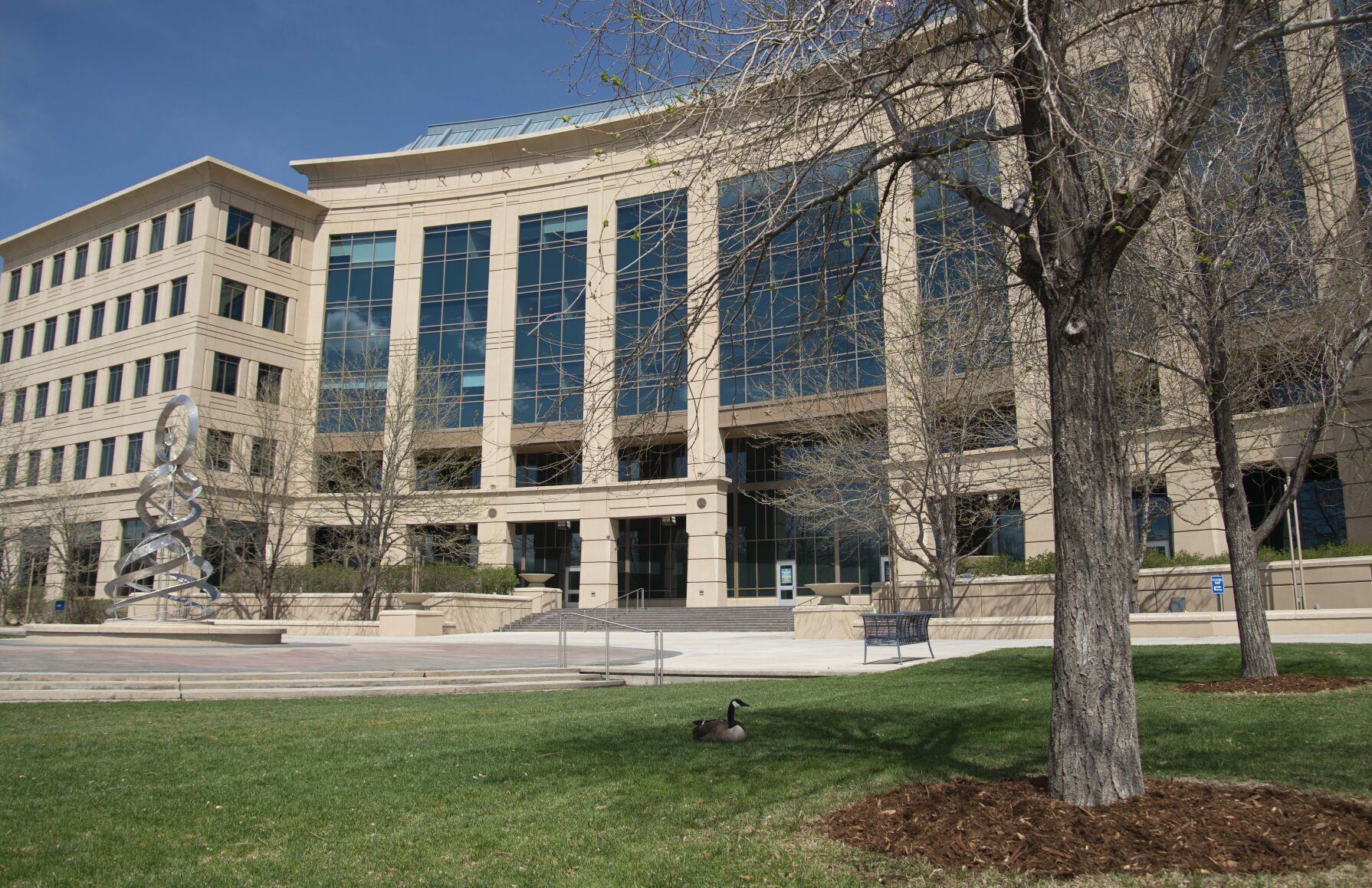
The Aurora City Hall on May 4, 2023.
Aurora’s political problem is not simply ideological division. It is something deeper and more corrosive: a cycle in which governance increasingly detached from everyday concerns produces voter disengagement, and that disengagement in turn empowers the very political dynamics that caused it.
In other words, Aurora risks entering a quiet but dangerous spiral of civic withdrawal.
Low voter participation is often treated as a mystery. It shouldn’t be. Political participation declines when people conclude that their participation no longer matters.
When a small number of highly motivated ideological activists dominate the political process, elections begin to reflect the priorities of that narrow group rather than the broader public. Ordinary residents — people raising families, running businesses, commuting to work — look at the process and see little reason to invest their time or energy.
The result is an illusion of democratic mandate.
Elections still occur. Candidates still win. But the decisions guiding the city increasingly reflect the preferences of a thin slice of the electorate.
This dynamic has become increasingly visible in many American cities where progressive political movements have consolidated influence. Municipal governance begins to drift away from practical problem-solving and toward ideological signaling.
Language politics replace clear policy. Symbolic resolutions multiply. Bureaucracies expand. Public meetings become forums for ideological affirmation rather than pragmatic debate.
Meanwhile, the issues that matter most to residents — public safety, infrastructure, housing affordability, and economic opportunity — often feel secondary.
When city government begins to operate in this way, something subtle but profound occurs in the psychology of the citizenry.
People stop feeling that government belongs to them.
City Hall becomes something distant — an arena dominated by activists, insiders, and professional political voices rather than ordinary residents. The sense of shared civic ownership erodes.
And when that happens, participation declines.
This is how the spiral begins.
Step one: policy choices and political culture alienate a broad portion of the public.
Step two: those citizens withdraw from the political process.
Step three: the remaining electorate becomes smaller and more ideologically concentrated.
Step four: the policies produced by that smaller electorate become even more detached from the broader population’s concerns.
The cycle then repeats itself.
Over time, this pattern can become self-reinforcing. Each election sees fewer participants. Each cycle concentrates influence further in the hands of organized ideological blocs.
The city continues to be governed. But the connection between citizens and their government steadily weakens.
The cost of this dynamic is not merely political. It is civic.
A healthy city depends on something more than budgets, zoning codes, and council meetings. It depends on civic ownership — the widespread belief that the direction of the community belongs to its residents.
When people believe their voices matter, they participate. They vote. They attend meetings. They challenge policies. They help shape their city’s future.
But when people come to believe that decisions are predetermined, that dissent is unwelcome, or that political outcomes are controlled by narrow interest groups, a different psychological response takes hold.
They disengage.
A city cannot thrive under those conditions.
Aurora is not a declining community. Quite the opposite. It is one of the most dynamic and rapidly growing cities in Colorado. Its population is entrepreneurial, diverse, and ambitious. Its economic potential is enormous.
But growth alone does not guarantee a healthy civic culture.
A city that continues to expand economically while its citizens retreat politically is building on unstable foundations.
Democracy does not collapse in dramatic fashion at the municipal level. It fades gradually. Participation shrinks. Accountability weakens. Public institutions become less responsive to the people they serve.
Aurora is not there yet. But the warning signs are visible.
The solution is not ideological purity in one direction or another. Cities function best when they focus on practical governance: safe streets, functional infrastructure, economic vitality, and responsive public institutions.
Equally important is restoring a political culture that welcomes genuine civic participation rather than narrowing the conversation to activist circles.
Aurora’s future should not be determined by the most organized ideological minority. It should be shaped by the broad participation of the community itself.
Breaking the spiral of civic disengagement requires something simple but powerful: citizens who once again believe their involvement matters.
Because the most dangerous threat to democratic governance is not political disagreement.
It is when the majority of citizens quietly decide that showing up is no longer worth the effort.
The remedy is simple: show up, participate, and reclaim ownership of the city we all share.
Michael A. Hancock is a retired high-tech business executive and a Coloradan since 1973. Originally from Texas, he is a musician, composer, software engineer and U.S. Air Force veteran whose wide-ranging interests – from science and religion to politics, the arts and philosophy – shape his perspective on culture, innovation and what it means to be a Coloradan.


Colorado’s Jason Crow misfires over Iran | Jimmy Sengenberger
Jimmy Sengenberger
jimmy-sengenberger@denvergazette.com
Updated 3 days ago
Over the weekend, President Donald Trump ordered Operation Epic Fury — a bold strike on Iran, conducted in tandem with the Israeli Defense Force. Some 40 members of Iran’s most senior political and military leadership were taken out in short order — including brutal...

Jimmy Sengenberger
Reporter

GUEST COLUMN: Another attempt at a fur ban? Still a ‘no’
Luke Wiedel
lwiedel@gmail.com
Updated 3 days ago
The Colorado Parks and Wildlife Commission (CPWC) will consider a petition to impose a statewide ban on the sale of fur at their March 4-5 or May 6-7 meetings. If you’re a Denver voter hearing about this petition for the...

Luke Wiedel
Reporter

Legislation on poison, poultry and prostitution dominate | Rachel Gabel
Rachel Gabel
rachel-gabel@denvergazette.com
Updated 3 days ago
Many weeks, my search history is odd but the past two weeks might worry our county sheriff if he didn’t know me as well as he does. This week has been the week of poison, poultry, and prostitution. Not to...

Rachel Gabel
Reporter
PERSPECTIVE: Jailbreak — Legislative Dems look to empty Colorado’s prisons
George Brauchler
george-brauchler@denvergazette.com
Updated 3 days ago
Colorado Democrats are working feverishly this legislative session to increase the rate at which convicted felons are released from our prisons back onto our streets. They claim they must, because of overcrowding and cost. Do not fall for that lie. ...

George Brauchler
Reporter

Are Colorado businesses leaving or evacuating? | Jon Caldara
Jon Caldara
jon-caldara@denvergazette.com
Updated 7 days ago
At this point, if you hear beeping downtown, it’s not a construction crew. It’s a company backing out. And look, I get it. Businesses relocate for all sorts of reasons: taxes, regulations, labor costs, office space, crime, commute times, the...

Jon Caldara
Reporter

GUEST OPINION: Generosity has defined Colorado for 150 years
Kyle Hybl
khybl1@gazette.com
Updated 6 days ago
What does it look like when a state takes care of its own? It looks like neighbors opening their homes to families displaced by wildfire. Volunteers standing shoulder to shoulder, offering food, clothing, and hope to people they have never...

Kyle Hybl
Reporter
Additional thoughts on State of the Union address/rally | Cronin and Loevy
Tom Cronin Bob Loevy
tom-cronin-bob-loevy@gazette.com
Updated 5 days ago
The U.S. Constitution’s Article II states that “He (the president) shall from time to time give to the Congress Information of the State of the Union, and recommend to their Consideration such Measures as he shall judge necessary and expedient...

Tom Cronin Bob Loevy
Reporter

What is the state legislature trying to hide?| Vince Bzdek
Vince Bzdek
vince-bzdek@denvergazette.com
Updated 5 days ago
What is it that the State Legislature is trying to hide? A bill that passed out of committee last week lets governments squirrel away important public notices on their own websites rather than publishing them in newspapers and other news...

Vince Bzdek
Reporter
Cute puppy overload and an audition of a different kind: Capitol M | Week of Feb. 28, 2026
Marianne Goodland
marianne-goodland@denvergazette.com
Updated 7 days ago
The lighter side of the Capitol, and most days, you ought to be really grateful for it. There’s a rumor (jk) floating around that an amendment is coming for the bill to legalize prostitution. The amendment would ban condoms made...

Marianne Goodland
Reporter
Union kills safeguards for Colorado schoolkids | Jimmy Sengenberger
Jimmy Sengenberger
jimmy-sengenberger@denvergazette.com
Updated 7 days ago
Without giving it a second thought, Democrats on the state Senate’s “kill committee” shot down a bill to keep dangerous public school employees from quietly moving between districts — even as supporters and critics alike urged amendments to make it work. Republican Sen. Mark Baisley, whose legislative...
Jimmy Sengenberger
Reporter
PREV
PREVIOUS

EDITORIAL: Downgrading murder equals justice deformed
It might sound like an overstatement to say Colorado’s offender-friendly legislature is hellbent on decriminalizing crime itself. But, really, what else could you make of House Bill 26-1281, introduced just the other day at the state Capitol? Get ready to blink in disbelief. Members of the “justice reform” fringe among ruling Democrats at the legislature […]

EDITORIAL: Denver’s restaurants are still reeling
Denver’s restaurant industry is in turmoil. While much of the rest of the country’s restaurant markets have bounced back from the pandemic, a new report from the Denver Restaurant Liaison Project found that Denver’s eateries continue to face “structural contraction, not recovery.” The city’s economic development department, Visit Denver and inKind created the project to […]