







The case for our artists as everyday heroes
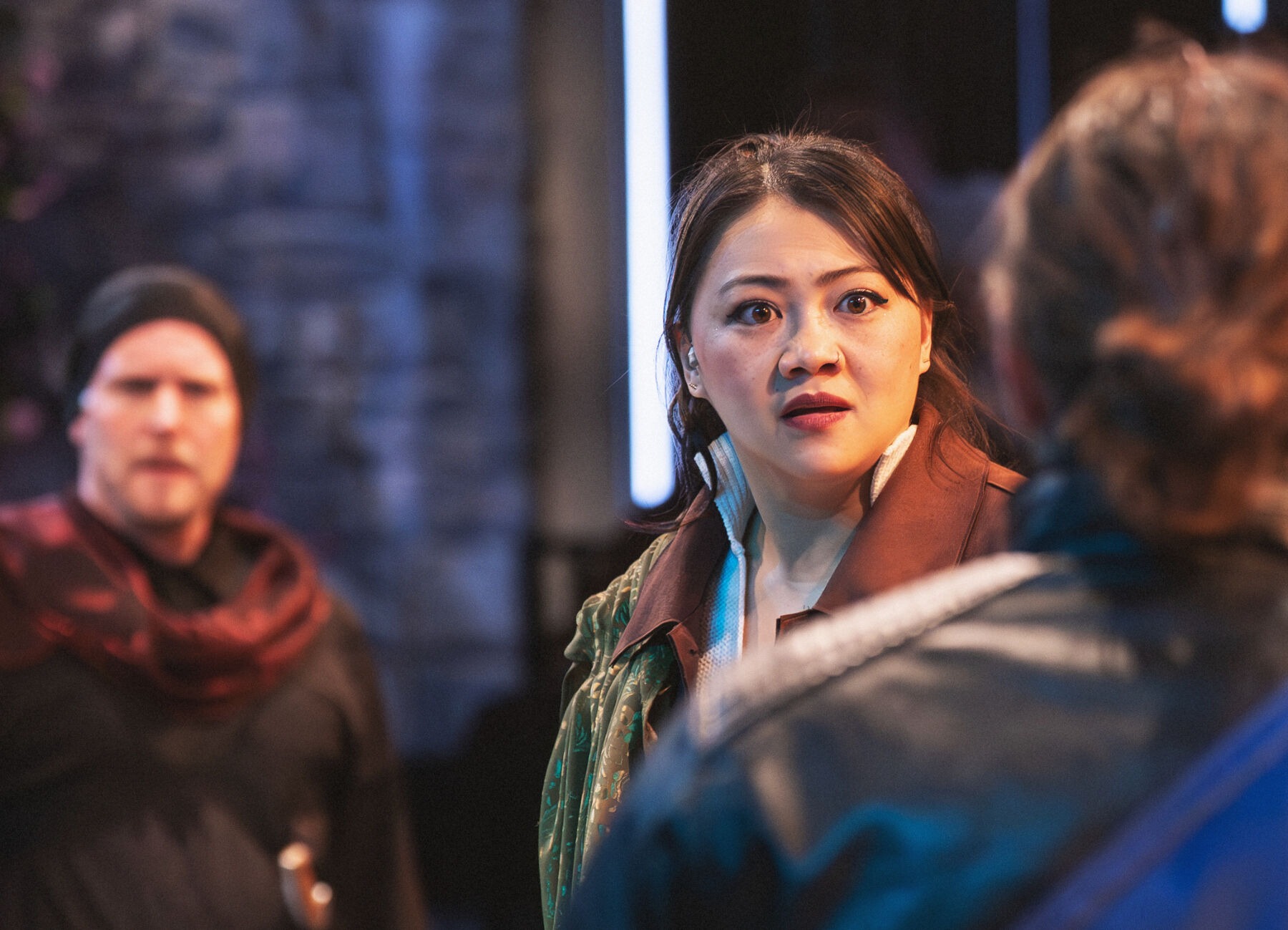
The work is short and inconsistent. The pay is lousy. They’re underfunded. Man, are we lucky to have artists who do it anyway.
Why is it so hard to be a working artist?
In my professional life as a journalist covering the arts in Colorado over the past 25 years, that timeless question has come up more than any other.
There are many reasons, starting with three biggies: the soaring cost of housing here, the inconsistency of income opportunities for actors living from gig to gig, and living in a society that does not value the arts enough to adequately fund them (publicly or privately).
How strange, then, that we treat celebrities like gods for the stories they tell on our screens – but we don’t think twice that the local actors who just thrilled and engaged us in a homegrown musical around the corner might be working on a $200 stipend for two months of work.
A local actor named Justin Pappas posed this largely rhetorical question on Facebook last week: “Is anyone able to actually make a decent living off theater alone? I’m not talking about acting and waiting tables. I’m talking: Does anyone in Colorado make enough money from working onstage to take a family on a ski trip once a year?”
The short answer is yes, a handful of actors and directors and designers just might string together enough gigs to scrape together a modest living for any given year. But over a lifetime? Almost never – not without an alternate source of income. And to also support a family? Forget it. Oh, and that ski trip might be more like … well, an overnight camping trip.
Which isn’t to say there are not sustainable jobs in the arts in Colorado. That’s why exploring this very question is liable to inflict some whiplash. Because “having jobs in the arts” is not the same as “having a significant number of sustainable jobs for artists.” Not by a long shot.
On the one hand, advocacy journalists like me are always trumpeting the Colorado Business Committee for the Arts’ biannual Economic Activity Study, which most recently announced there were 14,466 jobs at arts, culture and scientific organizations in the metro area in 2024. That marked an all-time high for the sector, representing a 6.8% increase in employment from 2022. The CBCA’s data is pulled from the 300-plus nonprofits that receive funding from the metro-area Scientific and Cultural Funding District (SCFD).
The arts are often dismissed as a drain or a handout because they are largely subsidized. But those subsidies might alternately be described as “sound economic investments,” because arts and culture add $1.2 trillion to the U.S. economy every year, according to data from the National Endowment for the Arts and the Bureau of Economic Analysis. The arts represents 4.2% of the nation’s entire GDP. Colorado, it further says, ranks 16th among states in “value added to the economy,” even though it ranks just 21st in population.
The arts need apologize to no one for being a smart investment.
Which doesn’t mean actors are making a decent living from acting – or taking their kids for a weekend at Winter Park. Even the astonishing actors you see performing with the Denver Center Theatre Company – essentially the local arts community’s equivalent of playing for the Broncos – are working from gig to gig and will be unemployed again in a few weeks.
Which is why my response to Mr. Pappas’ social-media inquiry read pretty much thusly:
Most of the sustainable arts jobs in Colorado do not go to artists. They are full-time positions in administration, fundraising, education and marketing. The Denver Center for the Performing Arts, for example, supports dozens of full-time jobs in those areas. Most year-round arts organizations support a smaller number of similarly sustainable full-time jobs.
“But only a handful of actors manage to cobble together a full-time living with no supplemental outside income sources because of the existential nature of having to hustle from one employer to another every few weeks.
I’ve written about the miracle anomaly that is Buntport Theater, a self-sufficient collective of five who have managed to pay themselves a modest annual salary for 25 years. But the majority of those who act, and only act, are part of a two-income family that allows for the dips and flows of unpredictable employment swings.
The Denver Center supports dozens of artists, on stage and off, to varying extents. A handful of designers and educators are full-time staff members. The next tier are the dozens of craft artists – technicians, set and props builders, painters and crew – who land seasonal contracts ranging from seven to nine months. But even those folks have to scramble to find a summer gig to round out an annual income. Then start over again the next year.
It’s possible, but not easy. Those who make it work are very blessed, very brave and, regrettably, very rare.
(Side note: At least five of our most successfully employed film and stage actors in Denver have something in common: They double as professional Realtors.)
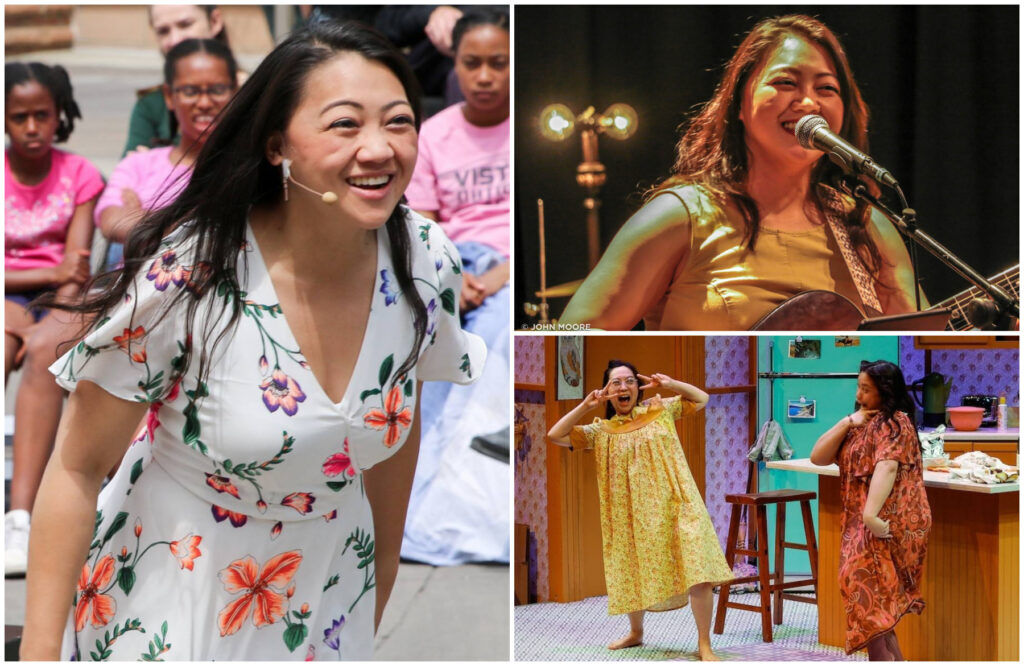
Looks like she made it
One scrambling success story is 35-year-old actor, director, teaching artist and indie musician Jenna Moll Reyes, who is presently playing Benvolio (through March 29) in the Arvada Center’s “Romeo and Juliet.”
Shakespeare has been very good to Moll Reyes, who estimates she’s appeared in nearly 700 performances of “R&J” – thanks mostly to a years-long gig she had performing a 45-minute distillation of the tragedy at high schools across the state as part of DCPA Education’s “Shakespeare in the Parking Lot” program.
She once performed the play six times in one day.
Moll Reyes is one of about 800 Colorado members of Actors Equity, a widely expanding union of live entertainers that offers health insurance as a benefit for some. Membership also means the theater companies that hire Equity actors and stage managers must pay them a decent minimum weekly wage for the short time they are employed.
When Moll Reyes works out her 2025 taxes, she figures she will be reporting income from at least nine different employers. She directed shows for two Colorado Springs theatre companies and created a supporting role in the world premiere of a play called “National Bohemians” for the Miners Alley Performing Arts Center in Golden. Next, she will be appearing in Alanis Morissette’s “Jagged Little Pill” at the Colorado Springs Fine Arts Center.
Most acting gigs in Colorado last between five and eight weeks. Moll Reyes has twice landed the Holy Grail of actor employment in Colorado: The Denver Center’s long-running Off-Center programming. Moll Reyes was gainfully employed for six months of 2022 performing in David Byrne’s “Theater of the Mind,” and last year struck lightning a second time by being part of the equally ambitious “Sweet and Lucky: Echo,” which not only closed three months early, the Denver Center ended its entire Off-Center programming line with that show.
But Moll Reyes has stayed busy by picking up freelance gigs as a coach for students, a professional photographer, a bar manager and a vocalist for hire. When she gets in a pinch, she’ll pick up a gig performing at children’s princess parties through a company called Wands and Wishes. It’s hard. It’s unpredictable. There’s no safety net. But she makes it work. Even if it means sharing a house with six of her best friends, college-style.
But that’s the thing. Eventually, most Colorado artists who climb onto the artist hamster wheel eventually get off in favor of a traditional, single-salaried job that brings them all the benefits and boring stability that most young adults long for. But if you were born with an artist’s soul, all it will cost you is your dreams.
Moll Reyes wouldn’t have it any other way.
“I think I’m much happier working all these arts- and theater-related jobs than I would be working at a (regular) job,” she said. “I tried making money being a full-time bartender – and it was just kind of sucking my life out. But when I am doing five different jobs at once that are all theater-related, that’s when I am the most fulfilled. Even though it’s a lot, it’s still transferring all that creative energy into something positive.”
And Moll Reyes is hardly alone. There’s Colleen Lee, who acts, directs, takes production photos and works in marketing. Shannan Steele is an actor, director, choreographer and single mom who also happens to be a doctor of physical therapy and operates her own business. The list goes on and on.
To me, it is their willingness to do life the hard way that makes them everyday heroes.
So why do they do it?
This question: – “Why is it so hard to be a working artist?” – is a bit personal for me because in 2013, I founded a nonprofit called The Denver Actors Fund specifically to help Colorado theater artists onstage and off to pay down their medical bills. And that inevitably leads to my very most favorite question:
What makes artists so special?
In a word: Everything.
Not just the bravery to step on a stage and transform and transport us. The bravery to pursue this gypsy life in the first place.
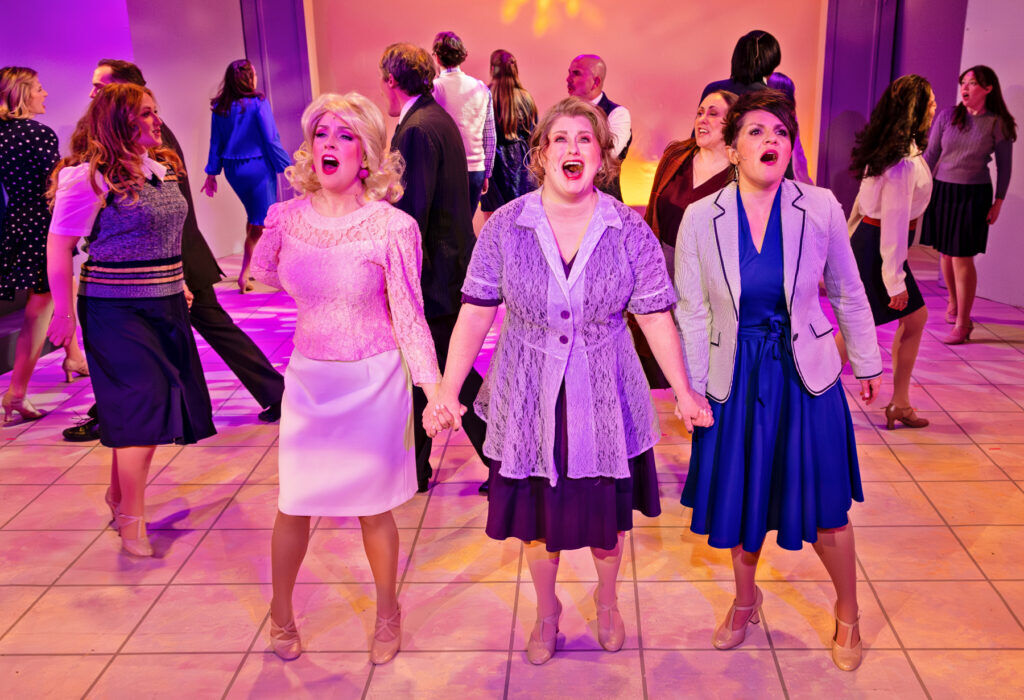
The other night, I stood before a sold-out house at a performance of Vintage Theatre’s “9 to 5, The Musical.” (Wanna feel old? I couldn’t find anyone in attendance who had seen the 1980 source movie that forever changed workplace dynamics in America.)
I told that audience a little about the Denver Actors Fund, and why it is such a necessary safety net for artists at some of the scariest times of their lives. (Our catchphrase: “For when you break a leg.”)
It turned out that we have helped 10 people who are part of making ”9 to 5” to pay down their medical debt by a combined $35,000. Miscarriages. Skin cancer. Two gall bladders. A back injury. A mammogram. Emergency dental. Mental-health care. A brain aneurysm, for crying out loud.
They all had some health insurance. But does anyone have good health insurance? Artists are always living on the economic edge. So when they get hit by a medical crisis, they get hit harder than most. They get hit with a balance that’s often the equivalent of taking out a seven-year loan to buy a used car. God help them if their dog gets hit by a car.
Many of them, like Moll Reyes, are already chasing every available tiny stream of income at once. Where are they supposed to find the time and the capacity to come up with another $300 a month to send off to a medical bill collector? By going out and finding a third, or fourth, or fifth job.
For many in this cast, $35,000 in medical debt is the difference between doing the show and finding yet another job to pay it off. And if they’re not in the show … you see a different show. A lesser show.
I just don’t think enough people realize how lucky we are that so many hundreds of artists in our community are willing to take on such a difficult, risky, uncertain life when that means dancing through time on the poverty line. If they weren’t, we would have no arts at all.
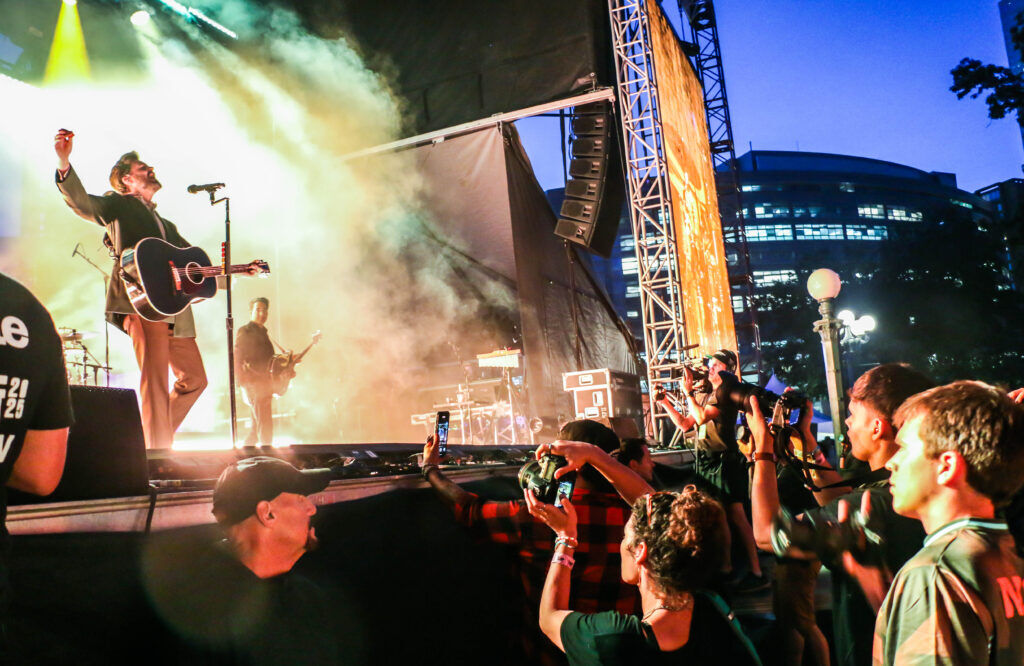
Imagine a world with no plays to see. No concerts to attend. No films to take in. No operas. No ballets. (I’m looking at you, Chalamet). No summer music festivals. No art walks. No dances. No screening of “The Lord of the Rings: The Two Towers” with live music from the Colorado Symphony. (That’s coming March 27-29). Because the artists who bring all that into our lives decided to play it safe and live a life that’s more of a sure thing.
The reasons for not being a working artist in the United States pile and pile on top of each other. Income volatility leaves little margin. The market is small, but the supply is huge. Growing competition from AI. Public funding is collapsing. Our society has been taught to fundamentally undervalue art. Gig economics require any artist to also be their own marketer, grant writer, accountant and publicist. Healthcare costs are skyrocketing. COVID broke Americans’ habit of going out and experiencing live art. Journalism about the arts has further diminished. Social media has created exposure but not necessarily revenue.
Whatever safety net an artist once had now seems more like a rickety old suspension bridge.
The vulnerability isn’t about artists being irresponsible or impractical. It’s about the viability of a freelance workforce operating inside the most expensive health-care system in the developed world.
That leaves artists no time to rest.
“I think for a lot of people like me who are working a million theater jobs at once, we want to do it – and we are always under the mindset of, ‘We’ve got to hustle,’” Moll Reyes said.
So why does she live her life this way? Because that’s the world she wants to live in.
“I think theater cultivates fellowship and community in a similar way that church does,” she said. “We’re just facilitating a different conversation in a different way. And I think that’s super important because right now our society needs catharsis and escape and understanding, and theater artists allow for that space to be created. We bring people in, just like churches do. And it does create this strong community, both for the artists and for those people who just step in for a brief moment to get away from their 9 to 5 for a few hours.
“And without theater artists out there hustling … who’s going to provide that service?”
John Moore is the Denver Gazette’s Senior Arts Journalist. Email him at [email protected].