







Colorado Democrats pass union fee bill, even after Polis signals another veto
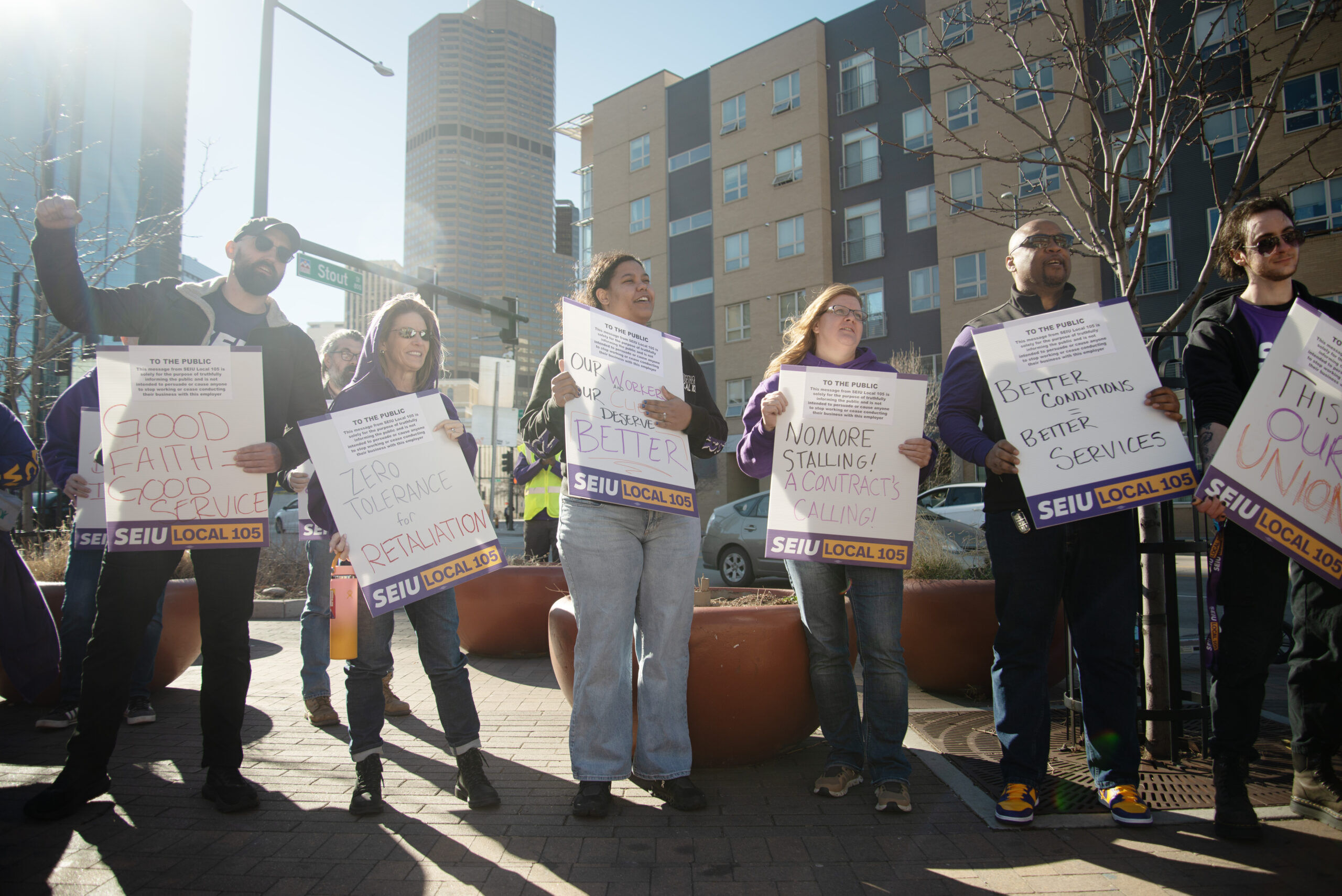
The Colorado House on Monday advanced along party lines legislation repealing a longstanding labor law governing a requirement before a unionized workplace can collect fees on all workers, regardless of whether they are union members.
The House voted, 42-22, to send the proposal to repeal that second election requirement under the state’s current laws to the Senate after a similar proposal was vetoed by Gov. Jared Polis in 2025.
Polis already signaled his year that he will likely veto the measure again — unless labor and business can reach a deal.
Democrats have argued the change would strengthen workers’ ability to organize and negotiate higher wages, while Republicans say eliminating the second vote would force employees to pay union representation fees without sufficient consent.
The proposal does not actually deal with a workplace’s ability to unionize, since organizing itself is governed by federal law. For that election, a labor group must receive a simple majority to unionize.
What makes Colorado’s 80-year-old law unique is that it requires a second election before a unionized workplace can establish a “union security agreement,” which allows unions to collect dues or representation fees from all workers, including non-members.
That second vote requires approval from at least 75% of workers. The 2026 labor-backed bill would eliminate the requirement for that second election.
While the bill passed both chambers in 2025, Polis vetoed it, as he had promised, citing worries that it would require mandatory dues deductions for all employees in unionized workplaces, regardless of union membership.
Polis has said he is “disappointed” that Democratic lawmakers reintroduced the measure in 2026 and has maintained that he will sign it into law only if labor and business groups reach a compromise.
The sponsors of this year’s bill — Reps. Javier Mabrey, D-Denver, and Jennifer Bacon, D-Denver — said they are bringing it back to show their commitment to workers across the state, particularly at a time when, they contended, their rights are being jeopardized at the federal level.
“We’re back because the problem did not go away; it has only gotten worse,” Mabrey said. “Costs keep rising, workers are under attack like never before, and the president is gutting worker protections provided by the Department of Labor and OSHA (Occupational Safety and Health Administration).”
States like Minnesota and Washington are often named some of the best places to work in the country, Mabrey said, and both of them have high union density.
While there have been a number of bills introduced over the past few years addressing affordability, very few have addressed wages, he said.
“Yes, it is about how much we are spending for housing, for food, for health care, basic necessities and entertainment, but it is also about purchasing power and how much workers are paid, and this bill addresses that part of the affordability crisis,” he said.
Republican House members said they don’t support the measure not because they don’t support unions — but because they don’t believe the bill would achieve what sponsors say it would.
“This bill is not about affordability,” said Rep. Rebecca Keltie, R-Colorado Springs. “Give me a break. This bill is just the opposite. This bill is about trying to rip money out of people’s pockets without their consent.”
Keltie said the second election protects workers who don’t want to pay union representation fees and removing it would be a “violation of free will.”
Assistant Minority Leader Ty Winter, R-Trinidad, said the bill does nothing to make life more affordable for everyday working people.
“I think the fight for workers should center around making the dollar that is earned stretch further, instead of being stepped on over and over and over again by legislation passed in this building,” he said, adding that the state is “killing good-paying jobs” in industries like oil and gas and mining.
“We can’t cut jobs and bring a bill like this and ride in on a white horse and save it all,” he said.
In the Senate, the bill is sponsored by Sens. Jessie Danielson, D-Wheat Ridge, and Iman Jodeh, D-Aurora.
Business and labor have been divided on the measure since it was introduced last year. At the time, the governor told both groups he would not sign the measure into law unless they could reach a compromise. As the end of session loomed, the governor pushed for a deal.
During the negotiations, all three sides — business, labor and the governor’s office — each put forth their own proposals:
• The business community agreed to lower the vote threshold in order to permit a union to begin negotiating over what labor groups called “representation fees” — the dues on non-union members. Under this offer, if, in the election to form a union, a simple majority of employees eligible to vote or 66% of workers who show up to cast a ballot say “yes,” then the labor group automatically gets the permission to negotiate over the fees. No second election is necessary. This position moves business from its starting point of a 75% threshold.
• The labor coalition wanted a lower threshold: If 53% of the workers who show up to vote in the first election say yes, then the labor group is authorized to negotiate over the fees. Under that scenario, a second election is also unnecessary. If the labor group failed to clear that threshold in the first election, a second election is necessary, under which the union must only secure a simple majority — 50% plus 1 — of the workers who show up to vote.
• The governor’s final offer had not been made public, but sources said it’s very similar to his previous offer, with some tweaks. For bargaining units of under 50 employees, 66% of those workers must show up to vote in the first election to unionize and 66% of ballots cast must vote in favor. For units with over 50 members, the threshold changes to 55%. If the thresholds are met, then a union is automatically permitted to pursue “union security.” That also applies if 50% plus one of the total workforce, regardless of workforce size, supports unionization.
