







Audit analysis shows DPS has carried more obligations than assets for two decades

Denver Public Schools has carried more obligations than unrestricted assets since at least 2005 — limiting the district’s financial flexibility for nearly two decades, a Denver Gazette analysis of district audits has found.
In practical terms, when the unrestricted net position is negative for a long time, it means most of the district’s resources are already committed to debt, pensions or other obligations.
Financial statements show the broader balance sheet reflects that pressure.
In its most recent audit, DPS reported about $3.7 billion in assets compared to roughly $4.2 billion in liabilities, leaving the district with an overall negative net position.
While that does not mean DPS faces an immediate cash crisis, it indicates the district has limited financial flexibility if revenue declines, costs rise or unexpected expenses emerge.
The Denver Gazette’s analysis of two decades of district audits identified several key trends:
• DPS has carried more obligations than unrestricted assets for two decades
• Long-term borrowing — bonds and certificates of participation — accounts for about 85% of the district’s liabilities, while pension liabilities represent a much smaller share
• The district’s funding mix has shifted, with state support shrinking, while local property taxes make up a growing share of revenue
The findings come as the DPS board prepares for its annual budget cycle, when staff typically present the proposed spending plan in May and the board votes on adoption in June.
Director Kimberlee Sia, who previously served as board treasurer, told The Denver Gazette that she would like to see that process start earlier.
While Sia is comfortable with financial spreadsheets, as the former chief executive officer of KIPP Colorado Schools, she said declining enrollment and the state share shrinking have made her increasingly uncomfortable with the delicate balance the district must strike with its roughly $1.5 billion budget.
“I’m a little worried,” Sia said. “I don’t know how much the district can take on and still confidently have an AAA rating and pay the debt back.”
Sia noted that fiduciary oversight is a core responsibility of the board.
“At the end of the day, I believe it is my responsibility as a board member that we make financial decisions with taxpayer money that is in the best interest for the school district,” Sia said.
‘They shouldn’t be claiming that they’re in a good financial state’
District audits illustrate why.
Officials reported a negative unrestricted net position — the portion of a district’s resources not already committed to specific obligations — of about $674.6 million in its most recent audit.
Unrestricted net position reflects the resources a district has available after accounting for long-term obligations, such as debt and pensions. When those obligations exceed available resources, the figure can become negative.
While financial statements show the amount fluctuates from year to year, DPS has reported a negative unrestricted balance in every audited year reviewed by The Denver Gazette since at least fiscal year 2005, when it was $571.5 million.
In 2014, new accounting rules required governments to report their pension liabilities, which pushed many districts into negative territory.
DPS, however, was already negative before those rules took effect — and had been for at least nine years.
Scott Pribble, a district spokesperson, attributed the district’s negative net position to long-term pension liabilities.
“The long-term pension liability is one of the main causes for the negative net position,” Pribble said in an email to The Denver Gazette.
Financial records show the district’s pension liability accounts for about 12% of DPS’s total liabilities on average.
Even when the pension liability rose to 23.7% in fiscal year 2016–17, it still accounted for less than a quarter of the district’s total liabilities.
“Negative net position for a public school entity, given the long-term nature of the pension system, is not a concern so long as there is a path to full funding or near full funding,” Pribble added.
Pribble did not elaborate on what that path for DPS is.
District officials have also pointed to the district’s AAA rating as indicative of its financial health.
But some public finance analysts say credit ratings measure a government’s ability to repay debt — not its overall financial condition.
“It’s not a scorecard on their overall financial condition,” Sheila Weinberg, founder and CEO of Truth in Accounting, said of the bond rating.
Founded in 2002, Truth in Accounting is a nonprofit focused on government financial transparency.
“They shouldn’t be claiming that they’re in a good financial state if their liabilities are more than their assets,” Weinberg said.
The audits that show the district has operated with a negative unrestricted net position for at least two decades is indicative of limited financial flexibility, Weinberg noted.
‘Circumvent voters’
While pension liabilities have drawn attention in recent years, financial records show most of the district’s obligations stem from long-term borrowing.
Voter-approved general obligation bonds and certificates of participation account for about 85% of the district’s total liabilities on average, according to a Denver Gazette analysis of district audits.
The district’s outstanding bond debt alone exceeds $2.8 billion, while COPs represent $784.6 million, in the most recent audit.
Despite voters approving a historic $975 million bond in 2024, DPS is already eyeing the next one.
Robin Pulliam, a former DPS deputy chief of staff who oversaw bond and mill levy planning, has said the district does not have a long-term maintenance strategy. The strategy, she has said, is passing a bond, which voters have done for more than three decades.
“We have a consistently aging infrastructure and we don’t have a proactive budget to get out ahead of break-fix items,” Pulliam has said, noting “the break-fix model is much more expensive.”
Voter-approved bonds are not the district’s only financing tool.
Certificates of participation, often referred to as COPs, are a lease-financing mechanism school districts use to fund construction projects without seeking voter approval for new debt, as required under state law.
In Denver, those agreements are issued through the Denver School Facilities Leasing Corp., a nonprofit entity created by the district that holds title to certain school properties while the district makes lease payments to repay the financing.
The structure is currently being challenged in court.
A lawsuit filed by the parent advocacy group Mamás de DPS, represented by attorney Lisi Owen, alleges the arrangement allows the district to take on long-term debt without voter approval and accuses district officials of racketeering related to the financing structure.
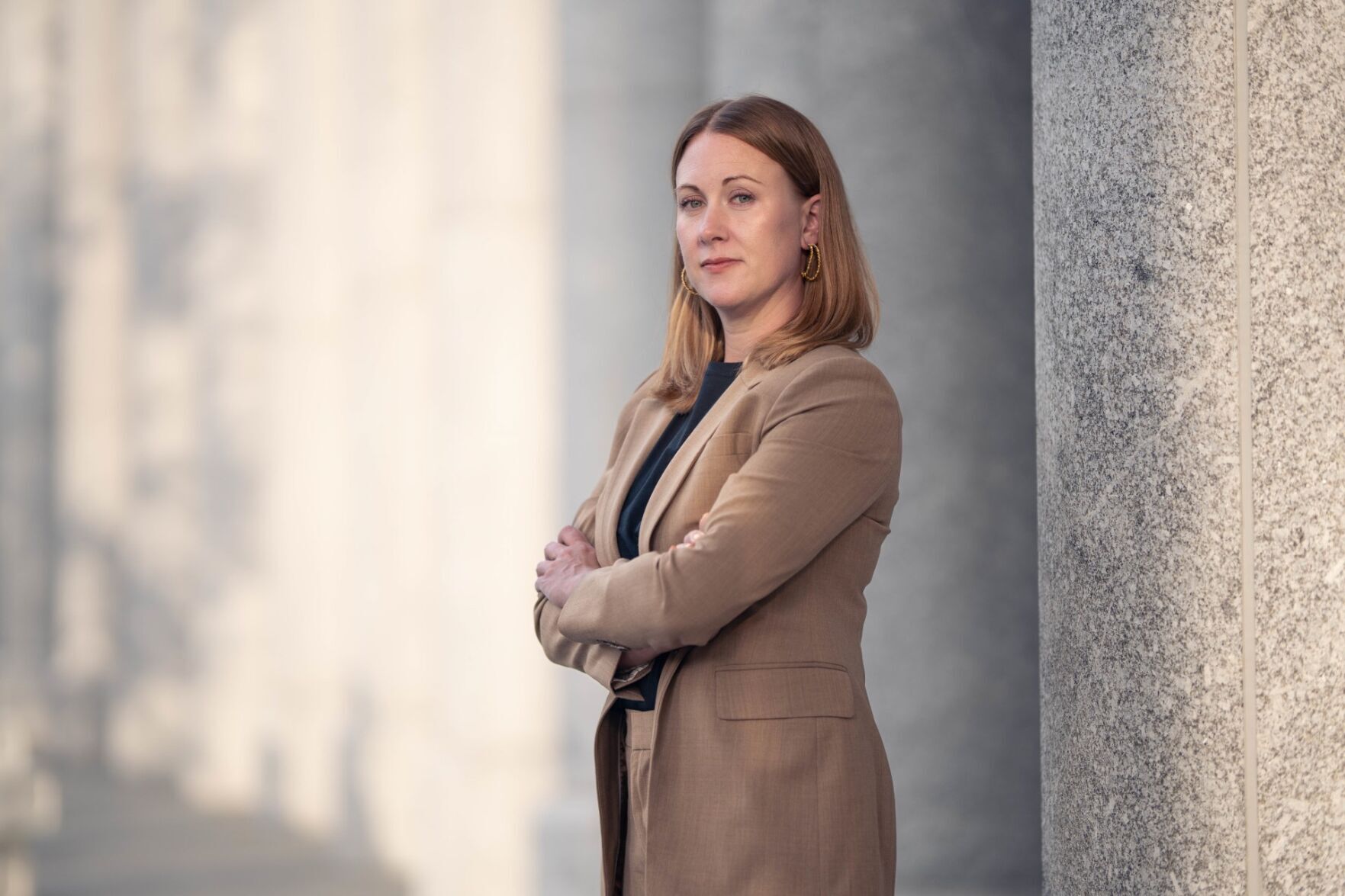
In court filings, district officials describe the Leasing Corp. as a “blended component unit” of DPS — a legally separate entity treated as part of the district for financial reporting that cannot be sued. But they also argue the structure allows the corporation to issue debt because Colorado’s constitutional debt limits apply only to governments, not nonprofit entities.
That contradiction raises concerns about transparency and accountability — worries echoed by a national expert on municipal finance, who sees the strategy as a maneuver that effectively lets DPS have it both ways.
“They are quite frankly trying to circumvent voters or trying to make their debt appear not as bad as it is,” Deborah Carroll, director of the Government Finance Research Center and a public administration professor at the University of Illinois at Chicago, has said.
These long-term obligations also carry real tradeoffs for the district’s operating budget.
In fiscal year 2024, DPS spent about $15 million on lease payments tied to certificates of participation, according to district financial records. That amount alone could have covered last year’s shortfall in cost-of-living adjustments for educators — and then some.
“If you had that money every year, you could give every school an extra teacher,” Rob Gould, president of the Denver Classroom Teachers Association, has said.
‘Substantial headwinds’
At the same time the district’s obligations have grown, the mix of revenue supporting DPS has shifted significantly.
A little more than a third of the district’s total revenue came from the state in 2005. Twenty years later, that share has fallen to about 17%.
Over the same period, the share of district revenue coming from property taxes increased from about 58% to roughly three-quarters today.
In terms of dollars, property tax revenue grew from $346 million in 2005 to more than $1.26 billion in the most recent audit.
Much of that increase reflects rising property values across Denver since the pandemic. In the 2019-2020 school year, DPS collected about $957 million in property taxes, compared with $1.26 billion in 2024–25, district financial records show.
The shift in the funding burden to local property taxes largely reflects Colorado’s school finance formula, which reduces the state’s contribution as local property tax collections rise.
But unlike state funding, local property tax revenue is not directly tied to student enrollment, making it a more stable source of funding even as student enrollment declines.
The revenue shift comes as DPS has been grappling with declining enrollment — something district officials have repeatedly cited as a driver of budget pressures and school closures.
In Colorado, funding follows students.
Every year, on or about Oct. 1, school districts conduct what’s called “The October Count.” This count is used to determine state funding levels.
Lower birth rates, rising housing costs and gentrification have been cited as key drivers of the district’s enrollment declines.
After peaking in the 2019-2020 school year with 92,112 students, district enrollment has dipped to 90,450 (a 1.8% decline), state data shows.
“There are substantial headwinds in coming years, including declining enrollment and pressures on state funding,” Pribble said.
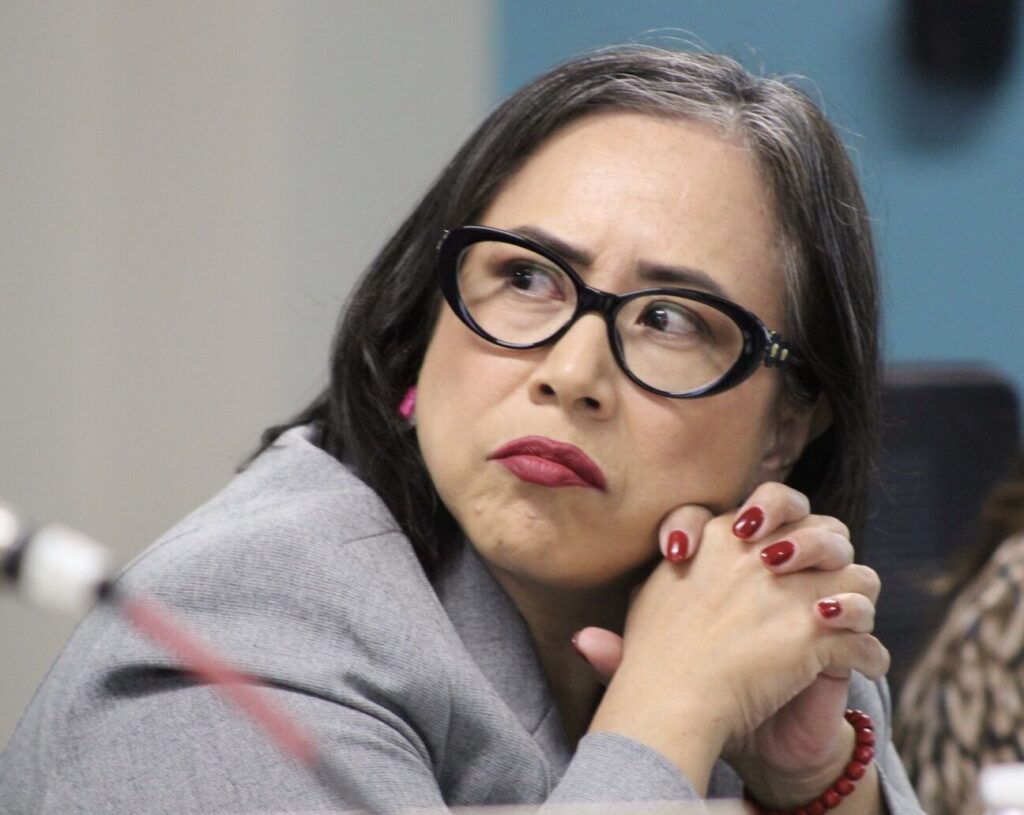
The board voted in November 2024 to close seven schools and restructure three others, a move that was expected to save the district about $30 million a year.
A financial update in January showed the district has since lost about $6.2 million in public funding tied to declining enrollment.
‘Very technical questions that board members are not responsible for’
Board President Xóchitl Gaytán dismissed questions about the district’s long-running negative net position as “getting into the weeds” and suggested The Denver Gazette direct its questions to the district’s chief financial officer, Chuck Carpenter.
“You’re asking very technical questions that board members are not responsible for,” Gaytán said.
As president, Gaytán controls the meeting agenda and has discretion to limit debate and questions from board members.
District leaders have repeatedly cited declining enrollment and the subsequent loss of state funding as a key driver of school closures although the majority of DPS’ funding comes from local property taxes.
Gaytán was unable to explain the board’s reasoning on that dynamic and instead circled back to per-pupil funding caps set through the state’s school finance formula.
School board members have a fiduciary duty to oversee the district’s roughly $1.5 billion budget, but Gaytán said the board relies on district leadership.
“We really depend on the superintendent and his team,” Gaytán said.