







$8 million biochar facility in DougCo set to open in September
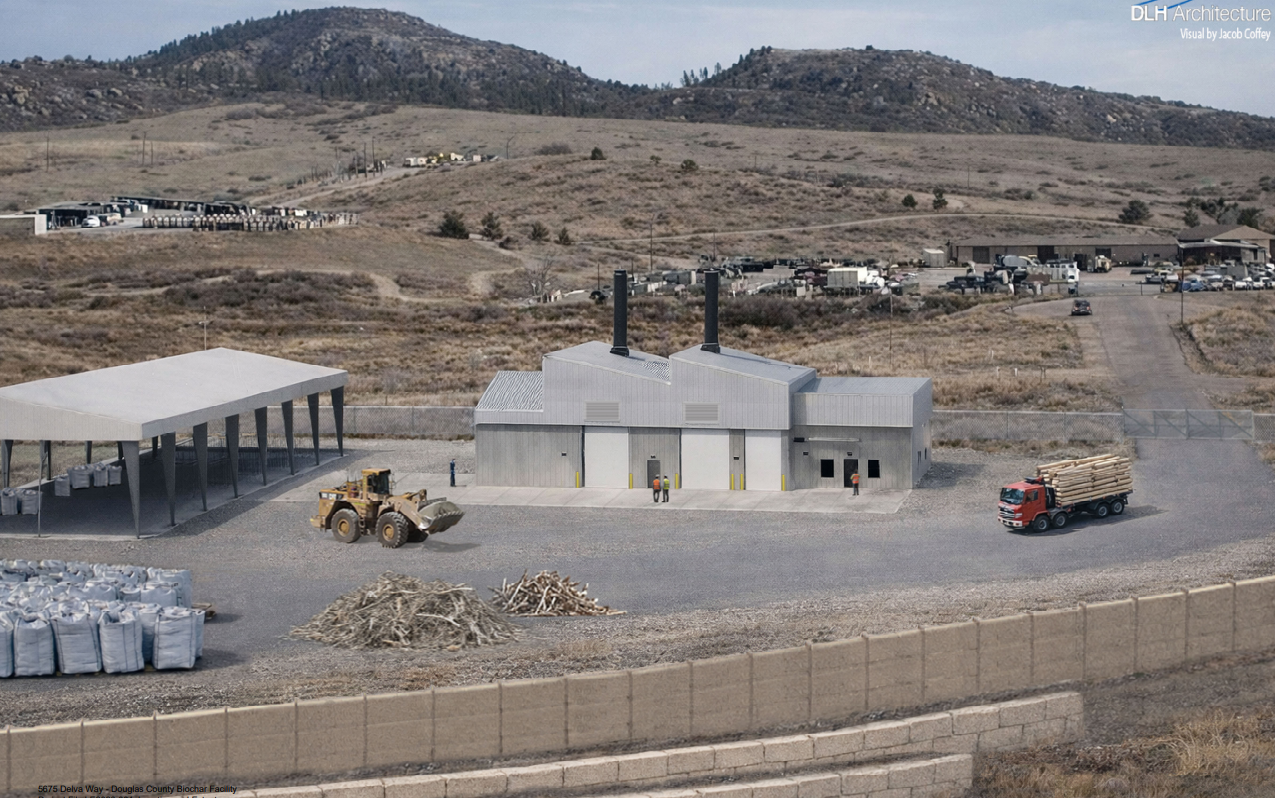
Douglas County is set to operate the first county-run biochar facility in the nation after the county Planning Commission approved the project’s location and extent application. The $8 million facility is expected to open in September in Sedalia.
“It was a huge opportunity to acquire this site,” Dan Roberts, assistant director of Douglas County Public Works Operations, said at a recent meeting.
Once operational, the facility will process roughly 10,000 tons of wood annually into biochar, a carbon-rich material primarily used to improve soil and water quality. County officials said the facility will increase capacity to process woody debris as forest restoration and wildfire mitigation efforts continue to grow.
“The origin of the biochar facility came out of the wildfire action collaborative,” Roberts said.
The 6,717‑square‑foot facility will accept woody material, including tree trunks, limbs, branches and ground chips. Treated, painted or contaminated wood will not be accepted.
County officials said free local drop‑off will be available for Douglas County residents and businesses, with appointments required for larger loads.
Residents will also be able to obtain limited quantities of biochar for home use, while larger bulk sales will be targeted at parks, conservation districts, water providers, composters, golf courses and restoration contractors.
Roberts said the facility is expected to generate revenue through biochar sales. One ton of wood produces about one cubic yard of biochar, which can sell for $150 to $300. County staff estimates the facility will generate about $2.2 million in annual revenue and pay for itself within nine years.
“It actually has significant value,” Roberts said. “This facility should be self‑sustaining once the market is developed here.”
County officials said local processing will reduce hauling and disposal costs for public and private projects, with savings reinvested in additional forest mitigation. The building has also been designed to accommodate a second processing unit if demand increases.