







Parents making waves to protect Colorado kids | Jimmy Sengenberger
For too long, school districts and state government have failed Colorado’s kids. Enter the parents — making waves from the ballot box to the federal Department of Education.
The department’s Office of Civil Rights (OCR) found Jefferson County Schools in violation of Title IX, which bars sex-based discrimination in federally funded schools.

OCR found Jeffco permitted “male students to access female bathrooms, locker rooms, and overnight accommodations, and to compete in female sports,” denying female students “safety, dignity, and equal access to educational programs and activities.”
Male students “may occupy up to 61 roster positions on girls’ sports teams,” they determined.
The department gave Jeffco 10 days to take several concrete steps to remedy the violations even as Jeffco rejected them, insisting Title IX somehow “protects transgender students’ access to school programs and facilities.”
“Today’s findings reveal sweeping Title IX violations by Jefferson County Public Schools — denying fairness and equality to female students by allowing males into their private facilities, overnight accommodations, and athletics,” Assistant Secretary for Civil Rights Kimberly Richey said.
The federal investigation stems from the parent group Jeffco Kids First and founder Lindsay Datko, whose yeoman’s work prompted Washington to act.
This same parent energy has also driven three initiatives onto November’s ballot, organized by grassroots coalition Protect Kids Colorado. Despite critics’ dismissing them as “fringe,” all three measures are eminently reasonable — reflected in an historic 91% signature validity rate and over 110% of required signatures.
Initiative 108 would boost penalties for child sex trafficking from a Class 2 felony to a Class 1 — a commonsense measure that should command broad support.
Initiative 109, protecting girls’ sports, echoes the OCR finding for Jeffco Schools. The measure would guarantee girls’ and women’s sports are for them alone — designating school athletic teams as male, female or coed and barring male students from girls’ teams. It maintains exceptions for girls to play on boys’ teams if no girls’ team exists and ensures federal protections for students with intersex conditions.
Initiative 109 is chaired by Jennifer Sey — past champion gymnast, former Levi Strauss executive and founder of XX-XY Athletics, which advocates for girls’ and women’s sports. Sey flatly rejects the characterization that 109 is “anti-trans.”
This is about ensuring girls have spaces that are safe and meant for them.
“In the case of contact team sports like basketball and volleyball, the fact that trans identified male athletes are bigger and stronger on average, puts women at real risk of serious injury when contact occurs,” XX-XY Athletics’ website says, adding this puts female athletes at real risk of injury on an “unequal playing field.” Girls and women who play sports also “have higher levels of confidence, self-esteem, and lower levels of depression” — underscoring precisely why Title IX protections matter.
Initiative 110 would prohibit sex change surgeries on minors. The American Society of Plastic Surgeons recently urged surgeons to “delay gender-related breast/chest, genital, and facial surgery until a patient is at least 19 years old.”
The organization concluded there’s “insufficient evidence demonstrating a favorable risk-benefit ratio” for “gender-related endocrine and surgical interventions in children and adolescents.” ASPS cited concerns over “potential long-term harms and the irreversible nature of surgical interventions” — reinforcing that caution is the medically responsible approach.
The initiative doesn’t apply to medically necessary care or impose criminal penalties, meaning doctors who perform such procedures won’t face criminal prosecution, although they could face professional and civil consequences.
It pulls the brakes — and the data calls for it. Trans and nonbinary identification among young people has gone into “free fall” after a surge in pandemic-era social media attention. San Diego State psychology professor Jean Twenge found trans identification among 18- to 22-year-olds was “cut nearly in half from 2022 to 2024,” while nonbinary identification “dropped by more than half between 2023 and 2024.”
Dr. Erica Anderson, a transgender clinical psychologist specializing in trans youth, has warned the surge was largely driven by social media amid pandemic isolation. “What happens when the perfect storm — of social isolation, exponentially increased consumption of social media, the popularity of alternative identities — affects the actual development of individual kids?” she told the New York Times in 2022.
Yet since 2021, Colorado laws and school district policies have increasingly enforced gender-affirming ideology. Initiatives 109 and 110 seek to address that.
“Surgeons can’t remove working body parts and just replace them later,” Dr. Travis Morrell, chair of Colorado Principled Physicians, told me. He stressed that empathy must be guided by evidence — holding off on “unproven, permanent surgeries” until at least adulthood.
Left-wing advocacy group One Colorado claims these initiatives “take important, personal decisions away from parents, schools, and medical professionals and hand them to politicians.”
That’s rich. One Colorado supported HB24-1039, which brands a school or teacher’s refusal to use a student’s chosen name and pronouns “discrimination,” even if parents disagree — and without requiring parental notification.
Apparently, parental rights only matter to opponents when parents agree with their social agenda.
“My own daughter was socially transitioned without our knowledge in Poudre School District,” said Protect Kids Colorado Executive Director Erin Lee, who chaired 110. “What we experienced is not isolated, and families deserve transparency, truth, and protection when it comes to their children.”
When government sidelines parents, parents step up. In Colorado, they just did — taking their case from school boards to the ballot box and beyond.
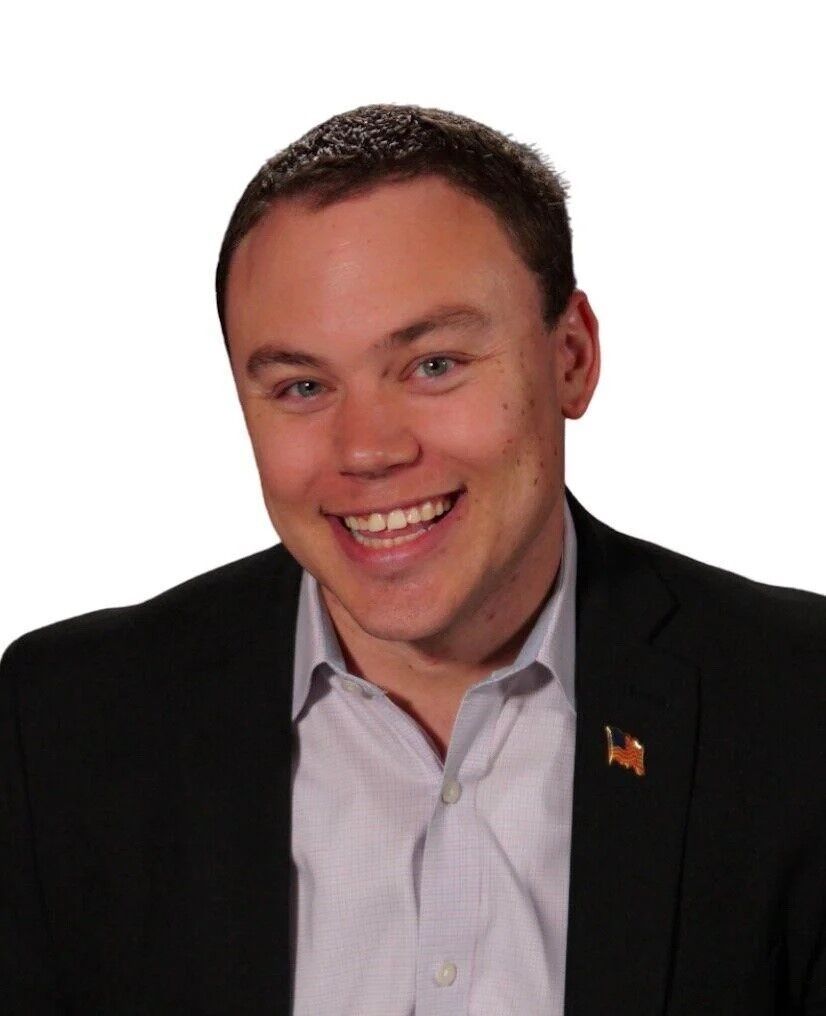
Jimmy Sengenberger is an investigative journalist, public speaker, and longtime local talk-radio host. Reach Jimmy online at Jimmysengenberger.com or on X (formerly Twitter) @SengCenter.