







Colorado elections don’t need feds’ meddling | Jimmy Sengenberger

The U.S. Supreme Court is currently deliberating mail-ballot laws. Meanwhile, Congress continues to hash out potential federal interventions in state election laws.
How might these developments affect Colorado, which became the third state to make the switch to all-mail ballots back in 2013?
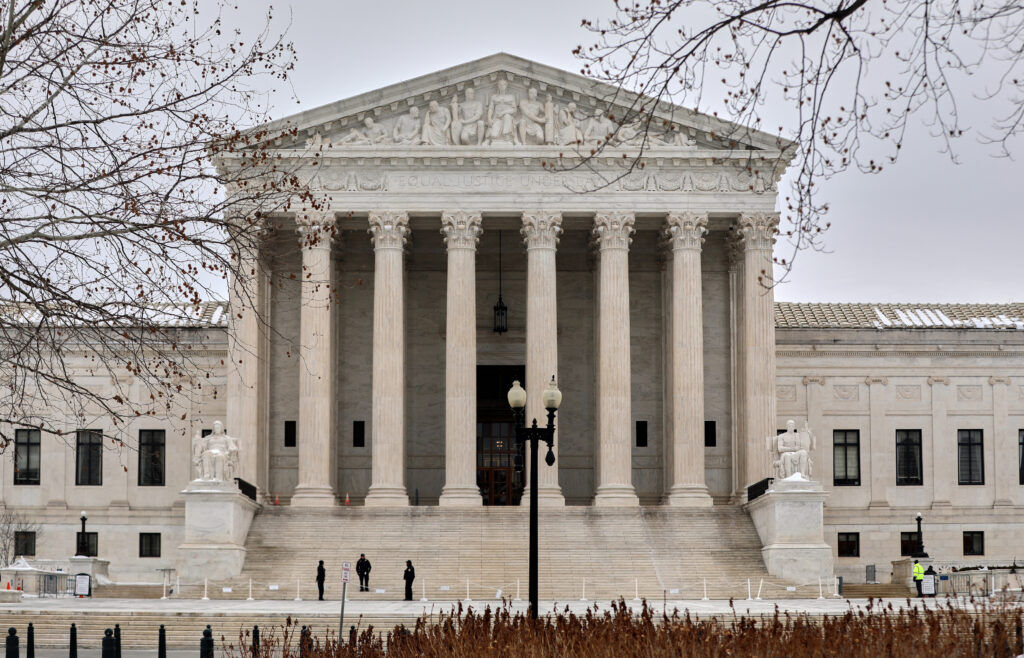
Last week, the Supreme Court heard the case of Watson v. Republican National Committee, considering whether Mississippi — and, by extension, other states — can count ballots received after election day, as permitted under state law.
As law professor Josh Blackman wrote for Reason’s Volokh Conspiracy, “It was an unusual oral argument. A deep red state was defending a permissive voting law that was opposed by the RNC.”
Could this case impact Colorado?
A ruling against Mississippi would leave Colorado largely unaffected. Under state law, ballots received after 7 PM on Election Day are not accepted.
“It sets the rules of the game so that it’s fair for everybody,” Matt Crane, executive director of the Colorado County Clerks Association, told me on KOA radio. “At 7:00 p.m., all ballots must be received — everyone knows that and understands it, and we’ve built our model around it.”
In fact, more than 80% of Coloradans return their ballots via drop box rather than through the mail. Others vote at vote centers.
The only exception for ballots received after Election Day is for military and overseas voters who fall under the federal Uniformed and Overseas Citizens Absentee Voting Act. Under Colorado law, their ballots can be received up to eight days after Election Day, providing they’re postmarked by Election Day.
“The thinking behind that is that frontline military deserve every opportunity to have their ballot counted,” Crane explained. “When Colorado passed that law a decade or so ago, the idea was to give them every opportunity to get that ballot back and have their voice heard.”
That seems like a sensible approach, and it’s possible the Supreme Court could uphold such an exception while striking down laws permitting all ballots to be received after Election Day.
Colorado is right. Election Day is Election Day. Ballots should be in by the deadline, full stop, with narrow exceptions for a small category of voters who have earned it.
Which makes what Colorado Secretary of State Jena Griswold — a Democrat infamous for putting partisanship before policy — did in 2020 all the more astonishing.
Griswold sued the US Postal Service over a voter education mailer, claiming then-Postmaster General Louis DeJoy was engaging in “voter suppression” for Trump. The postcard read, in part, “We recommend you mail your ballot at least 7 days before Election Day.”
Griswold’s ludicrous lawsuit claimed this was “false” because voters don’t have to return ballots by mail but can drop them off in-person. But it was savvy advice to ensure ballots get counted — the very same advice county clerks give their constituents.
Crane summed up clerks’ messages on the radio: “A week before Election Day, if you haven’t mailed it back yet, don’t put it in a postal box — it may not reach us in time.”
But Griswold insisted that, by the Postal Service encouraging voters to exercise due diligence, they were somehow engaging in “voter suppression” — the kind of loaded rhetoric historically reserved for racially-charged poll tests and poll taxes.
Apparently, encouraging people to mail their ballots on time is Jim Crow 2.0.
Griswold was simply pre-positioning. Had Democrats lost in 2020, she had her narrative ready: “voter suppression” by Donald Trump and his Post Office lapdogs tanked mail ballots across the country. Instead, Republicans lost, leaving Griswold’s “rigged election” narrative unused while Republicans crafted their own.
Let’s be clear: Outside interference — whether from federal overreach or partisan grandstanding by a state’s own top election official — undermines what states have earned the authority to do.
Colorado’s model has worked precisely because Colorado built it. Universal mail voting evolved organically from 1998. By the time we switched to universal mail ballots, over 70% of voters were already signed up for automatic, no-excuse absentee ballots — meaning voters themselves chose to receive them.
The real danger to Colorado isn’t a Supreme Court ruling on narrow questions. It’s the prospect that Congress might federalize elections.
Federal mandates squash legitimate state differences in the name of uniformity, threatening to undermine the very improvements Colorado has made over the years — learning from mistakes, developing best practices and pioneering the statewide risk-limiting audit.
States are nimble in a way the feds aren’t. Colorado has been able to tinker and improve because of state flexibility. A federal takeover would undercut that ability.
Congress is currently stalled over the Save America Act. The bill includes several commonsense provisions, including requiring proof of citizenship to vote and requiring a state-issued photo ID to vote in person.
Colorado accepts 19 or 20 different types of ID to register, but photo ID isn’t required. That should change here, no matter what Congress does.
The Save America Act, as written, wouldn’t ban universal mail ballots. The alternative Make Elections Great Again (MEGA) bill would, alongside a slew of other federal mandates.
Griswold championed a Biden-era push to nationalize elections. Trump is flirting with it, too. They’re both wrong. Washington has no business micromanaging Colorado’s elections — and Colorado’s successful track record proves it doesn’t need the help.
Jimmy Sengenberger is an investigative journalist, public speaker, and longtime local talk-radio host. Reach Jimmy online at Jimmysengenberger.com or on X (formerly Twitter) @SengCenter.