







Douglas County approves recreation mega-complex

A controversial Douglas County recreation center is moving forward following a contentious public hearing on the project.
County commissioners unanimously approved four contracts related to the design, construction and financing of the Zebulon Regional Sports Complex on Tuesday, aiming for a 2028 completion date.
“We’re going to be on the side of kids, and I hope we stay on the side of kids tonight,” Commissioner Abe Laydon said.
The $65 million complex was envisioned in response to a 2024 survey triggered by a voter approved sales tax extension used to finance recreation in the county. The survey found the appeal of a mega-sports complex was mixed among respondents, but following community engagement events, county commissioners heard from parents and youth about the need for more sports facilities, according to the county’s website.
Representatives of multiple youth sports organizations relayed similar concerns about the county’s current athletic infrastructure, resulting in long drives for parents and limited access for youth.
“We routinely send our children outside the county for training and competition opportunities,” Jim Bocci, head coach at Highlands Ranch Aquatics, said, echoing other organizations’ statements. “Not one school in Douglas County includes an aquatic facility.”
The county has not built a public baseball field since 2004 and does not have an Olympic-sized pool, according to Dan Avery, special projects manager at Douglas County.
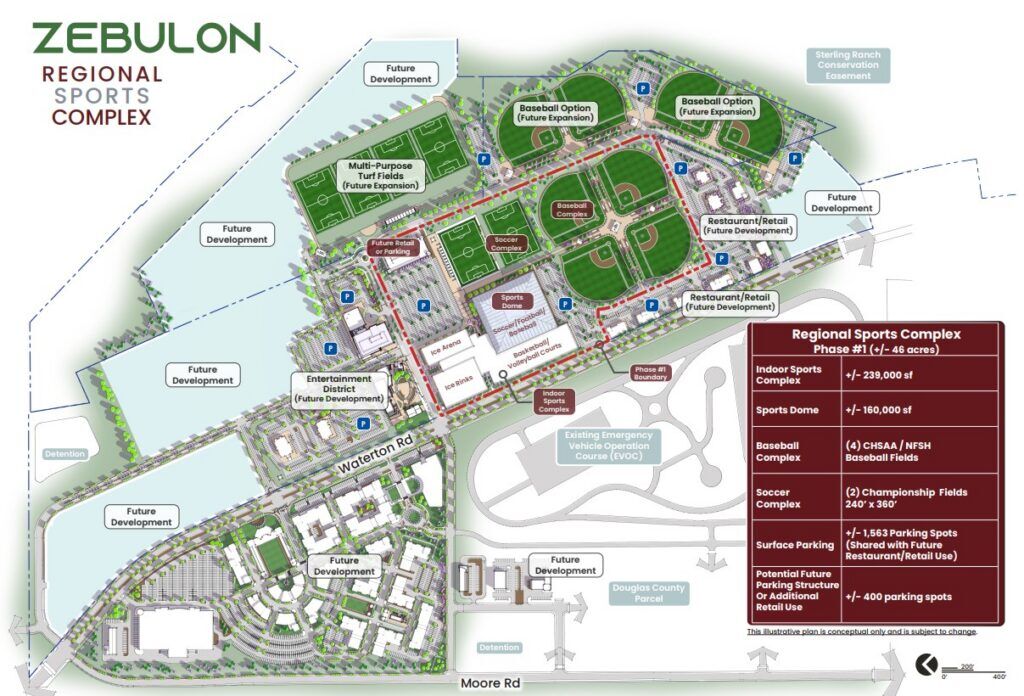
Preliminary designs for the 46-acre complex include multiple indoor hockey rinks, eight full-size multi-sport basketball courts, a covered sports dome with 160,000 sq. ft. indoor turf, 15,000 sq. ft. fitness and lifestyle center and outdoor baseball fields and multipurpose soccer fields.
County commissioners awarded a contract for the design, construction and long-term operation to KT Development, capped at $65 million KT Development has constructed and operated multiple sports complexes since its inception, according to managing member Luke Taylor.
Commissioners also awarded a $12 million contract to SR Construction LLC, for infrastructure improvements.
Construction is expected to start in October and be completed in December 2028.
The site sits on a former explosives plant that closed in 1989. Separate portions of the land were purchased by Sterling Ranch and Douglas County, who, through a 2025 land transfer, acquired the current site of Zebulon. Sterling Ranch has committed to conserving a 185-acres elk corridor on the property.
After decades of testing and remediation, in 2022, the Colorado Department of Public Health and Environment confirmed that the construction site required no further remediation following the removal of a small portion of contaminated soil. There are currently no land-use restrictions on the site of the future complex, and any construction requires a materials management plan through the CDPHE.
To finance the project, the county will issue certificates of participation for $100 million to be repaid by revenues from the site. If the revenue of Zebulon cannot match or exceed the repayment amount, the county will use taxes generated from the voter approved sales tax dedicated to recreation.
An additional $34 million will come from partner organizations that will fund and operate certain facilities on site.
According to officials, the complex will be self-sustaining, and revenues will cover operations cost, requiring no long-term county funding.
Public comment was split with some supporters echoing the need for more youth athletic facilities in the county and the issues parents and youth face.
Other speakers against the project questioned the need for a project this size, the debt incurred through the COPs, and the complex’s impacts on infrastructure including water and roads. Many speakers, including State Representative Bob Marshall, called for the project to be put on a ballot for the next election cycle.
“Commissioner Laydon tells us we have a unanimous decision from all the other municipalities,” Marshall said. “Then why don’t we send it to a ballot at the primary?”
When commissioners closed the public hearing after one hour, many who were not allowed to speak began yelling at commissioners demanding it be reopened. One attendee sat on the floor in front of the commissioners’ diocese, refusing to move, at which point the commissioners called a short recess.
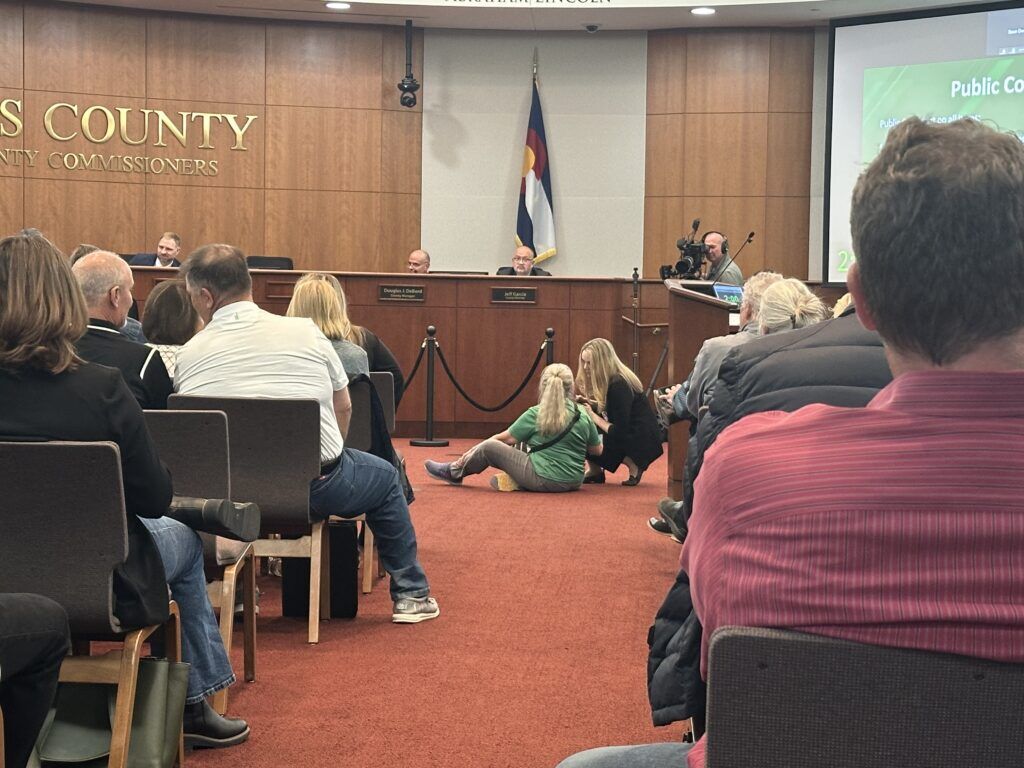
Once the meeting resumed, the commissioner unanimously approved the four contracts. Preliminary plans are subject to change once a final design is approved.