Nina Miller: She didn’t just break a leg – she broke even

It’s a big deal when a local playwright both self-produces and earns back her costs on an unknown new play. How did she do it?
Producing live theater has always required the moxie of a Vegas gambler. Only 20% of Broadway plays ever recoup their initial investments. The risk producers assume is just baked into that math.
Closer to home, the stakes are much smaller – but the margins are even thinner.
Over the years, theater producers have consistently told me it generally costs them about 30% more to stage an unknown new play compared to one that has some built-in title recognition.

So when a local playwright like Nina Miller decides to essentially self-produce her latest play, it’s not just unlikely that it will pay for itself.
“It’s unheard of,” said Miller, who is as known around town for amplifying other local playwrights as for championing her own work. She’s co-founder of both Dirtyfish Theatre and a group called Rough Draught Playwrights.
Be honest. You’re scanning the theater listings. Which play are you more likely to go see: A proven comedy like “The Importance of Being Earnest,” which just became the best-selling post-COVID play at Fort Collins’ Bas Bleu Theatre? Or “Daughtering,” Miller’s gentle new story of three generations of women dealing with death and spirits, which just had its premiere staging at the Dairy Arts Center in Boulder?
That was a rhetorical question. But it was closer than you might think. Miller used all her marketing might to entice about 412 people to one of her eight performances – the magic number for recouping all costs. Many of them were co-workers – “and I’ve had a lot of jobs,” she said with a laugh. My clients came. My old students came. People just came.”
In the end, an astonishing 75% of all available seats were filled, she said. (Granted, capacity was only 68).
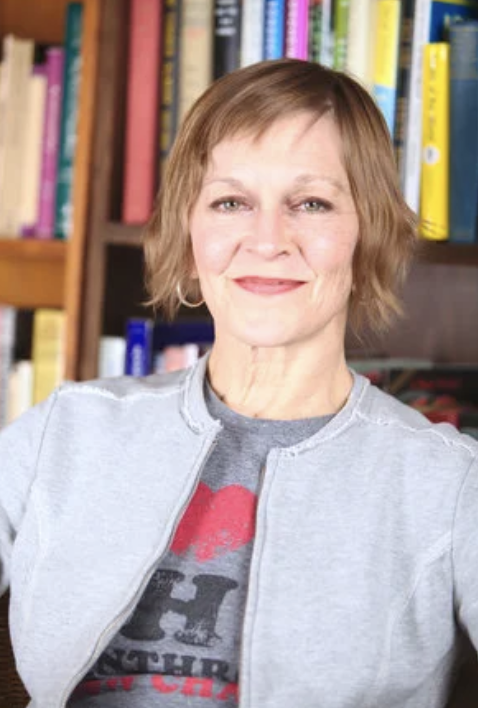
“But to me it’s about more than breaking even,” Miller said. “It’s about being willing to take the risk in the first place. There’s power in that.”
Miller went into the project with a $10,000 budget. (Individual shows at established theaters can run 10 times that much). Almost all of that was to pay for rent and artist stipends.
She had no public financing. No foundation support. She did have Glenn. As in Set, Sound and Light Designer (and life partner) Glenn Webb.
Everyone who produces theater should have a Glenn. And, for that matter, a caring uncle. For Miller, that was John William Miller. He died over the holidays and left Miller $4,000 to go toward what eventually grew to an $11,000 project.
“He told me, ‘I’ve been thinking about my mother. She never got her dream. I want you to have a dream,’” said Miller, who dedicated the run to her uncle’s memory. His gift made all the difference.
When I say this never happens, Susan Lyles is here to tell you this never happens. Lyles has been producing new plays by women playwrights since 2005 as founder of the And Toto Too Theatre Company.
“And we have never broken even in 21 years,” she said. “Not even once.” It doesn’t help that she doesn’t qualify for a penny of the $80 million the SCFD sends out every year to nearly 300 arts, culture and science organizations. Why? She’s too small to qualify. She can keep going only because generous donors believe in her mission to tell the stories of and by women. She’s frugal and she has almost no overhead. And she’s never been paid.
Lyles just closed “Fierce Satire and Mediocre Sex,” by Denver playwright Edith Weiss. It was the best-selling show in her company’s history. The rent and the artists got paid. The show cost $13K. And she made back $10½.
Here’s the cycle: Raise money. Put on a show. Lose money. Raise money. Put on another show. Repeat. That’s why she can only afford to stage one show a year.
So why does she do it? Because only about 39% of all plays staged are written by women, even though women make up the vast majority of audiences.
“I do it for the satisfaction of seeing new work get out there,” Lyles said, “because that doesn’t happen – especially for women. I love taking a play that’s never been done before and working with a playwright to bring it to life. That’s why I do it.”
So when an entirely self-produced effort like “Daughtering” does manage to break even, however it happens, attention must be paid. Even if, ironically, Miller didn’t get to pay herself –there is power in the break-even.
“And that power is that I’m going to do it again,” she said.
John Moore is the Denver Gazette’s Senior Arts Journalist. Email him at [email protected].