







Two candidates, different visions for CD-6 | Michael A. Hancock
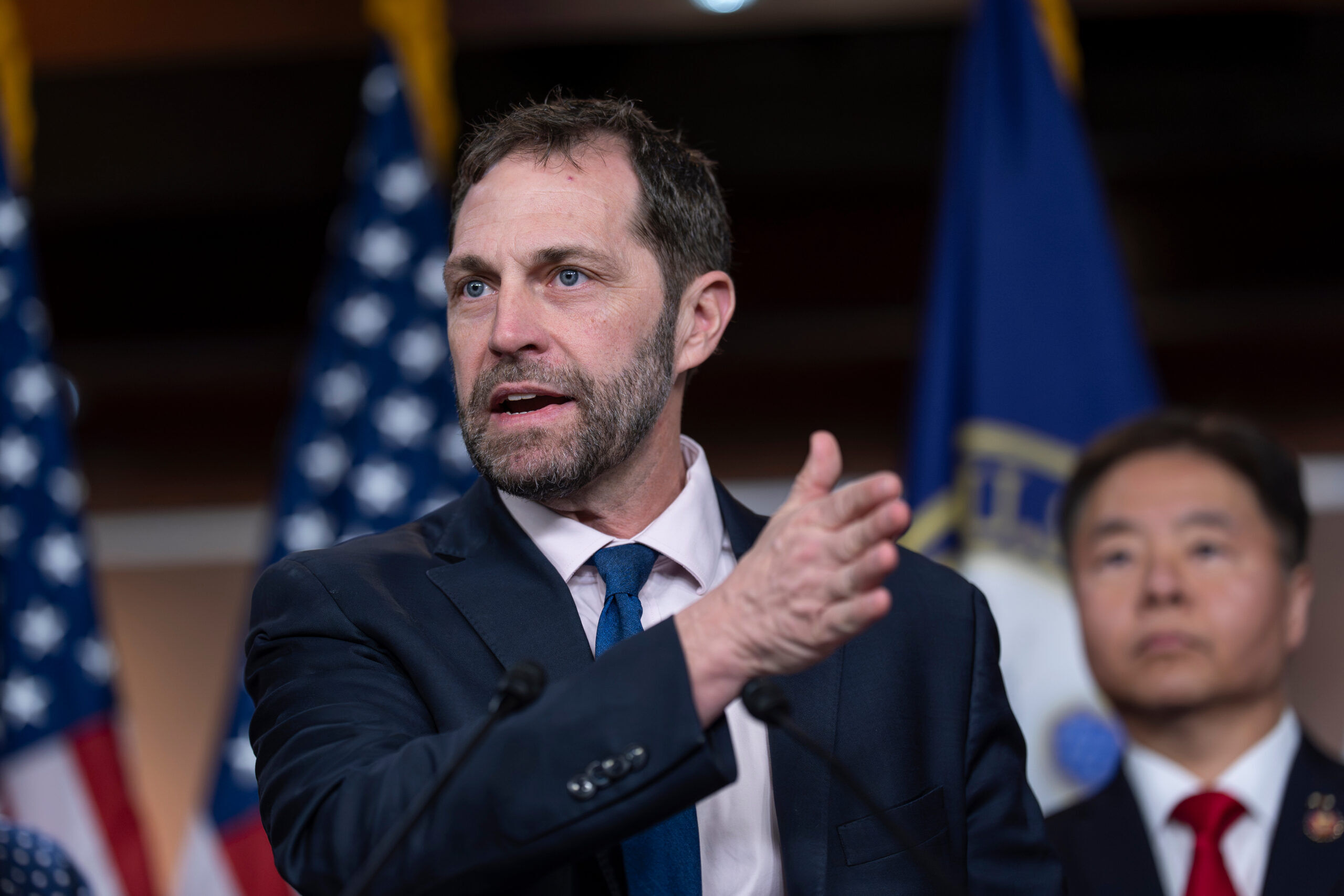
Every election is said to be important. Most are not. Most are merely cyclical, another turn of the wheel, another exchange of slogans, consultants, mailers, and television smiles. But some elections are genuinely clarifying. They force voters to confront not simply who they prefer, but what kind of future they are willing to accept.
Colorado’s 6th Congressional District now faces such a choice.
The contrast between Jason Crow and Mel Tewahade is not merely partisan. It is philosophical. It is experiential. It is, in the deepest sense, a choice between two ways of understanding society itself.
Jason Crow is the polished incumbent, a disciplined and articulate representative of the modern progressive order. He is not a bomb-thrower. He is the more durable type: a respectable progressive who rarely sounds radical because he does not need to. He speaks the language of moderation, pragmatism, and public service while advancing a worldview that moves left not by open rupture, but by subtle calibration — through framing, process, and the steady presentation of ideological choices as simple administrative necessity.
That matters.
Because the great political deception of our time is not that progressivism presents itself as radical. It rarely does. It presents itself as compassionate, managerial, and enlightened. It does not announce decline. It administers it. It does not openly defend disorder. It explains it, contextualizes it, and ultimately normalizes it. It does not call for dependence in so many words. It simply builds the kind of political architecture that makes dependence permanent.
And over time, the results become unmistakable.
We see them in rising costs that make it harder for working families to remain where they built their lives. We see them in a political culture that treats economic growth as something to be regulated rather than unleashed. We see them in a governing class that too often speaks of safety as though it were merely one social preference among many, rather than the first duty of civilized government.
A district cannot prosper while public order erodes. It cannot attract investment while instability spreads. It cannot sustain family formation, entrepreneurship, or civic confidence when the basic conditions of flourishing are steadily weakened by ideological governance.
This is where Mel Tewahade offers not just a different platform, but a different kind of lens.
Some candidates arrive at conservatism as a branding exercise. Others arrive there the hard way — through experience, through exposure to political systems that crush initiative, distort truth, and subordinate human dignity to ideology. The difference matters. A conservatism formed by lived reality is usually more serious than one formed by abstraction. It is less theatrical, less performative, and far less naïve.
That is the opportunity before CD6.
At a moment when too many politicians speak about liberty as though it were a decorative slogan, Tewahade represents something rarer: the possibility of a politics rooted in gratitude, seriousness, and firsthand understanding of what happens when bad ideas are allowed to harden into governing systems. A man who has seen the consequences of coercive ideology is far less likely to romanticize it here. A man whose worldview has been shaped by the realities of life across different cultures and systems is less likely to mistake America’s strengths for historical accidents.
That is not a small thing.
The people of CD6 do not need more fashionable rhetoric about “equity” while affordability worsens. They do not need more carefully packaged moderation that leaves untouched the assumptions driving decline. They do not need representation that can speak eloquently about the middle class while supporting the governing habits that steadily weaken it.
They need representation that understands a simple truth modern politics works very hard to obscure: economic growth and public safety are inseparable.
There is no long-term prosperity without order. There is no thriving business climate where lawlessness is excused, enforcement is demoralized, and instability becomes ambient. There is no broad-based economic confidence when energy policy is unserious, regulation is suffocating, and productive citizens are treated more as revenue sources than as builders of the common good.
Growth is not a slogan. Safety is not a side issue. Both are preconditions of a healthy republic.
And Colorado, sadly, has been learning the opposite lesson for years. Too often, our politics has been governed by the fiction that cultural fragmentation can be ignored, disorder can be explained away, and economic vitality can be centrally managed into existence. It cannot. Wealth must be produced before it can be redistributed. Stability must be defended before it can be enjoyed. Civilization must be maintained before it can be celebrated.
This race, then, is not simply about whether voters like Jason Crow’s demeanor or prefer Mel Tewahade’s biography. It is about whether CD6 still recognizes the difference between polished progressivism and reality-based representation.
Crow represents continuity with the governing assumptions that have led Colorado toward higher costs, weaker confidence, and an increasingly fragile sense of public order. Tewahade represents a chance to say that enough is enough — that a district as consequential as CD6 deserves a representative whose understanding of freedom is not theoretical, whose appreciation of economic dynamism is not bureaucratic, and whose commitment to safety is not negotiable.
In the end, voters are not choosing merely between two men. They are choosing between two governing instincts.
One believes society can be managed indefinitely by enlightened elites, even as the foundations beneath it weaken. The other begins with the older and harder truth: that liberty must be protected, growth must be cultivated, and safety must be enforced if a people are to remain truly free.
That is the real choice before CD6.
And it is a choice far bigger than one congressional seat.
Michael A. Hancock is a retired high-tech business executive and a Coloradan since 1973. Originally from Texas, he is a musician, composer, software engineer and U.S. Air Force veteran whose wide-ranging interests – from science and religion to politics, the arts and philosophy – shape his perspective on culture, innovation and what it means to be a Coloradan.